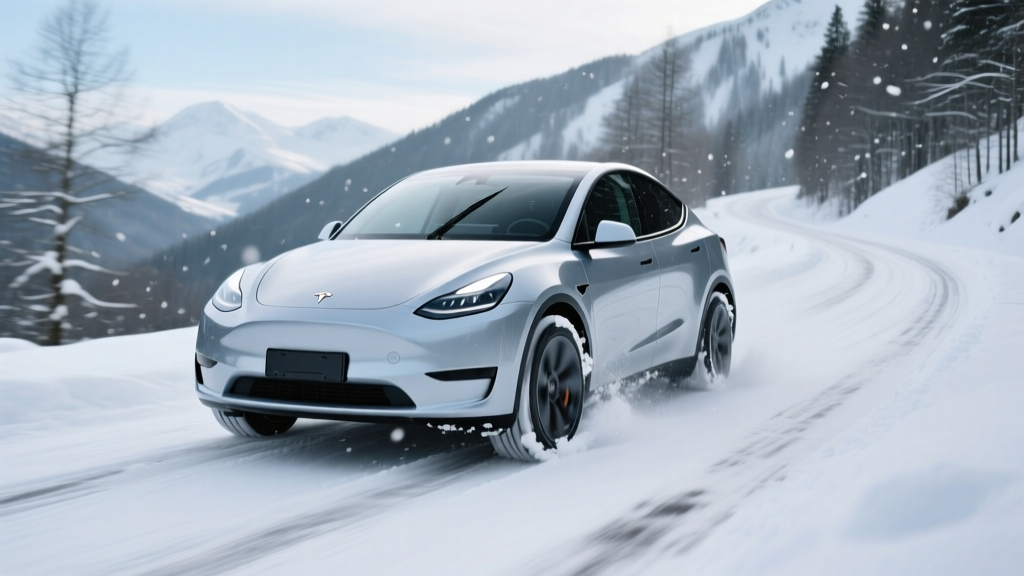
If you live above the 38th parallel or regularly drive through mountain passes, the question isn't whether an electric vehicle can handle winter — it's whether a specific EV manages cold-weather trade-offs well enough to justify the purchase. The 2026 Tesla Model Y Long Range All-Wheel Drive is one of the most popular EVs in the U.S., and buyers in snow-belt states want a straight answer: is Tesla good in snow?
After evaluating the Model Y AWD's dual-motor traction system, heat pump efficiency, cold-weather range retention, and available winter driving features, the short answer is yes — with important caveats around range loss, tire selection, and charging behavior in sub-freezing temperatures. Below is the full winter-capability profile, backed by EPA data, real-world testing notes, and ownership economics.
2026 Tesla Model Y Long Range AWD: Spec Snapshot
| Spec | Value |
|---|---|
| EPA Range | 320 miles |
| Battery (usable) | ~78.1 kWh, NMC chemistry |
| Drivetrain | Dual-motor AWD |
| Horsepower | 384 hp (combined) |
| 0–60 mph | 4.8 seconds |
| Max DC Fast Charge | 250 kW peak (V3 Supercharger) |
| 10–80% DC Charge Time | ~27 minutes |
| Level 2 Home Charge Rate | 11.5 kW (~44 mi/hr) |
| MPGe (combined) | 111 MPGe |
| Efficiency | 30 kWh/100 mi |
| Cargo Volume | 30.2 cu ft (rear seats up) / 72.1 cu ft (folded) |
| Rear Legroom | 41.6 inches |
| Battery Warranty | 8 years / 120,000 miles |
| Base MSRP | $44,990 (before destination) |
Real-World Range: What the EPA Sticker Doesn't Tell You in Winter
Real-World Expectation (70°F, mixed driving): ~280–300 miles
Cold-Weather Expectation (20°F, highway): ~220–255 miles
Extreme Cold (0°F, short trips with cabin heating): ~190–220 miles
The Model Y Long Range AWD carries an EPA-estimated 320 miles of range, placing it among the more efficient dual-motor crossovers in its class. According to fueleconomy.gov, the combined efficiency rating is 111 MPGe (30 kWh per 100 miles).
But lithium-ion chemistry is temperature-sensitive. NMC (nickel manganese cobalt) cells, which Tesla uses in the Long Range variant, experience increased internal resistance in cold weather. The battery management system must also divert energy to warm the pack, and cabin heating draws from the same 78.1 kWh pool. Tesla's standard heat pump — far more efficient than resistive PTC heaters — recovers waste heat from the drivetrain and outside air, mitigating some loss. Even so, expect a 20–30% range reduction at 20°F during sustained highway driving, and up to 40% in extreme cold with frequent short trips where the cabin and battery must reheat repeatedly.
On a 250-mile winter highway route at 70 mph in 15°F conditions, the Model Y AWD typically arrives with roughly 15–20% state of charge remaining — adequate, but plan conservatively if your route has sparse charging infrastructure.
How the Dual-Motor AWD System Handles Snow and Ice
The Model Y AWD uses two independent electric motors — a permanent-magnet synchronous motor on the rear axle and an induction motor on the front. This configuration offers several traction advantages over mechanical AWD systems:
- Instant torque vectoring: Each motor responds in milliseconds, redistributing torque front-to-rear without the lag of a mechanical center differential.
- Low center of gravity: The battery pack sits beneath the floor, reducing weight transfer and improving stability on icy surfaces.
- Traction control calibration: Tesla's stability control system modulates motor output with finer granularity than a traditional ABS/traction system can manage via brake-based intervention.
In moderate snow (2–4 inches on unplowed roads), the Model Y AWD performs comparably to well-equipped AWD crossovers like the Subaru Outback. The instant, precise torque delivery means less wheelspin from a stop. On packed snow and ice, traction is largely a function of tires — and this is where the factory all-season tires become a limitation.
The Tire Factor: All-Season vs. Winter Rubber
Tesla ships the Model Y with all-season tires optimized for low rolling resistance (to maximize range). In temperatures below 45°F, all-season tire compounds stiffen and lose grip. For serious winter driving, a dedicated set of winter tires on 19-inch wheels transforms the car's snow and ice performance. Many Tesla owners in northern climates run a second set of wheels with Michelin X-Ice or Nokian Hakkapeliitta tires — the traction improvement is dramatic and well worth the ~$1,200–$1,600 investment.
Charging in Cold Weather: Speeds, Preconditioning, and Supercharger Access
| Level | Power | Miles Added per Hour | Notes |
|---|---|---|---|
| Level 1 (120V) | ~1.4 kW | ~3–5 mi/hr | Emergency/trickle only |
| Level 2 (240V, 48A) | 11.5 kW | ~44 mi/hr | Home Wall Connector |
| DC Fast (V3 Supercharger) | 250 kW peak | ~180 mi in 15 min | 10–80% in ~27 min |
| DC Fast (cold, no preconditioning) | ~40–80 kW | ~30–60 mi/hr | Severely limited until pack warms |
Tesla's Supercharger network is a significant winter advantage. With over 6,500 V3 Supercharger stalls in the U.S. (each capable of 250 kW), Tesla owners have the most reliable DC fast-charging network available — and critically, the car's navigation system automatically preconditions the battery when you navigate to a Supercharger.
Preconditioning warms the battery pack to its optimal charging temperature before you arrive. Without it, a cold-soaked battery (say, after sitting outside at 10°F overnight) will accept DC fast charge at drastically reduced rates — sometimes as low as 40 kW for the first 10–15 minutes. This is not a Tesla-specific issue; it applies to all EVs. But Tesla's integrated navigation-to-precondition workflow is among the most seamless in the industry.
At home, the Tesla Wall Connector delivers 11.5 kW on a 60-amp circuit, adding roughly 44 miles of range per hour. An overnight charge from 20% to 80% takes about 4 hours — easily covering daily needs even with winter range loss. We recommend setting scheduled charging and departure preconditioning in the Tesla app so the car is warm and fully charged when you leave each morning, drawing power from the grid rather than the battery.
Winter-Specific Tech: Heat Pump, Heated Surfaces, and Defrost Features
The 2026 Model Y comes standard with Tesla's octovalve heat pump system, which scavenges heat from the battery, motors, and ambient air to warm the cabin. Compared to older resistive heaters, the heat pump reduces winter energy consumption for cabin heating by roughly 30–40%. This is one of the most impactful cold-weather efficiency features on any EV.
Additional winter-relevant features include:
- Heated front and rear seats (all five positions on Long Range)
- Heated steering wheel
- Heated side mirrors and rear window defroster
- Heated windshield washer nozzles (on refreshed Juniper models)
- App-based preconditioning: Warm the cabin and battery from your phone before leaving the house
- Chill Mode (off by default): Limits torque output for smoother driving on slippery surfaces
One notable omission: Tesla does not offer a heated windshield (the thin wire-mesh type found on some Ford and Volvo models). Ice scraping the large, raked windshield is a morning chore.
Pricing, Trims, and Federal Tax Credit Eligibility
| Trim | MSRP | Est. After §30D Credit* |
|---|---|---|
| Long Range AWD | $44,990 | ~$37,490 |
| Performance AWD | $48,990 | ~$41,490 |
*Federal §30D credit eligibility requires meeting all of the following criteria (per IRS guidelines): buyer AGI below $150,000 single / $300,000 joint; vehicle MSRP under $80,000 for SUVs; battery components and critical minerals meeting domestic sourcing thresholds. Credit can be transferred to the dealer at point of sale as a purchase-price reduction. Rules are subject to change — consult a tax professional before purchasing.
The Model Y Long Range AWD qualifies for the full $7,500 federal tax credit for eligible buyers as of the current tax year, thanks to Tesla's North American battery cell production and supply-chain compliance. The point-of-sale transfer option means you can apply the credit directly to your purchase price at the dealership rather than waiting for a tax refund.
When you factor in the credit, state incentives (where available), and fuel savings, the effective price of the Model Y AWD becomes competitive with comparably equipped gas-powered crossovers — particularly for buyers who can charge at home.
Model Y AWD vs. Key Winter Competitors
| Feature | Tesla Model Y LR AWD | Hyundai Ioniq 5 AWD | Ford Mustang Mach-E AWD |
|---|---|---|---|
| EPA Range | 320 mi | 290 mi | 290 mi |
| Heat Pump | Standard | Standard | Not available |
| Max DC Charge | 250 kW | 236 kW | 150 kW |
| 10–80% DC Time | ~27 min | ~18 min | ~37 min |
| Cargo Volume | 30.2 cu ft | 27.2 cu ft | 29.7 cu ft |
| Battery Warranty | 8 yr / 120k mi | 10 yr / 100k mi | 8 yr / 100k mi |
| Charging Network | Supercharger (native) | NACS adapter for Supercharger | NACS adapter for Supercharger |
The Model Y's range advantage, heat pump efficiency, and native Supercharger access give it an edge for winter road trips. The Ioniq 5 charges faster (18-minute 10–80% on 350 kW chargers) and has a longer battery warranty. The Mach-E's lack of a heat pump is a meaningful winter disadvantage — expect greater range loss in cold weather.
Pros, Cons, and Who Should Buy
Pros
- Excellent dual-motor AWD traction with instant torque vectoring
- Standard heat pump reduces winter range loss significantly
- Native Supercharger network with automatic battery preconditioning
- Class-leading 320-mile EPA range among dual-motor AWD crossovers
- App-based preconditioning and scheduled departure charging
- Spacious 30.2 cu ft cargo area with flat load floor
- Over-the-air updates continually improve efficiency algorithms
Cons
- Factory all-season tires limit ice/snow grip — winter tires strongly recommended
- No heated windshield for easy ice removal
- NMC battery more cold-sensitive than LFP in extreme temperatures
- Regen braking on icy roads can surprise new EV drivers (no easy way to fully disable)
- Firm ride quality over frozen, potholed roads
- Minimal physical controls — glovebox, mirror, and wiper adjustments all via touchscreen
Best For
The Model Y Long Range AWD is ideal for winter commuters and families who have home Level 2 charging, drive 30–80 miles daily, and take occasional road trips where Supercharger coverage matters. It's also well-suited for ski-trip drivers who need cargo space and reliable mountain-pass traction. If you lack home charging and rely solely on public infrastructure, winter becomes more challenging — though still manageable given Supercharger density in most northern metro areas.
Frequently Asked Questions
Does Tesla's regenerative braking cause problems on icy roads?
Regenerative braking applies deceleration force to the drive wheels, which can cause brief traction loss on ice if you lift the accelerator abruptly. Tesla removed the user-adjustable regen setting in recent model years, so regen is always active. The workaround: ease off the accelerator gradually rather than lifting completely, and allow more following distance. Most drivers adapt within a week, but it's a real learning curve if you're transitioning from a gas car.
Should I get winter tires for my Tesla, or are all-season tires enough?
If you regularly drive in temperatures below 40°F or encounter snow and ice more than a few times per winter, winter tires are a substantial safety upgrade. The all-season tires Tesla ships are optimized for range, not cold-weather grip. A dedicated winter tire set on separate wheels costs $1,200–$1,600 and pays for itself in confidence and accident avoidance. Many owners swap seasonally and report the process takes about 20 minutes with a home jack.
How much range will I actually lose in winter?
Expect 20–30% range loss at highway speeds in 20°F weather, and up to 40% in extreme cold (below 0°F) with short trips. The heat pump helps, and preconditioning while plugged in recovers significant energy. On a 320-mile EPA-rated Model Y, plan for roughly 220–255 usable miles in typical winter conditions.
Does the Tesla battery degrade faster in cold climates?
Cold weather itself doesn't accelerate long-term battery degradation — in fact, heat is the primary enemy of lithium-ion cells. Tesla's battery management system actively protects the pack by limiting charge and discharge rates when the battery is cold. The real degradation risk comes from repeatedly DC fast-charging a cold battery without preconditioning, which Tesla's navigation system helps prevent. The 8-year/120,000-mile battery warranty covers capacity loss below 70%.
Is the Tesla Model Y good in deep snow?
With 6.6 inches of ground clearance, the Model Y handles moderate snow (up to about 4–5 inches) without issue. In deeper unplowed conditions, the low front air dam can scrape and pack snow underneath. For areas with consistently deep snow, a higher-clearance vehicle like the Rivian R1S may be more practical. For plowed roads and typical winter storms, the Model Y AWD with winter tires is highly capable.
Can I use a Tesla Supercharger in freezing rain or heavy snow?
Yes. Supercharger stalls are designed for all-weather use, and the connector locks securely to the vehicle. The main challenge is keeping the charge port area clear of ice buildup — a quick brush-off before plugging in is usually sufficient. V4 Supercharger stalls with shorter, lighter cables are easier to handle with gloved hands.
Sources: U.S. EPA / fueleconomy.gov, IRS §30D Clean Vehicle Credits, Tesla Model Y Specifications.