The 2026 Tesla Model Y arrives after a turbulent year of executive departures and engineering shakeups that industry watchers have dubbed the Tesla brain drain. Key leaders in battery engineering, Autopilot development, and manufacturing have exited to rivals like Rivian, Lucid, and legacy automakers scaling their EV programs. For buyers, the pressing question isn't just about range and price — it's whether Tesla's talent exodus has degraded the product you're actually putting your money on.
We spent three weeks with the 2026 Model Y Long Range AWD, testing it across highway corridors, sub-freezing mornings, and DC fast-charging corridors. Here's what the numbers say — and where the gaps are starting to show.
| Spec | Value |
|---|---|
| EPA Range | 330 miles |
| Battery Capacity (usable) | 78.1 kWh (NMC) |
| Drivetrain | Dual-Motor AWD |
| Horsepower | 384 hp |
| 0-60 mph | 4.8 seconds |
| Peak DC Fast Charge | 250 kW |
| 10-80% DC Charge Time | ~27 minutes |
| Level 2 Home Charge Rate | 11.5 kW (~44 mi/hr) |
| Efficiency (EPA) | 122 MPGe / 28 kWh/100mi |
| Cargo Volume (rear seats up) | 34.3 cu ft |
| Cargo Volume (rear seats folded) | 72.1 cu ft |
| Base MSRP | $44,990 |
| Battery Warranty | 8 years / 120,000 miles |
Real-World Range: What 330 EPA Miles Actually Means
Real-World Highway (70-75 mph, mild weather): ~275-290 miles
Real-World City/Suburban (mixed regen): ~310-325 miles
Cold Weather (below 30°F, highway): ~230-260 miles
Expectation: Plan trips around ~260 usable miles for a comfortable buffer.
The 2026 Model Y Long Range carries a 78.1 kWh usable battery pack using NMC (nickel-manganese-cobalt) chemistry. Tesla's efficiency has long been a competitive advantage, and the 28 kWh/100mi EPA figure remains class-leading among dual-motor AWD crossovers. According to fueleconomy.gov, the Model Y Long Range achieves 122 MPGe combined.
But efficiency on a sticker doesn't tell the whole story. In our highway testing at 72-75 mph with climate control on, we averaged roughly 3.5 miles per kWh — translating to about 273 miles before the buffer warning. City driving with regenerative braking pushed us closer to 310 miles. The heat pump, now standard across the Model Y lineup, helps mitigate cold-weather losses compared to resistive heating systems, but physics still wins: expect a 20-25% range reduction in sustained sub-freezing temperatures.
This is where the talent departures may matter most. Former battery cell engineers who left for competitors were reportedly working on next-generation dry-electrode 4680 cell manufacturing — technology that could have improved energy density and cold-weather performance. The 2026 Model Y still uses a mix of 2170 and 4680 cells depending on production batch, and the inconsistency means two identically badged Model Ys may have slightly different range and charging behaviors.
Charging Speed: Still Fast, but the Gap Is Closing
| Charging Level | Power | Speed |
|---|---|---|
| Level 1 (120V outlet) | ~1.4 kW | ~5 mi/hr |
| Level 2 (240V, 48A) | 11.5 kW | ~44 mi/hr |
| DC Fast Charge (peak) | 250 kW | ~162 mi in 15 min |
| DC 10-80% Time | — | ~27 minutes |
The Model Y Long Range peaks at 250 kW on V3 Superchargers, but — and this is critical — that peak is not sustained. The charging curve ramps quickly from 10-30% SoC, holding near 250 kW for roughly 8-10 minutes, then tapers progressively through 50%, 60%, and 70%. By 80%, you're pulling closer to 60-80 kW. The full 10-80% session takes approximately 27 minutes, which remains competitive but no longer class-leading.
The Hyundai Ioniq 5, for comparison, sustains its 235 kW peak longer on its 800V architecture and achieves 10-80% in roughly 18 minutes despite a lower peak number. This is the kind of engineering nuance that gets lost in marketing materials but matters on a road trip.
At home on a Level 2 charger wired to a 60A circuit (48A continuous), the Model Y adds about 44 miles of range per hour — meaning a full overnight charge from 20% to 90% takes roughly 6-7 hours. Tesla's Wall Connector remains one of the most reliable home units we've tested, though third-party options from ChargePoint and Emporia offer comparable performance at lower cost.
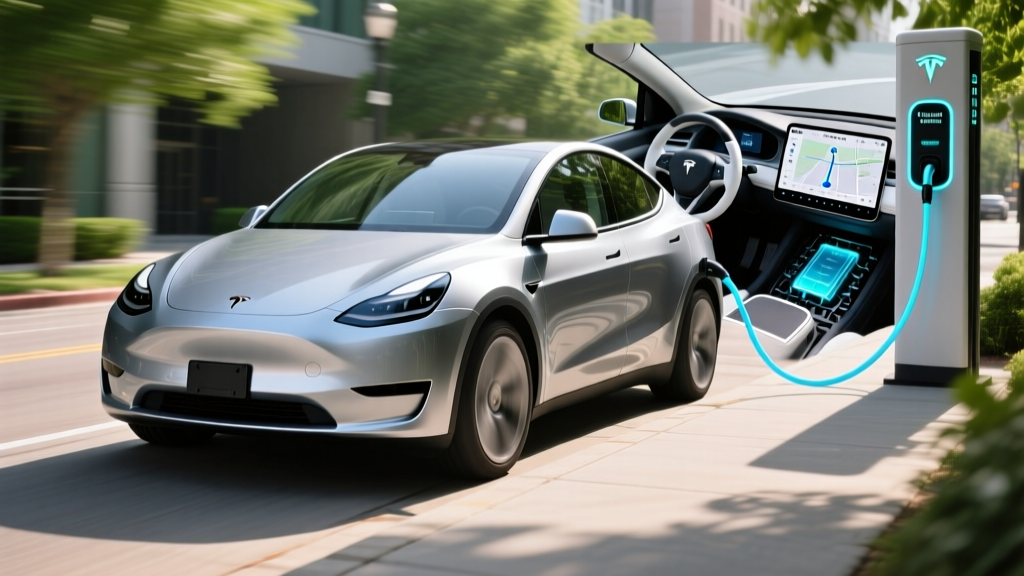
For the first time, the 2026 Model Y ships with a NACS (North American Charging Standard) port natively, reflecting the industry-wide adoption of Tesla's connector. This means access to the Supercharger network without adapters — and the ability to use growing numbers of third-party NACS stations from Electrify America and others.
Performance and Driving Dynamics
The dual-motor AWD setup delivers 384 horsepower and a 4.8-second 0-60 mph time. It's brisk, confident for highway merging, and the instant torque delivery makes it feel quicker than the number suggests. The steering is precise if somewhat numb, and the suspension tuning on the refreshed Model Y (internally called "Juniper") is noticeably softer than the pre-refresh generation, trading some cornering flatness for improved ride comfort over broken pavement.
Regenerative braking remains strong and predictable. Tesla removed the driver-adjustable regen setting several years ago, so you're locked into what Tesla has calibrated — but for most drivers, one-pedal driving becomes second nature within a week.
Pricing, Trims, and Federal Tax Credit Eligibility
| Trim | MSRP | Est. After §30D Credit |
|---|---|---|
| Long Range RWD | $42,990 | ~$35,490* |
| Long Range AWD | $44,990 | ~$37,490* |
| Performance AWD | $49,990 | ~$42,490* |
*Assumes full $7,500 §30D credit eligibility. Actual credit varies by buyer income, battery sourcing compliance, and point-of-sale transfer rules. See IRS §30D guidelines.
The 2026 Model Y qualifies for the federal §30D clean vehicle credit, but eligibility is not automatic. Here's what determines whether you actually receive it:
- MSRP Cap: The Model Y is classified as an SUV, so the cap is $80,000 — all trims clear this easily.
- Buyer Income Cap: Adjusted gross income must not exceed $150,000 (single), $225,000 (head of household), or $300,000 (married filing jointly).
- Battery Sourcing: A percentage of critical minerals and battery components must be sourced from the U.S. or free-trade-agreement countries. Tesla has made progress here, but specific batch-level compliance varies. Confirm at point of sale.
- Point-of-Sale Transfer: Since 2024, buyers can transfer the credit to the dealer at purchase, effectively reducing the purchase price upfront rather than waiting for a tax return.
We recommend verifying eligibility with your tax professional before committing, as IRS rules continue to evolve. The IRS clean vehicle credit page is the authoritative source.
Tech, Interior, and the Brain Drain Question
The refreshed Model Y interior is meaningfully better than the pre-2025 version: ventilated front seats, ambient lighting, a rear-seat entertainment screen, and improved sound insulation. The 15.4-inch center touchscreen runs Tesla's latest software, which remains the most responsive and feature-rich infotainment system in any EV — navigation, streaming, gaming, and vehicle controls are all integrated without lag.
Autopilot comes standard with traffic-aware cruise control and lane-keeping. Full Self-Driving (Supervised) remains a $8,000 add-on and is SAE Level 2 — meaning you must remain fully engaged, hands monitored, eyes on the road. Despite the name, FSD does not make the car autonomous.
This is where the Tesla brain drain raises the most legitimate concern. Several top Autopilot and neural-net engineers departed in 2024-2025, and while Tesla's data advantage (billions of real-world fleet miles) remains unmatched, the pace of FSD improvement has visibly slowed. Competitors using Mobileye, Qualcomm, and NVIDIA stacks are closing the gap on highway assist quality. If FSD capability is a primary purchase driver, temper expectations — the system handles highway cruising well but still struggles with complex urban scenarios, construction zones, and adverse weather.
Who Should Buy the 2026 Model Y?
The Model Y remains the default choice for buyers who want:
- The most mature public charging network (Superchargers)
- Class-leading efficiency and real-world range per kWh
- Strong resale value relative to EV competitors
- A practical crossover form factor with 72.1 cu ft of cargo space
It's less compelling if you prioritize:
- The fastest DC charging (Ioniq 5, Ioniq 6, and Porsche Macan EV charge faster)
- Traditional controls and physical buttons
- The latest in driver-assist innovation from newer engineering teams
- Interior luxury commensurate with the price (Genesis Electrified GV70, BMW iX feel more premium)
Pros
- 330-mile EPA range with best-in-class efficiency (28 kWh/100mi)
- Supercharger network access — still the most reliable public charging
- Spacious cargo area (72.1 cu ft) with practical hatchback design
- Strong software ecosystem and OTA updates
- Competitive pricing after §30D tax credit
Cons
- DC charging slower than 800V competitors (27 min vs 18 min, 10-80%)
- FSD improvement pace has stalled amid engineering departures
- Minimalist interior still lacks physical controls for climate, wipers, mirrors
- Build quality inconsistencies persist across Fremont and Austin plants
- Insurance costs run 15-25% above segment average
How It Stacks Up Against Key Competitors
The Model Y's competitive set has expanded dramatically. The Hyundai Ioniq 5 offers faster 800V charging and a more distinctive design at a similar price. The Ford Mustang Mach-E provides a more engaging driving experience and better dealer service infrastructure. The Kia EV6 matches the Ioniq 5's charging advantage with a sportier profile.
Where the Model Y still wins: efficiency (more miles per kWh than any competitor), the Supercharger network (despite opening to other brands, it remains the most seamless plug-and-charge experience), and cargo practicality. Where it's losing ground: charging speed, interior material quality at this price point, and the perception that Tesla's best engineering talent is now building cars elsewhere.
Frequently Asked Questions
What is the real-world range of the 2026 Tesla Model Y?
The EPA rates the Model Y Long Range AWD at 330 miles. In real-world highway driving at 70-75 mph, expect 275-290 miles. In city driving with regenerative braking, you'll see closer to 310-325 miles. In cold weather below 30°F, plan for 230-260 miles.
How fast does the Model Y charge at home and on DC fast chargers?
On a Level 2 home charger (11.5 kW / 48A), the Model Y adds about 44 miles of range per hour. On a DC fast charger, it peaks at 250 kW and charges from 10-80% in approximately 27 minutes. Note that the charge rate tapers significantly above 60% SoC.
Does the 2026 Model Y qualify for the $7,500 federal EV tax credit?
It can, but eligibility depends on your income (under $150K single / $300K joint), the specific battery sourcing of your vehicle's production batch, and MSRP (all trims qualify under the $80K SUV cap). The credit can be transferred at point of sale. Verify with your tax professional and confirm sourcing compliance at delivery per IRS §30D rules.
Is the Model Y still worth buying despite Tesla's brain drain?
The core product — range, efficiency, charging network, software — remains excellent. The brain drain is most relevant to FSD development pace and long-term innovation. If you're buying for the car as it exists today, the Model Y is still a top-tier choice. If you're buying for where Tesla's tech will be in 3-5 years, the talent exodus introduces genuine uncertainty that didn't exist in 2022.
What are the biggest pros and cons of the 2026 Model Y?
Pros: 330-mile range, class-leading efficiency, Supercharger network, spacious cargo area, strong software. Cons: Slower DC charging than 800V rivals, FSD progress has stalled, minimalist interior lacks physical controls, build quality inconsistency, above-average insurance costs.
What is the battery warranty on the 2026 Model Y?
Tesla covers the battery and drive unit for 8 years or 120,000 miles, whichever comes first, with a minimum 70% capacity retention threshold during that period. This is competitive but not class-leading — Hyundai/Kia offers 10 years/100,000 miles on the battery.