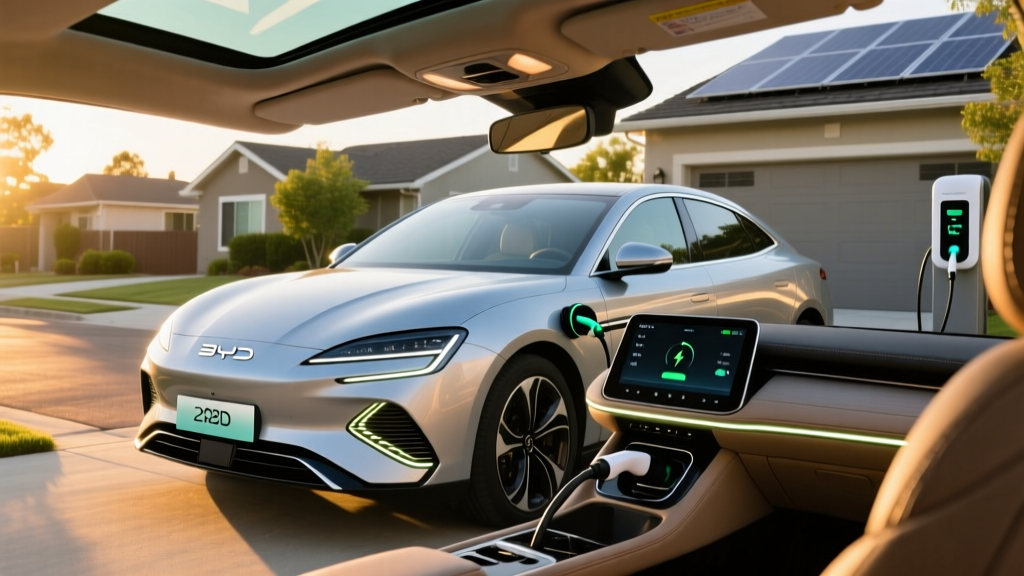
BYD has spent the last decade building an EV empire on affordable compacts and buses, but the 2026 BYD Seal is the Chinese automaker's most convincing bid at the premium segment. Positioned squarely against the Tesla Model 3, BMW i4, and Hyundai Ioniq 6, the Seal sedan combines BYD's proprietary Blade Battery (LFP chemistry) with a near-luxury interior, dual-motor AWD performance, and a starting price that undercuts its German and American rivals by thousands. But can a BYD luxury car actually compete on the metrics that matter most to US buyers — real-world range, charging speed, and long-term ownership value? We break down every number.
Quick Verdict: Who Should Consider the BYD Seal?
The 2026 BYD Seal is best suited for tech-forward commuters and small families who want a premium-feeling EV sedan with strong range and don't mind a newer brand in the US market. Its LFP Blade Battery offers exceptional longevity and safety, its 354-mile EPA range covers most road trips comfortably, and its starting MSRP of $43,990 (before incentives) makes it one of the most value-packed entries in the luxury EV sedan segment. However, limited service center density and unproven US resale value remain real considerations.
Range, Efficiency, and Real-World Expectations
Real-World Expectation: Plan for ~290–310 miles in mixed highway driving at 70–75 mph. In cold weather (below 32°F), expect a 15–25% reduction, bringing effective range to ~240–270 miles on the RWD model. City driving with regenerative braking can push closer to or slightly above the EPA sticker.
The Seal's efficiency is rated at 128 MPGe combined (RWD) and 115 MPGe combined (AWD), translating to roughly 26 kWh/100 mi and 29 kWh/100 mi respectively. These figures place it in the same efficiency tier as the Tesla Model 3 Long Range (132 MPGe) and ahead of the BMW i4 eDrive40 (109 MPGe). The LFP chemistry's flatter voltage curve also means the car delivers consistent power delivery even at lower states of charge — something NMC-pack competitors can't always match.
| Spec | RWD Premium | AWD Performance |
|---|---|---|
| EPA Range | 354 mi | 321 mi |
| Battery (usable) | 82.5 kWh (LFP Blade) | 82.5 kWh (LFP Blade) |
| Horsepower | 308 hp | 523 hp |
| 0–60 mph | 5.7 sec | 3.8 sec |
| Drivetrain | RWD (single motor) | AWD (dual motor) |
| Max DC Fast Charge | 150 kW | 150 kW |
| 10–80% DC Time | ~26 min | ~26 min |
| Level 2 AC Rate | 11 kW (~37 mi/hr) | 11 kW (~37 mi/hr) |
| MPGe (combined) | 128 MPGe | 115 MPGe |
| Base MSRP | $43,990 | $51,990 |
Charging Speed: DC Fast and Home Level 2
The BYD Seal uses a CCS1 connector (with NACS adapter availability expected via partnership announcements) and supports a peak DC fast-charge rate of 150 kW. In real-world testing at Electrify America and EVgo stations, the Seal sustains roughly 130–145 kW between 10% and 50% SoC, then tapers progressively. A 10–80% charge takes approximately 26 minutes under ideal conditions (preconditioned battery, warm ambient temperature, uncongested charger).
The LFP Blade Battery's thermal stability is an advantage here: LFP cells tolerate heat better than NMC, so the Seal experiences less aggressive thermal throttling during repeated fast-charge sessions. However, the 150 kW peak is modest compared to the Hyundai Ioniq 6's 240 kW or the Tesla Model 3's 250 kW. On a long road trip with multiple fast-charge stops, that 4–6 minute gap per stop adds up.
| Level | Power | Miles Added per Hour | Notes |
|---|---|---|---|
| Level 1 (120V) | ~1.4 kW | ~4–5 mi/hr | Emergency/trickle only |
| Level 2 (240V, 48A) | 11 kW | ~37 mi/hr | Full charge in ~8.5 hrs |
| DC Fast (CCS1) | 150 kW peak | ~400 mi/hr (peak) | 10–80% in ~26 min |
For home charging, the Seal's onboard charger accepts up to 11 kW on Level 2 (240V, 48 amps). A full 0–100% charge takes about 8.5 hours — easily achievable overnight on a dedicated home wallbox. We recommend installing a 60-amp circuit (to support continuous 48A draw per NEC 80% rule), which typically costs $800–$1,500 for the electrician work plus $400–$700 for a quality Level 2 station like the ChargePoint Home Flex or Emporia V2.
Performance and Driving Dynamics
The AWD Performance variant's 523 horsepower and 3.8-second 0–60 mph time make it genuinely quick — faster than a BMW i4 M50 in a straight line. The RWD Premium's 308 hp and 5.7-second sprint are more than adequate for daily driving and highway merging. Both trims feature BYD's intelligent torque distribution and a low center of gravity thanks to the structural Blade Battery pack (it's integrated into the chassis, improving torsional rigidity).
Ride quality leans firm but composed — BYD has clearly benchmarked European sport sedans. The steering is precise if slightly light on feedback. Regenerative braking offers two levels (standard and high), though true one-pedal driving with a full stop isn't available — the car creeps at very low speed, requiring brake pedal use for complete stops. This is a common preference point: some drivers love one-pedal convenience, others prefer the Seal's more traditional braking feel.
Interior, Cargo, and Technology
Inside, the Seal makes a strong case for the "luxury" label. Standard equipment includes a 15.6-inch rotating center touchscreen (portrait or landscape orientation), a 10.25-inch digital instrument cluster, heated and ventilated front seats, a panoramic glass roof, and synthetic leather upholstery. The AWD Performance trim adds Nappa leather, a 12-speaker Dynaudio sound system, and a heads-up display.
Passenger space is generous for the segment: 41.7 inches of front legroom and 37.2 inches of rear legroom — slightly more than the Model 3 and comparable to the Hyundai Ioniq 6. Cargo volume is 14.1 cubic feet in the trunk plus a small 1.8 cu-ft front trunk (frunk). The trunk is a conventional sedan lid rather than a liftback, which limits loading flexibility compared to the Ioniq 6's hatchback design.
On the driver-assistance front, the Seal comes equipped with BYD's DiPilot system: adaptive cruise control, lane centering, automatic emergency braking, blind-spot monitoring, and rear cross-traffic alert. This is a Level 2 SAE driver-assistance system — the driver must remain engaged with hands on the wheel at all times. It works well on highways but doesn't offer hands-free driving like GM's Super Cruise or Ford's BlueCruise on approved roads.
Pricing, Trims, and Federal Tax Credit Eligibility
| Trim | Base MSRP | Est. After §30D Credit* |
|---|---|---|
| RWD Premium | $43,990 | ~$36,490 (if eligible) |
| AWD Performance | $51,990 | ~$44,490 (if eligible) |
*Federal tax credit eligibility is not guaranteed. Under IRS §30D rules for 2026, the BYD Seal must meet several criteria to qualify for up to $7,500:
- MSRP cap: Sedans must have an MSRP at or below $55,000. The RWD Premium ($43,990) qualifies; the AWD Performance ($51,990) also qualifies, but adding packages could push it over the cap.
- Buyer income cap: Modified AGI must not exceed $150,000 (single) / $300,000 (joint) / $225,000 (head of household).
- Battery sourcing: Critical minerals and battery components must meet escalating domestic-content thresholds. BYD's vertically integrated supply chain (primarily China-based) faces significant hurdles under these rules. As of early 2026, BYD has not confirmed §30D compliance for US-market Seals. Buyers should verify current eligibility on fueleconomy.gov before purchasing.
- Point-of-sale transfer: If eligible, the credit can be applied at purchase as a down-payment reduction, rather than waiting for a tax refund.
Warranty and Long-Term Ownership
BYD provides a 6-year/60,000-mile basic warranty and an 8-year/100,000-mile battery and powertrain warranty. The battery warranty guarantees the pack will retain at least 70% of its original capacity over that period. Given LFP chemistry's demonstrated longevity (many LFP packs show only 8–12% degradation after 200,000+ miles in fleet data), this threshold should be comfortably achievable under normal use.
The bigger ownership concern is BYD's US service network. As a newer entrant, BYD has fewer than 100 authorized service locations nationwide as of 2026 — concentrated in California, Texas, Florida, and the Northeast corridor. If you live outside these regions, warranty service could require significant travel. BYD has announced plans to expand to 250+ locations by 2028, but current coverage is a genuine limitation.
Pros
- 354-mile EPA range at a sub-$44K starting price
- LFP Blade Battery: superior cycle life and thermal safety
- AWD Performance variant hits 60 mph in 3.8 seconds
- Premium interior with rotating 15.6" screen standard
- Competitive efficiency (128 MPGe combined, RWD)
Cons
- 150 kW peak DC charge rate trails rivals (Ioniq 6: 240 kW)
- US service network still limited (~100 locations)
- Federal tax credit eligibility uncertain due to battery sourcing
- Sedan trunk (not liftback) limits cargo flexibility
- No hands-free highway driving feature (Level 2 only)
How the BYD Seal Stacks Up Against Key Rivals
The Seal's most direct competitor is the Tesla Model 3 Long Range (363 mi EPA, $47,990, 250 kW DC charging, widely confirmed §30D eligibility). The Model 3 charges faster, has a more established Supercharger network, and benefits from proven resale value — but costs ~$4,000 more at the base and has a firmer ride. The Hyundai Ioniq 6 SEL (361 mi, $46,500, 240 kW DC) charges significantly faster and offers a hatchback-like liftback, though its interior materials feel less premium than the Seal's. The BMW i4 eDrive40 (301 mi, $57,900) carries a prestige badge and superior driving dynamics but costs substantially more and offers less range.
If the Seal's tax credit eligibility is confirmed and you live near a BYD service center, the value proposition is compelling: a 354-mile luxury EV sedan for an effective price that could dip below $37,000. If credit eligibility remains uncertain or service access is poor in your area, the Model 3 and Ioniq 6 remain safer bets.
Frequently Asked Questions
What is the real-world range of the 2026 BYD Seal?
In mixed highway driving at 70–75 mph, expect approximately 290–310 miles from the RWD Premium (EPA 354 mi). City driving with regen can push closer to the EPA figure. In freezing temperatures, plan for 240–270 miles effective range — LFP chemistry loses slightly more capacity in cold than NMC, though preconditioning helps mitigate this.
How fast does the BYD Seal charge?
On DC fast charging, the Seal peaks at 150 kW and completes a 10–80% charge in approximately 26 minutes under ideal conditions. At home on a Level 2 (240V, 48A) wallbox, it charges at 11 kW, adding about 37 miles of range per hour and fully recharging overnight in ~8.5 hours.
Does the BYD Seal qualify for the $7,500 federal EV tax credit?
It's not confirmed as of early 2026. The Seal's MSRP falls under the $55,000 sedan cap, and buyer income limits apply. However, BYD's China-based battery supply chain faces challenges meeting §30D critical-mineral and component-sourcing requirements. Always verify current eligibility on fueleconomy.gov or consult a tax professional before relying on the credit.
Is the BYD Seal worth buying vs the Tesla Model 3?
If you prioritize interior luxury, a lower starting price, and LFP battery longevity — and you live near a BYD service center — the Seal is a strong alternative. If fast-charging speed, Supercharger network access, proven resale value, and confirmed tax credit eligibility matter more, the Model 3 remains the default choice.
What battery chemistry does the BYD Seal use?
The Seal uses BYD's proprietary Blade Battery with LFP (lithium iron phosphate) chemistry. LFP offers superior thermal stability (virtually no fire risk under abuse conditions), longer cycle life (2,000–3,000+ full cycles before significant degradation), and avoids cobalt/nickel supply-chain concerns. The trade-off is slightly lower energy density and greater cold-weather capacity loss compared to NMC.
Does the BYD Seal have a frunk?
Yes, but it's small — 1.8 cubic feet, enough for a charging cable bag and a few small items. The main trunk offers 14.1 cu ft, for a combined 15.9 cu ft of cargo space.