Quick Verdict: The Ultra-Budget EV America Has Been Waiting For
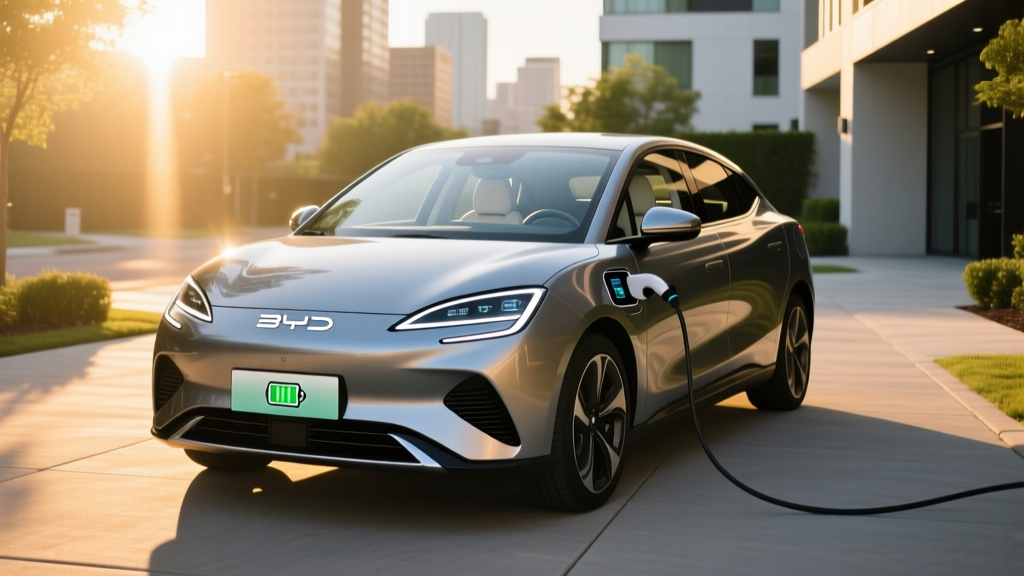
The BYD Seagull electric vehicle has dominated headlines in China and Latin America as a sub-$12,000 compact EV. For the 2026 model year, BYD has begun international expansion of the Seagull (also branded as the Dolphin Mini in select markets), raising the critical question for US buyers: when will it arrive, what will it actually cost stateside, and is it worth the wait against established budget EVs like the Chevrolet Bolt EV and Nissan Leaf?
This profile breaks down every confirmed and projected spec for the BYD Seagull electric vehicle, including real-world range expectations, charging speeds, battery chemistry, and federal tax credit eligibility under current IRS §30D rules. Where US-market specifications remain unconfirmed, we clearly label figures as projected based on the current global-spec model.
BYD Seagull Specifications at a Glance
| Specification | Standard Range | Extended Range |
|---|---|---|
| Battery Capacity (usable) | 30.1 kWh | 44.9 kWh |
| Battery Chemistry | LFP (BYD Blade) | LFP (BYD Blade) |
| CLTC Range | 305 km (~190 mi) | 405 km (~252 mi) |
| Projected EPA Range | ~160 miles | ~210–220 miles |
| Motor Output | 75 hp (55 kW) | 75 hp (55 kW) |
| Torque | 100 lb-ft | 100 lb-ft |
| 0–60 mph (est.) | ~11.5 seconds | ~11.5 seconds |
| Drivetrain | FWD (single motor) | FWD (single motor) |
| Top Speed | 81 mph | 81 mph |
| Max DC Fast Charge | 30 kW | 60 kW |
| 10–80% DC Charge Time | ~40 min | ~30 min |
| Level 2 AC Charge Rate | 6.6 kW | 6.6 kW |
| Length / Width / Height | 147.2" / 67.7" / 60.8" | |
| Wheelbase | 98.4 inches | |
| Cargo Volume (rear seats up) | ~9.5 cu ft | |
| Cargo Volume (seats folded) | ~26.0 cu ft | |
| Seating | 4 passengers (2+2) | |
Sources: BYD global spec sheets; CLTC-to-EPA conversion based on fueleconomy.gov methodology comparisons.
Battery, Chemistry, and Long-Term Degradation
The BYD Seagull uses BYD's proprietary Blade Battery, a lithium iron phosphate (LFP) cell arranged in a cell-to-pack (CTP) architecture. LFP chemistry offers distinct trade-offs compared to the nickel-manganese-cobalt (NMC) packs found in vehicles like the Hyundai Ioniq 5 or Tesla Model Y:
| Factor | LFP (BYD Seagull) | NMC (Typical Competitor) |
|---|---|---|
| Energy Density | Lower (~160 Wh/kg) | Higher (~250 Wh/kg) |
| Cycle Life | 3,000–5,000 cycles | 1,000–2,000 cycles |
| Cold-Weather Performance | Weaker range retention | Better low-temp output |
| Charging to 100% | Recommended periodically for BMS calibration | 80% daily recommended |
| Thermal Stability | Superior (lower runaway risk) | Good with active cooling |
| Cost per kWh | Lower | Higher |
BYD rates the Blade Battery for approximately 3,000+ full charge cycles before reaching 80% state of health (SoH). At 200 miles per cycle, that translates to roughly 600,000 miles of theoretical battery life — far exceeding the vehicle's mechanical lifespan. The global-spec Seagull carries a battery warranty of 8 years / 150,000 km (~93,000 miles). US warranty terms will depend on BYD's final market-entry strategy, but we expect alignment with the standard 8-year/100,000-mile battery warranty required for federal tax credit eligibility.
Charging Speed: DC Fast Charging and Home Level 2
Charging speed is the Seagull's most significant limitation for US buyers accustomed to 150–350 kW DC fast charging on vehicles like the Kia EV6 or Tesla Model 3. The Seagull's compact battery and budget architecture cap DC charging at modest rates:
| Charging Level | Power (kW) | Speed | Notes |
|---|---|---|---|
| Level 1 (120V household) | ~1.4 kW | ~5 miles/hour | Emergency/trickle only; full charge ~30+ hours |
| Level 2 (240V home) | 6.6 kW | ~22 miles/hour | Full 44.9 kWh charge in ~7 hours |
| DC Fast Charge (Standard) | 30 kW peak | 10–80% in ~40 min | CCS or GB/T depending on market |
| DC Fast Charge (Extended) | 60 kW peak | 10–80% in ~30 min | Peak rate sustained to ~55% SoC, then tapers |
For US-market models, BYD will need to equip the Seagull with either a CCS1 or NACS (Tesla-style) charge port. Given the industry-wide shift toward NACS adoption for 2025–2026 models, a NACS port would give the Seagull access to Tesla's Supercharger network — a major advantage for a vehicle with limited DC fast-charge capability. Connector confirmation for the US market remains pending.
Performance and Driving Impressions
The Seagull's 75-horsepower single front motor is tuned for urban efficiency, not acceleration. The projected 0–60 mph time of approximately 11.5 seconds places it in economy-car territory — comparable to a base Nissan Versa. Highway merging requires planning, and the 81 mph top speed limits the Seagull to city and suburban corridors rather than cross-country touring.
Where the Seagull excels is low-speed maneuverability. At just 147 inches long (shorter than a Mini Cooper), it slips into tight parking spaces and navigates congested city streets with ease. Regenerative braking offers adjustable levels, though the global-spec model does not support true one-pedal driving to a full stop — you'll still need the friction brakes for final halts.
Ride quality is compliant over urban potholes thanks to soft suspension tuning, but the short wheelbase (98.4 inches) produces a choppy ride at highway speeds. Noise insulation is minimal — expect noticeable wind and tire noise above 55 mph.
Interior, Technology, and Practicality
The Seagull's cabin punches above its price class with a minimalist but functional layout:
- Infotainment: 10.1-inch rotating touchscreen (portrait/landscape), BYD's DiLink system, wireless Apple CarPlay and Android Auto
- Instrument Cluster: 5.0-inch digital driver display
- Wireless Phone Charging: Single Qi pad on center console
- Climate: Single-zone automatic climate control with heat pump (critical for LFP cold-weather efficiency)
- Keyless Entry: NFC card key + smartphone-as-key support
Driver Assistance (ADAS): The global-spec Seagull offers a basic Level 1/Level 2 suite including adaptive cruise control, lane-keeping assist, automatic emergency braking, and a 360-degree camera on higher trims. This is SAE Level 2 driver assistance — the driver must remain fully engaged with hands on the wheel and eyes on the road at all times.
Space limitations are real. The rear seats accommodate adults under 5'8" adequately, but taller passengers will find legroom (estimated ~31 inches rear) and headroom tight. The 9.5 cu ft trunk is sufficient for a week's groceries for two people but won't handle a Costco run for a family. With rear seats folded, 26.0 cu ft opens up for larger cargo — comparable to a Honda Fit.
Pricing, Trims, and Federal Tax Credit Eligibility
In China, the BYD Seagull starts at approximately ¥69,800 (~$9,600 USD). Latin American export pricing ranges from $15,000–$22,000 depending on market and tariffs. For the US market, factoring in import duties (currently 100% on Chinese-manufactured EVs under 2024 tariff adjustments), shipping, homologation, and dealer markup, the realistic projected US pricing looks very different:
| Trim | Projected US MSRP | After §30D Credit (if eligible) |
|---|---|---|
| Standard Range (30.1 kWh) | $18,000–$22,000 | $10,500–$14,500 |
| Extended Range (44.9 kWh) | $22,000–$27,000 | $14,500–$19,500 |
| Extended Range Premium | $26,000–$30,000 | $18,500–$22,500 |
Critical tariff note: As of 2026, the US imposes a 100% tariff on Chinese-manufactured electric vehicles. This tariff effectively doubles the landed cost and makes a sub-$20,000 Seagull economically unviable unless BYD establishes manufacturing outside China (e.g., Mexico, Brazil, or a US plant). BYD has announced plans for a Mexico factory and a Brazil production facility, but vehicles from these plants would still face USMCA content rules and potential tariff scrutiny. US availability remains unconfirmed as of early 2026.
Federal EV Tax Credit Eligibility (§30D)
If the Seagull does reach US showrooms, its tax credit eligibility under IRS §30D rules would depend on several factors:
- MSRP Cap: Must be ≤$55,000 for sedans/hatchbacks — Seagull clears this easily
- Buyer Income Cap: AGI ≤$150,000 (single), $225,000 (head of household), $300,000 (joint) — most target buyers qualify
- Battery Component Sourcing: Battery components must be manufactured or assembled in North America (phased thresholds increase annually through 2029)
- Critical Minerals: Required percentage of critical minerals must be sourced from the US or FTA partners
- Foreign Entity of Concern (FEOC): Vehicles with battery components from a FEOC (including Chinese state-linked entities) are disqualified — this is the Seagull's biggest eligibility barrier
- Point-of-Sale Transfer: Eligible buyers can transfer the credit to the dealer for an immediate price reduction at purchase
Given that BYD is headquartered in Shenzhen and vertically integrates its own battery production in China, the Seagull's Blade Battery would almost certainly trigger FEOC disqualification under current rules. The Seagull is unlikely to qualify for the full $7,500 federal credit unless BYD restructures its supply chain for North American battery sourcing — a multi-year, multi-billion-dollar undertaking.
BYD Seagull vs. Key US Competitors
Even without confirmed US availability, understanding how the Seagull stacks up against current budget EVs clarifies what US buyers gain — and sacrifice — by waiting:
| Spec | BYD Seagull (Ext. Range) | 2025 Chevrolet Bolt EV | 2025 Nissan Leaf S |
|---|---|---|---|
| Projected/Base MSRP | $22,000–$27,000 (projected) | $28,785 | $29,135 |
| EPA Range | ~210–220 mi (projected) | 259 mi | 149 mi (40 kWh) |
| Battery Chemistry | LFP (Blade) | NMC | NMC |
| Max DC Charge | 60 kW | 55 kW (CCS) | 50 kW (CHAdeMO) |
| 10–80% DC Time | ~30 min | ~30 min | ~40 min |
| Horsepower | 75 hp | 200 hp | 147 hp |
| 0–60 mph | ~11.5 sec | ~6.5 sec | ~7.9 sec |
| Cargo (seats up) | 9.5 cu ft | 16.3 cu ft | 23.6 cu ft |
| Seats | 4 | 5 | 5 |
| Federal Credit Eligible | Unlikely (FEOC) | Yes (partial/full) | No (Japan assembly) |
- Choose the Seagull if: You need a dedicated city commuter under $25K, prioritize lowest possible purchase price, drive fewer than 30 miles round-trip daily, have reliable home Level 2 charging, and don't need highway-speed performance or 5-seat capacity.
- Choose the Chevrolet Bolt EV instead if: You need proven US dealer support, 259 miles of EPA range, 200 hp for highway confidence, 5-passenger seating, 16+ cu ft of cargo, and confirmed federal tax credit eligibility.
- Choose a used EV instead if: You want immediate availability, US warranty support, and access to the used-EV tax credit (up to $4,000 under §25E) without waiting for BYD's market entry.
Pros and Cons
Pros
- Lowest projected entry price of any new EV in its class
- LFP Blade Battery offers exceptional cycle life and thermal safety
- Compact dimensions ideal for tight urban parking
- Heat pump included standard (rare at this price point)
- 10.1-inch rotating touchscreen with wireless CarPlay/Android Auto
- Low operating cost (~$0.04–$0.06/mile on home charging)
Cons
- US availability unconfirmed; 100% tariff on Chinese EVs is a major barrier
- FEOC battery sourcing likely disqualifies it from the $7,500 federal credit
- Only 75 hp — underpowered for highway merging
- 60 kW max DC charge is slow by 2026 standards
- 4-seat layout limits practicality for families
- Cold-weather range loss significant with LFP chemistry
- No established US dealer or service network
Frequently Asked Questions
What is the real-world range of the BYD Seagull?
The Extended Range variant (44.9 kWh LFP) carries a CLTC rating of 405 km (~252 miles). US EPA-equivalent range is projected at 210–220 miles. In real-world mixed driving, expect approximately 185–200 miles. At sustained highway speeds (70+ mph), plan for 175–195 miles. In freezing temperatures, LFP chemistry loses 25–35% range, bringing winter real-world range down to roughly 140–165 miles.
How fast does the BYD Seagull charge?
On DC fast charging, the Extended Range model peaks at 60 kW, achieving a 10–80% charge in approximately 30 minutes (with charge-curve taper above 55% SoC). The Standard Range model peaks at 30 kW, taking roughly 40 minutes for 10–80%. At home on a Level 2 (240V, 6.6 kW) charger, the 44.9 kWh battery fills from empty in about 7 hours — easily handled overnight.
Does the BYD Seagull qualify for the federal EV tax credit?
Almost certainly not under current rules. The IRS §30D credit requires battery components to be free of Foreign Entity of Concern (FEOC) involvement. BYD's vertically integrated Chinese battery manufacturing would trigger FEOC disqualification. Even if the Seagull clears the MSRP cap (it does) and the buyer meets income limits, the battery sourcing requirement is the dealbreaker. Check irs.gov for the latest eligibility rules, as they evolve annually.
When will the BYD Seagull be available in the US?
As of early 2026, BYD has not confirmed a US launch date for the Seagull. The 100% US tariff on Chinese-made EVs makes direct import economically unfeasible at the Seagull's target price point. BYD would need to manufacture the Seagull in a tariff-advantaged location (Mexico, Brazil) while meeting USMCA content rules — a process that would take 2–3 years minimum from announcement. Watch for updates from BYD's North American strategy announcements.
Is the BYD Seagull worth buying vs. the Chevrolet Bolt EV?
If the Seagull reaches the US near $22,000–$25,000 without tax credit eligibility, and the Bolt EV sits at ~$28,785 with potential credit eligibility bringing it to ~$21,285, the Bolt EV offers substantially more value: 259 miles of EPA range, 200 hp, 5 seats, 16.3 cu ft of cargo, and an established US dealer/service network. The Seagull's only advantage would be a marginally lower sticker price on the Standard Range trim. For most US buyers, the Bolt EV (or a used EV with the §25E credit) is the more practical budget choice today.
What is the BYD Seagull's battery warranty?
The global-spec Seagull carries a battery warranty of 8 years / 150,000 km (~93,000 miles) with a capacity retention threshold of 70–80% (varies by market). US warranty terms would need to meet the 8-year/100,000-mile minimum to align with industry standards. BYD's LFP Blade Battery chemistry is rated for 3,000+ full cycles, suggesting real-world longevity well beyond the warranty period.