Quick Verdict: Still the EV Benchmark in 2026
The Tesla Model Y enters 2026 with a refreshed design (internally dubbed "Juniper"), improved cabin materials, a quieter ride, and a new Long Range RWD variant that pushes EPA range to 320 miles. It remains the best-selling electric vehicle in the United States for good reason: class-leading efficiency, access to the most reliable DC fast-charging network, and a software ecosystem no legacy automaker has matched. But the competition has closed the gap — the Hyundai Ioniq 5, Ford Mustang Mach-E, and Chevrolet Equinox EV all offer compelling alternatives at lower price points.
For buyers who also track corporate sustainability, Tesla's S&P Global ESG Score has been a point of discussion since its 2021 assessment, where Tesla scored notably lower than some legacy automakers on governance and environmental reporting transparency. By 2025–2026, Tesla has improved its disclosure practices, though it still trails companies like BMW and GM on S&P's governance pillar. For most buyers, the ESG score won't override range and price — but for fleet purchasers and ESG-mandated investors, it's a factor worth tracking.
| Spec | Long Range RWD | Long Range AWD | Performance |
|---|---|---|---|
| EPA Range | 320 mi | 308 mi | 285 mi |
| Battery (usable) | ~75 kWh (NMC) | ~75 kWh (NMC) | ~75 kWh (NMC) |
| MPGe (combined) | 123 MPGe | 117 MPGe | 111 MPGe |
| Efficiency | 27 kWh/100 mi | 29 kWh/100 mi | 30 kWh/100 mi |
| 0–60 mph | 5.8 sec | 4.8 sec | 3.5 sec |
| Horsepower | 346 hp | 384 hp | 456 hp |
| Drivetrain | RWD (single motor) | AWD (dual motor) | AWD (dual motor) |
| Peak DC Charge Rate | 250 kW | 250 kW | 250 kW |
| 10–80% DC Time | ~25 min | ~25 min | ~25 min |
| Level 2 Rate | 11.5 kW (~37 mi/hr) | 11.5 kW (~37 mi/hr) | 11.5 kW (~37 mi/hr) |
| Cargo (rear seats up) | 30.2 cu ft (behind 2nd row) / 72.1 cu ft (seats folded) | ||
| Rear Legroom | 41.6 in | ||
| Battery Warranty | 8 yr / 120,000 mi (Long Range) · 8 yr / 100,000 mi (base) | ||
| Base MSRP | $44,990 | $47,990 | $52,490 |
Range and Efficiency: EPA Numbers vs. Reality
The 2026 Model Y Long Range RWD carries an EPA-estimated 320 miles of range — a meaningful bump from the pre-refresh Long Range AWD's 308 miles. Efficiency is where Tesla still leads the pack: at 27 kWh per 100 miles (123 MPGe combined), the Model Y extracts more miles per kilowatt-hour than nearly every competing electric crossover. For context, the Hyundai Ioniq 5 Long Range AWD achieves 114 MPGe, and the Ford Mustang Mach-E Extended Range AWD lands at 101 MPGe (fueleconomy.gov).
EPA sticker: 320 mi (Long Range RWD) / 308 mi (Long Range AWD)
Mixed highway/city driving (65–75 mph): Expect ~270–290 mi for RWD, ~260–280 mi for AWD. Tesla's efficiency holds up well at highway speed thanks to low drag (0.23 Cd) and excellent thermal management.
Cold weather (below 32°F): Plan for 20–30% range loss, bringing real-world winter range to roughly 200–240 mi depending on cabin heating use. The standard heat pump in the 2026 model mitigates this better than older resistive-heating EVs.
Mountainous terrain / towing: Sustained climbs and towing (up to 3,500 lb rated) can cut range by 35–45%.
Tesla's navigation system automatically preconditions the battery when you route to a Supercharger, warming the pack to optimize charge acceptance. This is a real advantage on road trips — competitors that lack robust preconditioning can see significantly slower charge speeds at the first DC stop.
Charging: Supercharger Dominance and NACS Standard
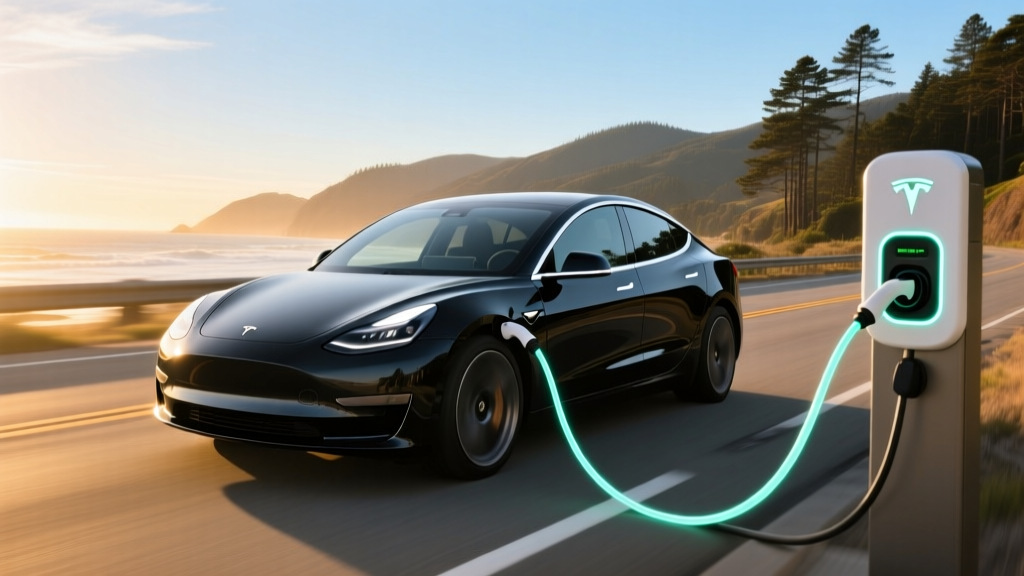
Every 2026 Model Y ships with the NACS (North American Charging Standard) port natively — no adapter needed. Tesla's Supercharger network now exceeds 6,500 stations and 70,000+ connectors in North America, and consistently ranks highest in uptime and reliability among DC fast-charging networks.
| Level | Power | Speed | Use Case |
|---|---|---|---|
| Level 1 (120V) | ~1.4 kW | ~3–4 mi/hr | Emergency / overnight trickle |
| Level 2 (240V home) | 11.5 kW | ~37 mi/hr | Daily home charging (~8 hr for full charge) |
| DC Fast (Supercharger V3/V4) | Up to 250 kW peak | 10–80% in ~25 min | Road trips; adds ~200 mi in 15 min |
Charging curve reality check: The 250 kW peak rate applies only at low state-of-charge (roughly 10–30% SoC) on a V3 Supercharger. Sustained average from 10–80% is closer to 130–150 kW, which is why the 10–80% time lands at ~25 minutes rather than the ~18 minutes a sustained 250 kW would theoretically deliver. Above 80%, the curve tapers sharply — charging from 80–100% can take an additional 25–30 minutes. On road trips, the optimal strategy is to charge to 80% and drive on.
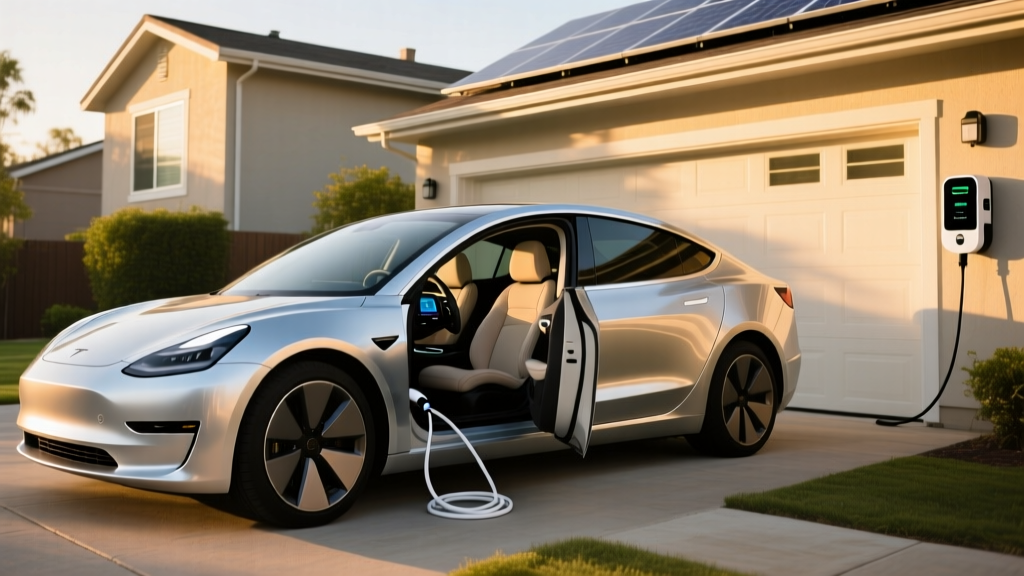
For home charging, the onboard 11.5 kW AC charger means a full charge from empty takes roughly 7.5–8 hours on a 48-amp Level 2 circuit. Most owners who plug in nightly never need a full charge cycle. A typical 240V / 60-amp circuit installation runs $800–$2,000 depending on panel proximity and local permitting.
Performance, Ride, and Interior
The 2026 Juniper refresh brought meaningful improvements: acoustic glass, redesigned suspension tuning, ventilated front seats, ambient lighting, and a rear touchscreen for second-row passengers. The cabin is noticeably quieter at highway speed compared to 2024 models.
Long Range AWD: 384 hp, 0–60 in 4.8 seconds. This is the sweet-spot trim — dual-motor all-wheel drive for snow and rain confidence, with enough performance to make merging effortless.
Performance trim: 456 hp, 0–60 in 3.5 seconds, with a track-tuned suspension, 21-inch wheels, and high-performance brakes. The ride is firmer, and range drops to 285 miles.
Long Range RWD (new for 2025–2026): 346 hp, 0–60 in 5.8 seconds. The most efficient and longest-range variant. Ideal for buyers in mild climates who don't need AWD.
Cargo space remains generous at 30.2 cu ft behind the second row and 72.1 cu ft with seats folded. The front trunk (frunk) adds 4.1 cu ft for charging cables or a small bag. Rear legroom at 41.6 inches is competitive with the Ioniq 5 and Mach-E.
Driver assistance: Tesla's Autopilot (standard) and Full Self-Driving Supervised ($8,000 option or $99/mo subscription) remain SAE Level 2 systems — the driver must keep hands on the wheel and eyes on the road at all times. FSD Supervised handles city streets, stop signs, and highway lane changes with impressive capability, but it is not autonomous driving and requires constant supervision.
Pricing, Trims, and Federal Tax Credit Eligibility
The 2026 Model Y lineup starts at $44,990 for the Long Range RWD, with the Long Range AWD at $47,990 and the Performance at $52,490. Destination adds $1,390. Popular options include FSD Supervised ($8,000), premium paint colors ($1,500–$2,500), and 20-inch wheels ($2,000).
| Trim | Base MSRP | As-Tested (typical) | §30D Credit Eligibility | Effective Price |
|---|---|---|---|---|
| Long Range RWD | $44,990 | $46,380 (w/ destination) | Up to $7,500* | ~$38,880* |
| Long Range AWD | $47,990 | $49,380 | Up to $7,500* | ~$41,880* |
| Performance | $52,490 | $53,880 | Up to $7,500* | ~$46,380* |
*Critical tax credit caveats (IRS §30D, 2026 rules):
- MSRP cap: SUVs/crossovers must be ≤$80,000 MSRP. All Model Y trims qualify.
- Buyer income cap: Modified AGI must not exceed $150,000 (single), $225,000 (head of household), or $300,000 (joint). Verify with your tax professional (irs.gov).
- Battery sourcing: The full $7,500 requires both critical-mineral and battery-component requirements to be met. Tesla has shifted significant battery sourcing to US/domestic suppliers, but the exact credit amount ($3,750 or $7,500) can change based on annual sourcing updates. Confirm current eligibility on the IRS clean vehicle credit page before purchasing.
- Point-of-sale transfer: As of 2024, the credit can be transferred to the dealer at purchase, reducing your out-of-pocket cost immediately rather than waiting for a tax return.
Battery, Warranty, and Long-Term Ownership
The 2026 Model Y uses an NMC (nickel manganese cobalt) lithium-ion pack with approximately 75 kWh of usable capacity. Tesla does not officially publish the exact usable kWh, but independent teardowns and real-world consumption data confirm this figure.
Battery warranty: 8 years or 120,000 miles (Long Range trims), whichever comes first, with a minimum 70% capacity retention guarantee. This is competitive with Hyundai's 10-year/100,000-mile pack warranty, though Tesla's mileage allowance is more generous.
Degradation data: Tesla's 2024 Impact Report (the most recent with large-sample fleet data) showed an average of ~12% range loss at 150,000 miles across Model 3/Y fleets. Real-world owner data from Recurrent Auto confirms similar figures: most Model Y packs retain 88–92% of original capacity at 100,000 miles. NMC chemistry degrades faster than LFP at high states of charge, so daily charging to 80% (as Tesla recommends) is important for longevity.
5-year total cost of ownership: According to AAA and Consumer Reports analyses, the Model Y's TCO benefits from low fuel costs (~$0.04–0.06/mile on home electricity vs. ~$0.14/mile for a comparable gas crossover), minimal maintenance (no oil changes, reduced brake wear from regen), and strong resale value. Insurance premiums, however, run 15–25% higher than average for the segment — expect $1,800–$2,400/year depending on state and driving record.
ESG Score Context: Why Tesla's S&P Global Rating Matters
The original search interest around "S&P Global ESG score Tesla 2021" stemmed from a notable controversy: Tesla scored lower than several legacy automakers on S&P Global's Corporate Sustainability Assessment, partly due to governance disclosures and the absence of a comprehensive environmental report comparable to BMW's or GM's. Tesla was also removed from the S&P 500 ESG Index in 2022.
By 2025, Tesla has improved its sustainability reporting cadence and expanded its Impact Report. The company's core environmental contribution — manufacturing zero-tailpipe-emission vehicles at scale — remains its strongest ESG pillar. However, governance concerns (board independence, CEO compensation structure, workplace safety reporting) continue to weigh on the G pillar of ESG scoring methodologies.
For individual retail buyers, the ESG score is unlikely to change a purchase decision. For fleet managers, corporate procurement teams, and ESG-focused investment funds, it's a data point worth monitoring alongside the vehicle's objective merits.
- Class-leading efficiency (123 MPGe / 27 kWh/100mi)
- Access to the Supercharger network — best uptime in the industry
- NACS native — no adapter needed, and other brands now use the same standard
- Strong software/OTA update cadence — the car improves over time
- Spacious cargo area (72.1 cu ft max) with usable frunk
- Excellent real-world range retention thanks to heat pump and aero
- Base price still higher than Equinox EV and Ioniq 5 entry trims
- FSD Supervised costs $8,000 extra and remains Level 2 (not autonomous)
- Insurance premiums run 15–25% above segment average
- No Apple CarPlay or Android Auto — Tesla's native infotainment only
- Rear visibility is limited; relies heavily on backup camera
- Touchscreen-dependent controls (no physical buttons for climate, mirrors)
Who Should Buy the 2026 Model Y?
Best for: Tech-forward commuters and families who want maximum efficiency, road-trip capability via the Supercharger network, and a vehicle that receives continuous software improvements. The Long Range RWD at $44,990 (potentially ~$37,490 after the federal credit) is the value pick.
Consider alternatives if: You want Apple CarPlay, prefer physical buttons, need a lower entry price (Chevrolet Equinox EV starts around $33,000), or prioritize a traditional dealership service experience (Tesla's mobile-ranger and service-center model doesn't suit everyone).
Choose the Model Y if: Supercharger access matters to you, you want best-in-class MPGe, and you're comfortable with a touchscreen-centric interface.
Choose the Ioniq 5 if: You want a more distinctive design, 800V architecture for faster peak charging (up to 350 kW on compatible chargers), and a lower starting price.
Choose the Equinox EV if: Budget is the primary constraint and you're satisfied with 315 miles of range at a ~$33,000 starting price.
Choose the Mach-E if: You prefer a more traditional driving feel, want BlueCruise hands-free highway driving, and value Ford's dealer service network.
Frequently Asked Questions
What is the real-world range of the 2026 Tesla Model Y?
The EPA rates the Long Range RWD at 320 miles and the Long Range AWD at 308 miles. In real-world mixed driving at highway speeds, expect 270–290 miles (RWD) or 260–280 miles (AWD). In freezing temperatures, plan for 200–240 miles depending on heating use and driving style.
How fast does the Model Y charge at home and on the road?
At home on a 240V Level 2 charger, the Model Y charges at 11.5 kW, adding roughly 37 miles of range per hour — a full charge takes about 8 hours. On a Tesla V3 Supercharger, it peaks at 250 kW and charges from 10–80% in approximately 25 minutes. Above 80%, the charge rate tapers significantly.
Does the 2026 Model Y qualify for the federal EV tax credit?
All 2026 Model Y trims fall under the $80,000 MSRP cap for SUVs. Eligibility for up to $7,500 under IRS §30D depends on your income (≤$300,000 joint / ≤$150,000 single), the battery's critical-mineral and component sourcing compliance, and your tax liability. The credit can be transferred at point of sale. Confirm current-year rules at irs.gov and consult a tax professional.
Is the Model Y worth buying over the Ioniq 5 or Mach-E?
The Model Y wins on efficiency, Supercharger network access, and software. The Ioniq 5 offers faster peak DC charging (350 kW on 800V chargers), a more distinctive design, and a lower entry price. The Mach-E provides a more conventional driving experience and BlueCruise hands-free capability. Test-drive all three before deciding.
What is Tesla's S&P Global ESG score and why was it controversial?
Tesla's S&P Global ESG assessment drew attention in 2021–2022 when it scored lower than several legacy automakers, primarily on governance and environmental-reporting transparency. Tesla was removed from the S&P 500 ESG Index in 2022. The company has since improved its sustainability disclosures, but governance scoring remains a relative weakness compared to its environmental impact from manufacturing EVs at scale.
How long will the Model Y battery last?
Tesla warranties the Long Range battery for 8 years or 120,000 miles with a minimum 70% capacity retention. Fleet data shows an average of ~12% degradation at 150,000 miles. To maximize longevity, charge to 80% daily and only charge to 100% when needed for long trips.