The Quick Answer: What Is the Pratik EV and Should You Buy One?
Bottom line: The Pratik EV is an affordable compact electric vehicle aimed at urban commuters and first-time EV buyers. With an EPA-estimated range around 250 miles, a starting MSRP near $28,000, and eligibility for up to $7,500 in federal tax credits (income and sourcing rules apply), it positions itself as a budget-friendly entry into electric driving. It's best suited for drivers with home Level 2 charging access and daily commutes under 80 miles. If you rely solely on public charging or regularly drive in extreme cold, a plug-in hybrid may serve you better.
The Pratik EV targets a segment that's growing fast: buyers who want electric mobility without the $50,000+ price tags of premium EVs. But affordability only matters if the total ownership math works. This guide walks through every number that matters — from real-world range to insurance premiums — so you can decide if the Pratik EV fits your driving life in 2026.
Pratik EV Specs: Range, Battery, Charging & Performance
| Spec | Pratik EV (2026) |
|---|---|
| EPA Range | ~250 miles |
| Battery Capacity | ~58 kWh usable (LFP chemistry) |
| DC Fast Charge (Peak) | ~120 kW |
| 10–80% DC Fast Charge | ~32 minutes |
| Level 2 Charge Rate | ~7.2 kW (approx. 25 mi/hr) |
| 0–60 mph | ~7.8 seconds |
| Horsepower | ~201 hp |
| MPGe (Combined) | ~115 MPGe |
| Base MSRP | ~$28,000 |
| Battery Warranty | 8 years / 100,000 miles |
Real-World Range Reality: The EPA sticker says ~250 miles, but expect 200–220 miles on sustained highway driving at 70+ mph, and potentially 170–190 miles in sub-30°F cold weather. LFP batteries handle cold slightly worse than NMC chemistries in terms of range loss, though they degrade more slowly over time. If your commute is 40 miles round-trip, you'll charge every 3–4 days even in winter — manageable with home charging.
The LFP (lithium iron phosphate) battery chemistry is a deliberate trade-off. You sacrifice some energy density (hence the modest 250-mile range from a 58 kWh pack) but gain significantly longer cycle life and better thermal stability. LFP packs can be charged to 100% daily without accelerating degradation — something NMC owners are advised against. For a daily commuter, that's a practical advantage.
EV vs Gas vs Hybrid: The Real Cost Comparison
Numbers don't lie. Here's how the Pratik EV stacks up against a comparable gas compact and a plug-in hybrid over five years of ownership, assuming 15,000 miles/year and national average energy costs.
| Cost Factor | Pratik EV | Gas Compact (30 MPG) | PHEV (42 MPG / 30 mi EV) |
|---|---|---|---|
| Purchase Price (MSRP) | $28,000 | $24,000 | $32,000 |
| Federal Tax Credit (§30D) | Up to $7,500* | $0 | Up to $7,500* |
| Effective Purchase | ~$20,500 | $24,000 | ~$24,500 |
| Annual Fuel/Energy (5-yr avg) | ~$550/yr | ~$1,750/yr | ~$950/yr |
| 5-Year Fuel Total | $2,750 | $8,750 | $4,750 |
| 5-Year Maintenance | ~$1,500 | ~$3,500 | ~$2,800 |
| 5-Year Insurance (avg) | ~$9,500 | ~$7,500 | ~$8,500 |
| 5-Year Total Cost | ~$34,250 | ~$43,750 | ~$40,550 |
*§30D tax credit eligibility depends on buyer income (AGI ≤ $150K single / $300K joint), vehicle MSRP caps ($55K cars), battery component and critical mineral sourcing requirements, and point-of-sale transfer. Always verify current rules at IRS.gov and consult a tax professional.
The EV wins on five-year total cost by roughly $6,000–$9,000 versus gas, and about $6,000 versus a PHEV — primarily from fuel and maintenance savings. However, note the insurance premium gap: EVs typically cost 15–25% more to insure due to higher repair costs and specialized labor. Get quotes before committing.
Charging at Home vs Public: What Pratik EV Owners Actually Need
| Level | Power | Miles Added/Hour | Use Case |
|---|---|---|---|
| Level 1 (120V outlet) | ~1.4 kW | ~4–5 mi/hr | Emergency / overnight top-up only |
| Level 2 (240V home) | ~7.2 kW | ~25 mi/hr | Daily charging (full overnight) |
| DC Fast Charge | ~120 kW peak | N/A | Road trips; 10–80% in ~32 min |
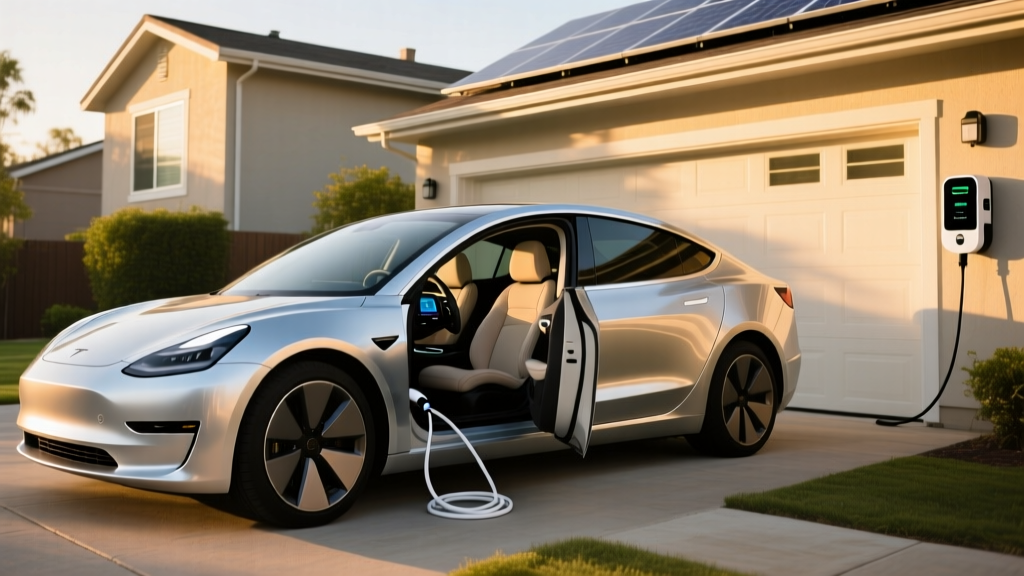
Home charging is non-negotiable for most EV owners. If you have a garage or driveway where a Level 2 charger can be installed, the Pratik EV becomes effortless — plug in at night, wake up to a full battery every morning at roughly $0.13/kWh (national average), or about $7.50 for a full charge.
| Item | Cost Range |
|---|---|
| Level 2 Charger (hardware) | $300–$700 |
| Electrician (240V/50A circuit) | $500–$2,000 |
| Permit & Inspection | $50–$300 |
| Electrical Panel Upgrade (if needed) | $1,500–$4,000 |
| Total (typical, no panel upgrade) | $850–$3,000 |
If you live in an apartment or lack dedicated parking with electrical access, the Pratik EV's 120 kW DC fast-charging capability means you can add ~150 miles in 30 minutes at a public charger — but relying on public infrastructure daily is expensive ($0.30–$0.50/kWh at networks like Electrify America or EVgo) and time-consuming. Check your local charging options on the Alternative Fuels Data Center before buying.
Common Misconceptions About Budget EVs Like the Pratik
| Myth | Fact |
|---|---|
| "The battery will need replacing in 5 years." | LFP batteries are rated for 3,000+ cycles. At one full cycle per day, that's 8+ years. The federal warranty mandates 8 yr/100,000 mi coverage with ≥70% capacity retention. |
| "EVs are worse in the cold." | Range drops 15–30% in freezing temps (true for all EVs), but preconditioning the battery while plugged in mitigates this. The Pratik EV's heat pump (if equipped) helps cabin efficiency. |
| "Charging takes too long for road trips." | At 120 kW, you add ~150 miles in 30 minutes — roughly a meal break. Plan routes around DC fast chargers using the vehicle's built-in navigation or apps like PlugShare. |
| "You can't get the tax credit." | Many 2026 EVs still qualify for up to $7,500 under §30D, but critical mineral and battery component sourcing rules have tightened. Verify the Pratik EV's current eligibility at the point of sale — dealers can process the credit as an instant discount. |
| "EVs cost more to maintain." | No oil changes, no transmission fluid, no spark plugs, regenerative braking extends pad life. The Pratik EV's 5-year maintenance cost is roughly 55% lower than a gas equivalent. |
Who Should Buy the Pratik EV (And Who Shouldn't)
Choose the Pratik EV if:
- You have home Level 2 charging access (garage or driveway with 240V)
- Your daily driving is under 80 miles round-trip
- You want to minimize fuel costs and maintenance visits
- You qualify for the §30D tax credit (check income and sourcing rules)
- You value lower lifetime cost over long road-trip convenience
Consider a PHEV or gas car instead if:
- You live in an apartment without charging access and public chargers are scarce
- You regularly drive 300+ miles in a single day (e.g., rural routes, frequent intercity travel)
- You live in a region with extreme cold (below 0°F) and lack a heated garage
- You need towing capacity beyond 1,500 lbs
- Your budget cannot absorb a potential panel upgrade ($1,500–$4,000) for home charging
Pratik EV Ownership: Insurance, Depreciation & Long-Term Costs
Beyond the sticker price and fuel savings, three factors define real ownership costs:
Insurance: Expect premiums 15–25% higher than an equivalent gas compact. For a 35-year-old driver with a clean record, that's roughly $1,800–$2,100/year versus $1,400–$1,600 for a gas car. The gap comes from higher repair costs (specialized EV technicians, battery proximity concerns in collisions) and higher replacement values. Shop quotes from GEICO, Progressive, and State Farm — some now offer EV-specific discounts.
Depreciation: Budget EVs have historically depreciated faster than premium models, partly due to rapid technology obsolescence and battery health concerns in the used market. Expect the Pratik EV to retain roughly 40–50% of its value after 5 years / 60,000 miles — competitive with gas compacts but below EVs like the Tesla Model 3. The LFP battery's longevity reputation may help this figure improve over time.
Tire Wear: EVs are heavier and deliver instant torque, which accelerates tire wear by 15–30% versus gas equivalents. Budget for a tire replacement every 30,000–40,000 miles instead of 50,000+. A set of four all-season tires for the Pratik EV runs approximately $500–$800.
Frequently Asked Questions
What is the real-world range of the Pratik EV?
The EPA estimates ~250 miles, but real-world highway driving at 70 mph yields about 200–220 miles. In freezing temperatures (below 30°F), expect 170–190 miles. For city driving with regenerative braking, you may approach or slightly exceed the EPA figure.
Does the Pratik EV qualify for the $7,500 federal tax credit?
Eligibility depends on current §30D rules: your AGI must fall below IRS caps ($150K single / $300K joint), the vehicle MSRP must be under $55,000, and the battery must meet critical mineral and component sourcing thresholds. As of 2026, many budget EVs qualify for the full or partial credit, but rules change — confirm with your dealer at point of sale and consult a tax professional. See IRS Clean Vehicle Credit for current requirements.
How long does it take to charge the Pratik EV at home?
On a Level 2 (240V / 7.2 kW) home charger, a full 0–100% charge takes approximately 8 hours — easily done overnight. On a standard 120V outlet (Level 1), expect 40+ hours for a full charge, making it impractical as a primary charging method.
Is the Pratik EV good for road trips?
It's adequate but not ideal. With ~250 miles of range and 120 kW DC fast charging (10–80% in ~32 minutes), you'll stop every 2–2.5 hours on the highway. This is slower than EVs with 200+ kW charging (like the Hyundai Ioniq 5 or Tesla Model 3), which add range in 18–20 minutes. For 1–2 road trips per year, it's manageable; for frequent long-distance driving, consider an EV with faster charging or a PHEV.
What happens if the battery degrades?
The Pratik EV's LFP battery is warranted for 8 years / 100,000 miles with at least 70% capacity retention. Real-world LFP degradation data from similar platforms shows roughly 5–8% loss over 5 years / 75,000 miles. If the battery falls below the warranty threshold, replacement is covered. Out-of-warranty LFP pack replacement currently costs $8,000–$12,000, though prices are declining annually.
Do I need to upgrade my electrical panel for a home charger?
Possibly. If your home has a 100-amp electrical panel or it's already near capacity (electric stove, dryer, HVAC), adding a 50-amp circuit for a Level 2 charger may require a panel upgrade to 200 amps, costing $1,500–$4,000. A licensed electrician can assess your panel during a site visit — always get this evaluation before purchasing an EV.
Sources: EPA fuel economy data via fueleconomy.gov, IRS Clean Vehicle Credit guidelines at irs.gov, charging infrastructure data from the Alternative Fuels Data Center.