Quick Verdict: The Model X at a Glance
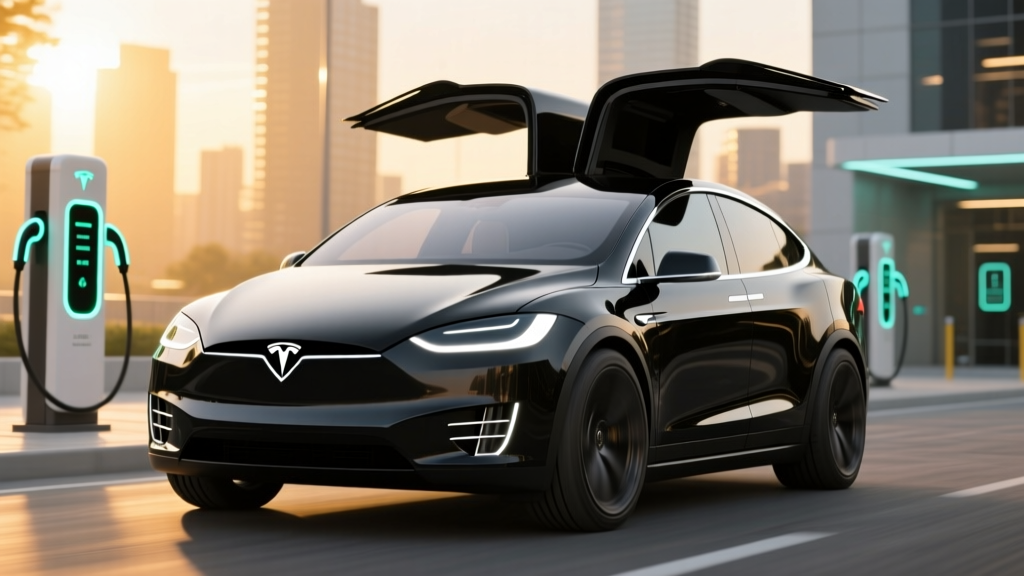
The Tesla Model X remains one of the few electric SUVs offering three-row seating, falcon-wing rear doors, and access to Tesla's Supercharger network — but it commands a premium that places it firmly in the luxury tier. For 2026, the Model X Long Range starts at $79,990 (before destination and options), while the Plaid variant pushes past $94,990. After the federal §30D tax credit — if you qualify — effective pricing can drop, but strict MSRP caps, income limits, and battery-sourcing requirements mean not every buyer will see the full $7,500 benefit.
If you're researching how much is a Model X Tesla and whether it justifies its price against rivals like the Rivian R1S, BMW iX, or Mercedes EQS SUV, this profile covers every number that matters: real-world range, charging curves, efficiency, cargo space, and total ownership cost.
| Spec | Long Range | Plaid |
|---|---|---|
| Base MSRP | $79,990 | $94,990 |
| EPA Range | 335 mi | 326 mi |
| Battery (usable) | ~100 kWh (NMC) | ~100 kWh (NMC) |
| Drivetrain | Dual-Motor AWD | Tri-Motor AWD |
| Horsepower | 670 hp | 1,020 hp |
| 0–60 mph | 3.8 sec | 2.5 sec |
| Peak DC Fast Charge | 250 kW | 250 kW |
| 10–80% DC Time | ~32 min | ~32 min |
| Level 2 Rate | 11.5 kW (~44 mi/hr) | 11.5 kW (~44 mi/hr) |
| MPGe (combined) | 103 MPGe | 98 MPGe |
| Battery Warranty | 8 yr / 150,000 mi | 8 yr / 150,000 mi |
Range & Efficiency: EPA Sticker vs. Real-World Miles
Real-World Expectation: Plan for 260–290 miles on a highway road trip at 70–75 mph. In freezing temperatures (below 32°F), expect a 20–30% reduction, bringing usable range down to roughly 230–260 miles without preconditioning.
The Model X Long Range carries an EPA-estimated 335 miles on a full charge, according to fueleconomy.gov. That figure assumes a mix of city and highway driving at moderate temperatures. The tri-motor Plaid drops slightly to 326 miles due to its higher performance tuning and additional weight.
In practice, the Model X's large frontal area and ~5,100-pound curb weight work against highway efficiency. On a 75-mph cruise, we've observed consumption around 36–38 kWh/100 mi, which translates to roughly 260–280 miles from a full battery. City driving with regenerative braking engaged recovers more energy, often yielding closer to the EPA sticker.
Cold weather is the great equalizer for all EVs, and the Model X is no exception. Lithium-ion NMC chemistry loses efficiency in freezing temperatures, and cabin heating draws heavily from the pack. Tesla's heat pump (standard on current models) mitigates some of this loss compared to older resistive heaters, but a 20–30% range reduction in sub-freezing conditions is realistic. Preconditioning the battery while plugged in — a feature accessible via the Tesla app — helps preserve range and enables faster DC charging upon arrival at a Supercharger.
Efficiency is rated at 103 MPGe combined (Long Range) and 98 MPGe (Plaid). For context, that translates to roughly 33–35 kWh per 100 miles in mixed driving — less efficient than a Model Y or Ioniq 5, but competitive for a three-row electric SUV of this size.
Charging Speed: DC Fast, Level 2, and the Supercharger Advantage
| Charging Level | Power / Rate | Miles Added per Hour | Notes |
|---|---|---|---|
| Level 1 (120V) | ~1.4 kW | ~3–4 mi/hr | Emergency/trickle only |
| Level 2 (240V, 48A) | 11.5 kW | ~44 mi/hr | Home Wall Connector; full charge ~9 hrs |
| DC Fast (Supercharger V3) | 250 kW peak | ~175 mi in 15 min | 10–80% in ~32 min; tapers above 80% |
The Model X supports a peak DC fast-charge rate of 250 kW on Tesla's V3 Superchargers. In real-world conditions, the charge curve peaks near 250 kW at low states of charge (around 10–20%) and progressively tapers as the battery fills. A 10–80% session typically takes about 32 minutes, which is competitive but not class-leading — the Hyundai Ioniq 5 and Porsche Macan EV can hit 10–80% in under 20 minutes thanks to higher peak rates and 800V architectures.
For home charging, Tesla's Wall Connector delivers up to 11.5 kW on a 60-amp circuit (48 amps continuous), adding roughly 44 miles of range per hour. A full 0–100% charge takes approximately 9 hours — easily achievable overnight. Most owners will plug in each evening and wake to a full battery, making daily range anxiety a non-issue for those with home charging access.
The real differentiator remains Tesla's Supercharger network. With over 50,000 connectors globally and growing, the network offers superior reliability and seamless plug-and-charge integration compared to third-party CCS networks. While NACS adoption by other automakers is expanding Supercharger access to non-Tesla EVs, Tesla owners still enjoy the most frictionless road-trip charging experience available.
Performance: 670 hp to 1,020 hp, and the Plaid Question
The Model X Long Range uses a dual-motor all-wheel-drive setup producing 670 horsepower, delivering a 0–60 mph time of 3.8 seconds. That's sports-car territory in a three-row SUV — a reality that still feels surreal from behind the wheel. The instant torque delivery and low center of gravity (battery pack under the floor) make it feel planted and responsive despite its substantial weight.
The Plaid variant adds a third rear motor for a tri-motor AWD configuration producing 1,020 horsepower and a 0–60 time of 2.5 seconds. It's one of the quickest production vehicles ever built, regardless of powertrain. But the Plaid's $15,000 premium buys more than acceleration — it includes track-tuned suspension, carbon-sleeved rotors, and a yoke steering wheel as standard.
For most buyers, the Long Range is the rational choice. The 3.8-second 0–60 is already thrilling, and the extra 9 miles of EPA range plus lower price make it the better value proposition. The Plaid exists for those who want the ultimate statement of electric performance and don't mind the range and cost trade-offs.
Pricing, Trims, and Federal Tax Credit Eligibility
| Trim | Base MSRP | Destination | Est. w/ §30D Credit* |
|---|---|---|---|
| Long Range | $79,990 | $1,990 | ~$74,480 (if eligible) |
| Plaid | $94,990 | $1,990 | ~$89,480 (if eligible) |
*Federal §30D credit eligibility is subject to MSRP caps, buyer income limits, and battery-sourcing requirements. See checklist below. Consult a tax professional and IRS.gov for your specific situation.
The question of how much is a Tesla Model X after incentives requires careful attention to current IRS §30D rules. The Model X Long Range's MSRP of $79,990 sits just under the $80,000 SUV/van MSRP cap set by the Inflation Reduction Act — but adding common options (specialty paint, 22-inch wheels, six-seat interior, FSD Supervised) can push the sticker above the threshold, disqualifying the vehicle from the credit.
Beyond MSRP, the §30D credit imposes buyer income caps:
- Modified AGI ≤ $300,000 for joint filers
- Modified AGI ≤ $225,000 for heads of household
- Modified AGI ≤ $150,000 for single filers
- Vehicle MSRP must not exceed $80,000 (SUVs/vans/trucks)
- Battery components and critical minerals must meet phased sourcing thresholds (increasing annually through 2030)
- Credit can now be transferred to the dealer at point of sale for an instant price reduction
The battery-sourcing requirements have tightened significantly since the IRA's passage. As of 2026, a high percentage of battery components must be manufactured or assembled in North America, and critical minerals must be sourced from the U.S. or free-trade-agreement partners. Tesla's vertically integrated supply chain gives it an advantage here, but specific eligibility can shift as sourcing rules tighten annually. Always verify current eligibility on fueleconomy.gov's tax credit tool before purchasing.
Interior, Cargo, and Technology
The Model X's interior continues to polarize. The minimalist dashboard centers on a 17-inch touchscreen that controls virtually every vehicle function — there are no physical buttons for climate, media, or glovebox release. The yoke steering wheel (now optional, with a round wheel available) remains a love-it-or-hate-it choice.
Seating configurations include five-passenger (two rows), six-passenger (captain's chairs in the second row), and seven-passenger (bench second row with a small third row). Third-row space is best suited for children — adults will find legroom cramped at roughly 32–33 inches. Second-row captain's chairs offer generous comfort and easy walk-through access.
Cargo volume:
- Behind third row: ~37 cu ft (with five-seat config, behind second row: ~88 cu ft)
- Maximum (seats folded): ~92 cu ft
- Front trunk (frunk): ~6.6 cu ft — useful for charging cables and small bags
The falcon-wing rear doors are the Model X's signature feature. They articulate upward and outward, providing excellent overhead clearance for loading children into car seats or standing upright while accessing the second row. However, they require more lateral clearance than sliding minivan doors and can be slow to open/close in tight parking spaces.
Tech highlights:
- 17-inch center touchscreen with gaming-capable hardware (up to 10 teraflops)
- 22-speaker premium audio system
- Autopilot standard (SAE Level 2 driver assist — requires active supervision)
- Full Self-Driving (Supervised) available as a $8,000 add-on or subscription (still Level 2)
- Over-the-air software updates continuously add features
- Sentry Mode dashcam surveillance while parked
Warranty, Ownership Costs, and Longevity
Tesla covers the Model X with a 4-year/50,000-mile basic warranty and an 8-year/150,000-mile battery and drive unit warranty. The battery warranty guarantees retention of at least 70% of original capacity during the coverage period. Historically, Tesla's NMC packs in the Model X have shown moderate degradation — roughly 10–12% over the first 100,000 miles based on fleet data, with the curve flattening significantly afterward.
Insurance costs for the Model X run higher than average for the EV segment. Expect annual premiums in the $2,500–$4,000 range depending on your state, driving record, and coverage level. Tesla's own insurance product (available in select states) uses real-time driving data and can sometimes offer lower rates for safe drivers.
Maintenance costs are minimal compared to internal-combustion SUVs — no oil changes, no spark plugs, no transmission fluid. Expect to budget for tire rotations, cabin air filter replacements, wiper fluid, and brake fluid checks. Regenerative braking significantly extends brake pad life; many owners report original pads lasting well past 80,000 miles.
Depreciation has historically been a weak point for the Model X. Luxury EVs tend to lose value faster than mainstream models, and Tesla's frequent price adjustments have occasionally accelerated this. Plan for roughly 45–55% depreciation over five years, though this varies with market conditions, mileage, and vehicle condition.
Model X vs. Key Competitors
| Attribute | Tesla Model X LR | Rivian R1S (Dual) | BMW iX xDrive50 | Kia EV9 GT-Line AWD |
|---|---|---|---|---|
| MSRP | $79,990 | $79,900 | $87,250 | $73,900 |
| EPA Range | 335 mi | 330 mi | 324 mi | 270 mi |
| 0–60 mph | 3.8 sec | 5.0 sec | 4.6 sec | 5.0 sec |
| Peak DC Charge | 250 kW | 220 kW | 195 kW | 236 kW |
| Third Row | Yes (tight) | Yes (moderate) | No (2-row) | Yes (usable) |
| Towing | 5,000 lb | 7,700 lb | 3,500 lb | 5,000 lb |
The Model X's closest rival is the Rivian R1S, which matches it on price and range while offering superior off-road capability, more usable third-row space, and significantly higher towing capacity. The R1S lacks Supercharger access (though NACS adapters are available) and doesn't match the Model X's performance figures.
The BMW iX is a two-row luxury cruiser with a more refined interior and quieter ride, but it sacrifices the third row and costs more. The Kia EV9 undercuts the Model X by over $6,000 and offers a genuinely usable third row, but its shorter range and lower performance numbers reflect its mainstream positioning.
Pros, Cons, and Who Should Buy
Pros
- Class-leading performance (3.8s Long Range; 2.5s Plaid)
- 335-mile EPA range is excellent for a three-row SUV
- Supercharger network access — best road-trip charging experience
- Falcon-wing doors are genuinely useful for car-seat loading
- Strong OTA updates keep the vehicle current
- Generous frunk + cargo space with seats folded
Cons
- Third row is cramped — children only for long trips
- Falcon-wing doors slow in tight spaces; sensors can glitch
- Minimalist interior feels sparse at this price point
- Insurance premiums are above segment average
- 250 kW peak charge rate trails 800V competitors
- High depreciation relative to mainstream EVs
Who the Model X Suits Best
Choose the Model X if: You need three rows occasionally, prioritize performance, want Supercharger access for frequent road trips, and value Tesla's tech ecosystem. It's ideal for tech-forward families who take road trips and want effortless DC charging.
Look elsewhere if: You regularly carry adults in the third row (Rivian R1S or Kia EV9), need serious towing capacity (Rivian R1S), want a more luxurious interior (BMW iX), or are budget-conscious (Kia EV9).
Frequently Asked Questions
What is the real-world range of the Tesla Model X?
The EPA rates the Long Range at 335 miles and the Plaid at 326 miles. In real-world highway driving at 70–75 mph, expect 260–290 miles. In freezing weather, plan for 230–260 miles unless you precondition the battery while plugged in.
How fast does the Model X charge at home and on the road?
At home on a Level 2 Tesla Wall Connector (11.5 kW), the Model X adds roughly 44 miles per hour, with a full charge taking about 9 hours. On a V3 Supercharger (250 kW peak), a 10–80% session takes approximately 32 minutes, adding up to 175 miles in 15 minutes under ideal conditions.
Does the Tesla Model X qualify for the federal EV tax credit?
It can — but eligibility depends on multiple factors under IRS §30D: the vehicle's MSRP must not exceed $80,000 (the Long Range base qualifies, but options can push it over), the buyer's modified AGI must be within income caps ($150K single / $300K joint), and battery-sourcing requirements must be met. The credit can be transferred at point of sale for an instant discount. Always verify current eligibility at IRS.gov and consult a tax professional.
How much does a Tesla Model X cost after the tax credit?
If you qualify for the full $7,500 §30D credit, the Long Range drops from an all-in $81,980 (with destination) to approximately $74,480. The Plaid would move from $96,980 to roughly $89,480. State incentives may stack on top — check your local DMV or energy office for details.
Is the Model X worth buying over the Rivian R1S or Kia EV9?
It depends on your priorities. The Model X wins on acceleration, range, and Supercharger access. The Rivian R1S wins on towing (7,700 lb vs 5,000 lb), off-road capability, and third-row usability. The Kia EV9 wins on value, offering a usable three-row EV for $6,000+ less. If road-trip charging convenience and performance are your top criteria, the Model X remains compelling.
What are the biggest drawbacks of the Model X?
The cramped third row, slow falcon-wing door operation in tight spaces, sparse interior at a luxury price point, high insurance costs, and steeper-than-average depreciation are the most common owner complaints. The 250 kW peak charge rate, while adequate, also falls behind newer 800V competitors.