The Verdict: Tesla's Full-Size SUV Still Sets the Bar for Tech, But the Price Is Steep
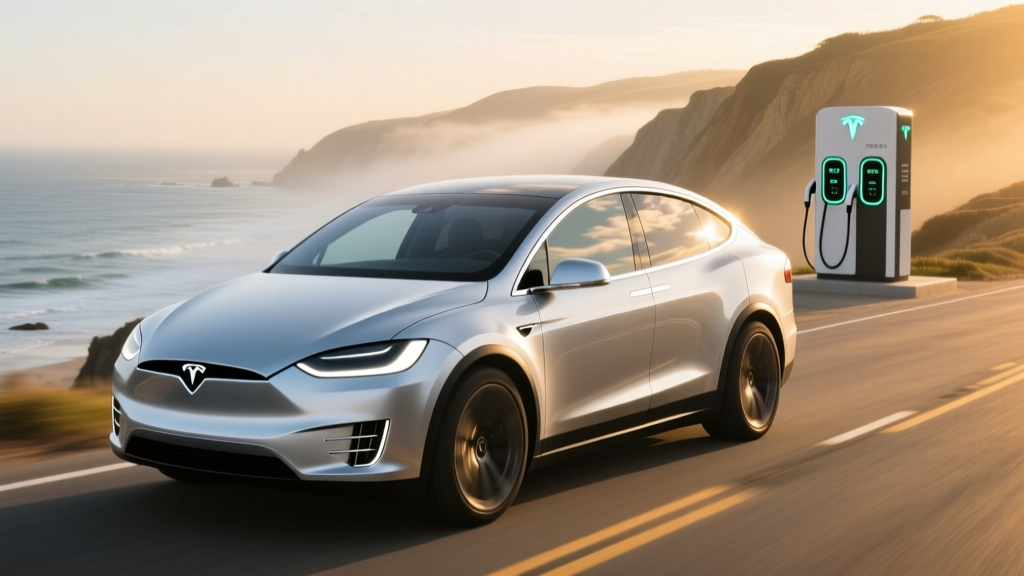
The Tesla Model X remains the benchmark when shoppers search for a Tesla full size SUV — and for good reason. With up to 320 miles of EPA-estimated range, access to the Supercharger network, falcon-wing rear doors, and a minimalist cabin dominated by a 17-inch touchscreen, the Model X delivers an experience no legacy automaker has fully matched in the three-row electric SUV segment. But at a starting MSRP of $79,990 (before incentives), it commands a significant premium over rivals like the Rivian R1S and the Kia EV9, and its aging platform — originally launched in 2015, refreshed in 2021 — shows in fit-and-finish details that buyers at this price point notice.
For 2026, the Model X continues in two primary trims: the dual-motor Long Range and the tri-motor Plaid. Both receive incremental software and efficiency updates, but the core architecture, 100 kWh battery pack, and 250 kW peak DC charging capability remain unchanged. If you need three rows, serious cargo volume, and the most mature public charging ecosystem available, the Model X is still the default choice. If you prioritize interior luxury or the latest 800-volt charging architecture, you'll want to cross-shop carefully.
Range, Battery, and Real-World Efficiency
The 2026 Model X Long Range carries a 100 kWh battery pack (approximately 95 kWh usable) using NMC (nickel manganese cobalt) lithium-ion chemistry. Tesla does not publish exact cell-level chemistry updates, but the pack architecture has evolved through multiple generations for energy density and thermal management.
| Specification | Long Range (Dual Motor) | Plaid (Tri Motor) |
|---|---|---|
| EPA Estimated Range | 320 miles | 308 miles |
| Battery Capacity (Usable) | ~95 kWh | ~95 kWh |
| Battery Chemistry | NMC | NMC |
| Efficiency (Combined) | 102 MPGe / 33 kWh/100mi | 98 MPGe / 34 kWh/100mi |
| Drivetrain | Dual Motor AWD | Tri Motor AWD |
Real-World Range Reality Check
EPA Sticker: 320 miles (Long Range) / 308 miles (Plaid)
Real-World Highway (70-75 mph): Expect 260–285 miles. The Model X's large frontal area and ~5,100 lb curb weight take a toll at sustained highway speeds.
Cold Weather (below 32°F): Plan for 200–240 miles. NMC chemistry loses 15–25% capacity in freezing temps, and cabin heating draws significant energy despite the heat pump.
City/Commuter Driving: You'll see the highest efficiency here — 290–315 miles is achievable with regenerative braking doing heavy lifting in stop-and-go traffic.
On fueleconomy.gov, the Model X Long Range posts a combined 102 MPGe, translating to roughly 33 kWh per 100 miles. That's competitive for a 5,100-pound SUV but notably less efficient than the smaller Model Y (28 kWh/100mi). For context, charging at the national average of $0.16/kWh, you're spending about $5.28 per 100 miles — versus roughly $12–$14 for a gas-powered BMW X5 at 22 MPG combined.
Charging Speed: DC Fast, Level 2, and the Supercharger Advantage
The Model X peaks at 250 kW on DC fast chargers via its native NACS (North American Charging Standard) connector — the same connector now being adopted industry-wide. On a V3 Supercharger or a compatible third-party station (Electrify America and EVgo now offer NACS cables at select locations), the Model X adds up to 175 miles of range in 15 minutes under ideal conditions.
| Charging Level | Power | Speed | Notes |
|---|---|---|---|
| DC Fast Charge (Peak) | 250 kW | 10–80% in ~30 min | Peak rate only sustained up to ~40% SoC; tapers significantly above 60% |
| DC Fast Charge (Average 10-80%) | ~140 kW avg | ~175 mi in 15 min | Preconditioning required for peak rate |
| Level 2 (Home / Destination) | 11.5 kW (48A) | ~34 mi/hr | Full charge in ~9 hours from empty |
| Level 1 (120V Outlet) | 1.4 kW (12A) | ~4 mi/hr | Emergency/trickle only; not practical for daily use |
Charging curve reality: Like all EVs, the Model X does not sustain its 250 kW peak rate across the full session. The charge curve peaks early (roughly 20–40% state of charge) and tapers progressively. From 10–80%, expect an average rate closer to 140 kW, making the 10–80% session take approximately 30 minutes. Above 80%, charging slows dramatically to protect battery health — a 80–100% top-off can add another 25–35 minutes.
Preconditioning matters. Navigate to a Supercharger using the built-in navigation, and the Model X will automatically warm or cool the battery to the optimal temperature for maximum charge rate upon arrival. Without preconditioning — especially in cold weather — your peak charge rate may be cut in half for the first 10–15 minutes of a session.
Home charging: The onboard charger accepts up to 11.5 kW (48 amps) on Level 2. Tesla's Wall Connector ($475) is the recommended home unit and requires a 60-amp dedicated circuit. Installation typically runs $800–$2,000 depending on your panel capacity and conduit run. At 34 miles of range per hour of charging, an overnight session easily replenishes a full day's driving for most owners.
Performance: 0-60, Horsepower, and Drivetrain
The Model X has never been a slow vehicle, but the Plaid variant borders on absurd for a three-row family SUV.
| Metric | Long Range | Plaid |
|---|---|---|
| Horsepower | 670 hp | 1,020 hp |
| 0–60 mph | 3.8 seconds | 2.5 seconds |
| Top Speed | 155 mph | 163 mph |
| Drivetrain | Dual Motor AWD | Tri Motor AWD |
| Towing Capacity | 5,000 lbs | 5,000 lbs |
The Long Range's 3.8-second 0–60 time already outpaces most V8-powered luxury SUVs. The Plaid's 2.5 seconds is supercar territory — though in practice, repeated hard launches will thermally manage the battery and reduce peak output. For daily driving, the Long Range's acceleration is more than sufficient and preserves range better than the Plaid's tri-motor setup.
Towing is rated at 5,000 pounds across both trims — adequate for a small boat or utility trailer but below the Rivian R1S (7,700 lbs) and far below a body-on-frame SUV. Expect a 30–40% range reduction when towing near max capacity, which effectively limits road-trip towing to short hauls or routes with dense Supercharger coverage.
Interior, Cargo, and Technology
The Model X seats up to seven in a 2-3-2 configuration, or six with optional second-row captain's chairs. Interior materials have improved since the 2021 refresh but still fall short of what you'll find in a similarly priced Mercedes EQS SUV or BMW iX.
| Dimension | Measurement |
|---|---|
| Cargo (Behind 3rd Row) | 15.0 cu ft |
| Cargo (3rd Row Folded) | 44.1 cu ft |
| Cargo (All Rows Folded) | 85.1 cu ft |
| Front Headroom | 41.7 in |
| 2nd Row Legroom | 40.9 in |
| 3rd Row Legroom | 32.7 in |
| Front Trunk (Frunk) | 6.6 cu ft |
The third row is best suited for children or occasional use — 32.7 inches of legroom is tight for adults on longer trips. With all rows in use, 15 cubic feet of cargo space is modest; you'll want to fold the third row for any serious grocery run or airport trip with luggage.
Tech highlights:
- 17-inch center touchscreen with swivel capability and 22-speaker audio system
- Second-row 8-inch touchscreen for rear passengers (climate, media, gaming)
- HEPA air filtration with "Bioweapon Defense Mode" — genuinely effective for wildfire smoke and urban pollution
- Over-the-air software updates that add features and refine performance
- Falcon Wing rear doors with ultrasonic obstacle detection — dramatic but occasionally slow and problematic in tight garages with low ceilings
Autopilot and FSD (Supervised): Every Model X ships with basic Autopilot (traffic-aware cruise control and lane centering). Full Self-Driving (Supervised) remains a $8,000 option or $99/month subscription. It adds automatic lane changes, navigation-guided on-ramp to off-ramp driving, and traffic light/stop sign recognition.
SAE Automation Level: Level 2
Despite the "Full Self-Driving" name, FSD (Supervised) is a SAE Level 2 driver-assistance system. The driver must remain fully engaged — hands on or near the wheel, eyes on the road — at all times. Tesla's cabin camera monitors attention. This is not autonomous driving. Level 4 robotaxi services like Waymo operate without a driver; the Model X does not offer this capability.
Pricing, Trims, and Federal Tax Credit Eligibility
The 2026 Model X is offered in two trims. Pricing has stabilized after years of fluctuation, but the MSRP positions it firmly in luxury territory.
| Trim | Base MSRP | As-Tested (Typical Options) | Federal Tax Credit (§30D) |
|---|---|---|---|
| Long Range | $79,990 | $87,000–$92,000 | Up to $7,500 (see eligibility below) |
| Plaid | $94,990 | $102,000–$108,000 | Up to $7,500 (see eligibility below) |
Federal EV Tax Credit (§30D) — 2026 Rules
The Model X may qualify for up to $7,500 under the IRS §30D Clean Vehicle Credit, but eligibility depends on multiple factors:
- MSRP Cap: The Model X qualifies — the SUV MSRP cap is $80,000. The Long Range base price of $79,990 clears this threshold, but adding options that push the sticker above $80,000 may disqualify it. The Plaid at $94,990 exceeds the cap and does NOT qualify.
- Buyer Income Limits: Modified AGI must not exceed $300,000 (joint filers), $225,000 (head of household), or $150,000 (single).
- Battery Sourcing: The $7,500 credit splits into two halves — $3,750 for critical minerals and $3,750 for battery components. Sourcing requirements tighten annually. Verify current-year compliance on the fueleconomy.gov tax credit tracker.
- Point-of-Sale Transfer: As of 2024, buyers can transfer the credit to the dealer at purchase, receiving the discount upfront rather than waiting to claim it on their tax return. Tesla supports this at checkout.
Consult a tax professional before relying on credit eligibility. Rules change annually and depend on your individual tax situation.
Bottom line on price: The Long Range, configured carefully to stay at or below the $80,000 MSRP cap, could net as low as ~$72,490 after the full $7,500 credit. But most buyers add paint ($2,000), wheels ($1,500–$4,500), FSD ($8,000), or the six-seat interior ($6,500), pushing past the cap. The Plaid does not qualify for the credit at all due to its MSRP.
Warranty and Long-Term Ownership
Tesla's warranty structure is straightforward but slightly behind some competitors in battery coverage duration.
| Coverage | Term |
|---|---|
| Basic Vehicle Limited Warranty | 4 years / 50,000 miles |
| Battery & Drive Unit Warranty | 8 years / 150,000 miles |
| Battery Capacity Retention Guarantee | Minimum 70% over warranty period |
The 8-year/150,000-mile battery and drive unit warranty is solid. Tesla guarantees the pack will retain at least 70% of its original capacity during that period. Real-world data from high-mileage Model X owners suggests NMC packs typically retain 85–90% after 100,000 miles under normal use — though Supercharger-heavy lifestyles and frequent 100% charging accelerate degradation.
Out-of-warranty battery replacement for the Model X currently runs $15,000–$22,000 depending on the pack revision and labor. This is a meaningful long-term cost to factor if you plan to keep the vehicle past 150,000 miles.
Model X vs. the Competition: Is It Worth It?
Pros
- Supercharger network — still the most reliable and extensive DC fast-charging ecosystem in North America
- 320-mile EPA range is strong for a three-row SUV
- Class-leading acceleration (Long Range and especially Plaid)
- Best-in-class infotainment and OTA update cadence
- Falcon Wing doors provide wide opening for child seat access
- Strong over-the-air feature additions over time
Cons
- MSRP easily exceeds $80,000 tax-credit cap with options
- Interior quality does not match Mercedes EQS SUV or BMW iX at this price
- 250 kW peak DC charging is outpaced by 800V rivals (Hyundai/Kia at 350 kW, Lucid at 300+ kW)
- Third-row space is tight for adults
- Falcon Wing doors can be slow and struggle in low-clearance garages
- No Apple CarPlay or Android Auto — Tesla's ecosystem only
- Insurance costs run 20–35% higher than comparable gas SUVs
Who Should Buy the Tesla Model X?
Choose the Model X if: You need three rows and prioritize charging infrastructure reliability above all else. Frequent road-trippers benefit enormously from the Supercharger network's uptime and ease of use. Tech-forward buyers who value OTA updates, the best EV route planner in the business, and rapid acceleration will find the Model X hard to beat.
Consider alternatives if: Interior luxury is your top priority (look at the Mercedes EQS SUV or BMW iX). You need serious towing capacity (Rivian R1S tows 7,700 lbs). You want the fastest possible DC charging (Kia EV9 or Hyundai Ioniq 9 with 800V architecture charge at up to 350 kW). Or you need a true adult-friendly third row (the Rivian R1S and EQS SUV offer more space).
Frequently Asked Questions
What is the real-world range of the Tesla Model X?
The EPA rates the 2026 Model X Long Range at 320 miles and the Plaid at 308 miles. In real-world highway driving at 70–75 mph, expect 260–285 miles. In freezing temperatures, that drops to 200–240 miles. City commuting with regenerative braking can yield close to the EPA sticker.
How fast does the Model X charge at home and on the road?
On a DC fast charger, the Model X peaks at 250 kW and charges from 10–80% in approximately 30 minutes, adding up to 175 miles in 15 minutes under ideal conditions. At home on Level 2 (11.5 kW / 48A), it adds about 34 miles per hour, fully charging overnight in roughly 9 hours.
Does the Tesla Model X qualify for the $7,500 federal EV tax credit?
The Long Range base MSRP of $79,990 falls just under the $80,000 SUV cap and may qualify — but only if the buyer meets income limits ($300K joint / $150K single) and the battery meets critical-mineral and component sourcing requirements for the current tax year. The Plaid at $94,990 exceeds the MSRP cap and does not qualify. Always verify on fueleconomy.gov and consult a tax professional.
Is the Model X worth buying over the Rivian R1S or Kia EV9?
It depends on your priorities. The Model X wins on Supercharger access, infotainment, and acceleration. The Rivian R1S offers better off-road capability, more towing capacity (7,700 lbs), and a more rugged build. The Kia EV9 is significantly more affordable (starting ~$56,000) with 800V fast-charging architecture, though with less range and no Supercharger access (though adapters are increasingly available).
What are the biggest drawbacks of the Model X?
The main complaints from owners and reviewers: interior materials that don't match the price point, falcon wing doors that can be slow and problematic in tight spaces, no Apple CarPlay/Android Auto, insurance costs that run 20–35% above gas equivalents, and a 250 kW charging peak that's now outpaced by newer 800-volt competitors.
How long will the Model X battery last?
Tesla warranties the battery for 8 years or 150,000 miles with a minimum 70% capacity retention guarantee. Real-world data from high-mileage owners suggests NMC packs retain 85–90% capacity at 100,000 miles with normal charging habits (keeping daily SoC between 20–80%, limiting DC fast charging to road trips). Out-of-warranty replacement currently costs $15,000–$22,000.