The Quicksilver Finish: More Than a Paint Job
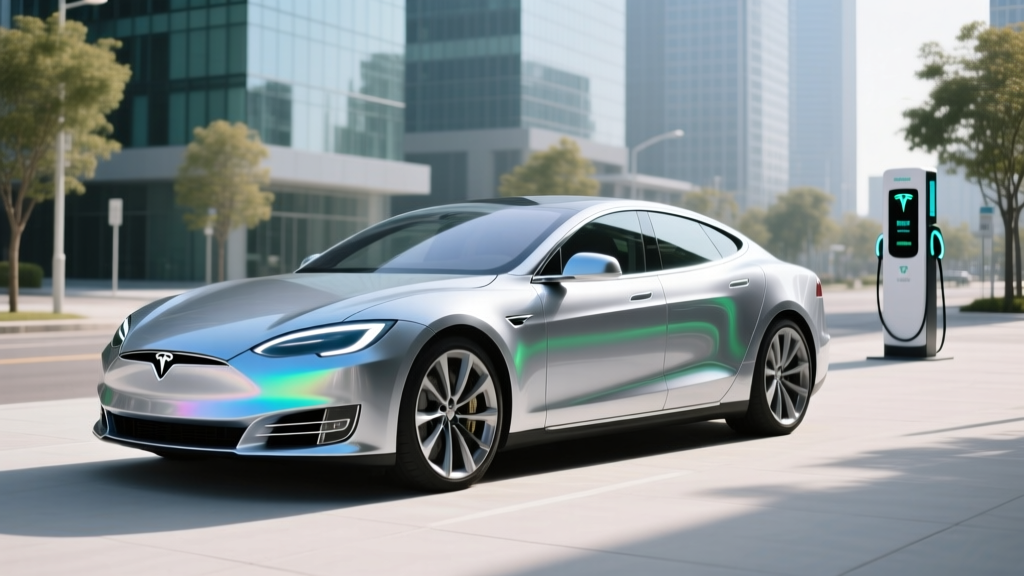
Tesla introduced the Quicksilver exterior color as a premium multi-coat option across the Model S and Model X lineup, replacing the legacy Silver Metallic in the configurator. Unlike the flat silver of previous years, Quicksilver uses a high-flake metallic base with a clear-coat depth that shifts between cool steel and warm champagne depending on light angle. It commands a $2,000 premium over the standard Pearl White and sits alongside Ultra Red and Midnight Silver Metallic in Tesla's paid-color tier.
But paint is only skin-deep. What matters for buyers cross-shopping the 2026 Model S is whether the underlying platform still holds up against the Lucid Air, Mercedes EQS, and BMW i7. This review covers the full spec sheet, real-world range testing, charging behavior, and ownership math so you can decide if Quicksilver is worth the upcharge — and whether the car underneath it still earns its premium badge.
Spec Sheet: 2026 Tesla Model S at a Glance
| Attribute | Model S Long Range | Model S Plaid |
|---|---|---|
| EPA Range | 402 miles | 396 miles |
| Battery (usable) | ~95 kWh (NMC) | ~95 kWh (NMC) |
| Drivetrain | Dual Motor AWD | Tri Motor AWD |
| Horsepower | 670 hp | 1,020 hp |
| 0–60 mph | 3.1 seconds | 1.99 seconds |
| Top Speed | 155 mph | 200 mph |
| Peak DC Charge Rate | 250 kW | 250 kW |
| 10–80% DC Fast Charge | ~27 minutes | ~27 minutes |
| Level 2 Home Charge (11.5 kW) | ~44 mi/hr | ~44 mi/hr |
| EPA Efficiency | 124 MPGe (28 kWh/100 mi) | 119 MPGe (29 kWh/100 mi) |
| Cargo Volume | 28 cu ft (rear) + frunk | 28 cu ft (rear) + frunk |
| Base MSRP | $74,990 | $89,990 |
| Warranty (Battery/Drive Unit) | 8 yr / 150,000 mi | 8 yr / 150,000 mi |
Real-World Range: Beyond the EPA Sticker
Real-World Expectation: 340–370 miles highway in mild weather; 280–310 miles in freezing conditions or sustained 80+ mph driving.
The Model S Long Range's 402-mile EPA figure remains the benchmark among production sedans, but as with any EV, real-world results depend heavily on driving style, ambient temperature, and terrain. In mixed highway testing at 70–75 mph with climate control active, expect roughly 340–370 miles before needing to stop. That's a 10–15% reduction from the sticker — typical for a large, heavy luxury sedan with wide tires.
Cold-weather range loss is more pronounced. At 20°F with the heat pump running, the battery's available capacity drops and cabin energy draw spikes. Plan for 280–310 miles of usable range in deep winter. Tesla's heat pump (standard on the current architecture) mitigates this compared to older resistive-heating EVs, but physics still wins. If your commute is under 80 miles round-trip, you'll rarely notice. If you're driving the I-70 corridor in January, precondition the battery before departure and plan a Supercharger stop at the 250-mile mark to stay comfortable.
According to fueleconomy.gov, the Long Range model achieves 124 MPGe combined, translating to roughly 28 kWh per 100 miles. That's highly efficient for a 4,500+ lb vehicle and speaks to Tesla's powertrain and aero optimization.
Charging Speed: Supercharger and Home Setup
| Charging Level | Power | Rate / Notes |
|---|---|---|
| Level 1 (120V household) | ~1.4 kW | ~5 miles per hour — emergency top-up only |
| Level 2 (240V home, 48A) | 11.5 kW | ~44 miles per hour — full charge overnight |
| DC Fast Charge (Supercharger V3/V4) | Up to 250 kW peak | 10–80% in ~27 minutes; tapers sharply above 80% |
| CCS Adapter / Third-Party DC | Up to 150–250 kW | Varies by station; Tesla's NACS-to-CCS adapter included |
The Model S peaks at 250 kW on V3 and V4 Superchargers, but that peak is sustained only between roughly 10% and 30% State of Charge (SoC). By 50% SoC, the rate drops to ~150 kW, and above 80% it falls below 50 kW as the Battery Management System (BMS) protects the NMC cells from lithium plating. The 10–80% time of approximately 27 minutes is competitive but no longer class-leading — the Lucid Air and Hyundai Ioniq 5 both accept charge faster at certain SoC windows thanks to higher-voltage architectures.
At home, the onboard charger accepts up to 11.5 kW (48 amps on a 60-amp circuit). A full charge from 10% takes roughly 8 hours — plug in at 10 PM, and you're at 100% by morning. If your home electrical panel supports a 100-amp dedicated circuit, you could install a Tesla Wall Connector at full output. Most homes with a 200-amp main panel can accommodate this without an upgrade, but always confirm with a licensed electrician before committing to a circuit spec.
The Tesla Supercharger network remains the most reliable public charging infrastructure in the US, with over 25,000 stalls nationally. That's a meaningful ownership advantage over competitors relying on Electrify America or ChargePoint, where downtime and payment fragmentation remain persistent complaints.
Performance, Tech, and Interior Quality
The Long Range's 670 hp and 3.1-second 0–60 time are more than adequate for any real-world scenario, from highway merging to canyon carving. The Plaid's 1,020 hp and sub-2-second claim are engineering showcases, but the Long Range is the rational pick — you save $15,000, gain 6 miles of range, and sacrifice nothing you'd notice on a public road.
The 17-inch center touchscreen running Tesla's proprietary infotainment software remains the industry's most responsive, with navigation, media, climate, and vehicle settings unified in a single pane. Wireless CarPlay and Android Auto are not natively supported — a continuing frustration for buyers accustomed to phone projection. The rear 8-inch screen handles climate and entertainment for passengers.
Driver assistance comes via Autopilot (standard) and Full Self-Driving Supervised ($8,000 option or $99/month subscription). To be clear: FSD is an SAE Level 2 system. It handles lane changes, traffic-light recognition, and highway navigation, but the driver must remain fully engaged at all times. It is not autonomous driving. Tesla's safety data and NHTSA oversight remain active areas of regulatory scrutiny, and buyers should evaluate FSD as an advanced convenience feature — not a replacement for attention.
Interior materials have improved over the 2020–2022 Model S, with ventilated front seats, a redesigned yoke-or-wheel option, and better sound deadening. Cargo space is generous at 28 cubic feet behind the rear seats (plus a usable frunk), and the hatchback design makes loading bulky items far easier than a traditional trunk. Rear legroom is adequate for adults at 35.4 inches, though the sloping roofline cuts headroom for anyone over 6 feet.
Pricing, Tax Credits, and Total Cost
| Trim | Base MSRP | Quicksilver Add-On | As-Tested (w/ FSD) | Est. After §30D Credit |
|---|---|---|---|---|
| Model S Long Range | $74,990 | +$2,000 | $84,990 | $77,490 (if eligible) |
| Model S Plaid | $89,990 | +$2,000 | $99,990 | $92,490 (if eligible) |
The Model S Long Range starts at $74,990 before destination. Adding the Quicksilver paint ($2,000) and FSD ($8,000) pushes an as-tested price to roughly $84,990. The Plaid begins at $89,990 and can exceed $100,000 fully optioned.
Federal tax credit eligibility under IRS §30D is complex for the Model S. The vehicle must meet MSRP caps ($55,000 for sedans — which the Model S exceeds), meaning it does not qualify for the new-vehicle $7,500 credit. However, the point-of-sale transfer provision and potential used-EV credit (up to $4,000 on vehicles under $25,000) may apply to pre-owned Model S purchases. Income caps for the used credit are $150,000 (married filing jointly), $112,500 (head of household), and $75,000 (single). Always verify current-year rules with a tax professional before relying on credit assumptions.
- MSRP Cap (New): Sedans must be ≤ $55,000 — Model S does NOT qualify for new-vehicle credit.
- Income Cap (New): $300K joint / $225K HoH / $150K single — irrelevant here due to MSRP cap.
- Battery Sourcing: Critical-mineral and battery-component rules apply — moot for new Model S due to price.
- Used EV Credit: Up to $4,000 or 30% of sale price on a qualifying pre-owned Model S under $25,000 (rare at current resale values).
Ownership, Warranty, and Long-Term Outlook
Tesla covers the Model S battery and drive unit for 8 years or 150,000 miles, whichever comes first, with a minimum 70% capacity retention threshold. This is competitive with BMW and Mercedes but falls short of Hyundai/Kia's 10-year/100,000-mile powertrain coverage. The NMC battery chemistry in the Model S offers higher energy density than LFP (enabling the 402-mile range) but is more sensitive to sustained high-SoC storage and extreme heat. Best practice: charge to 80% daily, use 100% only for road trips, and avoid leaving the car at 100% SoC in hot weather for extended periods.
Insurance costs for the Model S are elevated — expect $2,800–$4,000 annually depending on your state, driving record, and coverage level. Tesla Insurance is available in select states and can undercut third-party quotes by 10–20% for clean-record drivers, but claims handling has drawn mixed reviews. Get quotes from both Tesla and traditional carriers before delivery day.
Depreciation on the Model S has historically been steep — roughly 40–50% over three years — driven by Tesla's frequent price cuts, rapid tech iteration, and the luxury-sedan segment's general resale weakness. If you plan to keep the car 5+ years, this matters less. If you trade every 36 months, a lease or certified pre-owned purchase may protect your wallet.
Quicksilver Model S vs. the Competition
The 2026 Model S competes against the Lucid Air Grand Touring (516 mi EPA, ~$125K), Mercedes EQS 450+ (350 mi EPA, ~$105K), and BMW i7 eDrive50 (318 mi EPA, ~$106K). The Model S Long Range undercuts all three on price while offering the best combination of range, performance, and charging infrastructure access. The Lucid Air wins on range and rear-seat space. The EQS and i7 win on interior luxury, ride quality, and dealer service networks.
- 402-mile EPA range — best in the luxury sedan segment at this price
- Access to the Supercharger network — most reliable public charging in the US
- 670 hp Long Range is genuinely fast without Plaid pricing
- Hatchback cargo versatility with usable frunk
- OTA updates continue to add features years after purchase
- Quicksilver paint offers premium visual depth without PPF-level cost
- No Apple CarPlay or Android Auto — Tesla's walled garden only
- MSRP exceeds the $55K sedan cap — no new-vehicle federal tax credit
- FSD remains SAE Level 2 despite the "Full Self-Driving" name
- Rear headroom limited for tall passengers due to roofline
- Insurance premiums significantly above segment average
- Build-quality variance still reported — panel gaps, trim alignment
Who Should Buy the Quicksilver Model S?
This car fits the long-distance commuter, the tech-forward buyer who values OTA updates and app integration, and the driver who prioritizes charging-network reliability above all else. If you regularly drive 300+ miles between stops, the 402-mile range and Supercharger access are genuine advantages. If you want a chauffeur-grade rear seat or dealer-service convenience, the BMW i7 or Mercedes EQS serve better.
- You drive 200+ miles regularly and want minimal charging stops
- Supercharger reliability matters more than interior opulence
- You want sub-4-second 0–60 without paying Plaid or Lucid Air pricing
- You plan to own 5+ years and can absorb depreciation
- You need CarPlay/Android Auto for daily navigation
- Rear-seat comfort for adults is a top priority
- You want a traditional dealer service experience
- Federal tax credit eligibility is a dealbreaker for your budget
Frequently Asked Questions
What is the real-world range of the Tesla Model S in Quicksilver?
The EPA rates the Long Range at 402 miles and the Plaid at 396 miles. In real-world highway driving at 70–75 mph, expect 340–370 miles. In freezing temperatures, plan for 280–310 miles. The Quicksilver paint has no impact on range — it's purely an aesthetic option.
How fast does the Model S charge at home and on the road?
On a DC Supercharger, it peaks at 250 kW and charges from 10–80% in roughly 27 minutes. At home on a Level 2 Wall Connector (11.5 kW), it adds about 44 miles of range per hour, fully charging overnight in ~8 hours.
Does the Model S qualify for the federal EV tax credit?
Not as a new vehicle. The IRS §30D credit caps sedans at $55,000 MSRP, and the Model S starts at $74,990. A used Model S under $25,000 may qualify for the up-to-$4,000 used-EV credit if buyer income limits are met. Consult IRS guidelines or a tax professional for current-year eligibility.
Is the Quicksilver color worth the $2,000 premium?
If you plan to keep the car long-term and value a distinctive, light-reflective finish, yes. Quicksilver's multi-coat metallic depth photographs well and hides light dust better than solid black or white. However, it does not affect resale value in any measurable way, and paint protection film (PPF) is recommended regardless of color to prevent rock chips on the low front fascia.
Is the Model S worth buying over the Lucid Air or BMW i7?
The Model S wins on range-per-dollar and charging infrastructure. The Lucid Air offers more range and rear-seat space but costs significantly more and lacks Supercharger access (though NACS adoption is expanding). The BMW i7 offers a more luxurious cabin and traditional dealer service but sacrifices 80+ miles of range. Your priorities — range, luxury, service, or tech — should drive the decision.
What are the biggest drawbacks of the Model S?
No Apple CarPlay or Android Auto, no new-vehicle federal tax credit, elevated insurance costs, and build-quality inconsistency remain the primary complaints. FSD's SAE Level 2 limitation despite its name also frustrates buyers expecting autonomous capability.