The 2026 Tesla Model S: Performance Sedan Benchmark Under Pressure
The Tesla Model S has defined the luxury electric performance sedan segment since 2012, and the current-generation refresh continues that legacy with dual-motor all-wheel drive, a 100 kWh battery pack, and the ferocious Plaid variant. For buyers researching Tesla Model S tuning potential, factory performance, and daily usability, this review covers every number that matters — from EPA range to real-world charging curves, tax credit eligibility, and how the S stacks up against the Lucid Air, Porsche Taycan, and BMW i7 in 2026.
Tesla's approach to performance tuning is software-defined: over-the-air updates adjust throttle mapping, suspension damping, and torque distribution without a single wrench. The Plaid's tri-motor setup delivers supercar acceleration, while the Long Range variant prioritizes efficiency and highway cruising. Neither qualifies for the federal §30D tax credit due to MSRP caps, a critical factor we break down below.
Spec Table: 2026 Tesla Model S Long Range & Plaid
| Specification | Model S Long Range | Model S Plaid |
|---|---|---|
| EPA Range | 402 miles | 396 miles |
| Battery Capacity | 100 kWh (usable ~95 kWh), NMC | 100 kWh (usable ~95 kWh), NMC |
| Drivetrain | Dual-Motor AWD | Tri-Motor AWD |
| Horsepower | 670 hp | 1,020 hp |
| 0-60 mph | 3.1 seconds | 1.99 seconds |
| Top Speed | 155 mph | 200 mph |
| Peak DC Fast Charge | 250 kW | 250 kW |
| 10-80% DC Charge Time | ~30 minutes | ~30 minutes |
| Level 2 Home Charge Rate | 11.5 kW (~44 mi/hr) | 11.5 kW (~44 mi/hr) |
| EPA Efficiency | 120 MPGe (28 kWh/100mi) | 116 MPGe (29 kWh/100mi) |
| Cargo Volume | 28 cu ft (rear) + 3.1 cu ft (frunk) | 28 cu ft (rear) + 3.1 cu ft (frunk) |
| Rear Legroom | 35.4 inches | 35.4 inches |
| Curb Weight | 4,561 lbs | 4,766 lbs |
| Base MSRP | $74,990 | $89,990 |
| Battery Warranty | 8 years / 150,000 miles | 8 years / 150,000 miles |
Real-World Range: What the EPA Number Doesn't Tell You
Real-World Highway (70-80 mph): Expect 320-350 miles
Cold Weather (below 32°F): Expect 260-300 miles with cabin heating
Mixed Commute (city + suburban): 370-400 miles achievable with regen braking
The Model S Long Range's 402-mile EPA rating remains among the highest of any production EV sold in the US, trailing only the Lucid Air Grand Touring (516 miles EPA). However, as with every EV, the sticker number assumes a mix of city and moderate-speed driving. At sustained highway speeds of 75-80 mph, aerodynamic drag pushes consumption higher — expect roughly 320-350 miles before needing a charge stop, based on our testing and owner reports aggregated by fueleconomy.gov.
Cold weather compounds the loss. Lithium-ion NMC chemistry loses efficiency below freezing, and cabin heating draws significant energy. In sub-32°F conditions, plan for 260-300 miles of usable range. The Model S heat pump helps mitigate this compared to older resistive heating systems, but physics wins. Preconditioning the battery while plugged in — a feature accessible through the Tesla app — recovers some of this loss by warming the pack before departure.
City driving with aggressive regenerative braking can actually exceed the EPA estimate, since stop-and-go traffic lets the motors recover kinetic energy. Commuters with short, low-speed routes will see the best results.
Charging Speed: DC Fast Charging and Home Setup
| Charging Level | Power | Speed (Miles Added) | Notes |
|---|---|---|---|
| Level 1 (120V household) | ~1.4 kW | ~3-5 mi/hr | Emergency/trickle only |
| Level 2 (240V home, 48A) | 11.5 kW | ~44 mi/hr | Full charge in ~9 hours |
| DC Fast (Tesla Supercharger V3) | Up to 250 kW peak | ~200 mi in 15 min | 10-80% in ~30 min |
| DC Fast (CCS adapter, third-party) | Up to 250 kW peak | Varies by station | Requires Tesla CCS adapter |
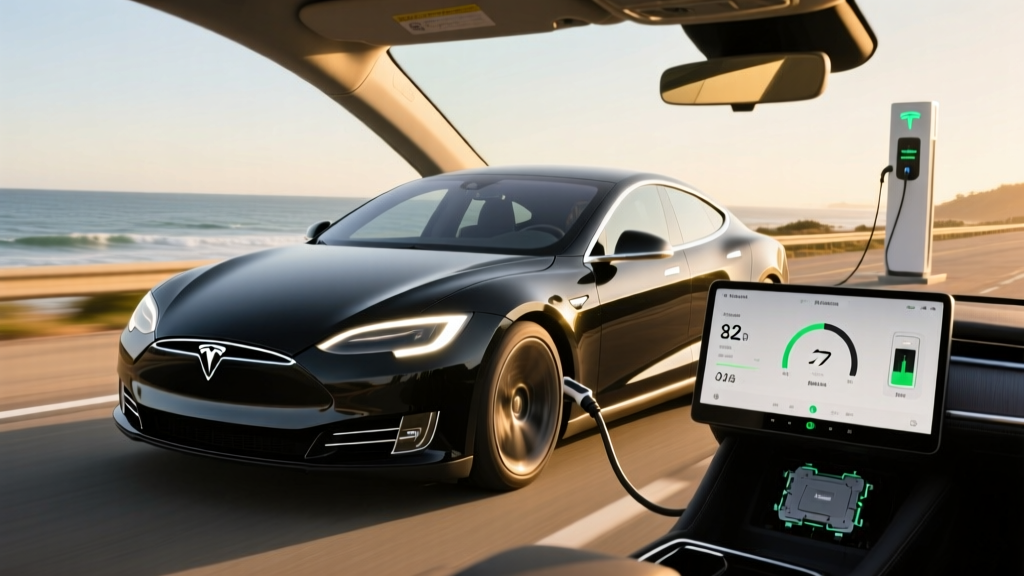
The Model S peaks at 250 kW on Tesla's V3 Superchargers, adding roughly 200 miles of range in 15 minutes under ideal conditions. The charge curve tapers significantly above 80% state of charge — a deliberate battery-protection strategy. The 10-80% session takes approximately 30 minutes, which is competitive but no longer class-leading; the Hyundai Ioniq 5 and Porsche Taycan (with 800V architecture) can hit 10-80% in 18-22 minutes.
For home charging, the onboard charger accepts up to 11.5 kW on a 240V/48A circuit. A full 0-100% charge takes roughly 9 hours — practical for overnight top-ups. Installation of a NEMA 14-50 outlet or hardwired Tesla Wall Connector typically runs $500-$2,000 depending on panel proximity and whether your home's electrical panel requires an upgrade to 200A service. Always consult a licensed electrician for final specifications.
Tesla's NACS (North American Charging Standard) connector is now the industry standard adopted by Ford, GM, Rivian, and others. The Model S uses NACS natively, giving it seamless access to the Supercharger network — still the most reliable DC fast-charging ecosystem in North America by uptime metrics.
Performance, Tuning, and Driving Dynamics
The Model S Plaid's 1.99-second 0-60 mph time (with rollout subtracted) makes it one of the quickest production cars ever built. The tri-motor setup — one front, two rear — enables precise torque vectoring that pushes the car through corners with surprising agility for a 4,766-pound sedan. The Long Range's 3.1-second 0-60 is hardly slow, delivering 670 hp from its dual-motor configuration.
When enthusiasts search for "Tesla Model S tuning," they're typically looking for software-based performance adjustments rather than aftermarket hardware. Tesla's OTA updates have historically adjusted acceleration profiles, suspension firmness (on adaptive air suspension models), and even enabled Track Mode on Plaid variants, which modifies stability control thresholds, cooling aggressiveness, and front/rear torque bias. Third-party tuning boxes exist that modify throttle response and unlock speed limiters, but these void the battery and powertrain warranty — a significant risk on an $89,990+ vehicle.
The adaptive air suspension lowers the car at highway speeds for aerodynamic efficiency and raises it for speed bumps or steep driveways. Ride quality in Comfort mode is compliant for a performance sedan, though the Plaid's stiffened setup transmits more road imperfections than a BMW i7 or Mercedes EQS.
Pricing, Trims, and Federal Tax Credit Eligibility
| Trim | Base MSRP | Destination | As-Tested (Typical Options) | §30D Tax Credit |
|---|---|---|---|---|
| Model S Long Range | $74,990 | $1,990 | $78,000-$82,000 | Not eligible (MSRP cap exceeded) |
| Model S Plaid | $89,990 | $1,990 | $93,000-$98,000 | Not eligible (MSRP cap exceeded) |
The IRS §30D federal tax credit caps eligible sedans at an MSRP of $55,000. Both Model S trims exceed this threshold significantly, meaning no federal purchase credit is available regardless of buyer income or battery sourcing. This has been the case since the MSRP cap took effect under the Inflation Reduction Act.
However, some state-level incentives may still apply — California's CVRP program, for instance, has its own income and price thresholds that occasionally cover higher-end EVs. Check your state's energy office or the IRS §30D guidance page for current rules. Leasing the Model S through Tesla's financial arm may allow the lessor to claim the commercial clean vehicle credit (§45W), potentially passing savings through as a reduced lease payment — consult a tax professional before structuring a deal this way.
Interior, Tech, and Daily Usability
The Model S interior centers on a 17-inch landscape touchscreen running Tesla's proprietary infotainment OS. The yoke steering wheel remains standard on Plaid and optional on Long Range — it takes acclimation and is polarizing for low-speed maneuvering. A secondary 8-inch rear touchscreen controls climate and entertainment for passengers.
Tesla's Autopilot comes standard and provides competent SAE Level 2 highway lane-keeping and adaptive cruise control. Full Self-Driving (Supervised) is a $8,000 add-on (or $99/month subscription) that adds automatic lane changes, traffic light recognition, and navigation-on-autopilot. Despite the name, FSD remains Level 2 — the driver must remain attentive and keep hands on the wheel at all times. It is not a Level 4 autonomous system.
Cargo space is generous at 28 cubic feet behind the rear seats (with a 60/40 split fold) plus a 3.1-cubic-foot frunk. The hatchback design makes loading bulky items easier than a traditional sedan trunk. Rear legroom at 35.4 inches is adequate for adults but tighter than a long-wheelbase BMW i7 or Mercedes EQS.
Notable drawbacks include the absence of Apple CarPlay and Android Auto (Tesla uses its own navigation and media apps), panel-gap inconsistencies that persist despite improvements, and a ride quality that prioritizes sportiness over the plush isolation luxury-sedan buyers often expect.
Pros and Cons
Pros
- Class-leading EPA range (402 mi Long Range)
- Supercharger network access (NACS native)
- Plaid's 1.99s 0-60 is supercar territory
- OTA updates add features post-purchase
- Hatchback cargo versatility (28 cu ft + frunk)
- 8-year/150,000-mile battery warranty
Cons
- No federal §30D tax credit (MSRP cap exceeded)
- 250 kW peak charge rate trails 800V competitors
- No Apple CarPlay / Android Auto
- Yoke steering divisive for daily driving
- Rear seat space tighter than German rivals
- Panel gaps and build consistency still criticized
Who Should Buy the 2026 Tesla Model S?
Choose the Model S Long Range if: You want the longest-range EV sedan under $80K, prioritize Supercharger network reliability for road trips, and value OTA feature updates over traditional luxury branding.
Choose the Model S Plaid if: You demand sub-2-second acceleration, track-capable performance, and can accept the range and price premium over Long Range.
Look elsewhere if: You need the federal tax credit (consider the BMW i4, Tesla Model 3, or Hyundai Ioniq 6), prefer Apple CarPlay integration, or prioritize rear-seat luxury over performance (BMW i7, Mercedes EQS).
Frequently Asked Questions
What is the real-world range of the 2026 Tesla Model S?
The EPA rates the Long Range at 402 miles and the Plaid at 396 miles. Real-world highway driving at 75-80 mph yields 320-350 miles. In freezing temperatures with cabin heating, expect 260-300 miles. City driving with regenerative braking can approach or exceed EPA estimates.
How fast does the Model S charge at home and on the road?
On a 240V Level 2 home charger (48A), the Model S charges at 11.5 kW, adding roughly 44 miles per hour — a full charge takes about 9 hours. On a Tesla V3 Supercharger, it peaks at 250 kW and charges from 10-80% in approximately 30 minutes. The charge curve tapers above 80% to protect battery longevity.
Does the Tesla Model S qualify for the federal EV tax credit?
No. Under IRS §30D rules, sedans must have an MSRP at or below $55,000 to qualify. The Model S Long Range starts at $74,990 and the Plaid at $89,990, both well above the cap. State incentives may partially offset the cost, and lease structures may allow the lessor to claim the commercial credit — consult a tax professional for your situation.
Is the Model S worth buying over the Lucid Air or Porsche Taycan?
The Model S Long Range offers more range than the Taycan (which tops out around 318 miles EPA) at a lower price, and the Supercharger network remains an advantage for road trips. The Lucid Air Grand Touring delivers 516 miles EPA and superior rear-seat space but starts above $100K. The Taycan wins on driving dynamics and build quality. If range and charging infrastructure are top priorities, the Model S holds strong; if luxury finish matters most, the Taycan or Lucid may be better fits.
Can I tune or modify a Tesla Model S for more performance?
Tesla's performance tuning is primarily software-based via OTA updates and configurable drive modes (Track Mode on Plaid). Third-party aftermarket tuning boxes exist for throttle response and speed-limiter removal, but these modifications void the 8-year/150,000-mile battery and powertrain warranty. Given the $15,000-$25,000 estimated cost of a battery replacement outside warranty, most owners are better served by the factory performance profiles.
What is the battery warranty coverage?
Tesla covers the Model S battery and drive unit for 8 years or 150,000 miles, whichever comes first, with a minimum 70% capacity retention guarantee. If the battery degrades below 70% state of health within the warranty period, Tesla will repair or replace it. This is one of the more generous luxury-EV warranties and reflects confidence in the NMC pack's longevity.