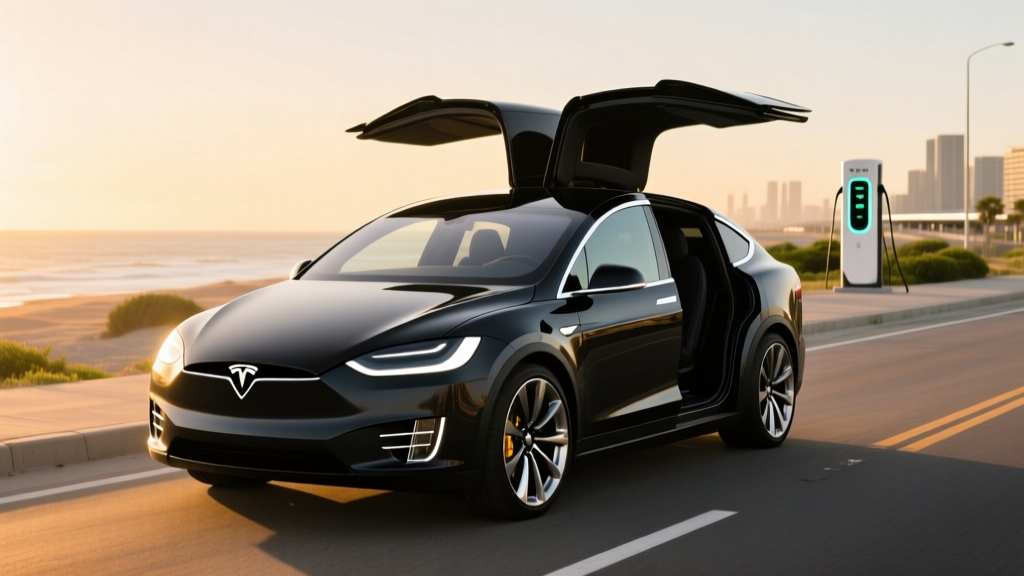
Rumors about Tesla sunsetting its flagship SUV surface nearly every year, and 2026 is no exception. So, is Tesla discontinuing the Model X? As of early 2026, the answer is no — the Model X remains in production at the Fremont factory and is actively listed on Tesla's configurator. However, Tesla has progressively narrowed the lineup, eliminated the Long Range trim in the US market, and shifted focus toward robotaxi and next-generation platforms. The Model X now occupies a specific niche: a high-performance, three-row electric SUV with access to the Supercharger network, aimed at buyers who need space, speed, and long-distance comfort.
This profile covers the 2026 Tesla Model X in detail — range, charging, pricing, tax credit eligibility, and whether it still makes sense against rivals like the Rivian R1S, BMW iX, and Mercedes EQS SUV.
2026 Tesla Model X: Quick Verdict
The 2026 Model X is available in a single dual-motor All-Wheel Drive configuration starting at $79,990 (before destination). The high-performance Plaid variant, with its tri-motor setup and 1,020 horsepower, starts at $94,990. Tesla has streamlined options, meaning most buyers will configure a vehicle in the $82,000–$98,000 range after common add-ons like Enhanced Autopilot, six-seat interiors, and premium paint.
The Model X earns its keep through class-leading efficiency for its size, access to Tesla's Supercharger network (now open to other brands, reducing its exclusivity advantage), and genuine third-row usability. It loses points for an aging interior design, panel-fit inconsistency, and a base price that exceeds the federal tax credit MSRP cap for SUVs.
Range, Battery, and Real-World Efficiency
Real-World Expectation: ~270–295 miles highway at 70 mph; ~220–250 miles in cold weather (below 32°F). The Plaid variant drops to an EPA 311 miles, with real-world highway closer to 255–280 miles.
The 2026 Model X Dual-Motor AWD uses a ~100 kWh battery pack (approximately 95 kWh usable). Tesla does not publish exact pack chemistry on its spec sheet, but the Model X has historically used NMC (nickel manganese cobalt) chemistry — chosen for its higher energy density, which is necessary in a heavy, three-row SUV. Unlike the Model 3 RWD, the Model X has not adopted LFP (lithium iron phosphate), which would add unacceptable weight.
On the efficiency front, the Dual-Motor AWD achieves an EPA-rated 100 MPGe combined, translating to approximately 34 kWh per 100 miles. That's impressive for a 5,185-pound vehicle with up to seven seats. For context, the Rivian R1S (Dual-Motor) rates at 84 MPGe combined, and the Mercedes EQS 580 SUV at 85 MPGe.
Owner insight: The Model X's heat pump and sophisticated thermal management system help mitigate cold-weather range loss better than many competitors, but physics still applies. Expect a 25–30% range reduction in sustained sub-freezing temperatures without preconditioning. Always precondition the battery while plugged in before winter drives — this warms the pack using grid power rather than battery energy.
| Spec | Dual-Motor AWD | Plaid (Tri-Motor) |
|---|---|---|
| EPA Range | 335 miles | 311 miles |
| Battery (usable) | ~95 kWh (NMC) | ~95 kWh (NMC) |
| Horsepower | 670 hp | 1,020 hp |
| 0–60 mph | 3.8 seconds | 2.5 seconds |
| Drivetrain | AWD (Dual-Motor) | AWD (Tri-Motor) |
| MPGe (combined) | 100 MPGe | 98 MPGe |
| kWh/100 mi | 34 kWh | 35 kWh |
| Top Speed | 155 mph | 163 mph |
| Curb Weight | 5,185 lbs | 5,390 lbs |
| Base MSRP | $79,990 | $94,990 |
Charging Speed: DC Fast and Home Level 2
The Model X supports a peak DC fast-charge rate of 250 kW via the NACS (North American Charging Standard) connector — Tesla's proprietary plug, which has now been adopted by Ford, GM, Rivian, and most major automakers. On a V3 or V4 Supercharger, the Model X can add up to 175 miles of range in 15 minutes under ideal conditions.
Charging curve reality: The 250 kW peak is not sustained. In real-world testing, the Model X typically holds above 200 kW from approximately 10% to 30% State of Charge (SoC), then tapers progressively. A 10–80% charge takes approximately 30–35 minutes at a V3 Supercharger. Above 80%, charging slows dramatically — expect 50 kW or less — which is why Tesla's navigation system typically recommends charging to 80% for road-trip stops.
For home charging, the Model X accepts up to 11.5 kW on Level 2 (48 amps on a 60-amp circuit). Using a Tesla Wall Connector or equivalent NACS Level 2 unit, you'll recover approximately 35 miles of range per hour of charging. A full 0–100% home charge takes roughly 10 hours.
| Charging Level | Power / Rate | Speed | Time |
|---|---|---|---|
| Level 1 (120V) | ~1.4 kW | ~4 mi/hr | ~68 hrs (0–100%) |
| Level 2 (240V, 48A) | 11.5 kW | ~35 mi/hr | ~10 hrs (0–100%) |
| DC Fast (V3 Supercharger) | Peak 250 kW | ~175 mi in 15 min | ~30–35 min (10–80%) |
| DC Fast (CCS adapter, 3rd party) | Up to 150–200 kW* | Variable | ~40–50 min (10–80%) |
*With a NACS-to-CCS adapter, the Model X can use Electrify America, EVgo, and other CCS networks. Actual speeds depend on the station's maximum output and the adapter's throughput.
Source: Tesla Model X Charging Guide
Pricing, Tax Credits, and Ownership Cost
The 2026 Model X Dual-Motor AWD starts at $79,990 (plus $1,390 destination). The Plaid begins at $94,990. After typical options — $2,000 for premium paint, $6,500 for a six-seat interior, and $8,000 for Full Self-Driving (Supervised) capability — most buyers land between $85,000 and $100,000.
| Item | Dual-Motor AWD | Plaid |
|---|---|---|
| Base MSRP | $79,990 | $94,990 |
| Destination Fee | $1,390 | $1,390 |
| As-Tested (typical config) | ~$88,000 | ~$103,000 |
| Federal §30D Credit Eligible? | No — exceeds $80,000 SUV MSRP cap | |
| Estimated Annual Charging Cost | ~$650–$900 (12,000 mi/yr, home L2) | |
Federal tax credit reality: Under current IRS §30D clean vehicle credit rules, SUVs must have an MSRP at or below $80,000 to qualify. The Model X Dual-Motor AWD's $79,990 base price technically falls under the cap, but once destination charges and any factory options push the vehicle above $80,000, it becomes ineligible. Additionally, the buyer must meet income caps ($300,000 joint / $150,000 single), and the vehicle must satisfy critical-mineral and battery-component sourcing requirements that shift annually. Consult a tax professional before relying on this credit.
Ownership economics: The Model X qualifies for reduced registration fees in some states but faces EV-specific registration surcharges in others (up to $225/year in states like Ohio). Insurance premiums run 15–25% higher than comparable gas SUVs due to repair costs. Depreciation has historically been steep on the Model X — expect 45–55% value loss over five years, though this has moderated as Tesla's brand cachet stabilizes.
Performance and Driving Dynamics
The Dual-Motor Model X delivers 670 horsepower and hits 0–60 mph in 3.8 seconds — quicker than a Porsche Cayenne Turbo and remarkably fast for a 5,185-pound family SUV. The Plaid, with its three-motor configuration and 1,020 hp, reaches 60 mph in 2.5 seconds, making it one of the quickest production SUVs ever built.
Both variants feature standard all-wheel drive with independent torque vectoring across axles. The adaptive air suspension provides adjustable ride height — useful for rough driveways, speed bumps, and light off-road clearance — and automatically lowers at highway speeds for improved aerodynamics.
Driving impression: The Model X rides comfortably on its air suspension, but the steering feels artificially weighted and less communicative than a BMW iX or Porsche Cayenne. Body roll is well-controlled for the vehicle's height, and regenerative braking offers true one-pedal driving when set to "Hold" mode. The cabin remains quiet at highway speeds, though wind noise around the falcon-wing rear doors is slightly more noticeable than in competitors.
Interior, Cargo, and Technology
The Model X offers seating for up to seven passengers in a 2-3-2 configuration (five-seat and six-seat layouts are also available). The second row provides 40.2 inches of legroom, and the third row accommodates 32.7 inches — enough for children and short-trip adults but tight for long journeys. The six-seat configuration replaces the bench with two captain's chairs, improving access and comfort at the cost of one seat.
Cargo space measures 88.1 cubic feet behind the front row (with second and third rows folded), 43.9 cu ft behind the second row, and 15.3 cu ft behind the third row. The front trunk (frunk) adds 6.5 cu ft — useful for charging cables, groceries, or a small carry-on.
Technology highlights:
- 17-inch center touchscreen with a fast, responsive UI and native navigation
- 12.3-inch driver instrument cluster (reintroduced in recent model years after initial removal)
- 22-speaker audio system with immersive sound
- Autopilot (standard): adaptive cruise control, lane-keeping assist, automatic emergency braking — SAE Level 2 driver-assist, not self-driving
- Full Self-Driving (Supervised) ($8,000 option): adds automatic lane changes, Navigate on Autopilot, Smart Summon, and traffic-light recognition. Still requires active driver supervision at all times (SAE Level 2)
- Over-the-air updates that periodically add features and refine performance
Notable drawbacks: The yoke steering wheel (now optional rather than default) remains divisive and impractical for low-speed maneuvers. Interior materials — while improved — still lag behind the Mercedes EQS SUV and BMW iX in perceived quality. Panel gaps vary noticeably between individual vehicles. The falcon-wing rear doors, while dramatic, can be slow to open and occasionally struggle with obstacle detection in tight garages.
Warranty and Long-Term Reliability
Tesla covers the Model X with the following warranty:
- Basic Vehicle: 4 years / 50,000 miles
- Battery & Drive Unit: 8 years / 150,000 miles (whichever comes first), with a minimum 70% capacity retention guarantee over the warranty period
The 150,000-mile battery warranty on the Model X exceeds the Model 3/Y's 120,000-mile coverage, reflecting Tesla's confidence in the larger pack's longevity. NMC chemistry in the Model X has shown moderate degradation in real-world fleet data — typically 8–12% capacity loss over 100,000 miles when owners avoid frequent 100% charges and DC fast-charging. Tesla recommends daily charging to 80–90% for NMC packs, reserving 100% for road trips.
Battery replacement cost: Out of warranty, a Model X battery replacement currently runs between $14,000 and $20,000 depending on the pack configuration and labor. While steep, the 8-year/150,000-mile warranty covers the vast majority of ownership periods.
Source: Tesla New Vehicle Limited Warranty
Is the Model X Worth It vs. the Competition?
The Model X competes in the luxury three-row electric SUV segment against several capable alternatives:
Model X Advantages
- Best-in-class efficiency (100 MPGe) for a three-row EV SUV
- Access to Tesla Supercharger network with native integration
- Quickest acceleration in segment (Plaid: 2.5s 0–60)
- Falcon-wing doors aid child-seat installation and third-row access
- Strong over-the-air update cadence
Model X Disadvantages
- Does not qualify for $7,500 federal tax credit (MSRP cap)
- Interior quality below German luxury rivals
- Aging platform design (introduced 2015, refreshed 2021)
- Panel-fit inconsistency
- High insurance and depreciation costs
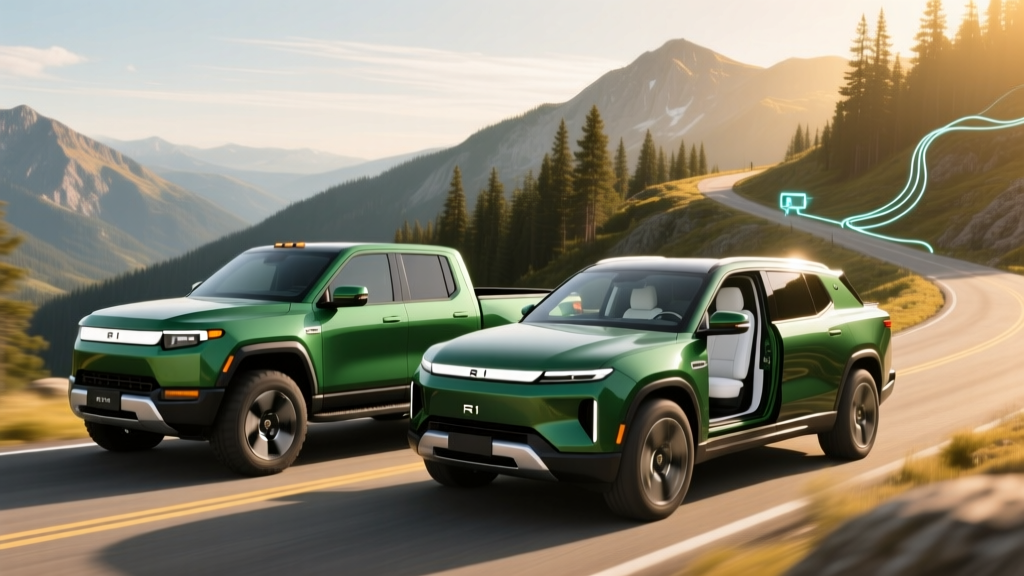
vs. Rivian R1S: The R1S offers superior off-road capability, a more modern interior, and available quad-motor performance. However, it trails the Model X in efficiency and lacks the Supercharger network advantage (though Rivian now has NACS access). The R1S starts lower ($75,900) and can qualify for the federal credit in certain configurations.
vs. BMW iX: The iX delivers a far more refined cabin, superior ride quality, and better build consistency. It's a two-row vehicle, though, so it doesn't compete on passenger capacity. The iX xDrive50 starts at $87,250.
vs. Mercedes EQS SUV: The EQS SUV matches the Model X on luxury and offers optional third-row seating, but it's heavier, less efficient (85 MPGe), and starts at $104,400. The EQS also suffers steeper depreciation.
So, Is Tesla Discontinuing the Model X?
Based on all available evidence as of 2026, Tesla is not discontinuing the Model X. The vehicle remains in active production, appears on Tesla's configurator, and continues to receive software updates. However, several factors fuel the persistent rumors:
- Narrowed lineup: Tesla eliminated the Long Range variant in the US, leaving only AWD and Plaid — a sign of reduced investment in the nameplate.
- Production volume: The Model X represents a small fraction of Tesla's total output. Quarterly deliveries typically show Model S/X combined at 2–5% of total volume.
- Platform age: The Model X rides on Tesla's original platform architecture. A ground-up redesign has not been announced.
- Strategic pivot: Tesla's public focus has shifted toward the Cybertruck, next-generation compact platform, robotaxi development, and energy products.
For buyers who need a three-row electric SUV with Supercharger access and strong range today, the Model X remains a legitimate option. Just understand that you're buying into a mature product with known trade-offs — and that Tesla's long-term commitment to the model is uncertain beyond the current generation.
Consider alternatives if: You value build quality and luxury materials (BMW iX, Mercedes EQS SUV), need off-road capability (Rivian R1S), or require the $7,500 federal tax credit to make the math work.
Frequently Asked Questions
What is the real-world range of the 2026 Tesla Model X?
The EPA rates the Dual-Motor Model X at 335 miles. In real-world highway driving at 70 mph, expect approximately 270–295 miles. In cold weather (below freezing), that drops to roughly 220–250 miles without preconditioning. The Plaid variant rates at 311 miles EPA, with real-world highway use closer to 255–280 miles.
How fast does the Model X charge at home and on the road?
On a Level 2 home charger (11.5 kW / 48 amps), the Model X gains about 35 miles of range per hour, with a full charge taking roughly 10 hours. On a Tesla V3 Supercharger (250 kW peak), a 10–80% charge takes approximately 30–35 minutes. Charging slows significantly above 80% SoC.
Does the 2026 Model X qualify for the federal EV tax credit?
Likely not in most configurations. The IRS §30D credit caps SUV MSRPs at $80,000. The Dual-Motor AWD starts at $79,990, but adding destination ($1,390) and any factory options pushes the vehicle above the cap, making it ineligible. Buyer income limits ($300,000 joint / $150,000 single) and battery-sourcing requirements add further restrictions. Consult the IRS clean vehicle credit page and a tax professional.
Is the Model X a good family vehicle?
Yes, with caveats. The available third row fits children and smaller adults. The falcon-wing doors make car-seat installation easier than in conventional SUVs. Cargo space is generous at 88.1 cu ft with seats folded. However, the ride can be firm, and the touchscreen-centric controls require a learning curve for passengers.
How does the Model X compare to the Rivian R1S?
The Model X wins on efficiency (100 vs. 84 MPGe), range (335 vs. ~321 miles), and Supercharger integration. The R1S wins on interior quality, off-road capability, available quad-motor performance, and potential federal tax credit eligibility. Both seat up to seven passengers.
Will Tesla replace the Model X with a new SUV?
Tesla has not announced a successor to the Model X. Speculation points to a potential next-generation platform that could underpin a more affordable, compact three-row SUV, but nothing is confirmed. The current Model X is expected to remain in production through at least the 2027 model year.
What is the battery warranty on the Model X?
Tesla covers the Model X battery and drive unit for 8 years or 150,000 miles, whichever comes first, with a guaranteed minimum of 70% capacity retention during that period. Out-of-warranty battery replacement costs between $14,000 and $20,000.