The 'Tesla MPV' Question: What Buyers Are Actually Looking For
Monthly search data shows a steady trickle of queries for Tesla MPV — a multi-purpose vehicle that doesn't exist in Tesla's 2026 lineup. The confusion is understandable: Tesla sells the Model Y crossover, Model X SUV, and the Cybertruck, but nothing with a true minivan body style or a dedicated people-mover platform. This article unpacks what searchers likely mean, what Tesla actually offers in that space, and which 2026 models come closest to filling the MPV-shaped gap.
Quick Verdict
Tesla has no MPV or minivan in production as of 2026. Buyers seeking three-row, sliding-door family haulers from Tesla will need to look at the Model X (SUV with falcon-wing doors) or cross-shop competitors like the Kia EV9 or Hyundai Ioniq 9. The long-rumored 'Tesla Model V' minivan remains unannounced.
What Tesla Actually Offers: The 2026 Model X as the Closest Fit
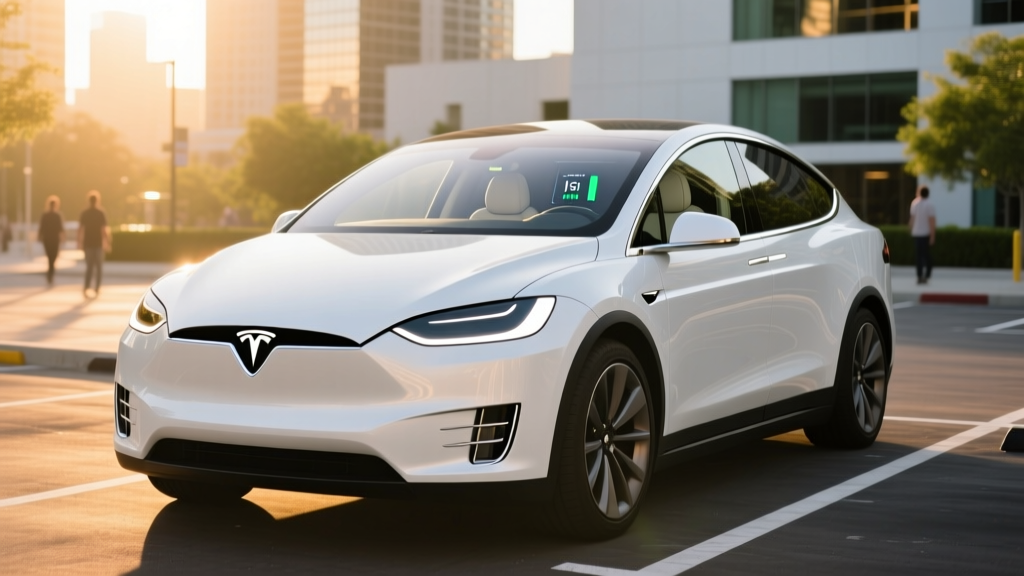
For buyers who typed "Tesla MPV" hoping for a three-row electric family hauler, the 2026 Tesla Model X is the nearest equivalent. It's an SUV, not an MPV, but it seats up to seven and offers the cargo versatility that minivan shoppers prioritize.
| Spec | Model X Long Range | Model X Plaid |
|---|---|---|
| EPA Range | 335 miles | 326 miles |
| Battery | ~100 kWh usable, NMC | ~100 kWh usable, NMC |
| 0-60 mph | 3.8 sec | 2.5 sec |
| Horsepower | 670 hp | 1,020 hp |
| Drivetrain | Dual-Motor AWD | Tri-Motor AWD |
| Max DC Charge | 250 kW | 250 kW |
| 10-80% Time | ~32 min | ~32 min |
| Level 2 Rate | 11.5 kW (~44 mi/hr) | 11.5 kW (~44 mi/hr) |
| MPGe (combined) | 102 MPGe | 98 MPGe |
| Cargo (behind 3rd row) | ~15 cu ft | ~15 cu ft |
| Cargo (max, folded) | ~88 cu ft | ~88 cu ft |
| Base MSRP | $79,990 | $94,990 |
| Warranty (battery) | 8 yr / 150,000 mi | 8 yr / 150,000 mi |
Source: Tesla Model X Design Page, EPA fueleconomy.gov
Real-World Range vs. EPA Sticker: What to Actually Expect
EPA 335 Miles → Real World ~260-290 Miles
The Model X Long Range carries a 335-mile EPA estimate, but real-world highway driving at 70-75 mph typically yields 260-290 miles due to aerodynamic drag and the vehicle's ~5,100-lb curb weight. In cold weather (below 32°F), expect a further 15-25% reduction, bringing effective range down to 200-245 miles on winter road trips. City driving with regenerative braking recovers more energy, often matching or exceeding the EPA figure in stop-and-go traffic.
The Model X's NMC (nickel manganese cobalt) chemistry delivers strong energy density but is more temperature-sensitive than LFP batteries. Tesla's heat pump helps mitigate cold-weather losses, but the physics of a large, heavy SUV can't be fully overcome. For context, the Kia EV9 (a closer MPV competitor) posts 304 miles EPA with a 100 kWh battery and similar real-world derating.
Charging Speed: DC Fast, Home Level 2, and the Curve Reality
| Charging Level | Power (kW) | Miles Added per Hour | Notes |
|---|---|---|---|
| Level 1 (120V outlet) | 1.4 kW | ~3-4 mi/hr | Emergency/trickle only |
| Level 2 (240V home) | 11.5 kW | ~44 mi/hr | Full charge overnight (~9 hrs) |
| DC Fast (Tesla Supercharger V3) | 250 kW peak | ~200 mi in 15 min | 10-80% in ~32 min |
| DC Fast (V4 Supercharger) | 250 kW (current) | Similar to V3 | CCS adapter not needed |
Charge curve reality: The Model X peaks at 250 kW only between roughly 10-30% state of charge. From 30-60%, it sustains ~150-180 kW, and above 80%, charging tapers sharply to protect the NMC battery — often dropping below 50 kW. This means the published 10-80% time of ~32 minutes is achievable at a V3 Supercharger with battery preconditioning enabled, but sessions from 10-90% will take closer to 50-55 minutes.
Home Level 2 charging at 11.5 kW requires a 60-amp dedicated circuit (48-amp continuous draw). Most Model X owners install a Tesla Wall Connector ($420 for the unit) with total installation running $800-$2,200 depending on panel capacity and conduit run length. A 200-amp electrical panel is typically required; older homes may need a panel upgrade ($1,500-$3,000 additional).
Pricing, Tax Credits, and the $80,000 MSRP Cap Problem
| Trim | Base MSRP | Federal §30D Credit | Effective Price |
|---|---|---|---|
| Model X Long Range | $79,990 | $0 (exceeds $80K SUV cap) | $79,990 |
| Model X Plaid | $94,990 | $0 (exceeds $80K SUV cap) | $94,990 |
⚠️ Tax Credit Warning
The Model X does not qualify for the $7,500 federal EV tax credit under IRS §30D rules. SUVs face an $80,000 MSRP cap, and the Model X Long Range starts at $79,990 — technically under the cap, but destination fees and mandatory options push the transaction price over. The Plaid at $94,990 is well above. Additionally, buyers must meet income caps ($150K single / $300K joint) and the vehicle must satisfy critical-mineral and battery-component sourcing requirements. Always verify current eligibility at IRS.gov before purchasing.
For buyers who specifically want a three-row electric family hauler with tax-credit eligibility, competitors like the Kia EV9 (starting ~$54,900, partial credit eligibility) or the Volkswagen ID. Buzz (starting ~$59,995) become compelling alternatives.
Tech, Driver Assist, and the MPV-Missing Features
The Model X carries Tesla's full tech suite: a 17-inch center touchscreen, rear-seat entertainment display, HEPA air filtration ("Bioweapon Defense Mode"), and over-the-air updates. The falcon-wing rear doors are a party trick that genuinely helps with car-seat loading — a point in its favor for minivan-intending buyers.
Autopilot & FSD: Level 2, Not Self-Driving
Tesla Autopilot and Full Self-Driving (Supervised) are SAE Level 2 driver-assistance systems. The driver must remain fully engaged, hands on or near the wheel, eyes on the road. These systems do not make the Model X autonomous. Only Level 4 services like Waymo operate without driver supervision — and those are robotaxi fleets, not consumer vehicles. FSD (Supervised) costs $8,000 upfront or $99/month as of 2026.
What's missing for true MPV buyers: The Model X lacks sliding rear doors (falcon-wings need vertical clearance and can struggle in tight garages), has no built-in vacuum system (like the Honda Odyssey), and its third row is best suited for children — adults will find legroom tight at ~33 inches. Cargo behind the third row is just 15 cu ft, far less than a Chrysler Pacifica Hybrid's 32 cu ft.
Is the Model X Worth It vs. Actual MPV Alternatives?
Choose the Model X If:
- You want Tesla's Supercharger network and software ecosystem
- Performance matters (3.8s 0-60 in a 7-seat vehicle is remarkable)
- You can charge at home and rarely need the full 335-mile range
- The $80K+ price without a tax credit fits your budget
Choose a Competitor (Kia EV9, VW ID. Buzz, Pacifica Hybrid) If:
- You need true minivan utility: sliding doors, adult-friendly third row, maximum cargo
- Federal tax credit eligibility is important to your purchase math
- Your budget is under $65,000
- You prioritize passenger comfort over 0-60 times
Model X Pros
- 335-mile EPA range among the best for 3-row EVs
- Access to 17,000+ Tesla Superchargers globally
- Falcon-wing doors ease car-seat loading
- Class-leading acceleration and handling for the segment
- Over-the-air updates keep tech current
Model X Cons
- No federal tax credit (over MSRP cap)
- Third row cramped for adults
- Falcon-wing doors need overhead clearance
- $80K+ price is steep vs. competitors
- Panel gaps and build-quality complaints persist
Frequently Asked Questions
Does Tesla make an MPV or minivan in 2026?
No. Tesla's 2026 lineup includes the Model 3, Model Y, Model S, Model X, Cybertruck, and the refreshed Roadster (limited production). There is no minivan or dedicated MPV. Rumors of a "Tesla Model V" minivan have circulated since 2020 but nothing has been officially announced or confirmed by Tesla.
What is the real-world range of the Tesla Model X?
The EPA rates the Model X Long Range at 335 miles. In real-world highway driving at 70+ mph, expect 260-290 miles. In cold weather below freezing, range can drop to 200-245 miles. City driving with regenerative braking often matches or slightly exceeds the EPA figure.
How fast does the Model X charge at home and on the road?
On a Level 2 home charger (11.5 kW), the Model X adds about 44 miles of range per hour, with a full charge taking roughly 9 hours. At a Tesla V3 Supercharger (250 kW peak), 10-80% takes approximately 32 minutes with preconditioning. Above 80%, charging tapers significantly.
Does the Tesla Model X qualify for the federal EV tax credit?
Generally, no. The IRS §30D credit caps SUV MSRP at $80,000. The Model X Long Range starts at $79,990 but destination fees typically push it over the cap. The Plaid at $94,990 is well above. Buyers must also meet income limits and battery-sourcing requirements. Always check current rules at IRS.gov.
Is the Model X a good substitute for a minivan?
It depends on your priorities. The Model X offers falcon-wing doors that help with car-seat loading and seats up to seven. However, its third row is tight for adults (~33 inches of legroom), it lacks sliding doors, and cargo behind the third row is limited to 15 cu ft. Dedicated minivans like the Chrysler Pacifica Hybrid or Toyota Sienna offer more passenger and cargo space, though neither matches the Model X's EV range or performance.
What's the best 3-row electric alternative to a Tesla MPV?
The Kia EV9 (304-mile EPA range, starting ~$54,900) is the strongest all-electric 3-row alternative in 2026, offering more interior space and partial tax-credit eligibility. The Volkswagen ID. Buzz provides genuine minivan styling with ~230 miles of range. For plug-in hybrid flexibility, the Chrysler Pacifica Hybrid (32 miles electric-only, 30 MPG combined) remains a practical choice.