Quick Verdict: Does the Model S Plaid Live Up to the Ludicrous Hype?
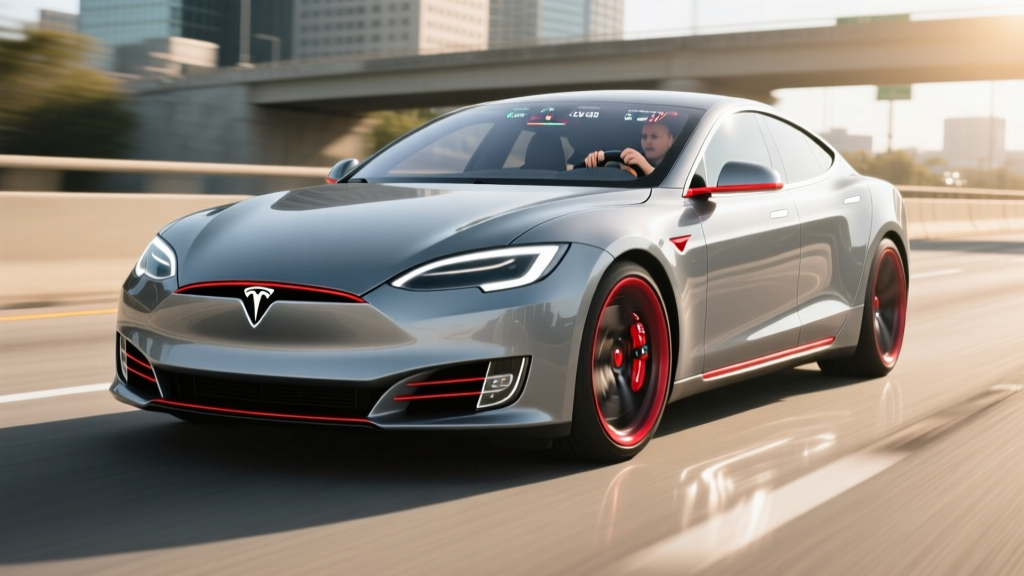
The Tesla Model S Plaid remains one of the quickest production cars ever built, and the answer to anyone searching for ludicrous mode tesla 0-60 data is straightforward: Tesla claims 1.99 seconds to 60 mph with rollout subtracted, but independent testing consistently clocks the Plaid between 2.1 and 2.3 seconds in real-world conditions. That distinction matters — it's the difference between a marketing number and what you'll actually experience on a prepped surface with warm tires and a full battery.
Beyond the headline acceleration, the 2026 Model S Plaid is a 1,020-horsepower luxury sedan with genuine daily-driver usability: 396 miles of EPA range, access to the Supercharger network, and a cabin that, while controversial in its minimalist execution, offers class-leading cargo space. The question isn't whether it's fast — it is, brutally so — but whether its $89,990 starting price (before any incentives) makes sense against the Lucid Air Sapphire, Porsche Taycan Turbo GT, and BMW i7 M70.
| Spec | Value |
|---|---|
| EPA Range | 396 miles |
| Battery (usable) | ~95 kWh, NMC chemistry |
| Drivetrain | Tri-motor AWD |
| Horsepower | 1,020 hp |
| 0–60 mph (claimed) | 1.99 sec (w/ rollout) |
| 0–60 mph (independent) | 2.1–2.3 sec |
| Top Speed | 200 mph |
| Max DC Fast Charge | 250 kW (V3 Supercharger) |
| 10–80% DC Charge | ~27 minutes |
| Level 2 Home Charge | 11.5 kW (~44 mi/hr) |
| MPGe (combined) | 116 MPGe |
| Efficiency | 29 kWh/100 mi |
| Cargo Volume | 28.0 cu ft (rear seats up) |
| Base MSRP | $89,990 |
| Federal Tax Credit (§30D) | Not eligible (MSRP > $55,000 sedan cap) |
| Battery Warranty | 8 years / 150,000 miles |
Range & Efficiency: 396 EPA Miles, but Plan for Less
The Model S Plaid carries a roughly 95 kWh usable battery pack using nickel-manganese-cobalt (NMC) chemistry — Tesla reserves LFP (lithium iron phosphate) for its standard-range, lower-cost models. NMC offers higher energy density, which is how Tesla fits 396 miles of EPA-estimated range into a sedan that also produces 1,020 hp.
EPA Range: 396 miles
Real-World Expectation: Expect 310–340 miles at sustained 75 mph highway speeds in mild weather. In freezing conditions (below 32°F), range drops to roughly 250–280 miles due to battery resistance and cabin heating demands. Aggressive driving in Plaid mode will further reduce range — hard acceleration events consume energy at multiples of the rated efficiency.
Efficiency is rated at 116 MPGe combined (29 kWh/100 miles), which is respectable for a 4,766-lb tri-motor sedan. For context, the Lucid Air Grand Touring achieves 131 MPGe combined with its more efficient powertrain, while the Porsche Taycan Turbo GT lands around 79 MPGe. The Model S Plaid sits in a reasonable middle ground — it's not the most efficient luxury EV, but it's far from the worst.
Charging Speed: 250 kW Peak, but the Curve Matters
The Model S Plaid charges at a maximum rate of 250 kW on Tesla's V3 Superchargers. A 10–80% session takes approximately 27 minutes under ideal conditions — meaning a preconditioned battery, moderate ambient temperature, and a stall that isn't being shared with another vehicle.
| Charging Level | Power | Speed |
|---|---|---|
| Level 1 (120V) | ~1.4 kW | ~4–5 miles/hour |
| Level 2 (240V, 48A) | 11.5 kW | ~44 miles/hour |
| DC Fast (V3 Supercharger) | 250 kW peak | 10–80% in ~27 min |
| DC Fast (CCS adapter, non-Tesla) | Up to 250 kW | Varies by station |
Charging curve reality: The Plaid hits peak 250 kW only between roughly 10–30% state of charge. Beyond 50%, charge speed tapers significantly — by 80%, you're looking at roughly 70–80 kW. This is standard for NMC chemistry, which Tesla manages conservatively to protect long-term battery health. If you're road-tripping, plan your stops around 10–80% sessions rather than trying to fill to 100% at a DC fast charger, where the final 20% can add 20+ minutes.
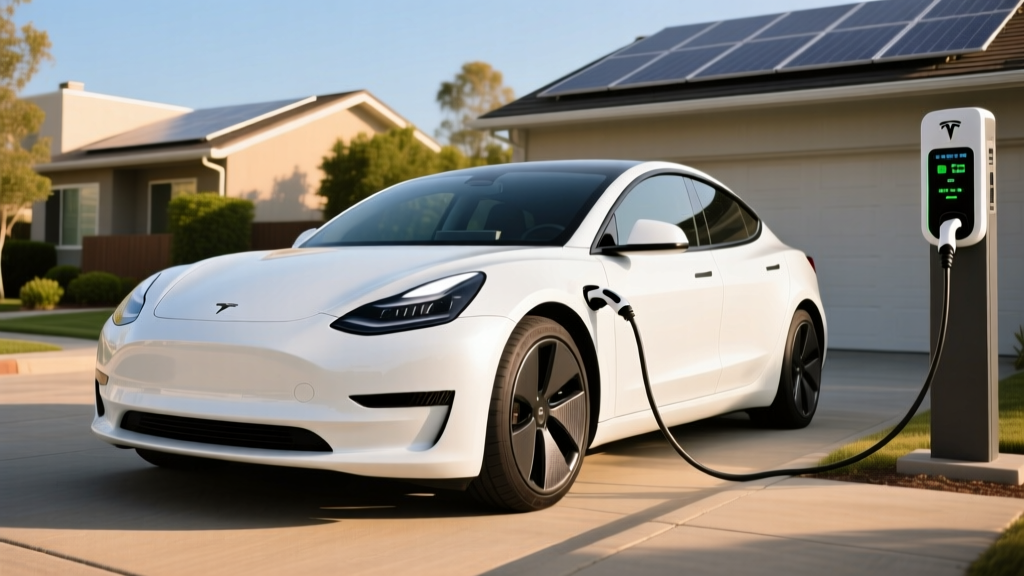
At home on a Level 2 Wall Connector (48 amps / 11.5 kW), a full charge from near-empty takes about 8–9 hours — easily accomplished overnight. Tesla includes a Mobile Connector with the vehicle for 120V trickle charging in a pinch.
The Ludicrous Mode 0-60 Question: What 1.99 Seconds Actually Means
Here's where precision matters. Tesla's claimed 1.99-second 0–60 mph time uses a 1-foot rollout — a drag-racing convention that subtracts the time it takes the car to travel its first foot. This effectively shaves 0.1–0.2 seconds off the clock. Without rollout, the number is closer to 2.1 seconds.
Independent tests by outlets like Motor Trend and Car and Driver have recorded the Model S Plaid between 2.1 and 2.3 seconds depending on surface preparation, tire temperature, battery state of charge, and ambient conditions. On a prepped drag strip with hot tires and a battery above 90% SoC, 2.1 seconds is achievable. On a public road with cold tires, expect 2.3–2.5 seconds — still astonishingly quick, but not the sub-2-second experience Tesla's marketing implies.
To access maximum acceleration, the Plaid requires:
- Battery state of charge above ~90%
- Battery and tire preconditioning (the car will prompt you)
- Drag Strip mode engaged via the touchscreen
- Adequate surface grip (asphalt condition matters enormously at these torque levels)
The tri-motor setup — one motor on the front axle, two on the rear — provides torque vectoring that helps put 1,020 hp to the ground without excessive wheelspin. The carbon-sleeve rotors in the rear motors allow them to spin at up to 20,000 RPM without structural failure, which is how Tesla achieves this power from relatively compact units.
Quarter-mile times typically fall in the 9.2–9.4 second range at 150+ mph, placing the Plaid in hypercar territory at a fraction of the price.
Interior, Cargo, and Tech: Luxury With Caveats
The Model S interior has been refreshed with a 17-inch landscape-oriented touchscreen, a 12.3-inch driver instrument cluster, and a rear-seat 8-inch entertainment display. Build quality has improved significantly since the pre-2021 refresh, though panel gaps and material quality still draw criticism compared to the Mercedes EQS or BMW i7.
Cargo space: 28.0 cubic feet behind the rear seats, expanding to 79.3 cu ft with the 60/40 split rear seats folded. The front trunk (frunk) adds additional storage. This is genuinely best-in-class — the Lucid Air offers 22.1 cu ft, and the Taycan's combined cargo is roughly 14.3 cu ft.
Passenger space: 42.1 inches of front legroom and 35.4 inches of rear legroom. The rear seat is comfortable for two adults on longer trips, though the sloping roofline cuts into headroom for taller passengers.
Driver assistance: The Model S Plaid comes with Tesla's Basic Autopilot (adaptive cruise, lane centering). Full Self-Driving (Supervised) is a $8,000 option or $99/month subscription as of 2026.
SAE Automation Level: Tesla Autopilot and FSD (Supervised) are Level 2 driver-assistance systems. The driver must remain fully engaged, hands on the wheel (or providing torque input), and eyes on the road at all times. This is not autonomous driving. Tesla's naming convention is misleading — "Full Self-Driving" does not mean the car drives itself without supervision.
Notable tech: The yoke steering wheel (standard on Plaid) remains polarizing — it offers excellent forward visibility of the instrument cluster but is awkward at low speeds and during parking maneuvers. Tesla's OTA update system continues to add features post-purchase, and the integrated gaming/entertainment system is the most capable in the industry for charging-station downtime.
Pricing, Trims, and the Tax Credit Reality
| Trim | Base MSRP | As-Tested (Typical Options) | §30D Federal Credit |
|---|---|---|---|
| Model S Long Range (Dual-Motor) | $74,990 | $78,000–$82,000 | Not eligible (sedan MSRP cap: $55,000) |
| Model S Plaid (Tri-Motor) | $89,990 | $95,000–$105,000 | Not eligible (sedan MSRP cap: $55,000) |
Federal tax credit (§30D): The Model S does not qualify for the $7,500 federal EV tax credit. Under current IRS rules, sedans must have an MSRP at or below $55,000 to be eligible. Both the Long Range and Plaid trims far exceed this cap. Additionally, the buyer must meet income thresholds ($150,000 single / $300,000 joint AGI) and the vehicle must meet critical-mineral and battery-component sourcing requirements. Even if the price cap didn't disqualify it, the Model S would need to satisfy sourcing rules that are subject to annual tightening.
State incentives: Some states offer rebates or tax credits that are not subject to the federal MSRP cap. Check your state's energy or DMV website for current programs — these vary significantly by jurisdiction and change frequently.
Destination fee: Tesla charges a $1,990 destination and order fee, which is not included in the MSRP figures above.
Competitor Comparison: Plaid vs. the Field
| Spec | Tesla Model S Plaid | Lucid Air Sapphire | Porsche Taycan Turbo GT | BMW i7 M70 |
|---|---|---|---|---|
| 0–60 mph | ~2.1 sec | ~2.0 sec | ~2.1 sec | ~3.3 sec |
| Horsepower | 1,020 hp | 1,234 hp | 1,019 hp | 650 hp |
| EPA Range | 396 mi | 427 mi | 269 mi | 295 mi |
| Max DC Charge | 250 kW | 300+ kW | 320 kW | 195 kW |
| Base MSRP | $89,990 | $249,000 | $230,000 | $168,500 |
| Cargo (cu ft) | 28.0 | 22.1 | 14.3 | 20.1 |
The Plaid's strongest competitive argument is price-to-performance. The Lucid Air Sapphire is marginally quicker and offers more range, but at $249,000, it costs nearly three times as much. The Taycan Turbo GT matches the Plaid's acceleration but sacrifices 127 miles of range and costs $140,000 more. The BMW i7 M70 is a luxury flagship first and a performance car second — it can't touch the Plaid's acceleration but offers a more traditional luxury experience.
If raw acceleration per dollar is your priority, the Model S Plaid has no real rival. If interior refinement, ride quality, or charging speed matter more, the competition makes a stronger case.
Pros
- Sub-2.3-second 0–60 mph in real-world conditions
- 396 miles EPA range — best in the performance-sedan class
- Access to Tesla Supercharger network (most reliable DC network)
- Class-leading cargo volume (28.0 cu ft + frunk)
- Continuous OTA updates add features post-purchase
- Price-to-performance ratio is unmatched
Cons
- No federal tax credit eligibility (exceeds $55K sedan MSRP cap)
- Yoke steering is awkward for low-speed/parking maneuvers
- Interior quality still trails Mercedes, BMW, Lucid
- 250 kW max DC charge lags behind Lucid (300+ kW) and Porsche (320 kW)
- FSD (Supervised) naming is misleading — still Level 2
- Rear-seat headroom limited by roofline slope
Who Should Buy the Model S Plaid?
Buy the Plaid if: You want the fastest-accelerating sedan available under $100,000, you value Supercharger network access for road trips, and you prioritize cargo practicality alongside performance. It's ideal for enthusiasts who daily-drive their performance car and need real range for commuting and travel.
Look elsewhere if: Interior luxury is paramount (consider the Lucid Air Grand Touring or Mercedes EQS), you need the absolute fastest DC charging available (Porsche Taycan or Lucid), or you want a vehicle eligible for the federal tax credit (you'll need to look at EVs under $55,000 MSRP for sedans, or $80,000 for SUVs/trucks).
Frequently Asked Questions
What is the real-world 0-60 time for the Tesla Model S Plaid in Ludicrous/Plaid mode?
Tesla claims 1.99 seconds with a 1-foot rollout subtracted. Independent testing shows 2.1–2.3 seconds depending on surface, tire temperature, and battery state of charge. On a prepped surface with optimal conditions, 2.1 seconds is repeatable. On public roads, expect 2.3–2.5 seconds.
Does the Tesla Model S Plaid qualify for the $7,500 federal EV tax credit?
No. Under IRS §30D rules, sedans must have an MSRP at or below $55,000 to be eligible. The Model S Plaid starts at $89,990, well above the cap. Buyer income limits and battery-sourcing requirements are additional factors, but the MSRP cap alone disqualifies it.
How much does it cost to charge a Model S Plaid at home vs. Supercharging?
At the national average residential electricity rate of ~$0.16/kWh, a full charge (~95 kWh) costs roughly $15.20 at home. Supercharger rates vary by location and time of day but typically range from $0.25–$0.50/kWh, making a full charge $23.75–$47.50. Home charging is significantly cheaper.
How does cold weather affect Model S Plaid range?
In temperatures below 32°F, expect a 25–35% reduction in range. A 396-mile EPA rating drops to roughly 250–280 miles in freezing conditions. Tesla's heat pump and battery preconditioning help mitigate this, but the physics of NMC chemistry in cold weather are unavoidable. Garage parking and preconditioning while plugged in reduce the impact.
Is the Model S Plaid faster than the Lucid Air Sapphire?
Marginally slower. The Lucid Air Sapphire, with 1,234 hp, has been independently tested at approximately 2.0 seconds to 60 mph. However, the Sapphire costs $249,000 — nearly three times the Plaid's $89,990 base price. In quarter-mile testing, both cars run low-9-second passes, with the Sapphire holding a slight advantage.
What is the battery warranty on the Model S Plaid?
Tesla covers the battery and drive unit for 8 years or 150,000 miles, whichever comes first, with a minimum 70% capacity retention guarantee. This is competitive with the industry standard, though some competitors (Hyundai/Kia at 10 years/100,000 miles) offer longer coverage periods.
Is Tesla's FSD (Full Self-Driving) worth the $8,000 option?
FSD (Supervised) is a Level 2 driver-assist system — it does not make the car autonomous. It adds features like automatic lane changes, traffic-light recognition, and enhanced navigation-guided driving. Most reviewers and owners find Basic Autopilot (included) sufficient for highway driving. The $8,000 cost or $99/month subscription is difficult to justify unless you specifically want the supervised city-street features, which still require constant driver attention.