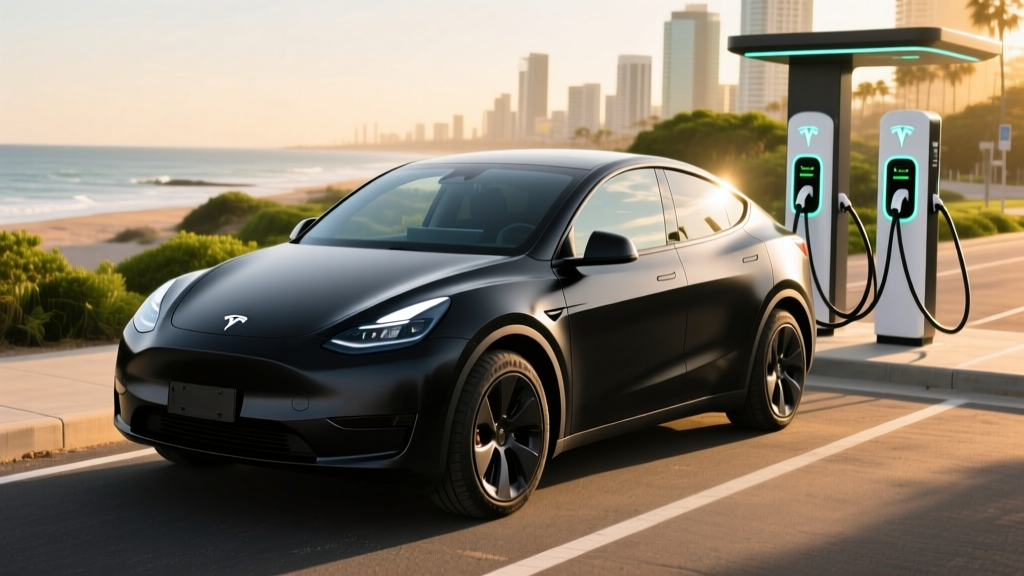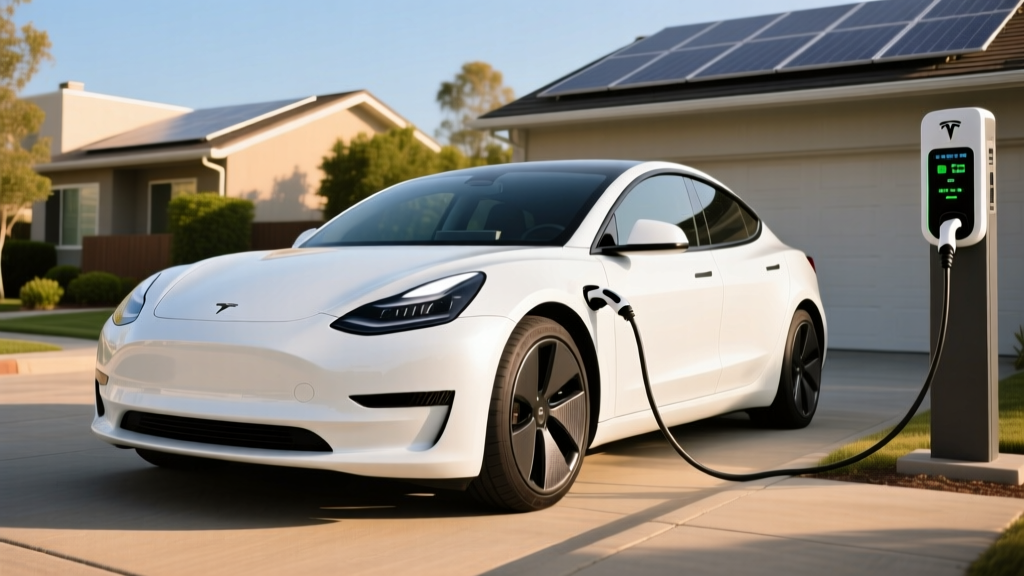
The Tesla Model 3 remains the benchmark compact electric sedan, and the refreshed "Highland" platform carried into the 2026 model year only sharpens its edge. Among the five exterior colors available, Pearl White Multi-Coat is consistently the most ordered — it hides road grime well, reflects solar heat in warm climates, and carries no upcharge on the base trim. But does the best-selling EV sedan still deserve that top spot against a growing field of rivals? We break down every spec that matters to real buyers.
Quick Verdict: Who the White Model 3 Is For
The 2026 Tesla Model 3 in Pearl White suits daily commuters, tech-forward couples, and road-trippers who value Supercharger network access above all. Its combination of class-leading efficiency (28 kWh/100 mi combined), rapid DC charging, and over-the-air updates makes it a default recommendation — provided you accept the minimalist interior, panel-gap variance, and the absence of Apple CarPlay. Buyers needing a back seat for tall adults or serious cargo should cross-shop the Hyundai Ioniq 6 or the refreshed Polestar 2.
2026 Tesla Model 3 Specifications at a Glance
| Attribute | Model 3 RWD | Model 3 Long Range AWD | Model 3 Performance |
|---|---|---|---|
| EPA Range | 363 mi | 363 mi | 315 mi |
| Battery (usable) | ~60 kWh LFP | ~79 kWh NMC | ~79 kWh NMC |
| Peak DC Charge Rate | 175 kW | 250 kW | 272 kW |
| 10–80% DC Time | ~28 min | ~25 min | ~22 min |
| Level 2 (11.5 kW AC) | ~44 mi/hr | ~44 mi/hr | ~44 mi/hr |
| 0–60 mph | 5.8 sec | 4.2 sec | 2.9 sec |
| Horsepower | 271 hp | 346 hp | 510 hp |
| Drivetrain | RWD | Dual-Motor AWD | Dual-Motor AWD |
| MPGe (combined) | 132 MPGe | 132 MPGe | 118 MPGe |
| Efficiency (kWh/100 mi) | 25 | 25 | 28 |
| Base MSRP (2026) | $38,990 | $45,990 | $52,990 |
Sources: fueleconomy.gov, Tesla.com 2026 spec sheets. Prices exclude $1,390 destination fee.
Real-World Range: What the EPA Sticker Doesn't Tell You
Real-World Expectation: 280–310 mi at sustained 75 mph highway speeds; 240–260 mi in sub-30°F winter conditions with cabin heat; up to 340 mi in mild city/regen-heavy driving.
The Long Range AWD's 363-mile EPA figure is class-leading, but efficiency on the highway drops to roughly 280–310 miles of usable range depending on terrain, wind, and tire pressure. The LFP-based RWD model, while rated similarly at 363 miles on the updated 2026 cycle, shows more pronounced cold-weather sag — expect 20–25% loss below freezing because LFP chemistry has higher internal resistance at low temperatures. Tesla's heat pump (standard across all trims since 2021) mitigates this, but physics still wins in January in Minneapolis. Plan charging stops around 220 miles of remaining range on road trips to keep a safety buffer.
Charging Speed: DC Fast, Level 2, and the Supercharger Advantage
| Level | Power | Miles Added per Hour | Notes |
|---|---|---|---|
| Level 1 (120V) | ~1.4 kW | ~5 mi/hr | Emergency/top-up only |
| Level 2 (240V/48A) | 11.5 kW | ~44 mi/hr | Overnight full charge in ~8 hr |
| DC Fast (RWD) | 175 kW peak | ~158 mi in 15 min | LFP curve tapers early |
| DC Fast (Long Range) | 250 kW peak | ~200 mi in 15 min | Sustained rate to ~55% SoC |
| DC Fast (Performance) | 272 kW peak | ~215 mi in 15 min | 2026 architecture upgrade |
The 2026 Performance trim's 272 kW peak is a notable bump over the outgoing 250 kW cap, enabled by revised thermal management. However, peak rate is sustained only between roughly 10–55% State of Charge (SoC); beyond 80%, the curve tapers sharply to protect the pack. The practical 10–80% time of ~22 minutes for the Performance trim translates to a typical road-trip stop of 25–30 minutes when you include plugging in and walking to the restroom.
At home, a 48-amp Level 2 wall connector on a 60-amp circuit delivers 11.5 kW, replenishing the Long Range pack from 20% to full in roughly 7 hours. Expect to budget $800–$1,500 for professional installation of a NACS wall connector, depending on panel proximity and local permitting.
Performance, Ride, and Daily Drivability
Even the base RWD Model 3 pulls 0–60 mph in 5.8 seconds — quicker than most gas-powered sport sedans — and the instant torque makes city merging effortless. The Long Range AWD's 4.2-second sprint is a sweet spot for most buyers, while the Performance trim's 2.9-second run puts it in supercar territory. Regenerative braking is strong but now offers a low-regen mode, a welcome change from the one-pedal-only behavior of pre-2024 models.
Ride quality on the Highland platform is markedly improved: revised bushings, new dampers, and acoustic glass cut cabin noise substantially. The 19-inch Nova wheels (optional) look sharp but reduce range by ~15 miles vs. the standard 18-inch Photon wheels — a tradeoff worth considering if efficiency is your priority.
Interior, Tech, and Cargo
The 2026 cabin remains minimalist: a single 15.4-inch touchscreen handles climate, navigation, media, and vehicle settings. Rear passengers now get an 8-inch screen for climate and entertainment — a major upgrade from the pre-refresh model. Ventilated front seats, ambient lighting, and power-folding mirrors are now standard on Long Range and above.
Cargo volume stands at 23 cubic feet (trunk + frunk), enough for two large suitcases plus a week of groceries. Rear legroom is 35.3 inches — adequate for average adults but tight for six-footers on long trips. The absence of Apple CarPlay and Android Auto remains a dealbreaker for some; Tesla's native navigation and Spotify integration are excellent but not universal replacements.
Driver assistance comes via Autopilot (standard, SAE Level 2) and Full Self-Driving Supervised ($8,000 option). FSD handles highway lane changes, on-ramps, and city streets with increasing competence but still requires hands-on supervision. It is not autonomous driving.
Pricing, Trims, and Federal Tax Credit Eligibility
| Trim | MSRP | Est. After $7,500 §30D Credit | Destination |
|---|---|---|---|
| Model 3 RWD | $38,990 | ~$31,490* | $1,390 |
| Model 3 Long Range AWD | $45,990 | ~$38,490* | $1,390 |
| Model 3 Performance | $52,990 | ~$45,490* | $1,390 |
*Assumes buyer qualifies for the full $7,500 federal EV tax credit under IRS §30D. Eligibility requires modified adjusted gross income ≤ $150,000 (single) or ≤ $300,000 (joint), vehicle MSRP ≤ $55,000 for sedans, and compliance with critical-mineral and battery-component sourcing thresholds. The credit can now be transferred to the dealer at point of sale, reducing the purchase price directly. Always confirm current-year rules at irs.gov and consult a tax professional.
Pearl White Multi-Coat is a no-cost option on all trims, which helps preserve credit eligibility on the Long Range (MSRP stays under the $55,000 sedan cap). Opting for Ultra Red ($2,500) or adding FSD pushes the Long Range above the cap, disqualifying it from §30D — a key consideration for buyers who prioritize the credit.
Ownership Costs, Warranty, and Longevity
Tesla covers the battery and drive units for 8 years / 120,000 miles (Long Range/Performance) or 8 years / 100,000 miles (RWD), with a guaranteed 70% minimum capacity retention. Real-world degradation data from fleet aggregators shows NMC packs retaining ~92% after 50,000 miles; LFP packs degrade more slowly but show greater variance in early-life SoC calibration.
Insurance premiums for the Model 3 run 15–25% higher than the segment average due to repair costs and Tesla's direct-parts ecosystem. Budget roughly $1,800–$2,400/year depending on your zip code and driving record. On the savings side, electricity at the national average of $0.17/kWh costs about $4.25 per 100 miles — roughly one-third the fuel cost of a comparable gas sedan at 30 mpg.
Pros and Cons of the White Model 3
Pros
- Class-leading efficiency (25 kWh/100 mi)
- Access to Tesla Supercharger network (17,000+ U.S. stalls)
- No-cost Pearl White hides dirt, reflects heat
- 272 kW peak charging on Performance trim
- Over-the-air updates add features post-purchase
- Standard heat pump for cold-climate efficiency
Cons
- No Apple CarPlay / Android Auto
- Tight rear legroom for tall adults
- FSD ($8,000) requires hands-on supervision
- LFP RWD pack slower to DC charge and weaker in cold
- Panel-gap and paint inconsistency still reported
- Insurance premiums above segment average
White Model 3 vs. Key Competitors
Against the Hyundai Ioniq 6 SE (361 mi EPA, $39,950), the Model 3 wins on charging speed and Supercharger access but loses on rear-seat space and CarPlay. The BMW i4 eDrive40 (301 mi, $52,200) offers superior build quality and driving dynamics at a higher price — and it doesn't qualify for the full §30D credit due to battery sourcing. The Polestar 2 (320 mi, $49,900) is a design-forward alternative but trails on efficiency and charging speed. For pure value-per-mile, the white Model 3 Long Range remains the segment benchmark.
Frequently Asked Questions
What is the real-world range of the 2026 white Tesla Model 3?
Expect 280–310 miles on highway road trips and up to 340 miles in mild city driving with regenerative braking. In sub-30°F winter weather, plan for 240–260 miles of usable range.
How fast does the Model 3 charge at home and on the road?
At home on a 48-amp Level 2 charger, you'll add about 44 miles of range per hour. On DC fast chargers, the Long Range peaks at 250 kW (10–80% in ~25 min), while the Performance peaks at 272 kW (~22 min).
Does the white Tesla Model 3 qualify for the federal EV tax credit?
Yes — all three trims qualify for the full $7,500 §30D credit provided the buyer meets income caps ($150k single / $300k joint), the vehicle MSRP stays under $55,000 (sedan cap), and battery-sourcing thresholds are met. Pearl White is a no-cost color, helping keep the Long Range under the cap.
How much does the Model 3 cost after tax credits?
With the $7,500 point-of-sale credit applied, the RWD drops to ~$31,490, the Long Range to ~$38,490, and the Performance to ~$45,490, plus destination and any options.
Is the Model 3 worth buying vs. the Ioniq 6 or BMW i4?
If Supercharger access, efficiency, and software matter most, yes. If rear-seat comfort, build quality, or CarPlay are priorities, the Ioniq 6 or BMW i4 may serve you better.
Is Pearl White a good color choice for resale and maintenance?
Pearl White is Tesla's most popular no-cost color, hides road grime better than black, and historically holds resale value well. It's the default recommendation for buyers who don't want to pay a premium for paint.