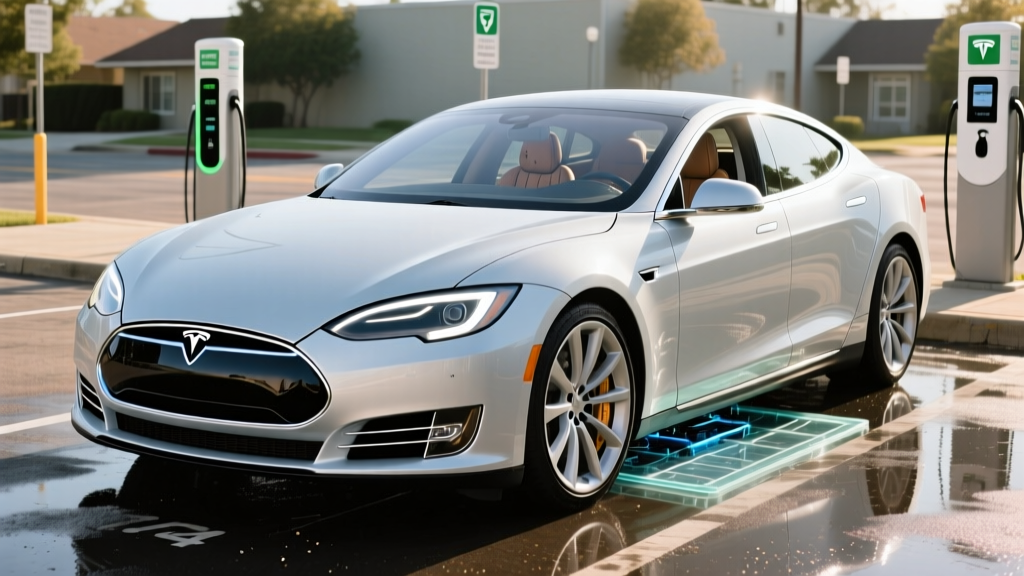
The Tesla Model S P85 was the car that proved electric sedans could out-accelerate supercars while carrying a family across the country on a growing Supercharger network. Produced roughly between 2012 and 2015, the P85 (Performance, 85 kWh battery) remains one of the most searched used EVs on the market — and for good reason. It delivers blistering torque, access to Tesla's proprietary charging network (now with NACS adapters opening up non-Tesla DC networks), and a platform that still feels modern inside. But buying a decade-old EV requires a different calculus than buying new. Battery degradation, out-of-warranty repair risk, and the absence of modern heat-pump efficiency all factor heavily into whether a used P85 is a bargain or a money pit.
This review breaks down the real-world ownership picture of the Tesla Model S P85 in 2026: what the battery actually delivers after years of use, how fast it charges on today's infrastructure, what you'll pay to keep it on the road, and whether it still competes with newer, cheaper EVs on the used market.
Tesla Model S P85: Original and Current Specs at a Glance
| Specification | Value |
|---|---|
| EPA Range (Original) | 265 miles |
| Battery Capacity | 85 kWh (gross); ~81 kWh usable |
| Battery Chemistry | NMC (Nickel Manganese Cobalt) — Panasonic cells |
| Drivetrain | Rear-Wheel Drive (single motor) |
| Horsepower | 416 hp |
| Torque | 443 lb-ft |
| 0–60 mph | 4.2 seconds |
| Top Speed | 130 mph |
| EPA Efficiency | 89 MPGe (combined) |
| Energy Consumption | 38 kWh/100 mi |
| DC Fast Charge (Peak) | ~120 kW (V2 Supercharger) |
| Level 2 Charge Rate | 10 kW (single onboard charger); 20 kW (dual charger option) |
| Charge Port | Tesla proprietary (NACS) |
| Cargo Volume | 26.3 cu ft (rear) + 5.3 cu ft (frunk) |
| Seating | 5 passengers (optional rear-facing 3rd row for 7) |
| Original MSRP (2013) | ~$91,400 (before incentives) |
| Typical Used Price (2026) | $14,000–$24,000 depending on mileage and battery SoH |
| Battery Warranty (Original) | 8 years / unlimited miles |
| Drivetrain Warranty | 8 years / unlimited miles (drive unit) |
Real-World Range: What the 85 kWh Battery Actually Delivers in 2026
EPA Sticker (New): 265 miles
Expected Real-World (2026, Average Battery SoH ~78–85%): 175–215 miles
Highway at 75 mph: ~160–190 miles
Cold Weather (below 32°F): ~130–165 miles
The original 265-mile EPA rating was impressive for 2013, but anyone shopping a used P85 today needs to plan around significant range compression from two factors: battery degradation and the car's inherent efficiency limitations.
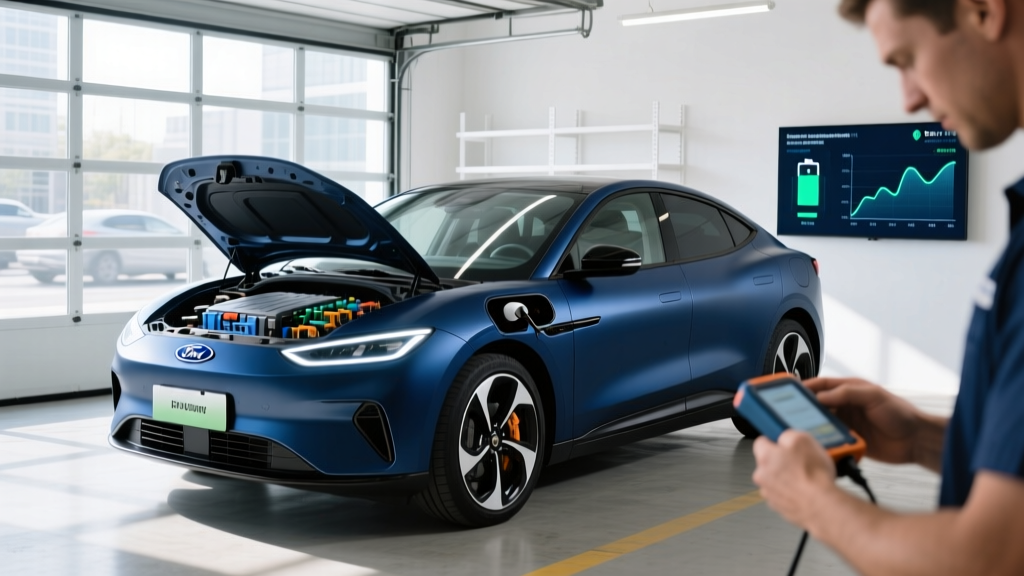
The 85 kWh pack uses Panasonic NMC cells that, based on aggregated owner data from Tesla Motors Club forums and fueleconomy.gov EV degradation research, typically retain between 78% and 85% of original capacity after 8–12 years and 80,000–140,000 miles. A P85 with 82% State of Health (SoH) will show roughly 217 miles at 100% charge on the dash — but you'll rarely charge to 100% for daily driving, and you won't want to run the pack below 10%.
Realistically, your usable window is about 170–195 miles in moderate temperatures on mixed driving. Highway speeds above 70 mph hit the P85 hard — the car's 0.24 drag coefficient was class-leading, but the lack of a heat pump means cold-weather cabin heating draws directly from the pack, shaving 25–35% off range in sub-freezing conditions.
Owner tip: When evaluating a used P85, ask the seller for a screenshot of the car's energy graph or use an OBD-II dongle with an app like TeslaFi or Scan My Tesla to pull the actual nominal full-pack capacity. The difference between a 72 kWh remaining pack and an 80 kWh pack is the difference between a usable road-trip car and a strictly local commuter.
Charging Speed: Supercharger, Level 2, and What to Expect
| Charging Level | Max Power | Miles Added per Hour | Notes |
|---|---|---|---|
| Level 1 (120V, 12A) | ~1.4 kW | ~3–4 mi/hr | Emergency/trickle only |
| Level 2 (240V, single charger) | 10 kW | ~28–30 mi/hr | |
| Level 2 (240V, dual charger option) | 20 kW | ~56–60 mi/hr | |
| DC Fast Charge (V2 Supercharger) | ~120 kW peak | ~300 mi/hr (at peak) | 10–80% in ~40–45 min |
| DC Fast Charge (V3 Supercharger) | ~120 kW (car-limited) | Same as V2 | V3 peak 250 kW not supported by P85 |
| CCS (via NACS-to-CCS adapter) | ~100–120 kW | Similar to Supercharger | Adapter required; verify compatibility |
The P85's charging story is a mix of enduring strength and dated limitations. On the plus side, it has native access to Tesla's Supercharger network — still the most reliable DC fast-charging infrastructure in the U.S. by a wide margin, according to Tesla's Supercharger page. On the downside, the car's peak DC charge rate of roughly 120 kW means it cannot take advantage of V3 Supercharger stalls (which peak at 250 kW for newer models) or the fastest Electrify America and Ionity stations.
The charge curve on the 85 kWh pack is relatively gentle compared to modern EVs. The P85 sustains close to its peak rate from 10% to about 50% SoC, then tapers progressively. A typical 10–80% session takes 40–45 minutes — acceptable for road trips but noticeably slower than a 2025 Hyundai Ioniq 5 or Tesla Model 3 Highland, which can do the same in 18–20 minutes.
At home, the single onboard charger tops out at 10 kW (about 29 miles of range per hour). Cars equipped with the optional dual charger can accept up to 20 kW on Level 2, but this requires a 100-amp circuit — most residential panels and home charger installations max out at 48 amps (11.5 kW), so the dual-charger advantage only materializes with a dedicated high-amperage EVSE and adequate panel capacity.
Performance and Driving Dynamics
The P85's single rear-mounted AC induction motor produces 416 hp and 443 lb-ft of torque, delivered with the instant response that redefined what "performance sedan" meant in 2013. The 4.2-second 0–60 mph time still holds up — it's quicker than a 2026 BMW 540i and only a half-second behind a base Porsche Taycan. The instant torque makes the P85 feel even faster in real-world passing and merge situations where ICE cars are still building boost or downshifting.
Driving dynamics are a mixed bag by modern standards. The P85 rides on an air suspension that delivers a comfortable, compliant highway cruise, but early Model S air springs have a well-documented failure rate — budget $1,500–$2,500 per corner if they haven't been replaced. Steering is precise but numb compared to the communicative racks in a Taycan or BMW i5. The regenerative braking is strong (Tesla's single-pedal driving was a revelation in 2013), but there's no adjustable regen strength like you'll find in newer EVs.
One important note: the P85 is rear-wheel drive only. The dual-motor all-wheel-drive variants (the 85D and P85D) arrived later. If you live in a region with significant snow or rain, the RWD layout with the car's 4,600+ lb curb weight can feel tail-happy without quality all-season or winter tires.
Interior, Cargo, and Technology
The Model S interior was futuristic in 2013 — the 17-inch portrait touchscreen replaced nearly every physical button, and the digital instrument cluster was years ahead of the competition. In 2026, the cabin still feels spacious and airy, but material quality and infotainment speed show their age.
Passenger Space: Front headroom is generous at 38.8 inches, and rear legroom measures 35.4 inches — competitive with a midsize luxury sedan. The optional rear-facing third-row jump seat (for small children) brought capacity to 7, but it was rarely ordered and is impractical for anyone over about 5 feet tall.
Cargo: The rear hatch opens to 26.3 cubic feet, and the front trunk (frunk) adds 5.3 cubic feet — total cargo volume of 31.6 cu ft with seats up, expanding to roughly 58 cu ft with the 60/40 rear seats folded. That's more practical than a BMW 5 Series sedan and close to a midsize crossover.
Tech and Driver Assistance: Early P85 models shipped without Autopilot hardware. Cars built after October 2014 include the Autopilot Hardware 1 suite (forward radar, cameras, ultrasonic sensors), which enables basic SAE Level 2 driver assistance — adaptive cruise control and lane-centering on highways. This is a hands-on, eyes-on system. It is not autonomous driving. FSD (Full Self-Driving) capability was not available on HW1 cars and cannot be retrofitted to modern FSD standards.
The infotainment system on pre-2016 cars runs on older NVIDIA Tegra processors, and the interface can feel sluggish compared to a 2026 Model 3 or any vehicle running a current-gen chipset. Some owners have upgraded to the newer MCU2 (Media Control Unit) through Tesla's retrofit program (~$1,500–$2,000), which adds faster performance and enables newer software features.
Used Pricing and the Tax Credit Question
The P85 may qualify for the Used Clean Vehicle Credit under IRC §25E — up to $4,000 or 30% of the sale price (whichever is lower). Requirements include:
• Sale price must be $25,000 or less
• Buyer income caps: $75,000 (single) / $112,500 (head of household) / $150,000 (joint)
• Vehicle must be at least 2 model years old
• Must purchase from a licensed dealer (private-party sales do not qualify)
• Credit can only be claimed once per VIN every 3 years
Always verify current rules at irs.gov. The P85 does not qualify for the new-vehicle §30D credit (discontinued for Tesla in 2019, and the car is no longer produced).
As of early 2026, used Tesla Model S P85 pricing typically falls between $14,000 and $24,000, depending on mileage, battery State of Health, cosmetic condition, and whether the car has the dual-charger option or MCU2 upgrade. A well-maintained P85 with verified 85%+ battery SoH and under 90,000 miles commands the top of that range.
If you find a qualifying P85 at a licensed dealer for $25,000 or less and your income falls within the §25E caps, the $4,000 used-EV credit can bring your effective purchase price down to $10,000–$20,000 — an extraordinary value for a 416-hp luxury sedan with Supercharger access.
Battery Degradation, Warranty, and Long-Term Costs
The 85 kWh NMC battery is the single biggest variable in used P85 ownership. Here's what the data shows:
- Average degradation at 100,000 miles: 12–18% capacity loss (per aggregated Tesla owner data)
- Common failure mode: Individual cell imbalance or module failure rather than full-pack death
- Battery replacement cost (2026): $12,000–$18,000 for a refurbished 85 kWh pack from Tesla or third-party shops like Electrified Garage
- Module-level repair: $2,000–$5,000 if only specific modules need replacement
The original 8-year/unlimited-mile battery and drive unit warranty has expired on all P85 vehicles (the newest examples are from 2015, meaning warranty coverage ended in 2023 at the latest). Some owners purchased Tesla's Extended Service Agreement before the original warranty lapsed; others rely on third-party EV warranties or self-insure.
Other maintenance costs to budget for:
- Air suspension struts: $1,500–$2,500 per corner (common failure at 80,000+ miles)
- Drive unit (motor) replacement: $5,000–$8,000 if the original unit fails
- 12V battery: $300–$500 replacement every 3–5 years
- Brake pads/rotors: Minimal wear due to regen; $400–$800 when needed
- Tires: $1,200–$2,000 for a set (245/45R19 or 245/35R21); expect 25,000–35,000 miles per set due to the car's weight and torque
- Insurance: $1,800–$3,000/year depending on state, driver profile, and coverage (Tesla insurance may be available in some states)
Pros and Cons: The P85 in 2026
✅ Pros
- 416 hp and 4.2s 0–60 still thrilling
- Native Tesla Supercharger network access
- Spacious hatchback cargo area (31.6 cu ft)
- Over-the-air software updates still delivered
- Potential $4,000 used EV tax credit (§25E)
- Strong owner community and third-party repair ecosystem
- Air suspension provides comfortable ride
❌ Cons
- Battery degradation reduces range to 175–215 mi real-world
- All original warranties have expired
- No heat pump — significant cold-weather range loss
- Sluggish infotainment (unless upgraded to MCU2)
- Autopilot HW1 is outdated; no modern FSD capability
- Air suspension failures are common and expensive
- RWD only — no AWD option on P85
- 120 kW DC charge peak is slow by 2026 standards
Is the Used P85 Worth It vs. Alternatives?
Decision Framework
Choose the Tesla Model S P85 if:
- You want a performance luxury sedan under $20K (after credit) with Supercharger access for road trips
- You have a home Level 2 charger and mostly drive under 150 miles/day
- You're comfortable budgeting $2,000–$4,000/year for out-of-warranty repairs
- You value cargo space and the hatchback form factor
Consider alternatives if:
- You need reliable 250+ mile daily range → look at a used 2021+ Tesla Model 3 Long Range or Chevy Bolt EUV
- You live in a cold climate and need efficient cabin heating → a newer EV with a heat pump (Hyundai Ioniq 5, Model Y) will serve you better
- You want modern ADAS → the P85's HW1 Autopilot is generations behind current Tesla Vision, BlueCruise, or Super Cruise
- You can't absorb a potential $12K+ battery replacement → consider a CPO EV with remaining battery warranty
The P85 competes in the used market against the Chevrolet Bolt EV ($12K–$18K, shorter range but newer and less risky), the Nissan Leaf Plus ($14K–$20K, CHAdeMO charging limits), and older Tesla Model 3 Standard Range Plus ($18K–$24K, more efficient but smaller). Against all of them, the P85 wins on performance, interior space, and Supercharger access — but loses on efficiency, reliability predictability, and modern tech.
Frequently Asked Questions
What is the real-world range of a used Tesla Model S P85?
Expect 175–215 miles in moderate temperatures with an average-degradation battery (78–85% SoH). Highway driving at 75+ mph and cold weather below freezing can reduce this to 130–165 miles. Always verify the specific car's battery health before purchasing.
How fast does the P85 charge at home and on the road?
At home on a 240V Level 2 charger, the single onboard charger adds about 29 miles per hour (10 kW). On Tesla V2 Superchargers, the P85 peaks at roughly 120 kW, reaching 10–80% in approximately 40–45 minutes. It cannot utilize V3 Supercharger speeds above 120 kW.
Does the Tesla Model S P85 qualify for any federal tax credit?
Not the new-vehicle §30D credit — the car is no longer produced. However, if purchased from a licensed dealer for $25,000 or less, and the buyer meets income thresholds ($75K single / $150K joint), the §25E Used Clean Vehicle Credit provides up to $4,000. Verify all requirements on IRS.gov before purchasing.
How long will the P85 battery last, and what does replacement cost?
Most 85 kWh packs retain 78–85% capacity at 100,000 miles. With proper care (avoiding frequent 100% charges and deep discharges), many packs reach 150,000–200,000 miles before dropping below 70% SoH. A full refurbished replacement pack costs $12,000–$18,000; module-level repairs run $2,000–$5,000.
Is the P85 a good first EV for someone new to electric cars?
It can be, with caveats. The Supercharger network makes road trips easy, and the driving experience is compelling. However, the expired warranty, potential for expensive repairs (air suspension, drive unit, battery), and reduced real-world range mean a first-time EV buyer should go in with eyes open and a repair fund. A newer used Model 3 or Chevy Bolt may be a lower-risk introduction to EV ownership.