Quick Verdict: The R1S Quad Max Is an Electric SUV Without Compromise — At a Price
The 2025 Rivian R1S Quad Max pairs a 149 kWh Max battery pack with Rivian's four-motor Quad setup to deliver something rare in the EV world: genuine 400-mile range in a three-row, body-on-frame SUV that can also hit 60 mph in under 3 seconds. For families who tow, road-trip, and refuse to choose between capability and efficiency, this is the current benchmark. The trade-off is a six-figure price tag and a weight penalty that shows up at the charge port.
Below, we break down every spec that matters — from real-world highway range to DC fast-charge taper curves — so you can decide whether the Quad Max justifies its premium over the Dual Max and competing three-row EVs.
2025 Rivian R1S Quad Max: Full Spec Sheet
| Specification | Value |
|---|---|
| EPA Range | 402 miles |
| Battery (Usable) | ~149 kWh, NMC (nickel manganese cobalt) |
| Drivetrain | Quad-motor AWD (one motor per wheel) |
| Horsepower | 1,025 hp |
| Torque | 1,198 lb-ft |
| 0–60 mph | ~2.9 seconds |
| Max DC Fast Charge | ~220 kW (peak) |
| 10–80% DC Charge | ~42 minutes |
| Level 2 Home Charge | 11.5 kW (~25 mi/hr) |
| Efficiency | ~48 MPGe combined / ~70 kWh/100 mi |
| Towing Capacity | 7,700 lbs (max) |
| Cargo (behind 3rd row / total) | 20.5 cu ft / 91.6 cu ft |
| Base MSRP (Adventure Quad Max) | $114,800 (incl. destination) |
| Battery Warranty | 8 years / 175,000 miles |
Range: EPA vs. Real World
Real-World Expectation: ~320–350 miles highway (70–75 mph); ~280–310 miles in cold weather (below 32°F); ~370–390 miles mixed city/suburban driving.
Rivian's 402-mile EPA rating is among the highest of any production SUV sold in the U.S. But as with any heavy, boxy vehicle, aerodynamic drag and temperature take a meaningful toll. On a flat, 72°F highway run at 70 mph, expect roughly 330–350 miles before you'd want to stop. Push speeds to 80 mph or encounter sustained headwinds, and 300–310 miles is more realistic.
Cold weather is the bigger variable. The R1S Max pack uses NMC chemistry, which suffers more low-temperature capacity loss than LFP. In sub-freezing conditions without preconditioning, range drops 20–30% — putting real winter range around 280–310 miles. Rivian's heat pump and battery preconditioning mitigate this substantially; always precondition before DC fast charging in cold weather to preserve charge speed and recover usable capacity.
For context, towing a 5,000-lb trailer cuts range roughly in half — expect 180–220 miles depending on terrain and speed. This is physics, not a Rivian shortcoming; no body-on-frame EV tows efficiently at highway speeds.
Charging Speeds: DC Fast and Level 2 at Home
| Charging Level | Power / Rate | Speed |
|---|---|---|
| Level 1 (120V household) | ~1.4 kW | ~3 miles per hour |
| Level 2 (240V, 48A home charger) | 11.5 kW | ~25 miles per hour |
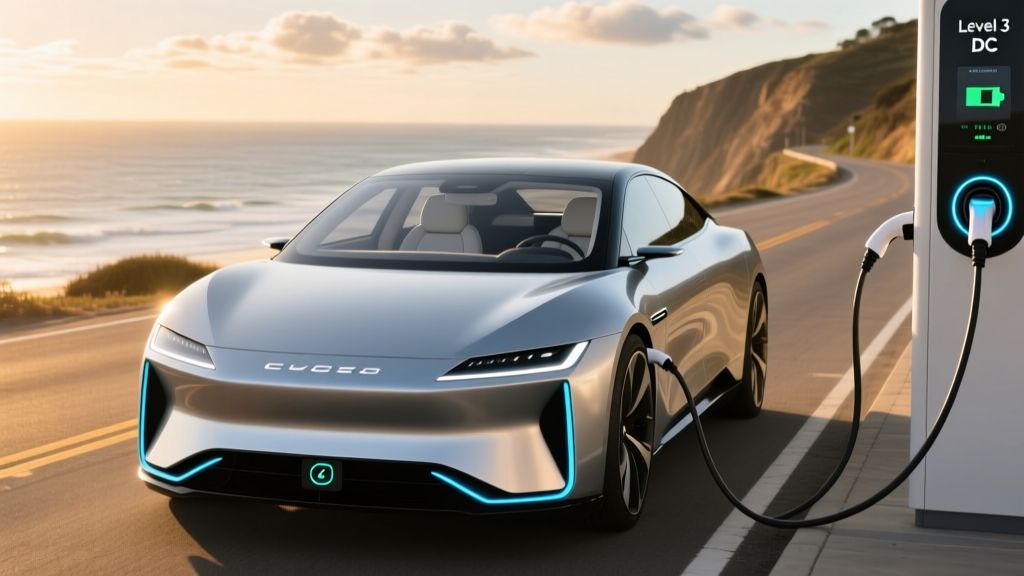
| DC Fast Charge (peak) | ~220 kW | 10–80% in ~42 minutes |
| DC Fast Charge (sustained avg 10–80%) | ~150–160 kW avg | ~280 miles added in 42 min |
The 149 kWh Max pack is a double-edged sword at the charger. Rivian quotes a peak charge rate around 220 kW, but because the pack is so large, the average rate across the 10–80% window matters more. Expect a sustained average closer to 150–160 kW, which is why the 10–80% session takes roughly 42 minutes — longer than smaller-pack EVs that hit similar peak rates.
The charge curve is relatively flat through 60% SoC, then tapers noticeably above 80%. On road trips, charging from 10% to 65% (about 25 minutes) is the sweet spot — you add roughly 200 miles and avoid the slow taper entirely. Plan stops accordingly.
At home on a Level 2 Rivian Wall Charger (or any quality 48A J1772/NACS unit), the R1S accepts 11.5 kW. An overnight session of 10 hours adds approximately 250 miles — enough to replenish most daily driving and then some. Full 0–100% Level 2 charges take roughly 13–14 hours, so treat home charging as a nightly top-up, not a full-cycle event.
The R1S ships with NACS (Tesla-style) charge ports as of the 2025 model year, giving native access to Tesla Supercharger stalls without an adapter — a significant advantage for road-trip charging infrastructure. For legacy CCS networks (Electrify America, EVgo), Rivian provides an adapter.
Performance: 1,025 Horsepower in a Family SUV
The Quad-motor powertrain puts one independently controlled motor at each wheel, producing a combined 1,025 hp and 1,198 lb-ft of torque. The result is a 0–60 mph time of approximately 2.9 seconds — territory previously reserved from supercars, now available in a 7,100-lb vehicle with a third row.
Beyond straight-line speed, the quad-motor setup enables genuine torque vectoring. Each wheel's torque is adjusted in real time, giving the R1S surprisingly agile cornering for its size and improving traction on loose surfaces. Rivian's software-driven stability control can brake individual wheels and redirect torque in milliseconds, which translates to confident handling in rain and snow without traditional mechanical differentials.
The air suspension offers adjustable ride height (up to 14.9 inches of ground clearance in Off-Road mode), automatic leveling when loaded, and a highway-lowering mode that reduces drag for efficiency. It's a system that serves both rock-crawling credibility and highway comfort.
Interior, Cargo, and Technology
The R1S seats up to seven across three rows. Second-row captain's chairs (six-passenger config) or a bench (seven-passenger) are available. Third-row legroom is 30.4 inches — adequate for children and shorter adults on trips under an hour, but tight for full-size adults on long hauls. This is a common compromise in the three-row SUV segment.
Cargo space measures 20.5 cubic feet behind the third row, expanding to 57.1 cu ft with the third row folded and 91.6 cu ft with both rear rows down. The front trunk (frunk) adds 11.1 cu ft of sealed, drainable storage — ideal for wet gear, groceries, or charging cables.
The 15.6-inch center touchscreen runs Rivian's proprietary OS, which is responsive and well-organized but lacks Apple CarPlay and Android Auto. Wireless phone mirroring is not available; Rivian has invested in its native navigation, media, and vehicle-control interface instead. Whether this is a pro or con depends on your attachment to phone-based infotainment.
Driver assistance comes via Rivian's Driver+ system — a SAE Level 2 feature combining adaptive cruise control and lane-centering on highways. It requires continuous driver supervision and is not autonomous driving. Hands-on-wheel detection is enforced. The system is competent for long highway stretches but does not rival GM's Super Cruise or Ford's BlueCruise for hands-off mapped-highway driving.
Pricing, Trims, and Federal Tax Credit Eligibility
| Trim / Config | MSRP (incl. destination) |
|---|---|
| R1S Adventure Dual Max | ~$100,800 |
| R1S Adventure Quad Max | ~$114,800 |
| R1S Ascend Quad Max (top trim) | ~$120,000+ |
- MSRP Cap: SUVs must be under $80,000 MSRP to qualify. The R1S Quad Max exceeds this cap and does not qualify for the $7,500 new-vehicle federal credit.
- Income Limits: Even for eligible vehicles, AGI must not exceed $300,000 (joint) / $150,000 (single).
- Battery Sourcing: Credits require critical-mineral and battery-component sourcing thresholds that tighten annually.
- Point-of-Sale Transfer: For qualifying vehicles, the credit can be applied at purchase rather than at tax filing.
Consult IRS.gov §30D guidance and a tax professional for your specific eligibility.
The R1S Quad Max does not qualify for the federal new-vehicle tax credit due to its MSRP exceeding the $80,000 SUV cap. This is a straightforward exclusion — no amount of battery sourcing or income qualification changes the math. Buyers should budget the full MSRP (minus any applicable state or utility incentives, which vary by jurisdiction).
Some states offer rebates or tax credits that apply regardless of MSRP caps — check your state energy office or AFDC incentive database for current programs.
Efficiency and Operating Costs
At roughly 48 MPGe combined and 70 kWh per 100 miles, the R1S Quad Max is efficient for its size but not class-leading. For comparison, the Tesla Model X achieves around 100 MPGe, though it offers less ground clearance, no body-on-frame construction, and a different third-row experience.
At the national average residential electricity rate of ~$0.16/kWh, charging the R1S at home costs approximately $0.11 per mile. Compare this to a gas SUV getting 18 MPG at $3.50/gallon ($0.19/mi), and the per-mile savings are real but modest — roughly $800/year for 15,000 miles of driving. The bigger ownership-cost conversation involves insurance (typically 15–25% higher than equivalent gas SUVs), tire wear (heavy EVs burn through tires faster), and depreciation.
Warranty and Long-Term Ownership
Rivian provides an 8-year / 175,000-mile warranty on the battery pack and drive unit, with a capacity retention threshold (the pack must not fall below a stated percentage of original capacity during the warranty period). The limited vehicle warranty is 5 years / 60,000 miles.
The 149 kWh NMC pack is large, which works in the owner's favor for long-term degradation. Because daily driving uses a smaller percentage of total capacity, the battery experiences fewer deep cycles. Most NMC packs lose 10–15% capacity over 150,000 miles under normal use — meaning a 402-mile R1S might settle around 340–360 miles of range after a decade of typical driving. Rivian's thermal management system (active liquid cooling/heating) is designed to minimize calendar and cycle degradation.
Battery replacement cost, should it be needed out of warranty, is estimated at $20,000–$30,000+ for the Max pack based on current NMC cell pricing and labor. This is a known risk for large-pack EVs — factor it into long-horizon ownership plans.
Who the R1S Quad Max Is For
- You need a genuine three-row SUV with 400+ mile range for family road trips
- You tow regularly (boats, campers, horse trailers) and want electric torque
- You want off-road capability (ground clearance, wading, torque vectoring) without sacrificing on-road comfort
- You value Supercharger network access via NACS and want a non-Tesla option
- Budget is under $90,000 — the Dual Max at ~$100,800 offers 90% of the capability
- You primarily commute in the city — the Dual Standard or Dual Large is lighter, cheaper, and more efficient
- CarPlay/Android Auto is non-negotiable
- You want hands-off highway driving — GM's Super Cruise or Ford BlueCruise offer more mapped hands-off routes
Pros and Cons
Pros
- 402-mile EPA range — best in the three-row EV SUV segment
- 1,025 hp with genuine torque vectoring; 2.9-sec 0–60
- NACS native — full Tesla Supercharger access
- 7,700-lb towing with integrated trailer controls
- Air suspension with adjustable ride height
- 11.1 cu-ft front trunk (frunk)
- Strong OTA update cadence improving features post-purchase
Cons
- $114,800+ MSRP — no federal tax credit due to price cap
- 42-minute 10–80% DC charge — slower than smaller-pack competitors
- Third-row legroom tight for adults (30.4 in)
- No Apple CarPlay or Android Auto
- Level 2 driver assist requires hands-on-wheel — no hands-off highway mode
- Heavy curb weight (~7,100 lbs) increases tire wear and reduces efficiency
- Service center network still expanding in some regions
Frequently Asked Questions
What is the real-world range of the 2025 Rivian R1S Quad Max?
Expect 320–350 miles on the highway at 70–75 mph in moderate temperatures. City and suburban driving yields closer to the EPA 402-mile figure. In cold weather (below 32°F), plan for 280–310 miles unless you precondition the battery. Towing cuts range to roughly 180–220 miles with a 5,000-lb trailer.
How fast does the R1S Quad Max charge?
On DC fast charging, the peak rate is ~220 kW with a 10–80% session taking approximately 42 minutes. The large 149 kWh battery means the average charge rate (~150–160 kW sustained) is what determines actual session length. At home on Level 2 (11.5 kW), expect ~25 miles of range per hour — a full overnight session covers most daily needs.
Does the R1S Quad Max qualify for the federal EV tax credit?
No. Under current IRS §30D rules, the SUV MSRP cap is $80,000. The R1S Quad Max starts at ~$114,800, well above the threshold. State incentives may still apply — check your local programs.
Is the R1S Quad Max worth it versus the Tesla Model X or Dual Max?
The Quad Max is justified if you need the combination of maximum range, quad-motor performance, and serious off-road/towing capability. The Dual Max (700+ hp, slightly better efficiency, ~$14,000 less) covers 90% of use cases. The Model X is more efficient and has more Supercharger-native history, but lacks the R1S's body-on-frame toughness, frunk, and ground clearance.
What is the biggest drawback of the R1S Quad Max?
The charge time relative to pack size. A 42-minute 10–80% session means longer stops on road trips compared to EVs with smaller packs and similar peak charge rates. Combined with no federal tax credit, the total cost of ownership requires a long horizon to justify versus cheaper alternatives.
How long will the 149 kWh battery last?
Rivian warranties the battery for 8 years / 175,000 miles. NMC chemistry typically retains 85–90% capacity at 150,000 miles under normal use. The large pack size means shallower daily cycles, which is favorable for longevity. Out-of-warranty replacement is estimated at $20,000–$30,000+.