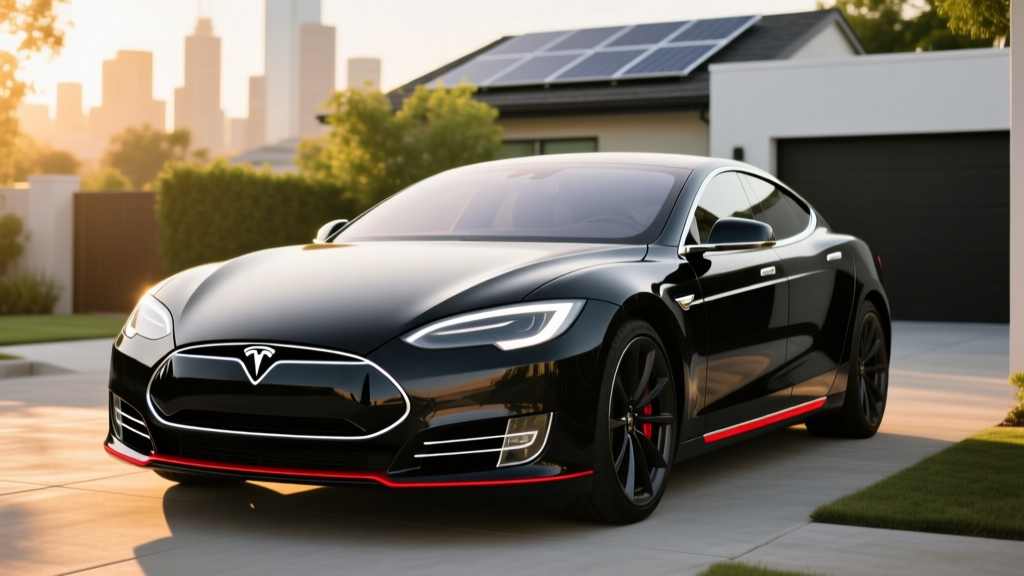
Quick Verdict: Is the Model S Still a Luxury Contender?
When buyers ask are Tesla's luxury cars still competitive against the BMW i7, Mercedes EQS, and Lucid Air, the answer depends on what "luxury" means to you. The 2026 Tesla Model S Long Range delivers class-leading efficiency, a 402-mile EPA range, access to the most reliable DC fast-charging network in North America, and blistering performance. But if your definition of luxury centers on interior material quality, ride isolation, and dealership white-glove service, Tesla's flagship sedan shows its age against newer rivals.
This review breaks down the 2026 Model S with the exact numbers that matter: real-world range, charging-curve behavior, federal tax credit eligibility under current IRS §30D rules, and how it stacks up on paper and on pavement.
2026 Tesla Model S: Full Spec Table
| Spec | Value |
|---|---|
| EPA Range | 402 miles |
| Battery Capacity | ~100 kWh usable (NMC chemistry) |
| Drivetrain | Dual-Motor AWD |
| Horsepower | 670 hp |
| 0–60 mph | 3.1 seconds |
| Top Speed | 155 mph |
| Max DC Fast Charge | 250 kW (peak) |
| 10–80% DC Time | ~27 minutes |
| Level 2 Home Charge | 11.5 kW (~44 mi/hr) |
| EPA Efficiency | 120 MPGe / 28 kWh/100 mi |
| Cargo Volume | 28 cu ft (rear trunk + frunk combined) |
| Rear Legroom | 35.4 inches |
| Base MSRP | $79,990 |
| Battery Warranty | 8 years / 150,000 miles (70% retention) |
| Vehicle Warranty | 4 years / 50,000 miles |
Source: fueleconomy.gov and Tesla's official 2026 specifications.
Range: 402 Miles on Paper, But What Happens in the Real World?
EPA Sticker: 402 miles
Highway (70–75 mph, moderate climate): Expect ~330–355 miles
Cold Weather (below 32°F, highway): Expect ~260–300 miles
Mixed Commute (city + suburban): ~370–395 miles
The Model S Long Range's 402-mile EPA figure remains one of the highest of any production EV sold in the U.S. Tesla achieves this through a combination of low drag coefficient (0.208 Cd), efficient silicon-carbide inverters, and a heat pump that minimizes cabin-heating energy draw. In real-world highway testing at 70–75 mph in 60–75°F conditions, the Model S consistently delivers 330–355 miles before hitting 10% State of Charge (SoC).
Cold weather is where every EV loses range, and the Model S is no exception. Below freezing, expect a 25–35% reduction due to battery resistance and cabin heating demand, even with the heat pump. Preconditioning the battery while plugged in mitigates some of this loss, and Tesla's navigation-based battery preconditioning warms the pack before you arrive at a Supercharger — a meaningful advantage for road-trip charging speed.
Charging: 250 kW Peak, But Read the Curve
| Charging Level | Power (kW) | Speed |
|---|---|---|
| Level 1 (120V household) | ~1.4 kW | ~5 mi/hr |
| Level 2 (240V home, Wall Connector) | 11.5 kW | ~44 mi/hr |
| DC Fast Charge (V3 Supercharger) | Up to 250 kW peak | ~200 mi in 15 min (at peak) |
| DC Fast Charge (CCS adapter, EA/others) | Up to 250 kW peak | Varies by station |
Tesla's 250 kW peak charge rate sounds competitive, but the charge curve tells the fuller story. The Model S sustains roughly 230–250 kW from approximately 10–25% SoC, then tapers progressively: ~170 kW by 40%, ~100 kW by 60%, and ~50 kW above 80%. The result is a 10–80% session of roughly 27 minutes at a V3 Supercharger. Competitors like the Lucid Air (with its 900V+ architecture) and Hyundai Ioniq 5 (800V) can sustain higher rates deeper into the charge, making their 10–80% times faster despite similar or lower peak numbers.
For home Level 2 charging, Tesla's Wall Connector at 48 amps (11.5 kW) replenishes a full battery in about 9 hours. Most owners charging overnight from 20–80% will wake to a full charge in under 5 hours. If your home electrical panel supports a 60-amp dedicated circuit, you'll maximize this rate — otherwise, a 40-amp circuit limits you to ~9.6 kW (~36 mi/hr).
Performance, Efficiency, and Interior Space
The 2026 Model S Long Range produces 670 horsepower from its dual-motor AWD powertrain, launching to 60 mph in 3.1 seconds. That's supercar territory from a four-door sedan weighing roughly 4,560 pounds. The Plaid variant (1,020 hp, 1.99s 0–60) exists for those who prioritize acceleration above all else, but the Long Range is the volume model and the one most buyers should consider.
Efficiency is where Tesla's engineering shows. At 120 MPGe combined (28 kWh per 100 miles), the Model S extracts more miles per kilowatt-hour than nearly every luxury EV rival. The BMW i7 xDrive60, for comparison, achieves roughly 87 MPGe combined. This efficiency advantage translates directly into lower electricity costs and longer range from a similarly sized battery.
Interior space is adequate but not class-leading for a luxury sedan. Rear legroom measures 35.4 inches — generous for two adults but tighter than the BMW i7 (41.2 inches) or Mercedes EQS (41.7 inches). Cargo capacity totals 28 cubic feet across the rear trunk and front trunk (frunk), a practical advantage over sedans with no frunk. The 17-inch center touchscreen remains the primary interface for nearly all vehicle controls, which some buyers love for its minimalism and others find distracting.
Pricing, Tax Credits, and Total Cost
| Trim | MSRP | Federal §30D Credit | Effective Price |
|---|---|---|---|
| Long Range | $79,990 | $0 (exceeds MSRP cap) | $79,990 |
| Plaid | $94,990 | $0 (exceeds MSRP cap) | $94,990 |
Critical tax credit detail: Under current IRS §30D rules, the federal EV tax credit of up to $7,500 is only available for sedans with an MSRP of $55,000 or less (and SUVs/trucks/vans up to $80,000). The Model S, classified as a sedan, exceeds this cap at every trim level — meaning no federal tax credit applies, regardless of buyer income. This is a significant disadvantage versus luxury SUVs like the BMW iX or Rivian R1S, which fall under the $80,000 SUV cap.
Additionally, §30D credits now require battery component and critical mineral sourcing thresholds that shift annually. Even if the MSRP cap didn't disqualify the Model S, battery-sourcing compliance must be verified per the IRS clean vehicle credit page. State-level incentives may still apply — check your state's energy office for current rebates.
Tech, Driver Assistance, and Notable Drawbacks
Tesla's infotainment system remains one of the most responsive in the industry, with over-the-air updates that add features post-purchase. The 17-inch center display, rear-seat entertainment screen, and 22-speaker audio system are all standard. Navigation-based preconditioning, Sentry Mode (dashcam surveillance while parked), and the Tesla app's remote features (climate control, location tracking, software updates) are best-in-class.
Autopilot comes standard and includes adaptive cruise control, lane-keeping, and automatic emergency braking. Full Self-Driving (Supervised) is a $8,000 add-on (or $99/month) that adds city-street navigation, stop-sign recognition, and more aggressive lane changes. Important: FSD Supervised is an SAE Level 2 system — the driver must remain fully engaged, hands on the wheel, eyes on the road. It is not autonomous driving, despite the marketing name.
- 402-mile EPA range — among the longest of any EV
- Supercharger network reliability and coverage
- Class-leading efficiency (120 MPGe)
- 3.1s 0–60 mph with practical daily usability
- Strong OTA update track record
- Frunk + trunk cargo versatility
- No federal tax credit (sedan MSRP cap)
- Interior materials below BMW/Mercedes/Lucid standards
- Rear legroom tight for the luxury-sedan class
- DC charge curve tapers significantly above 40%
- Ride quality firm on 21-inch wheels
- No Apple CarPlay or Android Auto
Who Should Buy the 2026 Model S?
- Choose the Model S if: You prioritize range, efficiency, and Supercharger access above interior opulence; you frequently road-trip and value predictable 250 kW charging; you want supercar-level acceleration in a practical daily driver.
- Consider the Lucid Air if: You want 500+ miles of range, a more spacious and luxurious interior, and faster sustained DC charging — and don't mind a smaller service network.
- Consider the BMW i7 if: Rear-seat comfort, material quality, and dealership experience are your top priorities — and you're willing to sacrifice ~100 miles of range.
- Consider the Mercedes EQS if: You want the quietest cabin and most advanced driver-assist suite in the segment, with comparable range to the Model S.
Frequently Asked Questions
What is the real-world range of the 2026 Tesla Model S?
The EPA rates the Model S Long Range at 402 miles. In real-world highway driving at 70–75 mph, expect 330–355 miles. In freezing weather, that drops to roughly 260–300 miles. City and suburban driving with regenerative braking returns closer to the EPA sticker, around 370–395 miles.
How fast does the Model S charge at home and on the road?
At a V3 Supercharger (250 kW peak), the Model S charges from 10–80% in approximately 27 minutes, though the rate tapers significantly above 40% SoC. At home on a 240V Level 2 Wall Connector (11.5 kW), it adds roughly 44 miles of range per hour — a full overnight charge from 20% takes about 7 hours.
Does the 2026 Model S qualify for the federal EV tax credit?
No. Under current IRS §30D rules, sedans must have an MSRP of $55,000 or less to qualify. The Model S Long Range starts at $79,990, disqualifying it regardless of buyer income. State incentives may still apply — consult your state's energy office and a tax professional for personalized guidance.
Is the Model S worth buying versus the Lucid Air or BMW i7?
It depends on priorities. The Model S wins on efficiency, Supercharger network access, and performance-per-dollar. The Lucid Air offers more range (up to 516 miles EPA) and a more luxurious cabin. The BMW i7 provides far superior rear-seat comfort and material quality. If road-trip charging reliability matters most, the Model S and Supercharger network remain hard to beat.
What is the battery warranty on the Model S?
Tesla covers the Model S battery for 8 years or 150,000 miles, whichever comes first, with a minimum 70% capacity retention guarantee. This is competitive within the luxury EV segment, though some rivals offer 10-year coverage. Real-world data from high-mileage Teslas suggests NMC packs typically retain 85–90% capacity after 100,000 miles under normal use.
For the latest EPA figures, see fueleconomy.gov. For federal tax credit rules, consult the IRS §30D guidance. Safety ratings available at NHTSA.gov.