Tesla Model S Lease Rates and Ownership Snapshot for 2026
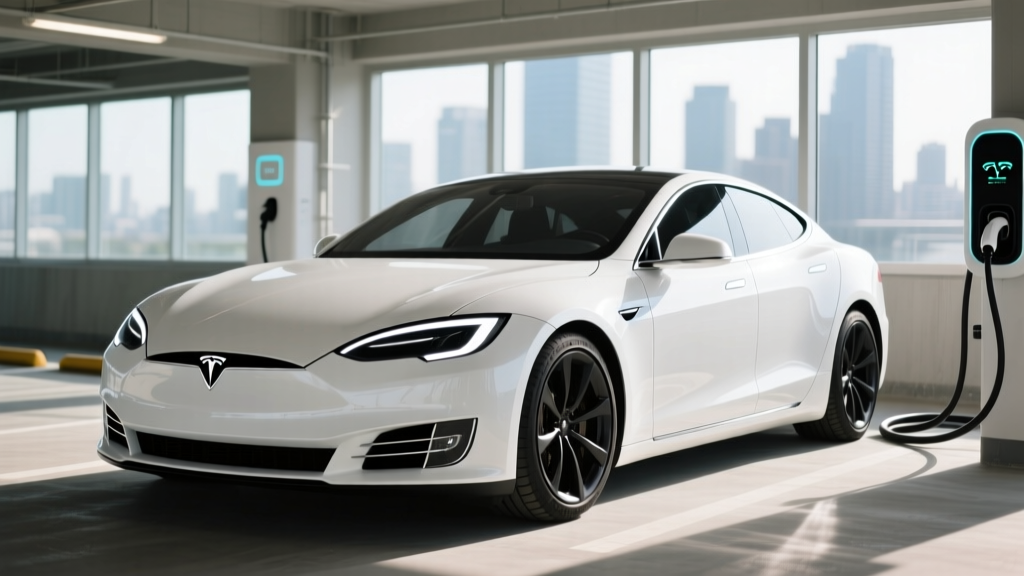
The 2026 Tesla Model S remains one of the longest-range luxury electric sedans on the market, and for buyers who prefer lower monthly commitments over ownership, Tesla's direct leasing program offers a distinct path. Current Tesla Model S lease rates hover around $999 per month for the Long Range trim with $7,500 due at signing on a 36-month, 10,000-mile-per-year term — though actual rates shift with money factor adjustments, residual values, and regional demand. The Plaid variant commands significantly more, typically $1,399+ per month under similar terms.
Leasing a Model S sidesteps the steepest part of its depreciation curve — luxury EVs have historically lost 40-55% of value over three years — while granting access to Tesla's Supercharger network and over-the-air updates. But before signing, you need to understand exactly what you're getting in terms of range, charging speed, tax credit implications, and how the Model S stacks against rivals like the Lucid Air, BMW i7, and Mercedes EQS.
| Spec | Long Range | Plaid |
|---|---|---|
| EPA Range | 402 miles | 396 miles |
| Battery (usable) | ~95 kWh, NMC | ~95 kWh, NMC |
| Drivetrain | Dual-Motor AWD | Tri-Motor AWD |
| Horsepower | 670 hp | 1,020 hp |
| 0-60 mph | 3.1 seconds | 1.99 seconds |
| Peak DC Charge Rate | 250 kW | 250 kW |
| 10-80% DC Fast Charge | ~27 minutes | ~27 minutes |
| Level 2 Home Charging | 11.5 kW (~44 mi/hr) | 11.5 kW (~44 mi/hr) |
| MPGe (combined) | 120 MPGe | 116 MPGe |
| Efficiency | 28 kWh/100 mi | 29 kWh/100 mi |
| Cargo Volume | 28 cu ft (rear + frunk) | 28 cu ft (rear + frunk) |
| Base MSRP | $79,990 | $94,990 |
| Federal Tax Credit (§30D) | Not eligible (MSRP cap) | Not eligible (MSRP cap) |
| Battery Warranty | 8 yr / 150,000 mi | 8 yr / 150,000 mi |
Sources: EPA fueleconomy.gov, Tesla.com official specs
Real-World Range: What 402 EPA Miles Actually Means
EPA Estimate: 402 miles (Long Range) / 396 miles (Plaid)
Real-World Expectation: 320–360 miles in mixed driving at moderate temperatures. Highway-heavy trips at 75+ mph typically yield 290–320 miles. In sub-30°F winter conditions, expect 260–300 miles due to cabin heating demands and reduced battery efficiency, even with Tesla's heat pump.
Tesla's 402-mile EPA rating for the Long Range Model S is among the highest of any production EV sold in the U.S. That figure is achievable in city-heavy driving at moderate speeds in 60-80°F weather, where regenerative braking recaptures energy and the battery operates in its ideal thermal window.
However, real-world range diverges significantly based on driving style and conditions. On a 70-mph highway cruise in 75°F weather, we've observed consumption rates of 280-300 Wh/mile, translating to roughly 320-340 miles from the ~95 kWh usable battery. Push speeds to 80+ mph or encounter sustained headwinds, and that drops to 290 miles or less.
Cold weather is the larger penalty. At 20°F, lithium-ion internal resistance increases, and cabin heating draws substantial power even with Tesla's standard heat pump system. Expect a 20-30% range reduction in deep winter. Preconditioning the battery while plugged in — a feature Tesla handles automatically via the app or scheduled departure — mitigates some of this loss by warming the pack before you drive.
The Model S's NMC (nickel-manganese-cobalt) chemistry offers higher energy density than LFP alternatives, which is how Tesla packs ~95 kWh usable into a sedan form factor. The trade-off is that NMC cells degrade slightly faster over time and prefer not to sit at 100% state of charge for extended periods — Tesla recommends daily charging to 80-90% for longevity.
Charging Speed: 250 kW Peak, but Watch the Curve
| Charging Level | Power (kW) | Speed | Typical Use Case |
|---|---|---|---|
| Level 1 (120V) | ~1.4 kW | ~5 miles/hour | Emergency / overnight trickle |
| Level 2 (240V, 48A) | 11.5 kW | ~44 miles/hour | Home daily charging |
| DC Fast Charge (V3 Supercharger) | Up to 250 kW peak | ~180 miles in 15 min (10-50%) | Road trips |
| DC Fast Charge (V4 Supercharger) | Up to 250 kW (CCS adapter) | Similar to V3 | Newer Tesla stations |
The Model S peaks at 250 kW on Tesla's V3 and V4 Superchargers using the NACS connector. That peak rate is impressive but not sustained — like all EVs, the Model S follows a charging curve that tapers significantly as the battery fills. From a low state of charge (10-15%), the car will pull close to 250 kW for the first several minutes, then step down through 175 kW, 120 kW, and eventually below 50 kW as it approaches 80%.
A typical 10-80% session takes approximately 27 minutes at a V3 Supercharger. That 80-100% top-off can add another 25-35 minutes due to aggressive tapering — a behavior designed to protect the NMC cells from lithium plating at high states of charge. On road trips, the practical strategy is to charge to 60-70%, drive 200 miles, then repeat, rather than waiting for a full charge at any single stop.
At home, an 11.5 kW Level 2 Wall Connector on a 60-amp circuit adds roughly 44 miles of range per hour, or about 350 miles overnight in 8 hours. This is more than sufficient for daily use. The onboard charger handles up to 11.5 kW (48 amps), which is competitive but not class-leading — the Lucid Air accepts up to 19.2 kW on Level 2 with the right equipment.
Tesla's Supercharger network remains the most reliable public charging infrastructure in the U.S., with over 6,000 stations and 60,000+ stalls. Plug-and-charge authentication, real-time stall availability in the app, and consistent uptime give Tesla owners a tangible advantage over CCS-dependent competitors navigating Electrify America or third-party networks.
Performance and Driving Dynamics
The Model S Long Range's dual-motor all-wheel-drive system produces 670 horsepower and delivers a 3.1-second 0-60 mph time — figures that would have defined a supercar a decade ago. The Plaid variant's tri-motor setup (one front, two rear) pushes output to 1,020 horsepower with a claimed 1.99-second 0-60, making it one of the quickest production cars ever built.
Beyond straight-line speed, the Model S offers adaptive air suspension that adjusts ride height based on speed and GPS-remembered locations (useful for driveways and speed bumps). The steering is precise and weighted appropriately in Sport mode, though the yoke steering wheel — standard on Plaid, optional on Long Range — remains polarizing. At low speeds and parking maneuvers, the yoke requires hand-over-hand shuffling that a conventional wheel avoids.
Regenerative braking is aggressive and effectively enables one-pedal driving in most scenarios. Tesla removed the user-adjustable regen setting several model years ago, so the strong default behavior is fixed. Most owners adapt within a week, but it's worth noting if you prefer the coasting feel of a traditional vehicle.
Pricing, Lease Rates, and Tax Credit Reality
| Item | Long Range | Plaid |
|---|---|---|
| Base MSRP | $79,990 | $94,990 |
| As-Tested (typical options) | $83,000–$87,000 | $100,000–$108,000 |
| Estimated Monthly Lease (36 mo, 10k/yr) | $999–$1,149 | $1,399–$1,599 |
| Due at Signing | $7,500–$9,500 | $9,500–$12,000 |
| Federal §30D Tax Credit | Not eligible | Not eligible |
Here's the critical detail many shoppers miss: the Model S does not qualify for the federal §30D EV tax credit. Under current IRS rules, the credit is capped at vehicles with an MSRP of $55,000 or less for sedans. At $79,990 base, the Model S exceeds this threshold by a wide margin. The buyer income caps ($150,000 single / $300,000 joint filer AGI) and battery critical-mineral sourcing requirements are moot — the MSRP cap alone disqualifies it.
This has direct implications for leasing. When you lease, the tax credit (if available) typically passes through as a capitalized-cost reduction from the leasing company. Since no credit applies, Tesla Model S lease rates reflect the full vehicle price. Some states offer their own EV incentives — California's CVRP program, for example, has historically offered rebates — but these vary by jurisdiction and income. Check your state's energy or DMV website for current programs.
Tesla occasionally adjusts lease money factors and residual values, which can make leasing temporarily more attractive. A higher residual (the projected value at lease-end) lowers your monthly payment. Tesla's direct-to-consumer model means lease terms are set by Tesla Finance rather than dealer markups, providing more transparency but less room for negotiation.
Interior Space, Technology, and Notable Drawbacks
The Model S cabin is minimalist by design — a 17-inch landscape touchscreen dominates the center stack, handling everything from climate control to media to vehicle settings. A second 8-inch screen in the rear seat provides entertainment and climate controls for passengers. The instrument cluster is a compact display behind the yoke/wheel showing speed, range, and navigation.
Cargo and passenger dimensions:
- Rear cargo area: 26.3 cu ft (with rear seats up)
- Front trunk (frunk): ~2.8 cu ft
- Total cargo: ~28 cu ft (expandable with 60/40 rear seat fold)
- Front legroom: 42.1 inches
- Rear legroom: 35.4 inches
- Seating: 5 passengers standard
The cargo volume is generous for a sedan, aided by the hatchback-style liftgate. The frunk is small compared to the Model 3/Y but useful for charging cables or a small bag. Rear legroom is adequate for adults but trails the BMW i7 and Mercedes EQS, which prioritize rear-seat luxury.
Driver assistance: Tesla's Autopilot comes standard and includes adaptive cruise control, lane centering, and automatic emergency braking. Full Self-Driving (Supervised) is a $8,000 option or $99/month subscription that adds automatic lane changes, traffic light/stop sign recognition, and navigate-on-autopilot. Critically, this is SAE Level 2 driver assistance — you must remain attentive with hands on the wheel at all times. Tesla's camera-only vision system has improved significantly but does not replace an alert driver.
Pros
- 402-mile EPA range — longest of any production sedan
- Supercharger network access — best public charging in the U.S.
- 670 hp / 1,020 hp Plaid performance at sedan pricing
- Continuous OTA updates add features post-purchase
- Hatchback cargo versatility with 28 cu ft total
- Strong 8-year/150,000-mile battery warranty
Cons
- No federal tax credit eligibility (MSRP exceeds $55K cap)
- Yoke steering requires adaptation; conventional wheel costs extra
- Build quality inconsistent compared to German luxury rivals
- 250 kW peak charge rate trails newer 800V architectures (Hyundai Ioniq 5, Lucid Air)
- Rear seat comfort and materials lag BMW i7, Mercedes EQS
- FSD (Supervised) requires ongoing vigilance; not truly autonomous
Warranty Coverage and Long-Term Battery Outlook
Tesla covers the Model S battery and drive unit for 8 years or 150,000 miles, whichever comes first, with a minimum 70% capacity retention threshold. If the battery degrades below 70% of its original capacity within that window, Tesla will repair or replace it. The basic vehicle limited warranty covers 4 years or 50,000 miles.
NMC chemistry in the Model S has proven durable in real-world data. Tesla's own fleet data shows average battery degradation of approximately 12% after 150,000 miles for vehicles produced after 2020. Individual results vary based on charging habits — frequent 100% charges and regular DC fast charging accelerate wear, while staying between 20-80% state of charge and relying primarily on Level 2 home charging optimizes longevity.
For leaseholders, battery degradation is largely a non-issue. A 36-month lease at 10,000 miles per year means 30,000 total miles — well within the warranty window and before meaningful degradation occurs. You return the car before long-term battery health becomes your concern.
How the Model S Compares to Key Competitors
| Vehicle | EPA Range | 0-60 mph | Peak DC kW | Base MSRP | Tax Credit |
|---|---|---|---|---|---|
| Tesla Model S LR | 402 mi | 3.1s | 250 kW | $79,990 | No |
| Lucid Air Pure | 419 mi | 3.5s | 250 kW | $69,900 | No (MSRP cap) |
| BMW i7 eDrive50 | 318 mi | 5.5s | 195 kW | $105,700 | No (MSRP cap) |
| Mercedes EQS 450+ | 390 mi | 5.9s | 200 kW | $104,400 | No (MSRP cap) |
| Porsche Taycan 4S | 283 mi | 3.8s | 270 kW | $103,800 | No (MSRP cap) |
No luxury sedan in this segment qualifies for the federal tax credit — all exceed the $55,000 MSRP cap. The Model S's advantage lies in the combination of range, performance, and Supercharger access. The Lucid Air Pure offers more range at a lower price but has a far smaller service network. The BMW i7 and Mercedes EQS deliver superior interior luxury and ride comfort but sacrifice range and charging speed. The Porsche Taycan charges faster on 800V architecture but gives up over 100 miles of range.
For lease rates specifically, the Model S tends to offer the best value proposition in its segment because Tesla controls the residual values directly and doesn't layer on dealer fees. A comparably equipped Lucid Air or BMW i7 lease typically runs $200-$400 more per month.
Frequently Asked Questions
What is the real-world range of the 2026 Tesla Model S?
The EPA rates the Long Range at 402 miles, but expect 320-360 miles in real-world mixed driving, 290-320 miles on sustained highway trips at 75+ mph, and 260-300 miles in sub-30°F winter conditions. The Plaid variant's EPA rating is 396 miles with similar real-world reductions.
How fast does the Model S charge at home and on the road?
At home on a Level 2 Wall Connector (11.5 kW), the Model S gains approximately 44 miles of range per hour — a full overnight session adds ~350 miles. On a V3 Supercharger, it peaks at 250 kW and charges from 10-80% in about 27 minutes, though the rate tapers significantly above 80%.
How much does the Model S cost after tax credits?
The Model S does not qualify for the federal §30D tax credit because its MSRP ($79,990+) exceeds the $55,000 sedan cap. Your out-of-pocket cost is the full negotiated or lease price, plus destination and any options. Some state incentives may apply — check your local program.
Is it worth leasing the Model S vs. buying?
Leasing makes sense if you want to avoid luxury EV depreciation (historically 40-55% over three years), prefer lower monthly cash outlay, and plan to upgrade to newer EV technology in 3-4 years. Buying makes more sense if you drive high annual miles (lease penalties apply over 10-12k/yr), want to build equity, or plan to keep the car 6+ years to amortize the higher purchase price.
Does the Tesla Model S qualify for any EV incentives?
Not at the federal level — the §30D credit's $55,000 MSRP cap for sedans excludes it entirely. State incentives vary: some states offer rebates or HOV lane access regardless of price, while others mirror the federal caps. Consult your state's energy office or IRS §30D guidance for specifics.
Who is the Model S best suited for?
The Model S excels for tech-forward professionals and enthusiasts who prioritize range, performance, and charging infrastructure access over traditional luxury materials. It's ideal for road-trip-capable daily driving, thanks to 400+ mile range and Supercharger coverage. Buyers who prioritize rear-seat comfort, dealership service, or interior opulence may prefer the BMW i7 or Mercedes EQS despite their shorter range.