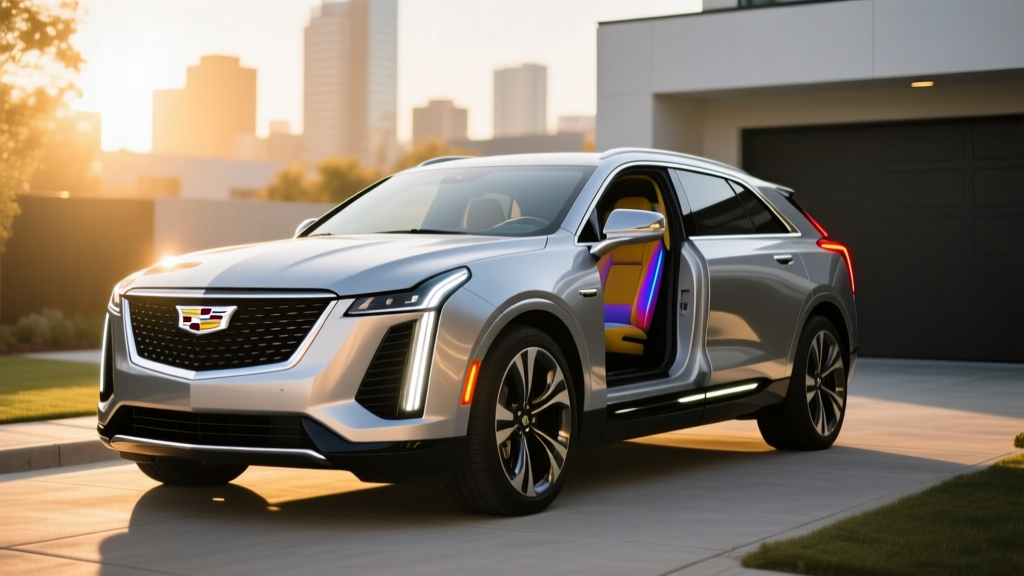
If you're researching the electric Escalade — officially the Cadillac Escalade IQ — here's the fast answer: it offers an EPA-estimated 460 miles of range from a massive 200+ kWh Ultium battery, starts at approximately $129,990, and charges at up to 350 kW on DC fast chargers (adding roughly 100 miles in about 10 minutes). It seats seven, produces up to 750 horsepower, and qualifies as Cadillac's first full-size luxury electric SUV. However, it does not qualify for the federal §30D tax credit due to its MSRP exceeding the $80,000 SUV cap, and real-world highway range will land closer to 350–380 miles.
Quick Verdict: Is the Electric Escalade Worth It?
Choose the Escalade IQ if: You want a full-size, three-row luxury EV with class-leading range, you have reliable home Level 2 charging, and your budget comfortably exceeds $130K.
Consider alternatives if: You need federal tax-credit assistance, frequently tow heavy loads long-distance, or live in an apartment without charging access.
2026 Escalade IQ Specs: Range, Battery, and Performance
The Escalade IQ rides on GM's BT1 electric platform with a dual-motor all-wheel-drive powertrain. It is one of the largest battery packs ever fitted to a production passenger vehicle.
| Spec | Value |
|---|---|
| EPA Range (est.) | ~460 miles |
| Battery Capacity (usable) | ~200+ kWh (NCMA, Ultium) |
| Horsepower | Up to 750 hp (Velocity mode) |
| 0–60 mph | Under 5.0 seconds (est.) |
| Max DC Fast Charge Rate | 350 kW (peak) |
| 10–80% DC Charge Time | ~30–35 minutes (est.) |
| Level 2 (AC) Charge Rate | 19.2 kW |
| Seating | 7 passengers (3 rows) |
| Starting MSRP | $129,990 (Luxury 1); $149,990 (Sport 1) |
| Federal Tax Credit (§30D) | Not eligible (exceeds $80K SUV MSRP cap) |
| Battery/Powertrain Warranty | 8 years / 100,000 miles |
Real-World Range Expectations
EPA Sticker: ~460 miles
Highway driving (70+ mph): Expect 350–380 miles
Cold weather (below 32°F): Expect 280–340 miles depending on cabin heating and terrain
Heavy towing: Range can drop 40–50% under load
The Escalade IQ's enormous battery gives it a buffer that smaller EVs lack, but physics still applies: a 7,500+ lb SUV pushing air at 75 mph consumes energy rapidly. Preconditioning the battery before fast charging and using the heat pump (standard) will help preserve range in winter.
Charging the Electric Escalade: Home and Public Networks
The Escalade IQ uses the NACS (North American Charging Standard) connector natively, giving it full access to Tesla Superchargers (V3 and V4), plus Electrify America, EVgo, and other NACS-equipped networks without an adapter.
| Level | Power (kW) | Miles Added Per Hour | Use Case |
|---|---|---|---|
| Level 1 (120V) | ~1.4 kW | ~3–4 mi/hr | Emergency/trickle only |
| Level 2 (240V, 80A) | 19.2 kW | ~52–58 mi/hr | Home daily charging |
| DC Fast (350 kW peak) | Up to 350 kW | ~600+ mi/hr (peak) | Road trips; 10–80% in ~30–35 min |
Home Charging Realities for a 200+ kWh Battery
Charging a battery this large at home requires planning. At 19.2 kW (the IQ's max Level 2 rate with an 80-amp circuit), a full 0–100% charge takes approximately 10–11 hours. Most owners will plug in at 20–30% remaining and wake up fully charged, but you need a NEMA 14-100 outlet or a hardwired Level 2 station on a dedicated 100-amp circuit.
Key consideration: Many homes have 100-amp or 150-amp electrical panels. A 100-amp dedicated circuit for the charger may require a panel upgrade to 200 amps, which typically costs $1,500–$3,500 depending on your municipality and electrician. Always consult a licensed electrician for a load calculation before purchasing equipment.
Escalade IQ vs. Gas Escalade: Cost of Ownership Compared
How does the electric Escalade stack up against the internal-combustion Escalade over five years? The numbers tell a nuanced story — the IQ saves on fuel and maintenance but costs significantly more upfront.
| Category | Escalade IQ (Electric) | Gas Escalade (6.2L V8) |
|---|---|---|
| Purchase Price (base) | $129,990 | $89,590 |
| Federal Tax Credit | $0 (MSRP cap) | $0 |
| Fuel/Energy (5 yrs) | ~$5,800 (at $0.14/kWh avg) | ~$18,750 (at $3.75/gal, 16 MPG) |
| Maintenance (5 yrs) | ~$1,500 | ~$4,500 |
| Insurance (5 yrs est.) | ~$18,000 | ~$14,000 |
| Depreciation (est.) | ~$52,000 | ~$38,000 |
| 5-Year Total Cost | ~$207,290 | ~$164,840 |
The takeaway: The Escalade IQ saves roughly $12,950 in fuel and $3,000 in maintenance over five years compared to the gas V8 model. However, the $40,400 higher purchase price and steeper depreciation on a $130K vehicle means the gas Escalade remains cheaper to own in total for most buyers. The IQ is a technology and refinement choice, not a pure cost-savings play.
Federal Tax Credit and Incentive Reality
Under current IRS §30D rules, the Escalade IQ does not qualify for the $7,500 federal clean vehicle credit. The reason is straightforward: the law caps eligible SUVs at an $80,000 MSRP, and the IQ starts at nearly $130,000.
This is a common misconception among luxury EV shoppers. Here's the reality:
| Myth | Fact |
|---|---|
| "All EVs get the $7,500 credit" | Only vehicles under MSRP caps ($55K sedans, $80K SUVs/trucks) with qualifying battery sourcing |
| "I can lease to get the credit" | Lease credit (§45W) goes to the lessor; savings may or may not pass through to the lessee |
| "State incentives will make up for it" | Some states offer rebates, but many also have MSRP or income caps — check your state's energy office |
| "The credit applies at point of sale" | True for eligible vehicles — but the IQ's MSRP disqualifies it entirely |
Bottom line: Budget the full MSRP plus destination, taxes, and dealer fees. Consult a tax professional for any state-specific incentives that may apply to your situation.
Real-World Ownership: What First-Time EV Buyers Should Know
Buying a $130,000 electric SUV is a different ownership experience than a gas luxury vehicle. Here are the practical considerations the brochures don't emphasize:
Home Charging Is Non-Negotiable
With a 200+ kWh battery, relying solely on public DC fast charging is expensive ($0.35–$0.50/kWh at public stations = $70–$100 per full charge) and time-consuming. If you cannot install a Level 2 charger at home or at a workplace, the Escalade IQ's convenience advantage erodes quickly. Apartment dwellers should look at the growing availability of curbside and garage Level 2 options in their area before committing.
Cold-Weather Range Loss Is Real
In sub-freezing temperatures, expect 20–30% range reduction. The IQ's standard heat pump mitigates this better than resistive heating, but a 460-mile EPA range dropping to ~320 miles in a Minnesota January is still a meaningful shift for road-trip planning. Always precondition the battery while plugged in before winter driving.
Insurance Premiums Are Higher
EV insurance averages 15–25% more than equivalent gas vehicles due to higher repair costs, specialized parts, and battery replacement risk. For a $130K SUV, expect annual premiums of $3,200–$4,000 depending on your profile. Get quotes from multiple carriers before signing a purchase agreement.
Tire Wear Accelerates
A 7,500-lb vehicle with 750 hp of instant torque will wear through tires faster than its gas counterpart. Budget for premium tire replacement every 25,000–35,000 miles at approximately $400–$600 per tire.
Decision Framework: Should You Buy the Electric Escalade?
Buy the Escalade IQ If:
- You have home Level 2 charging (or can install it)
- You want the quietest, most refined full-size SUV experience available
- You drive 200+ miles daily and want range without frequent stops
- Tax-credit eligibility is not a factor in your purchase decision
- You value instant torque, low center of gravity, and one-pedal driving in a luxury package
Consider the Gas Escalade or a Competitor If:
- You cannot charge at home and public infrastructure in your area is sparse
- You frequently tow more than 7,000 lbs over long distances
- The $40K+ premium over the gas model doesn't align with your budget
- You live in an extreme cold climate and regularly drive 300+ miles between stops
- You want to offset your purchase with the federal tax credit
Frequently Asked Questions
Does the electric Escalade (Escalade IQ) qualify for any tax credits?
No. The Escalade IQ's MSRP of $129,990+ exceeds the IRS §30D cap of $80,000 for SUVs. It is not eligible for the $7,500 federal clean vehicle credit. Some state or local utility incentives may apply — check your jurisdiction's energy office.
How long does it take to charge the Escalade IQ at home?
On a 19.2 kW Level 2 charger (80-amp circuit), a full charge from empty takes approximately 10–11 hours. Most owners who plug in nightly with 30–40% remaining will wake up fully charged in 6–7 hours. A standard 48-amp (11.5 kW) Level 2 station will take roughly 17–18 hours for a full charge.
What is the real-world highway range of the Escalade IQ?
While the EPA estimates approximately 460 miles, sustained highway driving at 70–75 mph will yield roughly 350–380 miles. In cold weather (below freezing), expect 280–340 miles. The large battery provides a generous buffer, but aerodynamic drag on a vehicle this size is significant at highway speeds.
Can the Escalade IQ tow? How does towing affect range?
GM rates the Escalade IQ for towing (expected ~8,000 lbs capacity based on platform specs). However, towing a heavy trailer can reduce range by 40–50%, bringing effective range down to 200–250 miles. Plan charging stops accordingly when towing long distances.
How does the Escalade IQ compare to the Tesla Model X or Rivian R1S?
The Escalade IQ is significantly larger (full-size, 3-row, 7-seat), more expensive, and offers more range than either the Tesla Model X or Rivian R1S. The Model X starts around $80K and offers ~340 miles EPA; the R1S starts around $75K with ~350+ miles. The IQ competes more directly with ultra-luxury offerings and trades performance agility for space, presence, and Cadillac's luxury execution.
Is Super Cruise included, and is it self-driving?
The Escalade IQ comes equipped with GM's Super Cruise, a hands-off (eyes-on) driver-assistance system for compatible highways. Per NHTSA and SAE classification, Super Cruise is a Level 2 system — the driver must remain attentive and ready to take over at any time. It is not autonomous or self-driving.
Sources: Cadillac official specifications, fueleconomy.gov (EPA), IRS §30D Clean Vehicle Credits. Specifications are based on 2025–2026 model-year data as published; confirm final figures with your dealer before purchase.