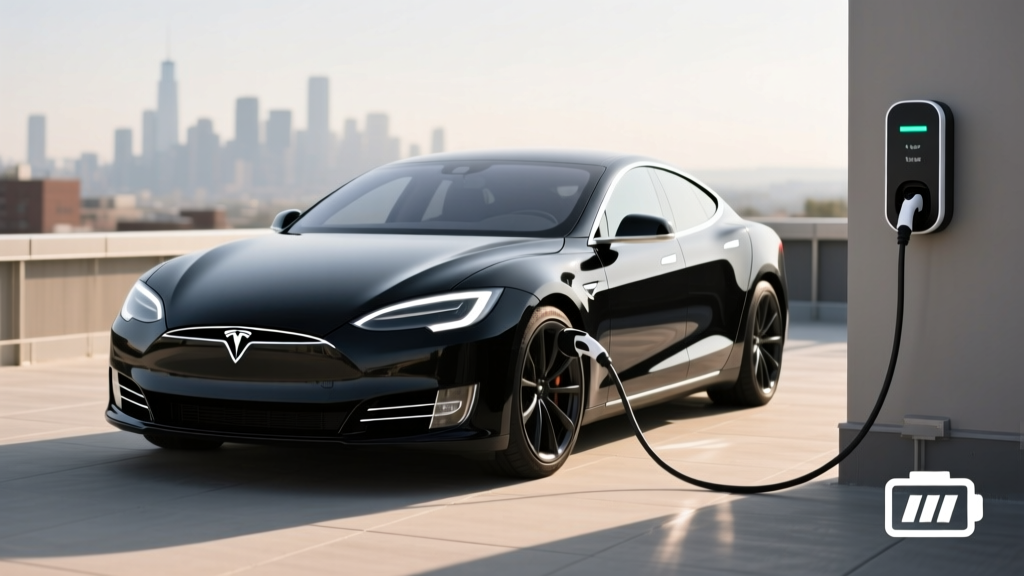
The Tesla Model S has been the benchmark luxury electric sedan since its launch, and the current-generation refresh (with the 2021+ interior and powertrain updates carried forward into 2026) keeps it relevant against newer rivals like the Lucid Air, BMW i7, and Mercedes EQS. But relevance isn't the same as dominance. Below, we break down the 2026 Tesla Model S with the exact numbers buyers need — EPA range, real-world highway expectations, DC fast-charge curves, battery chemistry, §30D tax-credit eligibility, and total cost of ownership — so you can decide whether this flagship sedan still earns its premium price.
2026 Tesla Model S: Quick Verdict
The Model S Long Range remains one of the longest-range production EVs on the U.S. market, with an EPA-estimated 402 miles. The Plaid variant trades roughly 30 miles of range for supercar-level acceleration (1,020 hp, 0-60 in 1.99 seconds). Both trims benefit from Tesla's mature Supercharger network, strong over-the-air update cadence, and a minimalist interior that has improved materially since the 2021 refresh. The main drawbacks? A starting price above $72,000 that eliminates federal tax-credit eligibility under current §30D MSRP caps, rear-seat space that trails competitors like the Lucid Air, and a yoke steering option that remains polarizing. If you want max range, access to the most reliable DC fast-charging network, and Tesla's software ecosystem, the Model S still delivers. If you need rear-seat comfort, the latest luxury materials, or a sub-$55,000 price to capture the federal credit, look elsewhere.
| Spec | Long Range | Plaid |
|---|---|---|
| EPA Range | 402 mi | 396 mi |
| Battery (usable, est.) | ~95 kWh, NMC | ~95 kWh, NMC |
| Drivetrain | Dual-Motor AWD | Tri-Motor AWD |
| Horsepower | 670 hp | 1,020 hp |
| 0-60 mph | 3.1 sec | 1.99 sec |
| Top Speed | 155 mph | 200 mph |
| Peak DC Fast Charge | 250 kW | 250 kW |
| 10-80% DCFC Time | ~30 min | ~30 min |
| Level 2 (11.5 kW) | ~41 mi/hr | ~41 mi/hr |
| MPGe (combined) | 120 MPGe | 116 MPGe |
| Base MSRP | $72,990 | $87,990 |
Range and Efficiency: EPA vs. Real-World Miles
Real-World Expectation: ~330-360 mi highway at 70 mph in moderate temps; ~280-310 mi in cold weather (below 32°F). City/regenerative driving can match or slightly exceed the EPA figure.
The Model S Long Range's 402-mile EPA rating places it near the top of the EV market, trailing only the Lucid Air Grand Touring (516 mi EPA). However, the EPA test cycle includes significant low-speed and regenerative-braking segments that favor EVs. On a sustained 70-mph highway run in 65-75°F weather, expect roughly 330-360 miles before needing to stop — a result consistent with third-party testing by outlets like Car and Driver and Edmunds on the refreshed Model S platform.
Cold weather is the great equalizer for all EVs. At temperatures below freezing, lithium-ion cells experience higher internal resistance, and cabin heating draws substantial energy (the Model S uses a heat pump, which helps). Plan for a 20-30% reduction in usable range during winter highway driving — roughly 280-310 miles in the Long Range. For a 250-mile winter commute with a safety buffer, that's still workable, but road-trippers crossing the Rockies or Upper Midwest in January should plan charging stops accordingly.
Efficiency-wise, the Long Range achieves an EPA-rated 120 MPGe combined, translating to approximately 28 kWh per 100 miles. That's competitive for a 4,500+ lb luxury sedan but trails the lighter Lucid Air (~26 kWh/100 mi) and BMW i7 eDrive50 (~30 kWh/100 mi but with less range). The tri-motor Plaid is slightly less efficient at 116 MPGe, a modest penalty for 350 additional horsepower.
Battery Chemistry, Degradation, and Warranty
The Model S uses an NMC (nickel manganese cobalt) lithium-ion battery pack with an estimated usable capacity of ~95 kWh. Tesla does not publish exact usable kWh figures, but teardown analysis and real-world consumption data point to this number. NMC chemistry offers higher energy density than LFP (lithium iron phosphate), which is why Tesla reserves it for Long Range and Plaid models where maximizing range is the priority. The trade-off: NMC cells degrade slightly faster than LFP over thousands of cycles and are best kept between 20-80% state of charge for daily use. Tesla's infotainment system lets you set a charge limit — set it to 80% for daily commuting and 100% only when you need full range for a road trip.
Tesla's battery and drive-unit warranty covers 8 years or 150,000 miles (whichever comes first), with a minimum 70% capacity retention threshold. This is among the better warranties in the luxury EV segment and reflects Tesla's confidence in its thermal management system. Real-world data from high-mileage Model S owners suggests typical degradation of 8-12% over the first 100,000 miles, after which the curve flattens. For context, a 10% loss on a 402-mile EPA range leaves you with roughly 362 miles — still exceptionally usable.
Charging Speed: DC Fast, Level 2, and the Supercharger Advantage
| Charging Level | Power / Rate | Speed (Miles Added) | Notes |
|---|---|---|---|
| Level 1 (120V, 12A) | ~1.4 kW | ~3 mi/hr | Emergency/trickle only |
| Level 2 (240V, 48A) | 11.5 kW | ~41 mi/hr | Home Wall Connector; full charge in ~9 hr |
| DC Fast (V3 Supercharger) | Peak 250 kW | ~200 mi in 15 min | 10-80% in ~30 min; tapers above 80% |
| DC Fast (CCS adapter, non-Tesla) | Up to 250 kW | Varies by station | Requires Tesla CCS adapter (sold separately) |
The Model S peaks at 250 kW on Tesla V3 Superchargers. In practice, the charge curve is aggressive in the 10-50% SoC window, where the car can sustain roughly 200-250 kW, then progressively tapers to ~100 kW by 70% and ~50 kW by 85%. A 10-80% session takes approximately 30 minutes under ideal conditions (battery preconditioned via on-route navigation). This isn't the fastest-charging EV on the market — the Hyundai Ioniq 5 and Porsche Taycan can pull 10-80% in roughly 18-22 minutes on 350 kW chargers — but Tesla's Supercharger network remains the most reliable and widely deployed DC fast-charging ecosystem in the U.S., which matters more than peak kW on a cross-country road trip.
For home charging, Tesla's Wall Connector delivers up to 11.5 kW (48 amps on a 60-amp circuit), adding roughly 41 miles of range per hour. A full 10-100% charge takes about 9 hours — easily accomplished overnight. Installation costs vary widely: expect $500-$1,500 if your electrical panel has spare capacity and the run is short, or $2,000-$4,000+ if a panel upgrade or long conduit run is needed. Always get a quote from a licensed electrician before purchasing equipment.
Preconditioning tip: Always navigate to a Supercharger using the car's built-in routing. The Model S will automatically warm the battery to optimal charging temperature before arrival, shaving 5-10 minutes off your stop. Arriving at a Supercharger without preconditioning (e.g., pulling in from a local road without navigation routing) can result in significantly slower initial charge rates, especially in cold weather.
Performance: Dual-Motor Long Range vs. Tri-Motor Plaid
The Long Range's dual-motor all-wheel-drive powertrain produces 670 horsepower and rockets to 60 mph in 3.1 seconds — a figure that would have been exotic-supercar territory a decade ago. Power delivery is instantaneous and linear, with no gear shifts to interrupt acceleration. Highway passing confidence is exceptional, and the car's low center of gravity (battery pack under the floor) keeps body roll well-controlled through corners despite its 4,561-lb curb weight.
The Plaid steps into hypercar territory with its tri-motor setup (one front, two rear) producing 1,020 horsepower. The 1.99-second 0-60 mph claim requires prepped-surface launch mode, but even in standard rollout conditions, the Plaid dips well under 2.5 seconds. Sustained high-speed performance is where the Plaid truly differentiates: it can maintain its 200-mph top speed without the thermal derating that afflicted earlier high-output EVs, thanks to redesigned cooling architecture.
Both trims feature adaptive air suspension that adjusts ride height based on speed and road conditions, lowering at highway speeds for aerodynamic efficiency and raising for steep driveways or rough roads. Regenerative braking offers a single strong setting that enables one-pedal driving in most scenarios — lift off the accelerator and the car decelerates briskly without touching the brake pedal, recovering energy back into the battery.
Interior, Cargo, and Technology
The post-2021-refresh Model S interior is a significant step up from earlier iterations, with ventilated front seats, heated rear seats, a 17-inch center touchscreen (now angled toward the driver), a rear-seat 8-inch display, and a 22-speaker audio system. Build quality and material choices (vegan leather, open-pore wood, aluminum accents) are competitive with Audi and BMW, though the Lucid Air and Mercedes EQS still offer more traditional luxury ambience.
Space is where the Model S shows its age relative to newer platforms:
- Front headroom: 38.8 in
- Rear legroom: 35.4 in (tight for adults over 6'0" on long trips)
- Trunk (rear): 26.3 cu ft
- Frunk (front trunk): 3.1 cu ft
- Max cargo (rear seats folded): ~64 cu ft
The rear seat comfortably fits two adults on shorter trips, but the Lucid Air and BMW i7 offer meaningfully more rear-seat space. The 26.3 cu ft trunk is generous for a sedan and easily handles four carry-on suitcases with room to spare. The small frunk is useful for charging cables or a laptop bag but won't hold much more.
On the tech front, Tesla's infotainment system remains the most responsive and feature-rich in the EV market, with built-in navigation, streaming apps (Netflix, YouTube, Spotify), a mobile game library for charging-stop entertainment, and seamless phone-as-key functionality. Over-the-air updates continue to add features years after purchase — recent additions include enhanced visualization, improved trip planning, and UI refinements.
Driver assistance: Basic Autopilot (lane centering, adaptive cruise control, traffic-aware features) comes standard. The optional Full Self-Driving (Supervised) package adds automatic lane changes, Navigate on Autopilot, Smart Summon, and traffic-light recognition. This is an SAE Level 2 system — the driver must remain fully engaged, hands on the wheel (or torque-applied with the yoke), and eyes on the road at all times. It is not autonomous driving. FSD can reduce fatigue on long highway stretches but requires constant supervision and does not replace an attentive driver.
Pricing, Trims, and Federal Tax Credit Eligibility
| Trim | Base MSRP | Federal §30D Credit | Effective Price |
|---|---|---|---|
| Long Range | $72,990 | $0 (exceeds MSRP cap) | $72,990 |
| Plaid | $87,990 | $0 (exceeds MSRP cap) | $87,990 |
Under current IRS §30D rules, the federal EV tax credit of up to $7,500 is subject to MSRP caps: $55,000 for sedans. Both Model S trims far exceed this threshold, making them ineligible for the federal credit regardless of buyer income or battery-sourcing compliance. See the IRS Clean Vehicle Credit page for the latest eligibility rules, which are subject to legislative change.
Additionally, §30D imposes buyer income caps ($150,000 single / $300,000 joint modified AGI) and critical-mineral/battery-component sourcing requirements. Even if the MSRP cap were lifted, buyers would need to verify personal eligibility. Consult a tax professional before making purchase decisions based on credit assumptions.
State and local incentives may still apply. Some states offer rebates, HOV-lane access, or reduced registration fees for EVs regardless of MSRP — check your state's energy or DMV website for current programs.
Ownership Costs: 5-Year Estimate
At $72,990, the Model S Long Range carries a premium entry price, but operating costs are substantially lower than a comparable gasoline luxury sedan (e.g., BMW 5 Series, Mercedes E-Class). Key 5-year cost considerations:
- Electricity (home charging at $0.14/kWh avg): ~$3,800 for 60,000 miles
- Gasoline equivalent (25 MPG premium sedan at $3.50/gal): ~$8,400
- Maintenance: Minimal — no oil changes, no spark plugs, brake-pad life extended by regen braking. Budget ~$600-800 over 5 years for cabin air filters, wiper fluid, tire rotations, and brake-fluid checks.
- Tires: High-performance tires on the Model S wear faster than economy-EV tires. Budget $1,200-$2,000 for a replacement set around year 3-4.
- Insurance: Model S premiums run 20-40% higher than average sedans due to repair costs and performance. Get a quote before purchasing — annual premiums of $2,500-$4,000 are common depending on profile.
- Depreciation: Luxury EVs depreciate steeply in years 1-3. Expect roughly 40-50% value retention at year 5 based on current market trends.
Pros and Cons
- 402-mile EPA range — among the longest of any production EV
- Access to Tesla Supercharger network (250 kW, 50,000+ stalls globally)
- Exceptional performance in both trims (3.1s / 1.99s 0-60)
- Industry-leading software, OTA updates, and infotainment
- Strong 8-year/150,000-mile battery & drive-unit warranty
- Generous 26.3 cu ft trunk plus frunk
- No federal tax credit — MSRP far exceeds §30D sedan cap
- Rear-seat legroom (35.4 in) trails Lucid Air, BMW i7
- 250 kW peak DCFC is outpaced by 350 kW-capable rivals
- Insurance premiums significantly above segment average
- Yoke steering option requires adaptation; not ideal for all drivers
- FSD (Supervised) is Level 2 only — not autonomous
Who Should Buy the 2026 Tesla Model S?
- You want 400+ miles of range and frequently take road trips over 300 miles
- Supercharger network reliability is a top priority for your travel patterns
- You value Tesla's software ecosystem, OTA updates, and mobile app integration
- Your budget accommodates $73,000+ without a federal tax credit
- You want supercar-rivaling acceleration in a practical daily-driver sedan
- Track-capable thermal management matters to you
- Rear-seat passenger comfort is a priority (consider Lucid Air, BMW i7)
- You need a vehicle under $55,000 MSRP for federal tax-credit eligibility
- You prefer traditional luxury interior materials (Mercedes EQS, BMW i7)
- Fastest DC charging is critical (Hyundai Ioniq 5 N, Porsche Taycan at 350 kW stations)
Frequently Asked Questions
What is the real-world range of the 2026 Tesla Model S?
The Long Range carries a 402-mile EPA rating. In real-world highway driving at 70 mph and moderate temperatures, expect roughly 330-360 miles. In cold weather (below freezing), plan for 280-310 miles. The Plaid delivers 396 miles EPA, with similar real-world reductions.
How fast does the Model S charge at home and on the road?
On a Level 2 home charger (11.5 kW), the Model S adds about 41 miles of range per hour, with a full charge taking roughly 9 hours. On a V3 Supercharger (250 kW DC), a 10-80% session takes approximately 30 minutes with battery preconditioning. Peak charge rate tapers progressively above 50% SoC.
Does the Tesla Model S qualify for the federal EV tax credit?
No. Under current IRS §30D rules, the federal clean vehicle credit is capped at $55,000 MSRP for sedans. The Model S starts at $72,990, making it ineligible regardless of buyer income or battery sourcing. State incentives may still apply — check your local programs. See IRS.gov for current rules.
Is the Model S worth it compared to the Lucid Air or BMW i7?
It depends on priorities. The Model S wins on Supercharger network access, software maturity, and cargo versatility. The Lucid Air offers more range (516 mi Grand Touring), a more spacious rear seat, and a more luxurious interior. The BMW i7 provides a traditional luxury experience with strong build quality. If charging infrastructure and software are paramount, the Model S leads; if rear-seat comfort or luxury materials matter more, test-drive the Air and i7.
What are the biggest pros and cons of the Model S?
Top pros: 402-mile range, Supercharger access, 670-1,020 hp performance, best-in-class software, and strong battery warranty. Top cons: no federal tax credit, rear-seat space trails newer competitors, 250 kW peak charging is outpaced by rivals, high insurance costs, and FSD remains Level 2 (driver supervision required).
What battery chemistry does the Model S use?
The Model S uses NMC (nickel manganese cobalt) lithium-ion cells with an estimated ~95 kWh usable capacity. NMC provides higher energy density than LFP, enabling the Model S's long range, but benefits from daily charge limits of 80% to maximize long-term cell health. Tesla's battery management system and thermal controls help mitigate degradation.
How long is the Model S battery warranty?
Tesla covers the battery and drive unit for 8 years or 150,000 miles, whichever comes first, with a guaranteed minimum 70% capacity retention. Real-world data from high-mileage owners suggests 8-12% degradation over the first 100,000 miles, with the degradation curve flattening thereafter.
Sources: EPA fuel-economy data via fueleconomy.gov, Tesla official specifications, IRS §30D Clean Vehicle Credit guidelines at irs.gov. All specifications reflect 2026 model-year data available at time of publication. Tax-credit rules are subject to change; consult a tax professional for personal eligibility.