The Short Answer: The Challenger Is Gone — Meet the Charger Daytona EV
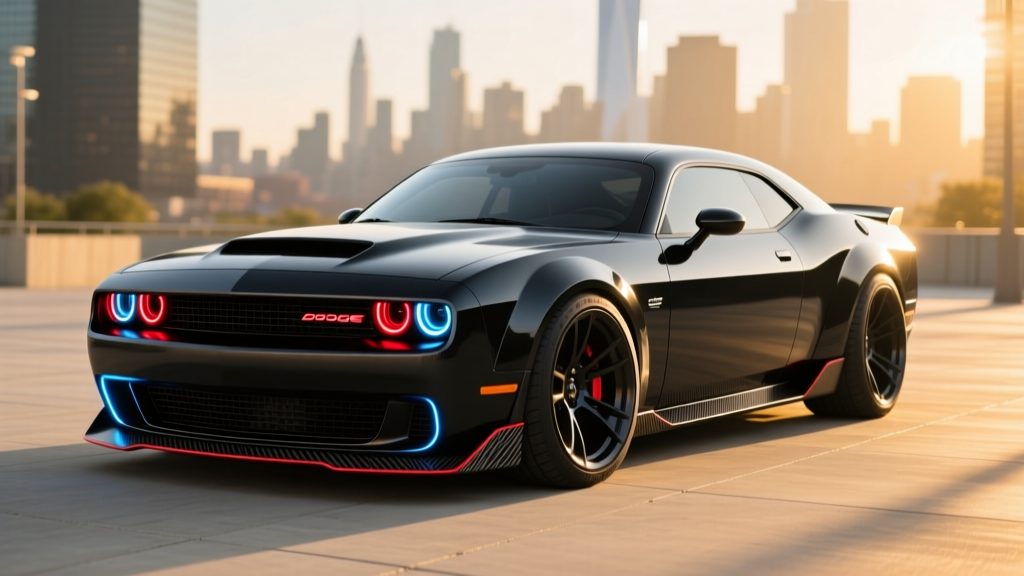
If you're searching for an EV Dodge Challenger, here's what you need to know: Dodge discontinued the Challenger (and gas Charger) after the 2023 model year. Its electric successor is the 2025–2026 Dodge Charger Daytona, a two-door electric muscle coupe (and four-door sedan) built on Stellantis' STLA Large platform. The Challenger nameplate has not returned as an EV, but the Charger Daytona fills the same muscle-car role with electric powertrains producing up to 670 horsepower and an EPA-estimated range of up to 317 miles. Pricing starts around $51,990 before incentives. If you specifically want a two-door coupe with Challenger-like styling, the Daytona Scat Pack delivers — but it's officially badged as a Charger, not a Challenger.
What Happened to the Dodge Challenger?
Dodge ended production of the third-generation Challenger in late 2023 alongside the gas-powered Charger sedan. The decision was driven by tightening emissions regulations and Stellantis' corporate pivot toward electrification. Rather than revive the Challenger name, Dodge consolidated its muscle-car identity under the Charger badge, introducing the all-electric Charger Daytona for the 2025 model year (now carrying into 2026 with minor updates).
For buyers who specifically want a modern Dodge two-door muscle coupe with electric propulsion, the Charger Daytona is the answer. The platform, performance targets, and styling ethos are direct descendants of what the Challenger represented — aggressive proportions, rear-wheel-drive dynamics (with AWD available), and straight-line performance.
2026 Dodge Charger Daytona: Range, Battery, and Charging Specs
The Charger Daytona uses a 100.6 kWh (gross) lithium-ion battery pack with NMC (nickel-manganese-cobalt) chemistry. Here are the exact figures by trim:
| Spec | Daytona R/T | Daytona Scat Pack |
|---|---|---|
| Battery (usable) | ~93 kWh | ~93 kWh |
| EPA Range | 317 miles | 260 miles |
| Horsepower | 496 hp | 670 hp |
| 0–60 mph | 4.7 sec | 3.3 sec |
| Drivetrain | AWD (dual motor) | AWD (dual motor) |
| Peak DC Fast Charge | ~175 kW | ~175 kW |
| 10–80% DC Charge | ~32 min | ~32 min |
| Level 2 (240V) Rate | 11 kW | 11 kW |
| MPGe (combined) | ~88 MPGe | ~78 MPGe |
| Base MSRP | $51,990 | $61,990 |
| Battery/Powertrain Warranty | 8 yr / 100,000 mi | 8 yr / 100,000 mi |
Real-World Range Expectations
The R/T's EPA 317-mile rating is solid for a heavy performance coupe, but real-world results vary. Expect approximately 260–280 miles on highway road trips at 70–75 mph, and 200–230 miles in freezing weather (below 30°F) due to cabin heating demands and battery chemistry limitations. The Scat Pack's wider tires and higher output drop real-world highway range to roughly 210–230 miles. Preconditioning the battery before DC fast charging is essential to hit the peak 175 kW rate — without it, charging may begin at 50–80 kW and taper early.
EV vs. Gas: Charger Daytona vs. the Old Challenger
The most common question from muscle-car loyalists is how the electric Charger Daytona stacks up against the gas Challenger it replaces. Here's a data-driven comparison using the last-available 2023 Challenger R/T Scat Pack and the 2026 Charger Daytona Scat Pack:
| Metric | 2026 Charger Daytona Scat Pack (EV) | 2023 Challenger R/T Scat Pack (Gas) |
|---|---|---|
| Horsepower | 670 hp | 485 hp (6.4L V8) |
| 0–60 mph | 3.3 sec | 4.2 sec |
| Range / Tank | 260 mi (EPA) | ~370 mi (18.5 gal × 20 mpg hwy) |
| Fuel / Energy Cost per Mile | ~$0.045 (home charging, $0.15/kWh) | ~$0.17 (premium gas, $3.50/gal, 20 mpg) |
| Annual Fuel/Energy (12,000 mi) | ~$540 | ~$2,040 |
| Estimated Annual Maintenance | ~$300 | ~$700 (oil, filters, belts) |
| Base MSRP (when new) | $61,990 | $47,690 (2023 MSRP) |
| Federal Tax Credit (§30D) | Check eligibility — likely $0–$3,750* | $0 |
| Exhaust Sound | Fake "Fratzonic" exhaust (speaker-based) | Real 6.4L V8 rumble |
*The §30D federal EV tax credit has strict battery-sourcing and critical-mineral requirements. As of 2026, many Stellantis vehicles face partial or full ineligibility due to supply-chain composition. Always verify current eligibility on IRS.gov's qualified vehicle list before purchasing. Income caps ($150K single / $300K joint) and MSRP caps ($55K sedans / $80K SUVs/trucks/vans) also apply.
Ownership Costs: What You'll Actually Spend
Beyond the sticker price, here's a realistic 5-year cost projection for the Charger Daytona Scat Pack vs. a comparably equipped gas muscle car:
| Cost Category (5 Years) | Charger Daytona Scat Pack | Gas Muscle Car (e.g., ~$55K V8) |
|---|---|---|
| Purchase Price (MSRP) | $61,990 | $55,000 |
| Tax Credit / Incentives | –$0 to $3,750 (varies) | $0 |
| Energy/Fuel (60,000 mi total) | $2,700 | $10,200 |
| Maintenance | $1,500 | $3,500 |
| Insurance (estimated avg) | $14,000 (~$2,800/yr) | $11,000 (~$2,200/yr) |
| Home Charger Install (Level 2) | $800–$2,000 (one-time) | $0 |
| Estimated 5-Year Total | ~$77,240 – $80,190 | ~$79,700 |
The EV breaks even or pulls slightly ahead over five years, primarily through fuel and maintenance savings — but the higher insurance premiums and home-charger installation eat into the advantage. If you can't charge at home and rely on public DC fast charging ($0.30–$0.50/kWh), the energy cost jumps to $4,500–$7,500 over five years, erasing the savings.
Common Misconceptions About the EV Dodge Challenger Replacement
| Myth | Fact |
|---|---|
| "Dodge is making an electric Challenger in 2026." | Dodge retired the Challenger nameplate. The electric successor is the Charger Daytona, available as a two-door coupe or four-door sedan. |
| "It qualifies for the full $7,500 tax credit." | Eligibility depends on battery mineral sourcing, buyer income, and MSRP caps. Many 2026 Stellantis EVs qualify for only $3,750 or $0. Check the IRS qualified vehicles list. |
| "The fake exhaust sound is just a gimmick." | The Fratzonic Chambered Exhaust uses a dedicated speaker system tuned to produce V8-like frequencies. It's polarizing — some owners love it, others disable it. It does add ~15 lbs and draws minimal power. |
| "It charges as fast as a Tesla." | At ~175 kW peak, the Charger Daytona charges slower than the Tesla Model S Plaid (250 kW) or Hyundai Ioniq 5 (240 kW). A 10–80% charge takes ~32 minutes vs. ~18–20 minutes for the fastest competitors. |
| "Electric muscle cars can't do burnouts." | The Scat Pack includes a dedicated "Drag" drive mode with front-axle disconnect for rear-wheel-drive launches. Instant electric torque makes it arguably more consistent than a gas V8 at the strip. |
Who Should Buy It — and Who Shouldn't
Decision Framework: Is the Charger Daytona Right for You?
Buy it if:
- You want a modern Dodge muscle coupe with 670 hp and sub-3.5-second 0–60 times.
- You have access to Level 2 home charging (a 240V/48A circuit adds ~25 miles per hour of charging, fully replenishing overnight).
- Your daily commute is under 150 miles round-trip, leaving comfortable range margin.
- You value instant torque and low per-mile energy cost over V8 exhaust authenticity.
- You live in a region with reliable DC fast-charging infrastructure for road trips.
Skip it (or wait) if:
- You specifically want the Challenger nameplate and styling — consider a used 2023 Challenger or a Ford Mustang Mach-E GT as an EV alternative.
- You lack home charging access and your area has sparse public charging. Relying exclusively on DC fast charging is expensive and time-consuming.
- You regularly drive 300+ miles in cold weather without stopping — the Scat Pack's 260-mile EPA range drops to ~200 miles in sub-freezing temps.
- You need the full $7,500 federal tax credit to make the math work — verify eligibility before committing.
- Charging speed is a top priority — competitors like the Hyundai Ioniq 5 N offer faster 10–80% charging in a performance package.
First-Time EV Buyer Essentials
If the Charger Daytona would be your first EV, these ownership realities matter:
- Home charging is non-negotiable for most owners. A Level 2 (240V) home charger costs $500–$800 for the unit plus $300–$1,500 for electrician installation, depending on whether your panel needs an upgrade to 200A. Budget $1,000–$2,500 total. A standard 120V outlet (Level 1) adds only ~3–4 miles per hour — inadequate for a 93 kWh battery.
- Understand kW vs. kWh. The battery stores 93 kWh (energy — like gallons in a tank). The charger delivers up to 175 kW (power — like gallons per minute at the pump). Confusing these is the most common first-time buyer mistake.
- Charge curves matter. The 175 kW peak only applies between roughly 10–40% state of charge. Above 60%, charging slows significantly, and above 80% it drops to under 50 kW to protect battery longevity. Plan road-trip stops to charge from 10% to 80% and move on.
- Cold weather reduces range 20–35%. The NMC battery chemistry in the Daytona is efficient but still susceptible to cold. Use the vehicle's preconditioning feature to warm the battery before driving and before charging.
- Tire wear accelerates. The Charger Daytona weighs over 5,800 lbs with instant torque. Expect to replace tires every 20,000–30,000 miles — budget $1,200–$1,800 per set for performance rubber.
Frequently Asked Questions
Will Dodge ever bring back the Challenger name as an EV?
As of early 2026, Stellantis has not announced a Challenger-branded EV. The company has consolidated its performance identity under the Charger Daytona nameplate. If a Challenger EV emerges, it would likely not arrive before the 2028 model year at the earliest.
Does the Charger Daytona have a frunk (front trunk)?
No. The Charger Daytona's front hood houses the Fratzonic exhaust system components and power electronics. Cargo space is limited to the rear trunk, which offers approximately 14 cubic feet — comparable to the old Challenger's trunk.
Can I tow with the Charger Daytona?
Dodge has not published a towing rating for the Charger Daytona coupe. Given its performance focus and weight, it is not designed as a tow vehicle. If towing is a priority, consider the Ford F-150 Lightning or Rivian R1T.
How does the Charger Daytona compare to the Tesla Model S or Mustang Mach-E GT?
The EPA's fueleconomy.gov database shows the Model S Long Range at 405 miles of range and 250 kW peak charging — both significantly ahead of the Daytona. The Mustang Mach-E GT offers 290 miles of range, 480 hp, and a lower starting price (~$55,000). The Daytona's advantage is Dodge brand loyalty, muscle-car styling, and the Fratzonic exhaust experience.
Is the Charger Daytona eligible for any state incentives?
State incentives vary widely and change frequently. California's CVRP, Colorado's state credit, and New York's Drive Clean Rebate have all been modified in recent years. Check your state's official energy or DMV website for current programs — don't rely on dealer claims alone.
Sources: EPA fueleconomy.gov, Dodge official specifications, IRS §30D qualified vehicle list.