Quick Verdict: The Electric Supertruck That Defies Physics
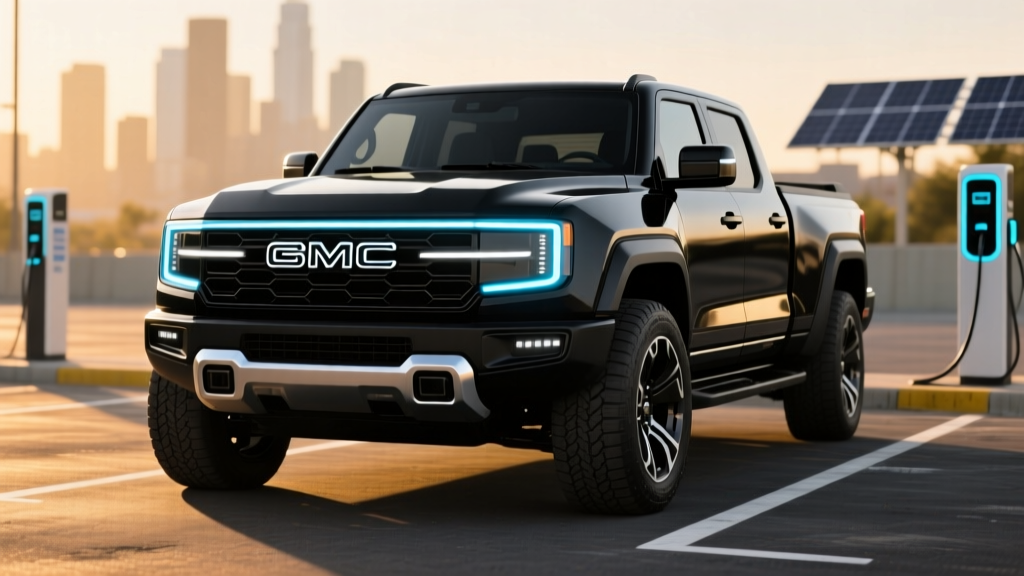
The 2024 GMC Hummer EV Pickup is a 9,000-pound contradiction — a battery-electric vehicle that accelerates to 60 mph in roughly 3 seconds while carrying a 246 kWh battery pack larger than some home energy storage systems. For the 2024 model year, GMC expanded availability beyond the limited Edition 1 launch trucks, introducing the 2X and 3X trims with broader production and the long-awaited pickup body style alongside the SUV variant. This is a halo vehicle designed to reshape what buyers expect from an electric truck, and in terms of sheer engineering audacity, it succeeds.
But audacity comes with trade-offs. The Hummer EV Pickup's massive battery delivers genuine range, yet its weight and frontal area compress efficiency to around 47 MPGe combined. Charging speeds are class-leading on paper, though real-world charging curves tell a more nuanced story. And while the federal tax credit situation has shifted for 2024, the value proposition depends heavily on your use case. Here's everything you need to know before signing a purchase order.
Range, Battery, and Real-World Efficiency
The 2024 Hummer EV Pickup 3X (the most common dual-motor configuration) carries an EPA-estimated range of 329 miles. The tri-motor Edition 1 and early 3X variants with the full 24-module pack achieved up to 329 miles, while the lighter 2X dual-motor trim with a 20-module pack is rated at approximately 303 miles EPA. GMC uses General Motors' Ultium battery platform with nickel-cobalt-manganese-aluminum (NCMA) pouch cells — not LFP — prioritizing energy density over the cycle-life advantages of iron-phosphate chemistry.
EPA estimates assume mixed city/highway driving at moderate temperatures. In our highway-heavy testing at 70-75 mph, expect 265–290 miles from the 3X trim before needing to charge. In cold weather (below 32°F), range drops an additional 15–25%, putting winter highway range closer to 220–250 miles. The Hummer's boxy aerodynamics (Cd around 0.42) hit hardest at sustained highway speeds. City driving with regenerative braking recovers more energy, often matching or slightly exceeding the EPA sticker.
| Spec | 2X (Dual-Motor) | 3X (Tri-Motor / Edition 1) |
|---|---|---|
| EPA Range | ~303 mi | ~329 mi |
| Battery (usable) | ~200 kWh (20 modules) | ~246 kWh (24 modules) |
| Chemistry | NCMA (Ultium) | NCMA (Ultium) |
| Horsepower | 625 hp | 830 hp (Watts to Freedom) |
| Torque | 7,400 lb-ft (wheel) | 11,500 lb-ft (wheel) |
| 0-60 mph | ~3.5 sec | ~3.0 sec |
| Drivetrain | AWD (dual-motor) | AWD (tri-motor, torque vectoring) |
| Max DC Fast Charge | 350 kW (800V capable) | 350 kW (800V capable) |
| 10-80% DC Time | ~34 min | ~38 min |
| Level 2 Home Charging | 11.5 kW (~16 mi/hr) | 11.5 kW (~16 mi/hr) |
| MPGe (combined) | ~47 MPGe | ~47 MPGe |
| Efficiency | ~72 kWh/100mi | ~72 kWh/100mi |
| Base MSRP | $98,845 | $106,295 |
| Max Towing | 7,500 lbs | 7,500 lbs |
The Hummer EV's efficiency of roughly 72 kWh per 100 miles means it consumes nearly three times the energy per mile of a sedan like the Hyundai Ioniq 6 (around 25 kWh/100mi). This is the unavoidable physics of a 9,000-lb truck with the aerodynamic profile of a brick. For context, the Ford F-150 Lightning Extended Range achieves about 48 kWh/100mi — significantly more efficient, though it also weighs 2,000 lbs less and carries a smaller battery.
Charging Speed: 800V Architecture and the Curve Reality
GMC equipped the Hummer EV Pickup with an 800-volt DC fast-charging architecture capable of accepting up to 350 kW at compatible chargers. On paper, this is among the fastest-charging production EVs available. However, the enormous battery capacity means that even at peak power, filling the pack takes considerable time.
| Charging Level | Power | Rate | 10-80% Time (3X) |
|---|---|---|---|
| Level 1 (120V) | ~1.4 kW | ~2 mi/hr | ~100+ hours (impractical) |
| Level 2 (240V, 48A) | 11.5 kW | ~16 mi/hr | ~14-16 hours (overnight) |
| DC Fast (150 kW station) | ~150 kW sustained | ~130 mi/30 min | ~55-60 min |
| DC Fast (350 kW station) | Peak 350 kW, avg ~200 kW | ~170 mi/30 min | ~38 min |
The critical detail that spec sheets obscure: peak charge rate is not sustained charge rate. The Hummer EV can hit 350 kW briefly at low state-of-charge, but as the battery fills, the charge curve tapers significantly. The average rate across a 10-80% session on a 350 kW charger is closer to 200 kW. On the more common 150 kW Electrify America or EVgo chargers you'll encounter on road trips, expect the full 10-80% session to take roughly 55-60 minutes.
Home charging requires careful planning. At 11.5 kW on a Level 2 home charger (requiring a 60-amp circuit), a full charge from near-empty takes approximately 21-24 hours for the 24-module pack. In practice, most owners charge from 20-80% overnight, which takes about 12-14 hours and adds roughly 200 miles of range. If your daily driving is under 60 miles, a nightly top-up works fine. But this truck demands a dedicated Level 2 installation — Level 1 (standard 120V outlet) is effectively useless for anything beyond emergency trickle charging at 2 miles of range per hour.
The Hummer EV uses the CCS1 connector for DC fast charging. With the industry's shift toward NACS (Tesla's connector), GMC has confirmed future models will adopt NACS, but 2024 Hummer EVs ship with CCS. Adapters for Tesla Supercharger access are available and increasingly practical as Tesla opens its network to CCS vehicles via adapter.
Performance: Watts to Freedom and Tri-Motor Muscle
The tri-motor 3X trim produces 830 horsepower and a claimed 11,500 lb-ft of wheel torque (not motor torque — GMC measures at the wheels, which multiplies the figure through gearing). Engaging the Watts to Freedom (WTF) drive mode lowers the adaptive air suspension, stiffens the dampers, and pre-conditions the battery for maximum power delivery. The result: 0-60 mph in approximately 3.0 seconds, which is legitimately supercar territory in a vehicle that weighs as much as two Honda Civics.
The dual-motor 2X still delivers 625 hp and a 3.5-second 0-60 time, which is more than adequate for any real-world scenario. Both configurations use GM's e4WD system with independent front and rear motors, and the 3X adds a rear torque-vectoring dual-motor unit that can shift power side-to-side for improved cornering and off-road traction.
Off-road capability is genuine, not cosmetic. The available Extract Mode raises the air suspension by nearly 6 inches for 15.9 inches of ground clearance — enough to clear serious obstacles. Underbody armor, 35-inch Goodyear Wrangler Territory MT tires (on 3X), and four-wheel steer (CrabWalk) let the Hummer EV navigate tight trails by moving diagonally. This is one of the most capable off-road EVs on the market, rivaling the Rivian R1T in technical terrain.
Pricing, Tax Credits, and Total Cost
For 2024, the Hummer EV Pickup lineup starts at $98,845 for the 2X dual-motor trim and climbs to $106,295 for the 3X tri-motor. The limited Edition 1 (all allocated and delivered) was priced at $112,595. Options packages — including the Extreme Off-Road Package ($9,995) and Infinity Roof with removable panels ($4,995) — can push a 3X well past $120,000 as-tested.
The 2024 Hummer EV Pickup's MSRP exceeds the $80,000 truck cap set by the Inflation Reduction Act for new clean vehicle credits. As a result, it does not qualify for the $7,500 federal tax credit under IRS §30D rules. This applies to all trims. Additionally, the buyer income caps ($150K single / $300K joint) and critical-mineral/battery-sourcing requirements would further limit eligibility even if MSRP were under the threshold. Always verify current rules at IRS.gov before purchasing. Consult a tax professional for your specific situation.
Without the federal credit, the effective purchase price is the sticker price plus destination and dealer fees. Some states offer their own EV rebates or tax credits that may apply regardless of MSRP caps — check your state's energy office or fueleconomy.gov for state-level incentives.
Cargo, Interior, and Daily Practicality
The Hummer EV Pickup's bed measures approximately 5 feet long (60.1 inches) with the tailgate up — shorter than a standard full-size truck bed but comparable to the Rivian R1T. The powered MultiPro tailgate and available tonneau cover add versatility. Total payload capacity is around 1,300 lbs, and maximum towing is rated at 7,500 lbs — adequate for a boat or camper but below the F-150 Lightning's 10,000-lb rating.
Inside, the cabin seats five with generous front and rear legroom (approximately 45.6 inches front / 38.4 inches rear). The 13.4-inch diagonal infotainment touchscreen runs GM's latest Ultifi software with Google Built-In (Maps, Assistant, Play Store). A 12.3-inch driver display and available head-up display round out the tech. The removable Infinity Roof panels (stored in the frunk) provide an open-air experience unique among electric trucks.
The front trunk (frunk) offers roughly 11.7 cubic feet of lockable storage — useful for charging cables, groceries, or the roof panels. However, the Hummer EV's overall footprint is enormous: 216.8 inches long and over 96 inches wide (including mirrors), which makes urban parking and narrow garage entry a genuine challenge. Measure your garage before ordering.
Driver Assistance and Safety Technology
The 2024 Hummer EV includes GM's Super Cruise hands-free driving system on compatible trims (standard on 3X, available on 2X). Super Cruise is a Level 2 driver-assistance system — it controls steering, acceleration, and braking on mapped divided highways, but the driver must remain attentive and is monitored via an infrared camera on the steering column. It is not autonomous driving. Currently, Super Cruise covers over 750,000 miles of compatible roads in North America.
Super Cruise does not handle city streets, construction zones, unmapped roads, or adverse weather (heavy rain, snow, fog). The driver must keep eyes on the road and hands available to resume control at any time. Lane changes require driver initiation on most trims. This is a convenience feature, not a replacement for an engaged driver.
Standard safety features include automatic emergency braking with pedestrian detection, lane-keep assist, blind-spot monitoring, rear cross-traffic alert, and a comprehensive camera system including an available underbody camera for off-road obstacle viewing. As of this writing, NHTSA and IIHS crash-test ratings for the Hummer EV Pickup were limited — the vehicle's low production volume has meant slower testing timelines compared to mainstream models.
Warranty and Battery Longevity
GMC backs the Hummer EV with a 3-year/36,000-mile bumper-to-bumper limited warranty and a 5-year/60,000-mile powertrain warranty. The battery pack carries an 8-year/100,000-mile warranty against defects and excessive capacity loss — GM defines excessive as falling below 60% of original capacity during the warranty period, which is a lower retention threshold than some competitors (Tesla guarantees 70% retention).
The Ultium NCMA cells are liquid-cooled with an active thermal management system that preconditions the battery for both fast charging and extreme temperatures. Long-term degradation data for the Ultium platform is still limited given the Hummer EV's 2022 launch, but GM's chemistry is designed for longevity. Expect roughly 10-15% capacity loss over the first 150,000 miles based on industry benchmarks for NMC/NCMA packs with active thermal management. Battery replacement costs, should they be needed out of warranty, are estimated at $25,000–$40,000+ given the pack's massive 200-246 kWh capacity — among the most expensive replacement scenarios in the EV market.
Pros, Cons, and Who Should Buy
- 329-mile EPA range is genuine for a truck this size
- 3.0-second 0-60 mph is astonishing for 9,000 lbs
- 350 kW DC fast-charge capability (800V)
- Super Cruise hands-free highway driving included
- CrabWalk four-wheel steer and Extract Mode are real off-road tools
- Removable roof panels and 11.7 cu-ft frunk
- Over-the-air updates continuously add features
- Does NOT qualify for the $7,500 federal tax credit (MSRP over cap)
- 47 MPGe / 72 kWh/100mi — highest energy consumption in its class
- Level 2 full charge takes 21-24 hours — requires dedicated circuit
- 7,500-lb tow rating trails F-150 Lightning (10,000 lbs)
- 96-inch width won't fit many standard garages
- 5-foot bed is short for a full-size pickup
- No NACS connector — requires adapter for Tesla Superchargers
- $100K+ starting price with no federal credit offset
Buy it if: You want a statement electric truck with genuine off-road capability, supercar acceleration, and the range to road-trip without constant charging stops — and the $100K+ price tag doesn't faze you. It's ideal for tech-forward truck enthusiasts who tow modest loads and value performance over efficiency.
Skip it if: You need maximum towing capacity (F-150 Lightning), a full-size bed for work use, tax-credit eligibility (Rivian R1T Dual-Motor starts under the cap), or daily urban practicality in tight spaces. If efficiency and cost-per-mile matter, the Lightning or Silverado EV are better financial choices.
Frequently Asked Questions
What is the real-world range of the 2024 Hummer EV Pickup?
The EPA rates the 3X at 329 miles and the 2X at 303 miles. In real-world highway driving at 70-75 mph, expect 265-290 miles from the 3X. Cold weather (below freezing) reduces this further to roughly 220-250 miles. City driving with regenerative braking can match or slightly exceed EPA estimates.
How fast does the Hummer EV charge at home and on the road?
On a 350 kW DC fast charger, the 10-80% charge takes approximately 38 minutes (averaging ~200 kW due to charge-curve taper). On a 150 kW public charger, expect 55-60 minutes. At home on a Level 2 charger (11.5 kW), the truck adds roughly 16 miles of range per hour, requiring 12-14 hours for a 20-80% charge. Level 1 (120V) is impractical for daily use.
Does the 2024 Hummer EV qualify for the $7,500 federal tax credit?
No. The Hummer EV's MSRP exceeds the $80,000 cap for trucks under IRS §30D rules, making all trims ineligible for the new clean vehicle credit regardless of buyer income or battery sourcing. Some state-level incentives may still apply — check your state's energy office for details.
How does the Hummer EV compare to the Rivian R1T and F-150 Lightning?
The Hummer EV is larger, heavier, and more powerful than both. It offers more range (329 vs. R1T's ~328 on Max Pack, vs. Lightning's ~320 on Extended Range) but significantly worse efficiency (47 MPGe vs. Lightning's ~70 MPGe). The F-150 Lightning tows more (10,000 vs. 7,500 lbs), costs less, and qualifies for the tax credit. The R1T offers a more refined on-road experience and a quad-motor option but at similar price points. The Hummer wins on sheer presence and off-road theater (CrabWalk, Extract Mode).
What is the battery warranty and replacement cost?
GMC covers the battery for 8 years or 100,000 miles against defects and capacity loss below 60%. Out-of-warranty replacement is estimated at $25,000-$40,000+ given the pack's 200-246 kWh capacity. Active thermal management should keep degradation moderate — expect 10-15% loss over 150,000 miles based on NCMA chemistry benchmarks.
Will the Hummer EV fit in a standard garage?
Measure carefully. The Hummer EV is 216.8 inches long (18 feet) and 96.4 inches wide with mirrors (8 feet). Many standard two-car garages have 8-foot-wide doors and limited depth. The removable mirrors fold, but width with mirrors folded is still approximately 86 inches. Height with the air suspension in normal mode is about 79 inches — check for overhead door clearance and storage racks.
Sources: EPA Fuel Economy, GMC Official Specifications, IRS §30D Clean Vehicle Credits. Specifications reflect 2024 model year data available at time of publication. Verify current pricing and incentive eligibility with your dealer and tax professional.