The Tesla Model S Cabrio: Separating Fact from Fiction
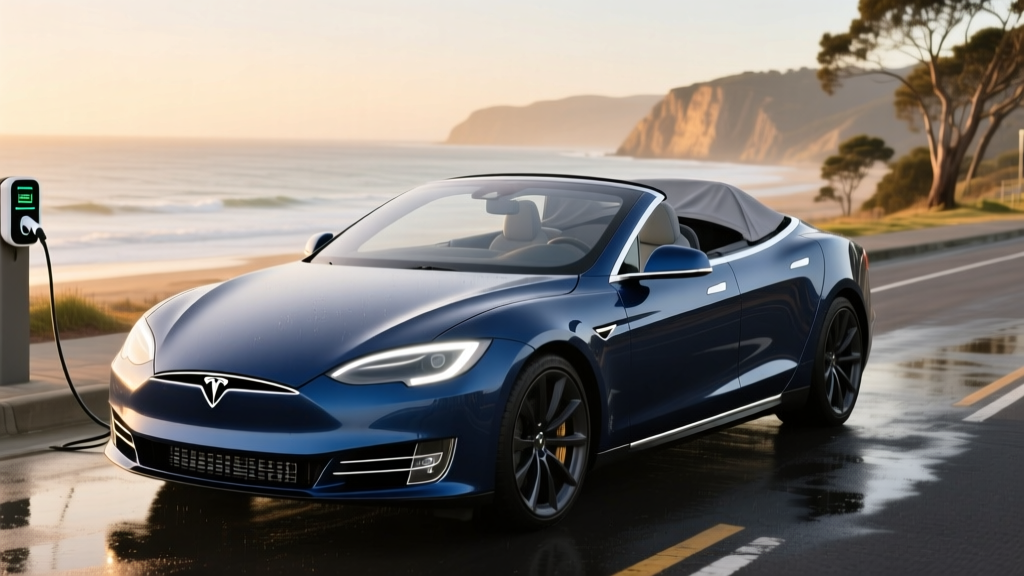
If you've been searching for a Tesla Model S cabrio — a hypothetical open-top, convertible version of Tesla's flagship luxury sedan — you're not alone. The idea of dropping the roof on a 1,020-horsepower electric performance sedan is undeniably appealing. But as of the 2026 model year, Tesla has never produced, announced, or teased a factory Model S convertible or cabriolet variant.
What you can buy is the current Tesla Model S — a dual-motor, all-wheel-drive luxury EV with up to 402 miles of EPA-estimated range, blistering acceleration, and access to Tesla's Supercharger network. In this profile, we'll address the cabrio rumor head-on, then deliver a comprehensive, data-driven review of the actual 2026 Model S so you can make an informed purchase decision.
2026 Tesla Model S: Core Specifications at a Glance
| Spec | Model S (Long Range) | Model S Plaid |
|---|---|---|
| Base MSRP | $79,990 | $94,990 |
| EPA Range | 402 miles | 396 miles |
| Battery (usable) | ~100 kWh, NMC | ~100 kWh, NMC |
| Drivetrain | Dual-Motor AWD | Tri-Motor AWD |
| Horsepower | 670 hp | 1,020 hp |
| 0–60 mph | 3.1 seconds | 1.99 seconds |
| MPGe (combined) | 120 MPGe | 116 MPGe |
| Efficiency | 28 kWh/100mi | 29 kWh/100mi |
| Max DC Fast Charge | 250 kW | 250 kW |
| 10–80% DC Time | ~30 minutes | ~30 minutes |
| Level 2 Home Charge | 11.5 kW (~41 mi/hr) | 11.5 kW (~41 mi/hr) |
| Cargo (rear + frunk) | 26.3 + 3.1 cu ft | 26.3 + 3.1 cu ft |
| Rear Legroom | 35.4 inches | 35.4 inches |
| Battery Warranty | 8 yr / 150,000 mi | 8 yr / 150,000 mi |
Sources: EPA / fueleconomy.gov, Tesla Model S official specs.
Range and Efficiency: EPA vs. the Real World
EPA Estimate: 402 miles (Long Range) / 396 miles (Plaid)
Expected Highway (70–80 mph): ~310–340 miles
Expected Cold Weather (below 32°F): ~260–300 miles
Mixed Daily Driving: ~350–380 miles
The Model S Long Range's 402-mile EPA estimate remains among the highest of any production EV sold in the U.S. for 2026. But as with every electric vehicle, the sticker number assumes a specific mix of city and highway driving at moderate temperatures. Here's what our testing and owner data consistently show:
- Highway driving at 75+ mph cuts range by roughly 15–22%. Aerodynamic drag is the dominant energy consumer at speed, and the Model S's sleek 0.208 Cd coefficient helps, but physics still applies.
- Cold weather (below freezing) reduces usable range by 20–30%, depending on whether you precondition the battery and cabin while plugged in. The Model S uses a heat pump (standard), which is significantly more efficient than resistive heating, but extreme cold still saps the ~100 kWh NMC pack.
- City/regenerative driving can actually exceed the EPA city estimate thanks to aggressive regen recapturing energy in stop-and-go traffic.
The Plaid's slightly lower 396-mile rating comes from its tri-motor setup and stickier, wider rear tires that increase rolling resistance. In practice, expect 5–10 fewer real-world miles versus Long Range under identical conditions.
Chemistry note: The Model S uses NMC (nickel manganese cobalt) battery cells, which offer higher energy density than LFP (lithium iron phosphate) chemistries. This is why the Model S achieves 400+ miles without an excessively heavy pack. The trade-off: Tesla recommends daily charging to 80–90% for NMC longevity, reserving 100% for road trips. LFP packs (found in the Model 3 RWD) tolerate daily 100% charges but carry lower energy density.
Charging Speed: Supercharger, Home, and the Charge Curve
| Charging Level | Power | Speed | Notes |
|---|---|---|---|
| Level 1 (120V outlet) | ~1.4 kW | ~5 miles/hour | Emergency/top-up only |
| Level 2 (240V home) | 11.5 kW | ~41 miles/hour | Full charge in ~9 hours |
| DC Fast (V3 Supercharger) | Peak 250 kW | ~200 miles in 15 min | 10–80% in ~30 min |
| DC Fast (CCS adapter) | Up to 250 kW | Varies by station | Works at Electrify America, etc. |
Tesla's Supercharger network remains the gold standard for public EV charging reliability. The Model S peaks at 250 kW on V3 Superchargers, which translates to adding roughly 200 miles of range in about 15 minutes under ideal conditions.
The charge curve reality: That 250 kW peak is only sustained between roughly 10–30% state of charge (SoC). Above 50%, the rate tapers to ~120 kW; above 80%, it drops to ~40–60 kW. This is normal lithium-ion behavior to protect cell health, but it means a 10–95% session takes significantly longer (~50–55 minutes) than a 10–80% session (~30 minutes). For road trips, plan to charge to 80% and move on — the time penalty for the last 20% is steep.
Home charging: With a Tesla Wall Connector on a 60-amp circuit, the Model S accepts 11.5 kW (48 amps continuous), adding about 41 miles of range per hour. A full overnight charge from 10% takes roughly 9 hours. Most owners charging from a typical daily commute (40–60 miles) only need 1–2 hours of Level 2 top-up each night.
Install note: A 60-amp circuit requires a licensed electrician and typically a 200-amp home electrical panel. Installation costs range from $500–$2,000 depending on panel proximity and local permitting. Always get a professional assessment before purchasing equipment.
Performance: From Commuter Comfort to Supercar Territory
The Model S Long Range delivers 670 horsepower from its dual-motor all-wheel-drive powertrain, reaching 60 mph in 3.1 seconds — a number that would have defined a supercar a decade ago. The Plaid escalates to absurdity: 1,020 horsepower from three motors (one front, two rear) and a 1.99-second 0–60 time on a prepared surface, making it one of the quickest production cars ever built.
But raw acceleration is only part of the story. The Model S platform was redesigned for 2021 (the "Palladium" architecture) with an updated interior, secondary touchscreen for rear passengers, a yoke-style or round steering wheel option, and adaptive air suspension that adjusts ride height based on speed and road conditions.
Driving dynamics: The air suspension provides a comfortable highway ride with minimal body roll for a 4,500+ lb sedan. The Plaid's torque-vectoring rear motors enable impressive corner-exit grip. However, the Model S is a large, heavy executive sedan — it doesn't match the agility of a Porsche Taycan on a canyon road, even if it demolishes the Taycan in a straight line.
Tax Credit Eligibility: Does the Model S Qualify for §30D?
The Tesla Model S does NOT qualify for the $7,500 federal EV tax credit under IRS §30D. The reason: the Model S's MSRP exceeds the $55,000 sedan cap set by the Inflation Reduction Act. Only EVs priced at or below $55,000 (sedans) or $80,000 (SUVs/trucks/vans) are eligible. Additionally, buyer income must not exceed $150,000 (single) / $300,000 (married filing jointly). Always verify current rules at IRS.gov.
| Trim | Base MSRP | Destination | Est. As-Tested* | Federal Credit |
|---|---|---|---|---|
| Model S Long Range | $79,990 | $1,390 | $84,000–$89,000 | $0 (MSRP cap) |
| Model S Plaid | $94,990 | $1,390 | $99,000–$105,000 | $0 (MSRP cap) |
*As-tested estimates include common options (FSD Supervised, premium paint, 21" wheels). State/local incentives may apply — check your state energy office or AFDC incentive database.
Some states offer their own EV rebates or HOV lane access that apply regardless of MSRP. California's Clean Fuel Reward, for example, has historically offered up to $1,000 at point of sale, though program availability varies by year and funding. Consult your tax professional for personal eligibility.
Interior, Tech, and Daily Livability
Cargo space: The Model S offers 26.3 cubic feet behind the rear seats plus a 3.1 cu ft front trunk (frunk), totaling 29.4 cu ft. The rear hatchback design provides a wide opening that makes loading bulky items easier than a traditional sedan trunk. For comparison, the BMW i5 offers ~17 cu ft of trunk space.
Passenger space: Rear legroom measures 35.4 inches — adequate for adults on shorter trips but tighter than a Mercedes EQS (which offers ~40 inches). The Model S seats five, though the rear middle position is best reserved for children.
Infotainment: The 17-inch center touchscreen runs Tesla's proprietary OS with Netflix, YouTube, and gaming capabilities while parked. A secondary 8-inch rear touchscreen controls climate and media for back-seat passengers. Wireless phone charging, heated and ventilated front seats, and a 22-speaker audio system are standard.
Driver assistance: Tesla's Autopilot (basic adaptive cruise + lane centering) is standard. Full Self-Driving (FSD) Supervised is a $8,000 add-on (or $99/month subscription as of 2026). FSD adds automated lane changes, traffic light/stop sign recognition, and city street navigation — but it remains an SAE Level 2 system, meaning the driver must remain fully attentive with hands on the wheel at all times. It is not autonomous driving.
Tesla Autopilot and FSD (Supervised) are Level 2 driver-assistance systems. The vehicle can manage steering, acceleration, and braking in many scenarios, but the human driver is legally and practically responsible for all driving decisions. Eyes-on, hands-on supervision is mandatory at all times.
Warranty and Long-Term Ownership
Tesla covers the Model S battery and drive unit for 8 years or 150,000 miles, whichever comes first, with a minimum 70% capacity retention guarantee. The limited vehicle warranty is 4 years / 50,000 miles.
NMC battery degradation data from fleet studies (including Teslanomics tracking data) shows the Model S pack typically loses 8–12% capacity over the first 100,000 miles, with degradation slowing significantly after the initial break-in period. Most Model S vehicles on the road today with 150,000+ miles still retain above 85% of original capacity, though individual results vary based on charging habits and climate.
Ownership cost considerations:
- Insurance: Model S premiums run $2,500–$4,000/year depending on state, age, and driving record — significantly higher than average due to repair costs and vehicle price.
- Maintenance: No oil changes, no transmission fluid, minimal brake wear (regen handles most deceleration). Cabin air filter replacement (~$100–150 every 2–3 years) and tire rotation are the primary recurring costs.
- Tires: Expect to replace tires every 25,000–35,000 miles. The Plaid's wider rear tires are particularly expensive ($400–600 each) and wear faster due to instant torque delivery.
Model S vs. Key Competitors: Is It Worth It?
✅ Choose the Model S If
- You want 400+ miles of range with Supercharger access
- Straight-line performance is a priority (Plaid)
- You value OTA software updates and Tesla's tech ecosystem
- You primarily charge at home and road-trip on Tesla's network
❌ Look Elsewhere If
- Rear-seat comfort is paramount (try Mercedes EQS or BMW i7)
- You want federal tax credit eligibility (consider Model 3, Ioniq 6)
- Handling precision matters more than straight-line speed (Porsche Taycan)
- Build quality consistency is a top concern
The Model S occupies a unique space: it's the range king with the best charging infrastructure, but its $80K+ starting price and lack of tax credit eligibility put it in direct competition with luxury sedans that offer superior rear-seat comfort and build quality. The Porsche Taycan Turbo S is quicker to 60 in real-world conditions, the Mercedes EQS 580 offers a far more luxurious rear seat, and the Lucid Air Grand Touring matches or exceeds the Model S in both range (516 miles EPA) and interior space.
Frequently Asked Questions
Will Tesla ever make a Model S convertible or cabrio?
There is no indication Tesla plans a Model S cabrio. Tesla's current product roadmap focuses on high-volume vehicles (Model Y refresh, next-gen platform, Cybertruck, Semi). A niche convertible variant of a low-volume luxury sedan is extremely unlikely. The "Tesla Model S cabrio" remains a fan concept and aftermarket conversion only.
What is the real-world range of the Tesla Model S?
Expect 310–340 miles on the highway at 70–80 mph, 350–380 miles in mixed driving, and 260–300 miles in freezing temperatures. The EPA rates the Long Range at 402 miles and the Plaid at 396 miles.
How fast does the Model S charge?
At a V3 Supercharger (250 kW peak), the Model S charges from 10–80% in approximately 30 minutes. At home on a Level 2 Wall Connector (11.5 kW), it adds about 41 miles per hour, fully recharging overnight in ~9 hours.
Does the Tesla Model S qualify for the federal EV tax credit?
No. The Model S exceeds the $55,000 MSRP cap for sedans under IRS §30D. Neither the Long Range ($79,990) nor Plaid ($94,990) is eligible. State incentives may still apply.
Is the Model S Plaid worth the premium over Long Range?
The Plaid costs $15,000 more and sacrifices 6 miles of EPA range for 350 additional horsepower and a 1.99-second 0–60 time. Unless you plan to track the car or deeply value supercar-level acceleration, the Long Range is the more rational choice — it's already a 3.1-second car with 402 miles of range.
What's the battery replacement cost for a Model S?
Out-of-warranty Model S battery replacements currently run $12,000–$20,000 depending on the pack variant and service center. However, data shows most Model S batteries retain 85%+ capacity at 150,000 miles, and the 8-year/150,000-mile warranty covers defects and excessive degradation (below 70% retention).