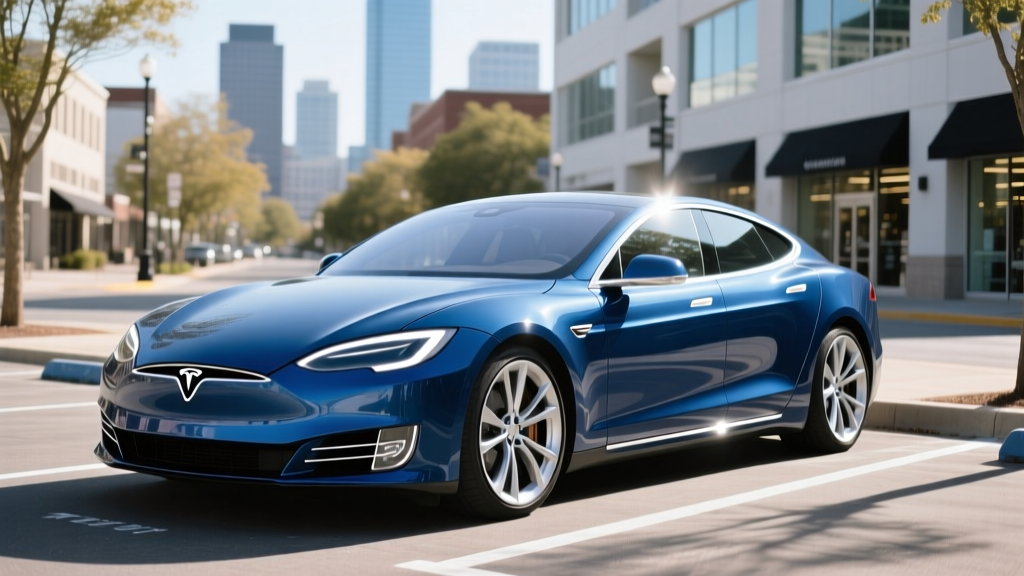
The Tesla Model S has been the benchmark luxury electric sedan for over a decade. For 2026, it continues to offer some of the longest EPA range figures in the segment, access to the most reliable DC fast-charging network in North America, and performance that embarrasses sports cars costing twice as much. But at a starting price well above $70,000, and with competitors like the Lucid Air, BMW i5, and Mercedes-Benz EQS closing the gap in interior refinement, the Model S has to earn its premium on data — not just brand cachet.
This review covers the 2026 Tesla Model S lineup — the Long Range dual-motor and the tri-motor Plaid — with exact figures on range, charging curves, efficiency, cargo space, warranty, and federal tax credit eligibility under current IRS §30D rules.
2026 Tesla Model S Quick Specs
| Spec | Long Range (Dual Motor AWD) | Plaid (Tri-Motor AWD) |
|---|---|---|
| EPA Range | 402 miles | 359 miles |
| Battery (usable, est.) | ~100 kWh (NMC) | ~100 kWh (NMC) |
| Horsepower | 670 hp | 1,020 hp |
| 0–60 mph | 3.1 sec | 1.99 sec |
| Top Speed | 155 mph | 200 mph |
| Drivetrain | Dual Motor AWD | Tri-Motor AWD |
| Max DC Fast Charge | 250 kW (CCS via adapter / NACS native) | 250 kW |
| 10–80% DCFC Time | ~30 min | ~30 min |
| Level 2 Home Charge | 11.5 kW (~34 mi/hr) | 11.5 kW (~34 mi/hr) |
| MPGe (combined) | 120 MPGe | 116 MPGe |
| Efficiency | 28 kWh/100 mi | 29 kWh/100 mi |
| Cargo (rear + frunk) | 28.0 cu ft (rear) + ~3.1 cu ft (frunk) | 28.0 cu ft (rear) + ~3.1 cu ft (frunk) |
| Base MSRP | $74,990 | $89,990 |
| Battery/Drive Unit Warranty | 8 yr / 150,000 mi | 8 yr / 150,000 mi |
Sources: fueleconomy.gov (EPA), Tesla Model S configurator. Prices reflect base MSRP before destination and options; specs are for the 2025–2026 model year as published.
Range: EPA Sticker vs. Real-World Miles
EPA combined: 402 miles. On a 70°F day with mixed city/highway driving at moderate speeds, expect ~340–370 miles. At sustained 75–80 mph highway cruising, expect ~300–330 miles. In freezing temperatures (below 32°F) with cabin heat on, plan for 250–290 miles of usable range before needing to charge.
The Model S Long Range's 402-mile EPA figure remains one of the highest of any production EV sold in the U.S. in 2026. That number is achievable — Tesla's powertrain efficiency and thermal management have been class-leading for years — but it requires the conditions the EPA test cycle favors: moderate speeds, frequent deceleration (regen recapture), and mild ambient temperatures.
On a real-world 300-mile highway trip at 75 mph in 65°F weather, the Long Range typically arrives with 15–20% state of charge remaining, which tracks to roughly 310–330 miles of total usable range. That's still enough to drive from Los Angeles to Las Vegas on a single charge if you're conservative with speed.
Cold weather is where every EV loses range, and the Model S is no exception. Tesla's heat pump (standard on current production) mitigates the hit compared to older resistive-heater EVs, but a 20–30% range reduction in sub-freezing conditions is normal physics, not a defect. Preconditioning the battery while plugged in — easily scheduled via the Tesla app — recovers some of that loss and is critical for fast-charging speed in winter.
The Plaid's 359-mile EPA rating reflects the energy cost of its tri-motor setup and stickier tires. Real-world highway range lands around 270–310 miles in fair weather, less in cold. If your priority is maximum distance per charge, the Long Range is the clear pick.
Charging Speed: DC Fast, Level 2, and the Supercharger Advantage
The Model S peaks at 250 kW on DC fast chargers — a figure it has held since the V3 Supercharger rollout. While some newer rivals (Hyundai Ioniq 5 at 350 kW, Lucid Air at ~300 kW) quote higher peak rates, Tesla's advantage is infrastructure: the Supercharger network remains the most reliable and widespread DC fast-charging ecosystem in North America, with plug-and-charge authentication and real-time stall availability in the car's nav.
| Charging Level | Power / Voltage | Miles Added per Hour (approx.) | Use Case |
|---|---|---|---|
| Level 1 (120V household) | ~1.4 kW | ~3–4 mi/hr | Emergency / trickle top-off |
| Level 2 (240V, 48A Wall Connector) | 11.5 kW | ~34 mi/hr | Daily home charging — full overnight refill |
| Level 2 (240V, 32A Mobile Connector) | 7.7 kW | ~23 mi/hr | Rental / travel, NEMA 14-50 outlet |
| DC Fast (Tesla V3 Supercharger) | Up to 250 kW | ~200 mi in 15 min (peak) | Road trips |
| DC Fast (CCS station w/ adapter) | Up to 250 kW (station dependent) | Varies by network | Non-Tesla networks (Electrify America, EVgo) |
The charge curve matters more than peak kW. The Model S hits 250 kW only at a low state of charge (roughly 10–25% SoC) and with a preconditioned battery. Above 50% SoC, the rate tapers significantly — typical of NMC lithium-ion cells protecting longevity. A 10–80% session takes approximately 30 minutes at a V3 Supercharger. Expect the last 20% (80–100%) to take an additional 25–35 minutes, which is why Tesla's nav defaults to charging to 80% on road trips unless you override it.
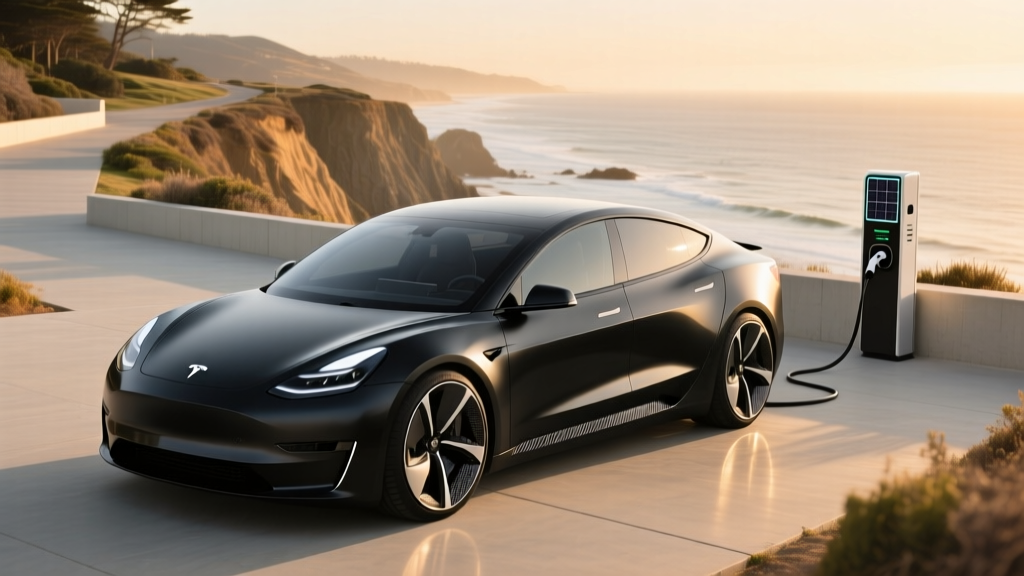
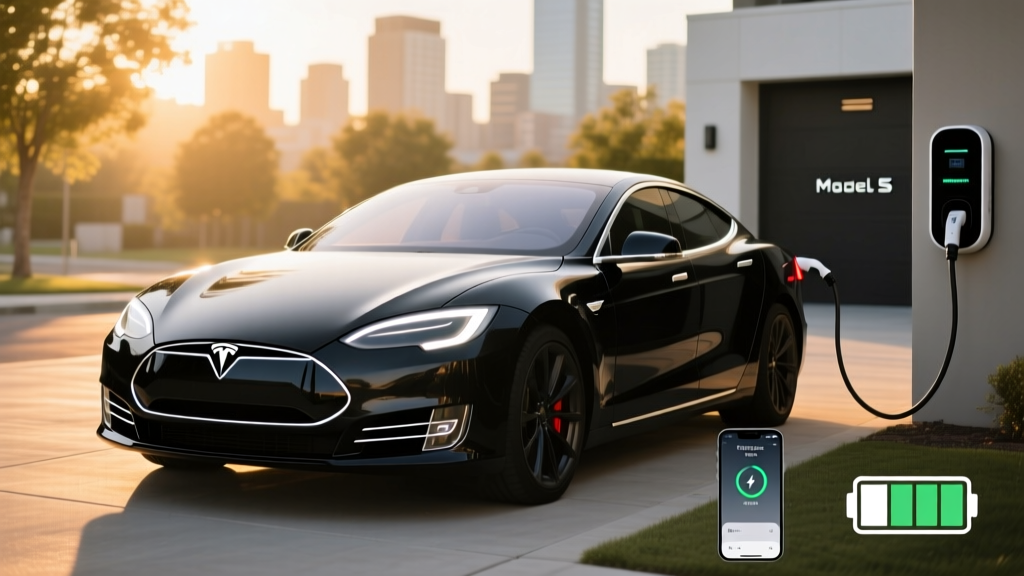
For home charging, the Tesla Wall Connector at 48 amps (11.5 kW) adds roughly 34 miles of range per hour. An overnight session (8–10 hours) on a 60-amp circuit easily refills the entire 100 kWh pack. Installation costs typically range from $800 to $2,500 depending on panel proximity and local permit fees — factor that into your purchase budget.
The Model S uses the NACS connector natively. Tesla also includes a CCS adapter (or sells one, depending on delivery date) for access to third-party networks. As of 2026, the North American EV market is converging on NACS, and Tesla owners have been on the right side of that transition from day one.
Performance, Efficiency, and Daily Drivability
The Long Range's 670 hp and 3.1-second 0–60 time make it quicker than most V8 sedans, and the dual-motor AWD provides confident traction in rain and light snow. It's a genuinely fast car that doesn't feel like it's trying too hard — the kind of effortless torque delivery that defines a well-sorted EV.
The Plaid is a different category entirely. At 1,020 hp and 1.99 seconds to 60 mph, it competes with hypercars on acceleration while seating five adults and offering 28 cubic feet of cargo. The yoke steering wheel (standard on Plaid, optional on Long Range) remains polarizing — some owners adapt quickly, others find it awkward for low-speed parking maneuvers. A conventional round wheel is available at no cost.
Efficiency-wise, the Long Range achieves 120 MPGe combined (28 kWh/100 mi) per the EPA. That translates to roughly $0.04–$0.05 per mile on residential electricity rates ($0.14–$0.17/kWh national average), versus $0.12–$0.15 per mile for a comparable 22-mpg gasoline luxury sedan at $3.50/gallon. Over 15,000 annual miles, that's $1,200–$1,500 in fuel savings per year before factoring in maintenance differences.
Ride quality on the adaptive air suspension is compliant in Comfort mode and firm but controlled in Sport. Road noise is well-managed at highway speeds, though some owners note more tire roar on coarse pavement than in the Lucid Air or Mercedes EQS. The 17-inch center touchscreen handles nearly all vehicle controls — including glovebox, mirror adjustment, and vent direction — which keeps the dash minimal but adds tap-count to simple tasks.
Interior, Cargo, and Tech
The 2026 Model S interior is clean and tech-forward but not luxurious in the way a Mercedes EQS or BMW i7 defines luxury. Materials are good — vegan leather, aluminum trim, real wood options — but panel gaps and occasional creaks on rough roads still draw owner complaints. It's a premium interior, not an opulent one.
Space is generous for a sedan:
- Rear legroom: ~35.4 inches — adequate for adults on longer trips
- Front headroom: ~38.8 inches
- Cargo (rear hatch): 28.0 cu ft (seats up), expandable with 60/40 split fold
- Frunk: ~3.1 cu ft — useful for charging cables, groceries, or a small bag
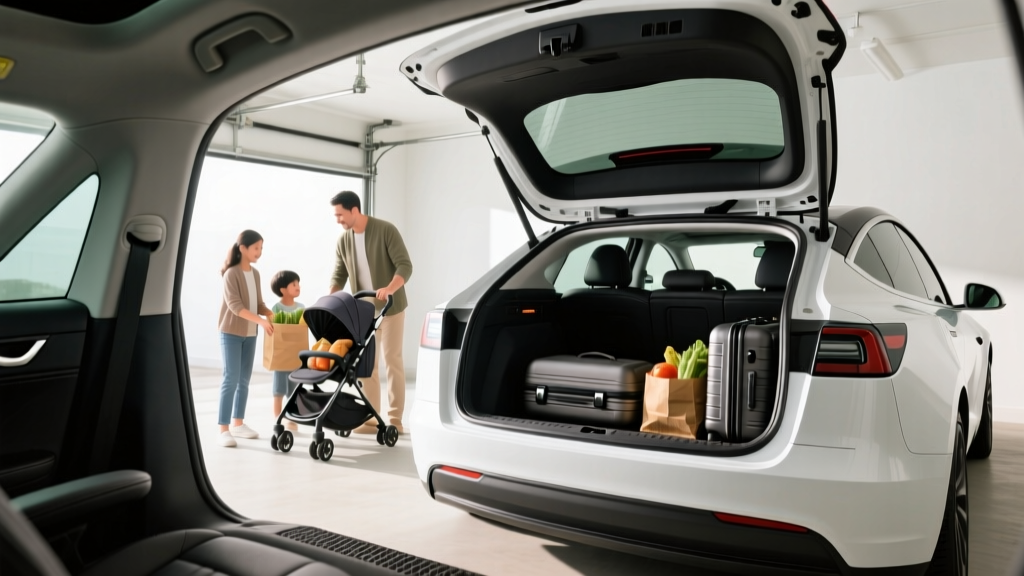
The rear hatchback design is a practical advantage over traditional trunk sedans. Loading luggage, a stroller, or a large box is significantly easier than with the EQS or i7.
Tech highlights include a 12.3-inch driver display, the 17-inch center touchscreen (with Netflix, YouTube, and gaming while parked), a rear-seat 8-inch touchscreen for climate and media, and a 22-speaker audio system that rivals anything in the segment. Wireless phone charging, ventilated front seats, and a HEPA air filtration system (Bioweapon Defense Mode) are standard.
Autopilot, FSD, and Driver Assistance
Tesla Autopilot and Full Self-Driving (Supervised) are Level 2 driver-assistance systems. The driver must remain attentive, keep hands on the wheel (or demonstrate engagement via the cabin camera), and be prepared to take over at any moment. These are not self-driving systems. No production Tesla is capable of unsupervised autonomous driving.
Autopilot (standard) includes Traffic-Aware Cruise Control and Autosteer, which handles lane centering on well-marked highways competently. FSD (Supervised), available as an $8,000 purchase or $99/month subscription as of 2026, adds automatic lane changes, on/off-ramp navigation, traffic light and stop sign recognition, and city street steering.
FSD has improved substantially in smoothness and confidence over recent software versions, but it still makes occasional errors — phantom braking, awkward lane positioning near construction zones, misreading faded lane markings. It's a useful long-distance fatigue reducer, not a replacement for an alert driver. Competitors like GM's Super Cruise and Ford's BlueCruise offer comparable Level 2 highway assist with more explicit driver-monitoring requirements.
Pricing, Trims, and Federal Tax Credit Eligibility
| Trim | Base MSRP | Est. As-Tested* | §30D Credit Eligible? |
|---|---|---|---|
| Long Range AWD | $74,990 | $78,000–$82,000 | No — exceeds $55,000 sedan MSRP cap |
| Plaid AWD | $89,990 | $93,000–$100,000+ | No — exceeds $55,000 sedan MSRP cap |
*As-tested pricing includes destination fee ($1,390), common options (paint, wheels, FSD). Does not include state/local incentives.
Under IRS §30D rules, the MSRP cap for sedans is $55,000 (vans, SUVs, and trucks are capped at $80,000). The Model S is classified as a sedan and exceeds this cap on both trims. It does not qualify for the $7,500 federal tax credit regardless of buyer income or battery sourcing. See IRS §30D guidelines for current rules including income caps ($150K single / $300K joint) and critical-mineral/battery-component sourcing requirements.
Some buyers may qualify for state-level incentives (California's CVRP, Colorado's state credit, etc.), which vary by jurisdiction and are subject to funding availability. Check your state's energy office or DMV for current programs.
For buyers seeking a Tesla with federal credit eligibility, the Model 3 and Model Y (depending on trim and sourcing) remain the models that can meet §30D requirements, though specific eligibility shifts with supply-chain changes — always verify on the IRS portal before purchasing.
Who Should Buy the 2026 Model S?
- You want 350+ real-world highway miles and minimal charging stops on road trips
- Supercharger network reliability is a top priority for your travel routes
- You need a practical 5-passenger sedan with hatchback cargo flexibility
- You value over-the-air updates and a mature software ecosystem
- You want supercar acceleration with daily-driver practicality
- Track use (with appropriate cooling and tires) is part of your plan
- Budget is flexible above $90,000
- Federal tax credit eligibility is a must — consider the BMW i5, Tesla Model 3, or Hyundai Ioniq 6
- You prioritize traditional luxury materials and ride isolation — test-drive the Lucid Air, Mercedes EQS, or BMW i7
- You prefer physical controls for climate and volume
Pros and Cons
- Class-leading EPA range (402 mi Long Range)
- Supercharger network — still the most reliable DC fast-charging ecosystem
- Hatchback cargo versatility rare in the luxury sedan segment
- Over-the-air updates continuously add features
- Strong resale value relative to most luxury EVs
- 8-year/150,000-mile battery and drive unit warranty
- No federal tax credit eligibility (MSRP cap)
- Interior materials don't match the price point of EQS or Lucid Air
- Touchscreen-dependent controls add friction to simple tasks
- 250 kW peak DC charge rate trails some newer 800V competitors
- Road noise on coarse surfaces is noticeable at highway speeds
- FSD (Supervised) is an $8,000 upsell that still requires full driver attention
2026 Model S FAQ
What is the real-world range of the 2026 Tesla Model S?
The Long Range achieves 402 miles EPA combined. In real-world highway driving at 75 mph, expect ~310–330 miles. In freezing weather, plan for 250–290 miles. The Plaid delivers ~359 miles EPA, with real-world highway range around 270–310 miles.
How fast does the Model S charge at home and on the road?
On a Tesla V3 Supercharger (250 kW peak), a 10–80% session takes approximately 30 minutes. At home on a 48-amp Level 2 Wall Connector (11.5 kW), the car adds ~34 miles per hour, refilling the full battery in roughly 9–10 hours overnight.
Does the 2026 Model S qualify for the $7,500 federal EV tax credit?
No. Under IRS §30D rules, sedans must have an MSRP at or below $55,000 to qualify. The Model S starts at $74,990 and is classified as a sedan, making it ineligible regardless of buyer income. State incentives may still apply.
Is the Model S worth buying vs. the Lucid Air or Mercedes EQS?
If Supercharger access and proven efficiency are your priorities, the Model S Long Range is hard to beat. The Lucid Air offers more interior luxury and competitive range (up to 516 mi EPA on the Grand Touring), but at higher prices and with less mature public-charging support. The Mercedes EQS is more opulent and quieter but significantly heavier and less efficient, with ~350 miles EPA.
What is the battery warranty on the 2026 Model S?
Tesla covers the battery and drive unit for 8 years or 150,000 miles, whichever comes first, with a minimum 70% capacity retention threshold during that period. The basic vehicle limited warranty is 4 years / 50,000 miles.
Can I use non-Tesla DC fast chargers with the Model S?
Yes. The Model S uses the NACS connector natively. Tesla provides (or sells) a CCS adapter for access to Electrify America, EVgo, and other CCS-equipped networks. As more networks adopt NACS cables through 2026, adapter dependence will decrease.
Is FSD (Supervised) actually self-driving?
No. FSD is an SAE Level 2 system. It can steer, accelerate, and brake in many scenarios, but the driver must remain fully attentive and ready to intervene at all times. It does not make the Model S autonomous.
For the latest EPA data, visit fueleconomy.gov. For tax credit rules, consult IRS §30D guidance. For safety ratings, check NHTSA and IIHS.