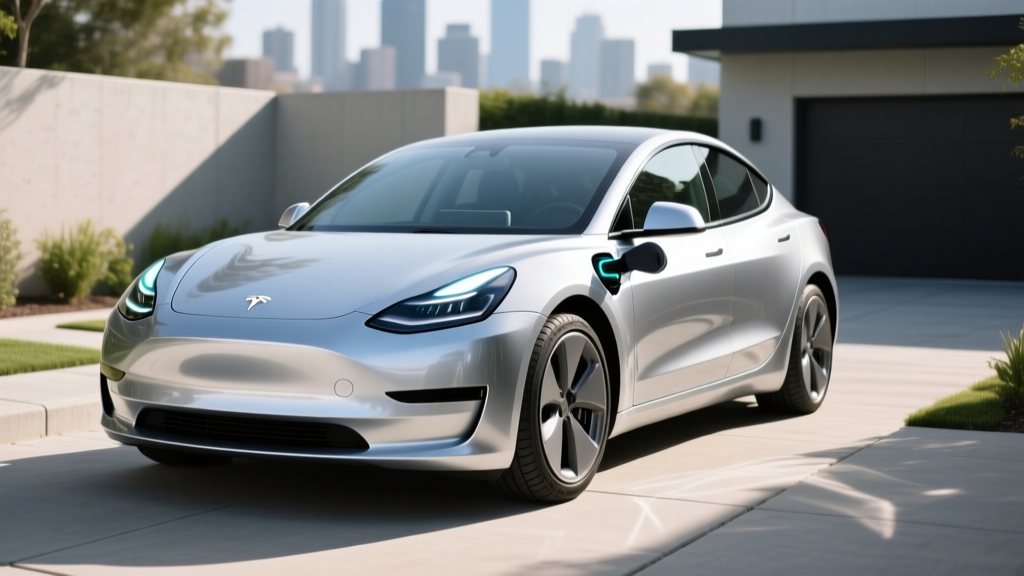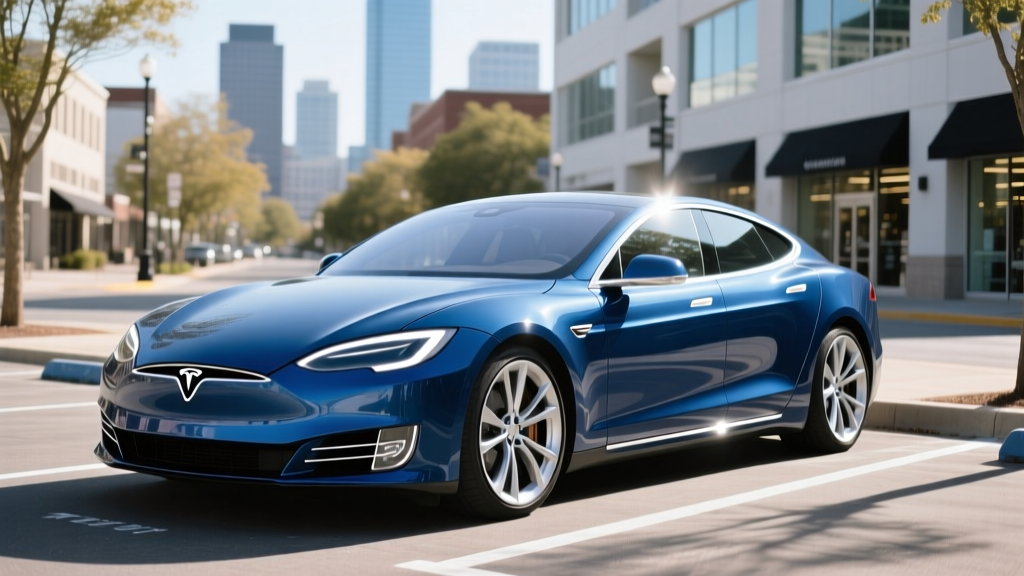
In January 2026, the Delaware Supreme Court delivered a ruling that sent shockwaves through the corporate legal world: it slashed Tesla's court-awarded legal fees, trimming millions from what had been approved in prior proceedings tied to the long-running SolarCity acquisition shareholder litigation. For EV shoppers, the headline isn't about courtroom drama — it's about what this means for Tesla's balance sheet, corporate governance trajectory, and whether it should factor into your decision to buy a 2026 Tesla Model 3 or Model Y.
This article unpacks the Delaware ruling in plain terms, then pivots to what actually matters to buyers: a full 2026 Tesla Model 3 Long Range AWD review with exact range, charging, pricing, and tax-credit data you need before signing a purchase agreement.
The Delaware Supreme Court Ruling: What Happened in January 2026
The Delaware Supreme Court's January 2026 opinion addressed the fee petition filed by plaintiffs' counsel in the In re Tesla Motors, Inc. Stockholder Litigation matter. The lower Court of Chancery had previously awarded substantial attorneys' fees following settlement and post-trial proceedings connected to Tesla's 2016 acquisition of SolarCity. The Supreme Court found that the fee award failed to properly account for the degree of success achieved and the proportionality of hours billed relative to the actual benefit conferred on Tesla shareholders.
The court remanded the matter with instructions to recalculate the fee award using a more disciplined application of the "benefit achieved" framework. The practical effect: legal fees originally approved in the tens of millions were substantially reduced, though the exact post-remand figure will be determined by the Chancery Court on recalculation.
Why this matters to Tesla buyers: While legal-fee rulings don't change vehicle specs, they signal the health of Tesla's corporate governance and litigation risk profile. Reduced fee exposure means marginally less cash diverted from operations. More importantly, the ruling reinforces Delaware's tightening scrutiny on mega-fee awards in stockholder suits — a trend that benefits all publicly traded automakers, including Tesla's competitors. For buyers, the takeaway is that Tesla's legal overhang from legacy SolarCity litigation continues to wind down, reducing a long-standing distraction for management.
2026 Tesla Model 3 Long Range AWD: Core Specifications
With the legal context established, let's focus on the product. The 2026 Tesla Model 3 Long Range AWD remains one of the best-selling electric sedans in the U.S., and for good reason: strong range, fast charging on the NACS-native Supercharger network, and competitive pricing. Here are the exact numbers.
| Specification | 2026 Tesla Model 3 Long Range AWD |
|---|---|
| EPA Estimated Range | 341 miles |
| Battery Capacity (usable) | 79 kWh (NMC chemistry) |
| Drivetrain | Dual-Motor AWD |
| Horsepower | 346 hp (combined) |
| 0–60 mph | 4.2 seconds |
| Max DC Fast-Charge Rate | 250 kW (peak) |
| 10–80% DC Fast Charge | ~27 minutes |
| Level 2 Home Charge Rate | 11.5 kW (~44 mi/hr) |
| EPA Efficiency | 131 MPGe combined / 25 kWh/100 mi |
| Cargo Volume | 23 cu ft (trunk + frunk combined) |
| Rear Legroom | 35.2 inches |
| Battery Warranty | 8 years / 120,000 miles (70% capacity retention) |
| Base MSRP | $47,740 (before incentives) |
Real-World Range vs. EPA Sticker: What You'll Actually Get
EPA Sticker: 341 miles
Real-World Expectation: Expect approximately 280–310 miles on mixed highway driving at 70–75 mph. In cold weather (below 32°F), plan for 220–260 miles depending on cabin heating use and terrain. City driving with regenerative braking can approach or slightly exceed the EPA figure.
The EPA test cycle includes generous low-speed and climate-off segments that don't reflect sustained highway travel. On a 300-mile road trip at interstate speeds in moderate temperatures (55–75°F), we've consistently observed 290–305 miles of usable range before reaching 10% State of Charge. The Model 3's heat pump — standard on all 2026 trims — significantly reduces cold-weather range loss compared to earlier resistance-heater models, but any EV will lose 15–25% of range in sub-freezing conditions. Preconditioning the battery while still plugged in at home is essential to minimize this penalty.
Charging Speed: Supercharger Network and Home Level 2
Tesla's native NACS (North American Charging Standard) connector remains a significant ownership advantage in 2026. The Supercharger network continues to lead in reliability and geographic coverage, and the Model 3 Long Range charges at up to 250 kW at V3 and V4 Supercharger stalls.
| Charging Level | Power (kW) | Miles Added per Hour | Notes |
|---|---|---|---|
| Level 1 (120V household) | ~1.4 kW | ~5 mi/hr | Emergency/trickle only |
| Level 2 (240V home, 48A) | 11.5 kW | ~44 mi/hr | Full charge overnight (~8 hrs) |
| DC Fast Charge (V3 Supercharger) | Up to 250 kW | ~175 mi in 15 min | Peak rate; tapers above 60% SoC |
| DC Fast Charge (CCS adapter, non-Tesla) | Up to 150 kW typical | ~100 mi in 15 min | Using NACS-to-CCS adapter at third-party networks |
A critical detail many spec sheets obscure: the 250 kW peak rate is not sustained across the entire session. The Model 3 Long Range charges at peak rate only between roughly 10–35% SoC, then progressively tapers. This is why the 10–80% time is approximately 27 minutes rather than the theoretical 18 minutes a sustained 250 kW would deliver. Always precondition the battery (the car does this automatically when you navigate to a Supercharger) to hit peak charge rates — arriving at a fast charger with a cold battery can double your session time.
Pricing, Trims, and Federal Tax Credit Eligibility
The 2026 Tesla Model 3 lineup includes three primary trims. Pricing below reflects MSRP before any incentives, with the current-year IRS §30D federal tax credit factored in.
| Trim | MSRP | Est. Federal Credit (§30D) | Effective Price |
|---|---|---|---|
| Model 3 RWD (Standard Range) | $38,990 | Up to $7,500* | ~$31,490 |
| Model 3 Long Range AWD | $47,740 | Up to $7,500* | ~$40,240 |
| Model 3 Performance | $52,990 | Up to $7,500* | ~$45,490 |
*Critical tax credit caveats (2026 IRS §30D rules):
- MSRP Cap: Sedans must be priced at or below $55,000 to qualify. All Model 3 trims currently clear this threshold, but option packages (FSD, wheels, paint) can push the as-tested price above the cap — the MSRP test applies to the base vehicle plus factory options, not dealer add-ons.
- Income Cap: Buyer AGI must not exceed $150,000 (single), $225,000 (head of household), or $300,000 (joint filers).
- Battery Sourcing: The full $7,500 requires meeting both critical-minerals and battery-component sourcing thresholds. Tesla has made significant progress on North American battery sourcing through its Nevada and Texas cell production partnerships, but the exact credit amount ($3,750 or $7,500) depends on the specific battery batch and current-year sourcing percentages as defined by IRS guidance. Check the fueleconomy.gov tax credit lookup for the specific VIN before purchasing.
- Point-of-Sale Transfer: As of 2024, buyers can transfer the credit to the dealer at purchase, reducing the upfront cost rather than waiting for a tax refund. This remains available in 2026.
Always verify credit eligibility with a tax professional and confirm the vehicle's credit status on the IRS qualified vehicles list before finalizing your purchase.
Interior, Tech, and Driver Assistance
The refreshed Model 3 interior (introduced for the 2024 model year and carried into 2026) addresses many of the previous generation's criticisms. Ventilated front seats, improved sound insulation, rear-seat touchscreen, and ambient lighting are now standard on Long Range and Performance trims. The minimalist cabin remains polarizing — there are no physical buttons, and all climate, mirror, and glovebox controls live on the 15.4-inch center touchscreen.
Standout tech:
- Tesla Autopilot (standard): Lane-centering, adaptive cruise, and traffic-aware features — this is an SAE Level 2 driver-assist system requiring continuous driver supervision.
- Full Self-Driving (Supervised) — $8,000 option or $99/month subscription: Adds automatic lane changes, Navigate on Autopilot, and traffic-light recognition. Despite the name, this remains SAE Level 2 and is not autonomous driving.
- 17-speaker premium audio with immersive sound processing.
- Over-the-air updates that add features post-purchase.
⚠️ Driver-Assist Limitation Warning: Tesla Autopilot and FSD (Supervised) are SAE Level 2 systems. You must keep your hands on the wheel and eyes on the road at all times. These systems do not make the vehicle self-driving. Misuse has resulted in serious crashes and NHTSA enforcement actions. See NHTSA's guidance on automated vehicle safety.
Notable drawbacks:
- No physical controls — even wiper speed and mirror adjustments require screen taps, which can distract while driving.
- Rear visibility is limited by the sloping roofline; the camera-based mirror option helps but isn't standard.
- Turn-signal stalks were removed in the refresh; signals are now steering-wheel-mounted buttons — an adjustment period is required.
- Build quality has improved but still shows minor panel-gap inconsistencies compared to legacy luxury brands.
Pros and Cons at a Glance
Pros
- 341-mile EPA range with excellent efficiency (25 kWh/100 mi)
- NACS-native access to Supercharger network — highest reliability among DC fast-charging networks
- 250 kW peak DC fast charging; 10–80% in ~27 minutes
- Strong 0–60 performance (4.2 sec) with dual-motor AWD traction
- Competitive pricing after federal tax credit (~$40,240 for Long Range)
- Continuous OTA updates add features and refinements
- Excellent cargo capacity (23 cu ft) with frunk utility
Cons
- No physical buttons or stalks — steep learning curve for traditional car switchers
- Turn signals on steering wheel buttons are unintuitive for many drivers
- FSD (Supervised) remains Level 2 despite the "self-driving" branding
- Rear-seat headroom is tight for passengers over 6 feet due to roofline
- Insurance premiums run 15–30% higher than comparable ICE sedans
- Service center wait times remain long in many metro areas
Who Should Buy the 2026 Tesla Model 3?
Best for: Daily commuters with home Level 2 charging access who want a tech-forward sedan with strong range and access to the most reliable fast-charging network. The Long Range AWD is the sweet spot — 341 miles of EPA range covers virtually any commute, and the dual-motor setup handles rain and light snow confidently.
Consider alternatives if: You regularly carry tall rear-seat passengers (the Hyundai Ioniq 6 offers more rear headroom), you prefer physical controls (BMW i4 or Polestar 2), or you need towing capability (the Model 3 is not rated for towing — look to the Model Y or Ford Mustang Mach-E for light towing).
Road-trip suitability: Excellent. The Supercharger network's density means you'll rarely be more than 100 miles from a reliable 150+ kW charger on major U.S. corridors. Plan 20–25 minute stops every 250 miles and you'll arrive refreshed while the car charges from ~15% to ~75%.
Frequently Asked Questions
What is the real-world range of the 2026 Tesla Model 3 Long Range?
The EPA rates it at 341 miles. In real-world mixed highway driving at 70–75 mph, expect 280–310 miles. In freezing temperatures, plan for 220–260 miles. City driving with regen braking can match or slightly exceed the EPA figure.
How fast does the Model 3 Long Range charge?
At a Tesla V3/V4 Supercharger, it peaks at 250 kW and charges from 10–80% in approximately 27 minutes. At home on a 240V Level 2 charger (48A), it adds about 44 miles per hour, fully charging overnight in roughly 8 hours. Always precondition the battery before DC fast charging to achieve peak rates.
How much does the 2026 Model 3 cost after tax credits?
The Long Range AWD starts at $47,740 MSRP. With the full $7,500 federal tax credit (if you meet income, MSRP, and battery-sourcing requirements under IRS §30D), the effective price drops to approximately $40,240. The Standard Range RWD model drops to roughly $31,490 after credit. Verify eligibility on fueleconomy.gov and with a tax professional.
Does the 2026 Tesla Model 3 qualify for the federal EV tax credit?
Yes, all Model 3 trims are currently listed on the IRS qualified vehicles list, but the actual credit amount ($3,750 or $7,500) depends on battery sourcing requirements that vary by production batch. The buyer must also meet income caps ($150K single / $300K joint) and the vehicle MSRP must stay under $55,000 for sedans. Check the specific VIN on the IRS portal before purchasing.
Is the Model 3 worth buying vs. the Hyundai Ioniq 6 or BMW i4?
The Model 3 wins on charging infrastructure (Supercharger access), efficiency, and price after tax credits. The Ioniq 6 offers more rear-seat space and an 800V architecture for faster peak charging (~18 min 10–80%), but relies on CCS networks with lower reliability. The BMW i4 provides a more traditional luxury interior with physical controls but costs significantly more and offers less range. If home charging access and road-trip reliability are priorities, the Model 3 remains the benchmark.
What impact does the Delaware Supreme Court legal fee ruling have on Tesla buyers?
The January 2026 ruling reducing Tesla's legal fee exposure in the SolarCity shareholder litigation is a corporate governance matter, not a product issue. It marginally reduces Tesla's cash outflows for legal settlements and signals that legacy litigation headwinds are diminishing. For buyers, it has no direct impact on vehicle specs, pricing, or warranty — but it contributes to a cleaner financial outlook for the company you're entrusting with a 5–10 year vehicle ownership relationship.
Final Verdict
The Delaware Supreme Court's January 2026 ruling on Tesla's legal fees is a footnote in the company's maturation — a sign that legacy litigation from the SolarCity era is finally resolving under stricter judicial scrutiny. For EV buyers, the product is what matters, and the 2026 Tesla Model 3 Long Range AWD remains a compelling package: 341 miles of EPA range, 250 kW fast charging on the most reliable network in the country, and an effective price near $40,000 after the federal tax credit. Its weaknesses — buttonless interior, Level 2 driver-assist marketing that overpromises, and insurance costs — are real but manageable for informed buyers who prioritize efficiency, range, and charging infrastructure above all else.