Quick Verdict: A Luxury Performance Sedan With Aging Bones
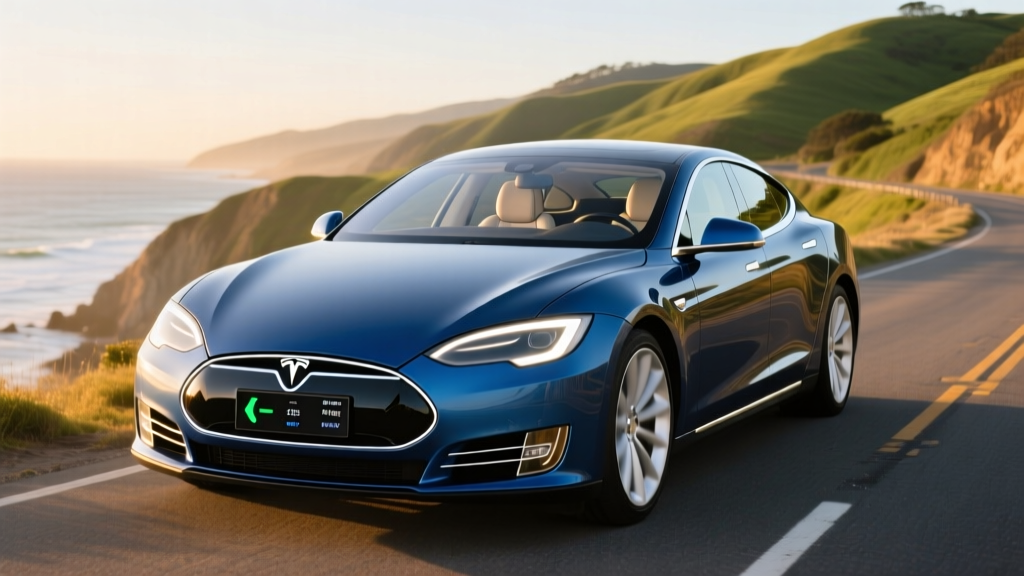
The 2020 Tesla Model S occupies an unusual position in 2026. It's a pre-refresh car—built before Tesla's mid-2021 interior overhaul brought the horizontal touchscreen, yoke option, and rear-seat display. But it still delivers what made the Model S famous: blistering acceleration, access to the Supercharger network, and a 100 kWh battery that provides genuine long-distance capability. As a used EV, it can be a compelling value proposition or a costly liability depending on one factor above all else: battery health.
If you're shopping for a 2020 Model S today, you're looking at vehicles that are five to six years old with 40,000–90,000 miles on the odometer. Prices have settled into the $28,000–$42,000 range depending on trim, mileage, and condition. That's a significant discount from the $74,990–$99,990 original MSRP, making it competitive with newer but smaller EVs like the Hyundai Ioniq 5 or Tesla Model 3. The question is whether the luxury, performance, and range justify the maintenance risk of an aging flagship.
2020 Tesla Model S: Core Specifications at a Glance
| Specification | Long Range Plus | Performance (Raven) |
|---|---|---|
| EPA Range | 402 miles | 348 miles |
| Battery (Usable) | ~100 kWh (NMC) | ~100 kWh (NMC) |
| Drivetrain | Dual-Motor AWD | Dual-Motor AWD |
| Horsepower | ~422 hp | ~778 hp (Ludicrous) |
| 0–60 mph | 3.7 seconds | 2.3 seconds (w/ Ludicrous) |
| Top Speed | 155 mph | 163 mph |
| MPGe (Combined) | 111 MPGe | 104 MPGe |
| Efficiency | 30 kWh/100 mi | 32 kWh/100 mi |
| Cargo Volume | 26.3 cu ft (rear) + 5.3 cu ft (frunk) | |
| Rear Legroom | 35.4 inches | |
| Battery Warranty (Original) | 8 years / 150,000 miles | |
| Original MSRP (2020) | $74,990 | $99,990 |
| Typical Used Price (2026) | $30,000–$38,000 | $35,000–$42,000 |
Sources: fueleconomy.gov, Tesla press archives.
Real-World Range: What the 402-Mile EPA Sticker Actually Means
EPA Rated: 402 miles
Real-World Highway (65–75 mph, 70°F): ~310–340 miles
Real-World Highway (32°F, winter): ~250–285 miles
Mixed City/Highway Commute: ~340–370 miles
Note: Expect 10–20% range reduction at sustained highway speeds above 70 mph, and 15–30% loss in freezing temperatures due to cabin heating and battery resistance.
The 2020 Model S Long Range Plus earned a landmark 402-mile EPA rating—the first production EV to crack the 400-mile mark. But EPA tests use low average speeds and generous regenerative-braking assumptions that don't match interstate driving. In practice, the Model S is a large, heavy sedan (4,941 lbs curb weight) pushing through substantial aerodynamic drag at highway speeds. Our experience and aggregated owner data show 310–340 miles is realistic on a warm-weather road trip at 70 mph, dropping to 250–285 miles in winter conditions.
The Performance trim's 348-mile EPA rating translates to roughly 270–295 real-world highway miles in moderate weather, owing to stickier tires and more aggressive powertrain calibration. For context, that's still enough to handle most US road-trip legs between Supercharger stops, but you'll want to plan charging breaks at the 200–250 mile mark in cold weather to maintain a comfort buffer.
Battery Chemistry, Degradation, and State of Health
The 2020 Model S uses a Panasonic-sourced NMC (nickel manganese cobalt) lithium-ion pack with approximately 100 kWh of usable capacity. NMC chemistry offers high energy density—which is how Tesla fit 400+ miles of range into a sedan—but it comes with trade-offs versus the LFP (lithium iron phosphate) chemistry Tesla now uses in Model 3/Y Standard Range vehicles.
NMC batteries are more sensitive to sustained high states of charge. Tesla recommends daily charging to 80–90% for NMC packs and reserving 100% charges for road trips. Over five to six years, owners typically see 8–14% capacity degradation depending on charging habits, climate exposure, and Supercharger frequency. A 2020 Model S that was regularly charged to 100% and frequently DC fast-charged may show 12–16% degradation by now, reducing real-world range proportionally.
The original battery warranty covers 8 years or 150,000 miles, whichever comes first, with a 70% minimum capacity retention threshold. That means a 2020 Model S remains under battery warranty through 2028 or until 150,000 miles. If the battery drops below 70% of original capacity within that window, Tesla will replace or refurbish it at no cost. This is a critical safety net for used buyers—always request a battery State of Health (SoH) reading from Tesla or a third-party diagnostic tool before purchasing.
Charging Speeds: Supercharger Network and Home Level 2
| Charging Method | Power / Rate | Time / Range Added |
|---|---|---|
| Level 1 (120V household) | ~1.4 kW | ~3–4 miles per hour |
| Level 2 (240V, 48A Wall Connector) | 11.5 kW | ~34 miles per hour (full charge ~10 hrs) |
| DC Fast Charge (V2 Supercharger, 150 kW) | Peak 150 kW | 10–80% in ~35–40 minutes |
| DC Fast Charge (V3 Supercharger, 250 kW) | Peak ~200 kW (NMC taper) | 10–80% in ~30–35 minutes |
The 2020 Model S supports DC fast charging at up to 200 kW peak on V3 Superchargers (250 kW stalls). However, the 100 kWh NMC pack exhibits a pronounced charge curve taper: peak speeds are sustained only between roughly 10–30% state of charge, then taper progressively. Expect an average rate closer to 120–140 kW across a 10–80% session, yielding a realistic 30–40 minute charging stop.
At home, the onboard charger accepts up to 11.5 kW (48 amps) on a Level 2 Tesla Wall Connector connected to a 60-amp circuit. This adds about 34 miles of range per hour and fully replenishes the 100 kWh pack in roughly 10 hours—adequate for overnight charging. A standard NEMA 14-50 outlet on a 50-amp circuit delivers about 7.7 kW, adding ~23 miles per hour.
Connector note: The 2020 Model S uses Tesla's proprietary connector. It is not natively compatible with NACS (which is the same physical connector but used on newer non-Tesla vehicles) or CCS. However, Tesla provides a J1772 adapter for Level 2 public stations. For CCS public DC fast chargers, you'll need Tesla's CCS adapter (sold separately, ~$175). The Model S does have full access to the Tesla Supercharger network, which remains the most reliable DC fast-charging infrastructure in the US.
Performance: Raven Architecture and Ludicrous Mode
The 2020 Model S came in two trims, both built on Tesla's "Raven" powertrain architecture introduced in 2019. The Raven front motor is a permanent-magnet synchronous reluctance design (more efficient than the older induction motor), while the rear remains an induction unit.
The Long Range Plus delivers 422 hp and a 3.7-second 0–60 mph time—quick by any measure, though overshadowed by the Performance trim. The Performance variant with Ludicrous Mode unleashes 778 hp and a staggering 2.3-second 0–60 time, making it one of the quickest production sedans ever built. Even without Ludicrous, the Performance model hits 60 mph in about 3.2 seconds.
Ride quality in the 2020 Model S benefits from the adaptive air suspension standard on both trims. The cabin is genuinely quiet at highway speeds, and the low center of gravity from the floor-mounted battery pack delivers confident cornering for a 4,900-pound sedan. That said, the steering lacks the feedback of a Porsche Taycan, and the regenerative braking in 2020 models is strong but not adjustable to the degree of newer EVs with blended brake-by-wire systems.
Interior, Tech, and the Pre-Refresh Reality
This is where the 2020 Model S shows its age most clearly. The interior features the legacy vertical 17-inch touchscreen, a traditional round steering wheel, and the pre-refresh dashboard layout. There is no rear-seat entertainment screen, no yoke steering option, and no AMD Ryzen infotainment processor (the 2020 model uses an Intel Atom chip, which can feel sluggish by 2026 standards when navigating maps or loading apps).
Standard tech includes:
- Autopilot basic functionality (Traffic-Aware Cruise Control, Autosteer)
- Over-the-air software updates (still actively supported by Tesla)
- HEPA air filtration with Bioweapon Defense Mode
- Panoramic glass roof
- 12-way power front seats with heating (ventilation not standard on all trims)
- 17-speaker audio system
Full Self-Driving (FSD) capability was a $7,000 option on the 2020 Model S. FSD is a Level 2 driver-assistance system per SAE classification—it requires continuous driver supervision and is not autonomous driving. Some 2020 models on the used market will include transferred FSD licenses; verify this with Tesla before purchase, as FSD transfers are not guaranteed on all used sales.
Autopilot and FSD are SAE Level 2 systems. The driver must keep hands on the wheel and eyes on the road at all times. These systems do not make the vehicle self-driving. FSD can navigate highway interchanges and respond to traffic lights under supervision, but it can and does make errors requiring immediate driver intervention. Never rely on these systems in construction zones, unmapped areas, or adverse weather without heightened vigilance.
Pricing, Tax Credits, and the Used-EV Advantage
| Cost Factor | Long Range Plus | Performance |
|---|---|---|
| Original MSRP (2020) | $74,990 | $99,990 |
| Typical Used Price (2026) | $30,000–$38,000 | $35,000–$42,000 |
| Federal Used EV Credit (§25E) | Up to $4,000 (30% of sale price, max $4,000) | |
| Estimated Price After Credit | $26,000–$34,000 | $31,000–$38,000 |
Because the 2020 Model S is a used vehicle, it does not qualify for the new-vehicle §30D federal tax credit (up to $7,500). Instead, it may be eligible for the §25E Previously-Owned Clean Vehicle Credit, which provides 30% of the sale price up to a maximum of $4,000. Key eligibility requirements per IRS guidelines:
- Sale price must be $25,000 or less to qualify for the full $4,000 (vehicles priced above $25,000 still qualify but the credit is 30% of price, capped at $4,000)
- Buyer income limits: $75,000 single / $112,500 head of household / $150,000 joint (modified AGI)
- Vehicle must be purchased from a licensed dealer (private-party sales do not qualify)
- Vehicle must be at least two model years old (2020 qualifies in 2026)
- Buyer must not have claimed the used-EV credit in the prior three years
Practical tip: Many 2020 Model S listings are priced between $28,000–$42,000. If you find one at or below $25,000 from a dealer, you maximize the $4,000 credit. At $35,000, the credit is still capped at $4,000 (since 30% of $35,000 = $10,500, which exceeds the cap). Always confirm eligibility with a tax professional and check current-year IRS rules, as incentive programs can change.
Ownership Costs: Insurance, Maintenance, and Efficiency
The 2020 Model S delivers strong efficiency for its size at 111 MPGe combined (Long Range Plus) and 104 MPGe (Performance), translating to roughly 30–32 kWh per 100 miles. At a national average electricity rate of $0.17/kWh, fueling costs approximately $5.10–$5.44 per 100 miles—compared to roughly $12–$15 per 100 miles for a comparable gas sedan at $3.50/gallon and 25 MPG.
However, insurance is a significant ownership cost. The Model S consistently ranks among the most expensive EVs to insure due to high repair costs, aluminum body panels, and expensive parts. Expect $2,800–$4,200 annually for full coverage depending on your location, driving record, and coverage levels. Always get insurance quotes before purchasing.
Maintenance is lighter than a gas car—no oil changes, no spark plugs, no transmission fluid. Budget for cabin air filter replacement (~$100–$150 every 2 years), tire rotation, wiper fluid, and brake fluid checks. The regenerative braking system preserves brake pads, which often last 100,000+ miles. However, out-of-warranty repairs on the air suspension, drive unit, or touchscreen can be expensive ($2,000–$5,000+ per incident), making the remaining factory warranty or an extended service plan worth considering.
Pros and Cons
- 402-mile EPA range (Long Range Plus) still competitive in 2026
- Supercharger network access — the most reliable DC fast-charging ecosystem
- Performance variant's 2.3-second 0–60 is supercar territory
- Generous cargo space (26.3 cu ft trunk + 5.3 cu ft frunk)
- OTA updates keep software current six years post-launch
- Battery warranty valid through 2028 or 150,000 miles
- Available §25E used-EV credit up to $4,000
- Pre-refresh interior feels dated vs. 2021+ Model S
- Intel Atom processor sluggish by 2026 standards
- High insurance premiums ($2,800–$4,200/year)
- NMC battery requires 80–90% daily charge limit discipline
- 150 kW peak DC charging slower than 2024+ competitors at 250–350 kW
- Out-of-warranty air suspension and drive unit repairs are expensive
- No CCS native port — requires adapter for non-Tesla DC chargers
- Rear seat space tight for adults on long trips (35.4" legroom)
Who Should Buy the 2020 Model S?
Buy it if: You want a spacious luxury EV sedan with genuine 300+ mile real-world range, access to the Supercharger network for road trips, and supercar-level acceleration—all under $40,000 after credits. It's ideal for tech-savvy commuters and road trippers who value performance and charging infrastructure over interior luxury.
Pass on it if: You prioritize a modern interior, the latest infotainment hardware, or native CCS charging. If you need a back seat comfortable for tall adults on long trips, consider the Lucid Air or a newer Model S refresh (2021+). If budget is tight and you don't need 400 miles of range, a used Model 3 Long Range or a new Hyundai Ioniq 6 offers better value with lower maintenance risk.
Frequently Asked Questions
What is the real-world range of the 2020 Tesla Model S?
The EPA rates the Long Range Plus at 402 miles and the Performance at 348 miles. In real-world highway driving at 70 mph in moderate temperatures, expect 310–340 miles (Long Range Plus) or 270–295 miles (Performance). Winter conditions reduce these figures by 15–30%, to roughly 250–285 and 210–250 miles respectively. Battery degradation of 8–14% over five to six years further reduces effective range.
How fast does the 2020 Model S charge at home and on road trips?
At home on a Level 2 Tesla Wall Connector (11.5 kW / 48A), the Model S adds about 34 miles of range per hour, fully charging in roughly 10 hours. On V3 Superchargers, it peaks at approximately 200 kW but tapers significantly above 30% SoC, resulting in a 10–80% charge in about 30–40 minutes. On older V2 Superchargers (150 kW), expect 35–45 minutes for 10–80%.
Does the 2020 Model S qualify for the federal EV tax credit?
Not the new-vehicle §30D credit, which applies only to new purchases. However, it may qualify for the §25E Previously-Owned Clean Vehicle Credit of up to $4,000 when purchased from a licensed dealer. Buyer income must not exceed $75,000 (single) or $150,000 (joint), and the buyer must not have claimed the used-EV credit in the prior three years. Consult a tax professional and verify current-year IRS rules before relying on this credit.
Is the 2020 Model S worth buying versus newer competitors?
It depends on your priorities. Versus a new Tesla Model 3 Long Range ($42,000+, 341-mile EPA), the 2020 Model S offers more cargo space, a larger battery, and faster acceleration—but a dated interior, higher insurance, and more maintenance risk. Versus a used 2022+ Hyundai Ioniq 5 or Kia EV6, the Model S has superior range and Supercharger access but slower DC charging and no native CCS. For buyers who road-trip frequently and value the Supercharger ecosystem, the 2020 Model S remains a strong choice at its current used prices.
What should I check before buying a used 2020 Model S?
Prioritize these four items: (1) Battery State of Health — request a diagnostic reading showing capacity retention percentage; anything above 88% is healthy for a 5–6 year old pack. (2) Remaining warranty — verify the battery/powertrain warranty (8 yr / 150,000 mi) hasn't been voided. (3) Service history — check for air suspension replacements, drive unit repairs, and recall completions. (4) FSD transfer — if the car was optioned with Full Self-Driving, confirm with Tesla that the license transfers to you as the new owner.
What are the biggest risks of owning a 2020 Model S in 2026?
The primary risks are out-of-warranty repair costs once the 8-year/150,000-mile battery warranty expires in 2028. Air suspension failure ($2,000–$3,500 per corner), drive unit replacement ($4,000–$7,000), and touchscreen failure ($1,500–$2,500) are the most commonly reported expensive repairs on pre-refresh Model S vehicles. High insurance premiums and the Intel Atom processor's declining software performance are ongoing frustrations. Budgeting $1,500–$3,000 annually for potential repairs after the warranty period is prudent.