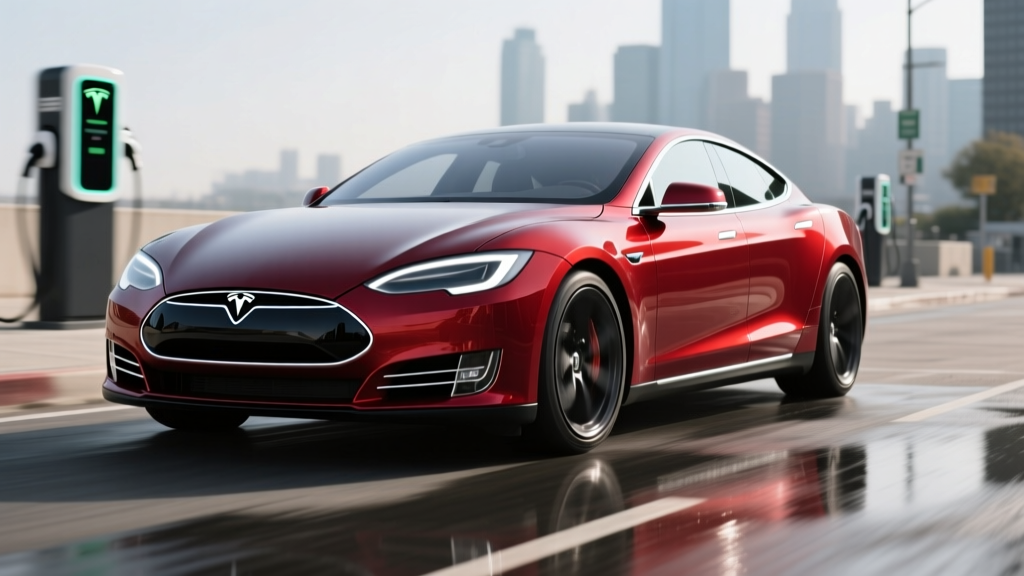
The Tesla Model S launched the premium electric sedan segment over a decade ago, and despite intensifying competition from the Lucid Air, Porsche Taycan, and Mercedes EQS, it remains a benchmark for straight-line performance and Supercharger network access. For 2025–2026, Tesla continues to offer the Model S in two trims: the dual-motor Long Range and the tri-motor Plaid. Both deliver startling acceleration, but the numbers — and the ownership experience — differ meaningfully between them.
This review breaks down the Tesla Model S 0-60 performance across trims, real-world range expectations beyond the EPA sticker, charging speeds on DC fast chargers and at home, interior practicality, and whether the federal EV tax credit applies. If you're cross-shopping the fastest sedans on the market, the data below will tell you exactly what you're buying.
Quick Verdict: Who Should Buy the Tesla Model S?
The Model S remains the default choice for buyers who want sub-2-second acceleration (Plaid), access to the most reliable DC fast-charging network in North America (Tesla Superchargers), and a proven long-range platform. It suits tech-forward commuters, frequent road-trippers who value 200+ kW charging, and performance enthusiasts who want supercar-rivaling speed in a four-door package.
It's less ideal for buyers prioritizing rear-seat luxury (the Lucid Air and Mercedes EQS offer more premium interiors), those needing the latest in ride refinement, or shoppers whose budget falls below $80,000. Federal tax credit eligibility is also restricted for most buyers due to the MSRP cap — more on that below.
Tesla Model S 0-60, Horsepower, and Performance Specs
Acceleration is the headline, and Tesla publishes some of the quickest factory 0-60 mph times of any production vehicle. Here's how the two trims stack up:
| Spec | Long Range (Dual Motor AWD) | Plaid (Tri-Motor AWD) |
|---|---|---|
| 0-60 mph | 3.1 seconds | 1.99 seconds* |
| Horsepower | 670 hp | 1,020 hp |
| Drivetrain | Dual Motor AWD | Tri-Motor AWD |
| Top Speed | 155 mph | 200 mph (with track package) |
| Quarter Mile | ~11.1 sec | ~9.23 sec |
*Tesla's 1.99-second 0-60 time for the Plaid is achieved with rollout subtracted (approximately 1 foot of rollout, as is standard in drag racing). Independent testing by outlets like Motor Trend has recorded 2.0–2.1 seconds with rollout included. Both figures remain extraordinary for a four-door sedan.
In real-world driving, the Long Range's 3.1-second sprint is already faster than most sports cars. The Plaid's tri-motor setup — one front motor and two rear motors with torque vectoring — delivers relentless, stomach-dropping acceleration that holds well past 100 mph. The carbon-sleeve rotors in the Plaid's rear motors allow them to spin at over 20,000 RPM without disintegrating, which is the engineering trick that enables this power density.
Range, Efficiency, and Battery: What the EPA Doesn't Tell You
| Spec | Long Range | Plaid |
|---|---|---|
| EPA Estimated Range | 402 miles | 396 miles |
| Battery Capacity (usable) | ~100 kWh | ~100 kWh |
| Battery Chemistry | NMC (Nickel Manganese Cobalt) | NMC |
| MPGe (combined) | 120 MPGe | 116 MPGe |
| Efficiency (kWh/100 mi) | 28 kWh/100 mi | 29 kWh/100 mi |
The EPA estimates 402 miles for the Long Range and 396 for the Plaid. In practice, expect 330–360 miles on highway road trips at 70–80 mph, and significantly less in cold weather. At 20°F with cabin heating, range can drop 25–35%, putting real-world winter highway range closer to 260–300 miles. City driving with regenerative braking recovers energy and can approach or even exceed the EPA number in mild weather. These figures still rank among the best in the segment — the EPA's fueleconomy.gov data confirms the Model S Long Range as one of the longest-range EVs sold in the U.S.
The Model S uses an NMC (nickel manganese cobalt) lithium-ion pack rather than LFP (lithium iron phosphate). NMC offers higher energy density — essential for fitting 100 kWh into a sedan platform — but it's best practice to charge NMC batteries to 80% for daily use and only charge to 100% before long trips. Tesla's battery management system handles this automatically if you set your charge limit in the app.
Charging Speed: Supercharger, DC Fast, and Home Level 2
Charging speed is where Tesla's vertical integration still pays dividends. The Model S supports the Tesla Supercharger network natively — no adapter needed — and the Supercharger network consistently ranks highest in reliability among DC fast-charging providers.
| Charging Method | Max Power | Speed / Time |
|---|---|---|
| DC Fast Charge (Supercharger V3/V4) | 250 kW peak | 10–80% in ~27 minutes; adds up to 200 miles in 15 min |
| DC Fast Charge (CCS via adapter) | 250 kW peak | Similar to Supercharger on capable stations |
| Level 2 Home Charging (Tesla Wall Connector, 48A) | 11.5 kW | ~41 miles of range per hour; full charge in ~10 hours |
| Level 2 Public (J1772 via adapter) | Up to 11.5 kW | Varies by station; typically 30–41 mi/hr |
| Level 1 (120V household outlet) | ~1.4 kW | ~3–4 miles per hour (emergency/trickle only) |
Charging curve reality: The 250 kW peak is not sustained across the full session. The Model S hits peak power between roughly 10–30% state of charge, then tapers progressively. From 80–100%, charging slows dramatically — often below 50 kW — which is why Tesla and most EV experts recommend charging to 80% on road trips for the best time efficiency. Preconditioning the battery (which the car does automatically when you navigate to a Supercharger) is essential for achieving peak charge rates, especially in cold weather.
For home charging, the Tesla Wall Connector on a 60-amp circuit delivers 48 amps (11.5 kW), replenishing the full 100 kWh pack overnight. Most owners who charge at home nightly never visit a public charger except on road trips.
Pricing, Trims, and Federal Tax Credit Eligibility
| Trim | Base MSRP | As-Tested (common options) |
|---|---|---|
| Long Range | $79,990 | $85,000–$90,000 (wheels, paint, FSD) |
| Plaid | $94,990 | $105,000–$115,000 (track pkg, FSD, premium paint) |
Prices exclude the $1,390 destination fee. Tesla adjusts pricing periodically — verify current figures at Tesla's configurator.
Does the Tesla Model S Qualify for the Federal EV Tax Credit?
For most buyers, no. Under the IRS §30D Clean Vehicle Credit rules, new EVs must have an MSRP at or below $55,000 for sedans to qualify for the up-to-$7,500 credit. Both Model S trims exceed this cap significantly. Additionally, buyers must meet income thresholds ($150,000 single / $300,000 joint modified AGI) and the vehicle's battery components and critical minerals must meet domestic sourcing requirements.
The Model S is also ineligible for the point-of-sale transfer option that allows qualifying buyers to apply the credit as an instant discount at the dealership, since it fails the MSRP test regardless of income or sourcing.
The used EV tax credit (§25E) offers up to $4,000 (or 30% of the sale price, whichever is less) for pre-owned EVs priced at $25,000 or less, purchased from a dealer. A 2018–2020 Model S with higher mileage may fall into this range, making the used market a viable path to Tesla ownership with a tax benefit. Verify eligibility on IRS.gov and confirm the specific VIN qualifies.
Interior, Cargo, and Technology
The Model S interior is minimalist and screen-dominant. A 17-inch center touchscreen (now tilted slightly toward the driver in refreshed models) controls virtually everything — climate, media, navigation, vehicle settings, and the gaming system. A secondary 8-inch screen for rear passengers handles climate and entertainment.
Dimensions and Practicality
- Seating: 5 passengers standard
- Front legroom: 42.7 inches
- Rear legroom: 35.4 inches (adequate but tighter than the Lucid Air's 41.2 inches)
- Cargo (rear trunk): 28.0 cu ft
- Frunk (front trunk): ~3.1 cu ft
- Total cargo: ~31 cu ft (with seats up); expands to ~79 cu ft with rear seats folded
The hatchback design is a major practicality advantage over traditional sedans — the entire rear glass lifts, making loading bulky items far easier than a BMW i5 or Mercedes EQS trunk lid allows. The frunk is small but useful for charging cables.
Standout Tech Features
- Autopilot (standard): SAE Level 2 driver assistance with adaptive cruise, lane centering, and automatic emergency braking. Requires continuous driver supervision — this is not self-driving.
- Full Self-Driving (Supervised) ($8,000 option or $99/mo subscription): Adds automatic lane changes, navigate-on-autopilot, traffic light/stop sign recognition, and parking assist. Still SAE Level 2 — driver must remain fully engaged.
- Over-the-air updates: Tesla regularly pushes software updates that add features, improve efficiency, and refine the UI.
- Gaming: The 17-inch screen supports Steam-compatible games while parked — genuinely impressive hardware.
- Sentry Mode / Dashcam: Built-in cameras record surroundings when parked and while driving.
Tesla's Autopilot and FSD (Supervised) are SAE Level 2 driver-assistance systems. Despite the "Full Self-Driving" branding, the driver must keep hands on the wheel (or demonstrate attention via the cabin camera), monitor the road, and be prepared to take over instantly. These systems do not make the vehicle autonomous. Tesla's FSD has improved substantially in city driving, but it is not a substitute for an attentive driver.
Warranty, Ownership Costs, and Long-Term Outlook
| Coverage | Term |
|---|---|
| Basic Vehicle | 4 years / 50,000 miles |
| Battery & Drive Units | 8 years / 150,000 miles |
| Battery Capacity Retention | Minimum 70% over warranty period |
Tesla's 8-year/150,000-mile battery and drive unit warranty is competitive with the segment. The 70% capacity retention threshold means Tesla will repair or replace the battery if it degrades below 70% of original capacity within the warranty window. Real-world data from Tesla's fleet suggests NMC packs in the Model S typically retain 85–90% capacity at 100,000 miles when owners follow best practices (avoiding frequent 100% charges, minimizing DC fast charging in extreme heat).
Insurance costs for the Model S are notably higher than average — expect $2,500–$4,000+ annually depending on your location, driving record, and trim (Plaid commands a premium). Get quotes before purchasing. Maintenance is minimal: no oil changes, no transmission fluid, cabin air filter replacement every 2–3 years, and tire rotation every 6,250 miles. Brake pads last far longer than in ICE vehicles thanks to regenerative braking.
Pros, Cons, and Competition
Pros
- Class-leading acceleration (Plaid: 1.99 sec 0-60)
- 402-mile EPA range (Long Range) — among the longest of any EV
- Supercharger network access — the most reliable DC fast-charging ecosystem
- Hatchback cargo versatility with usable frunk
- Continuous OTA software improvements
- 250 kW peak DC charging speed
Cons
- No federal tax credit eligibility (MSRP exceeds $55K sedan cap)
- Rear-seat comfort trails Lucid Air and Mercedes EQS
- High insurance premiums ($2,500–$4,000+/yr)
- Build quality inconsistencies reported by some owners
- FSD (Supervised) requires $8,000 extra and remains Level 2
- Plaid range drops noticeably under aggressive driving
Key Competitors at a Glance
- Lucid Air Grand Touring: 516-mile EPA range, 3.0-sec 0-60, ~$125K. Superior luxury and range; less proven charging network.
- Porsche Taycan Turbo S: 2.4-sec 0-60, ~246-mile range, ~$190K. Better driving dynamics and build quality; far less range.
- Mercedes EQS 580: 355-mile range, 4.1-sec 0-60, ~$125K. More luxurious interior; less engaging to drive.
Decision Framework
Choose the Model S Long Range if: You want 400+ miles of range, daily-drivable performance (3.1 sec is plenty), and the best road-trip charging experience available.
Choose the Model S Plaid if: You want the fastest production sedan on the planet, you track your car occasionally, and the ~$15K premium over Long Range fits your budget.
Look elsewhere if: Rear-seat luxury is a priority (Lucid Air), you need the absolute longest range regardless of brand (Lucid Air Grand Touring), or your budget is under $75K (consider the Model 3 or Hyundai Ioniq 6).
Frequently Asked Questions
What is the real-world range of the Tesla Model S?
The EPA rates the Long Range at 402 miles and the Plaid at 396 miles. In real-world highway driving at 75 mph in moderate temperatures, expect 330–360 miles. In cold weather (below 30°F), that can drop to 260–300 miles due to battery resistance and cabin heating demand. City driving with regen braking can approach the EPA figure or slightly exceed it in mild conditions.
How fast does the Tesla Model S charge?
On a Tesla Supercharger V3 or V4 station, the Model S peaks at 250 kW and charges from 10–80% in approximately 27 minutes. At home on a Level 2 Tesla Wall Connector (48A / 11.5 kW), you gain roughly 41 miles of range per hour, fully replenishing the battery in about 10 hours.
Does the Tesla Model S qualify for the $7,500 federal tax credit?
No. Under current IRS §30D rules, sedans must have an MSRP of $55,000 or less to qualify. The Model S starts at $79,990 (Long Range) and $94,990 (Plaid), well above the cap. The used EV credit (§25E) may apply to older, lower-priced pre-owned Model S vehicles purchased from a dealer for $25,000 or less.
Is the Tesla Model S Plaid faster than a Bugatti or Ferrari?
In a 0-60 mph sprint, the Model S Plaid's 1.99-second time rivals or beats hypercars costing 10–20x more, including the Bugatti Chiron (~2.3 sec) and Ferrari SF90 (~2.5 sec). However, the Plaid cannot match these cars in sustained high-speed track performance, cornering dynamics, or top-end speed beyond ~200 mph.
How long will the Tesla Model S battery last?
Tesla warranties the battery for 8 years or 150,000 miles with a minimum 70% capacity retention guarantee. Fleet data suggests the NMC pack retains approximately 85–90% of original capacity at 100,000 miles under normal use. Many Model S vehicles have exceeded 200,000 miles on the original battery, though some degradation is expected.
Is the Model S worth buying over the Lucid Air or Porsche Taycan?
The Model S wins on Supercharger access, tech integration, and value-per-performance (Plaid at ~$95K vs. comparable performance sedans at $150K+). The Lucid Air wins on range and rear-seat space. The Porsche Taycan wins on driving dynamics, build quality, and prestige. Your priority — range, performance, luxury, or charging infrastructure — determines the right choice.