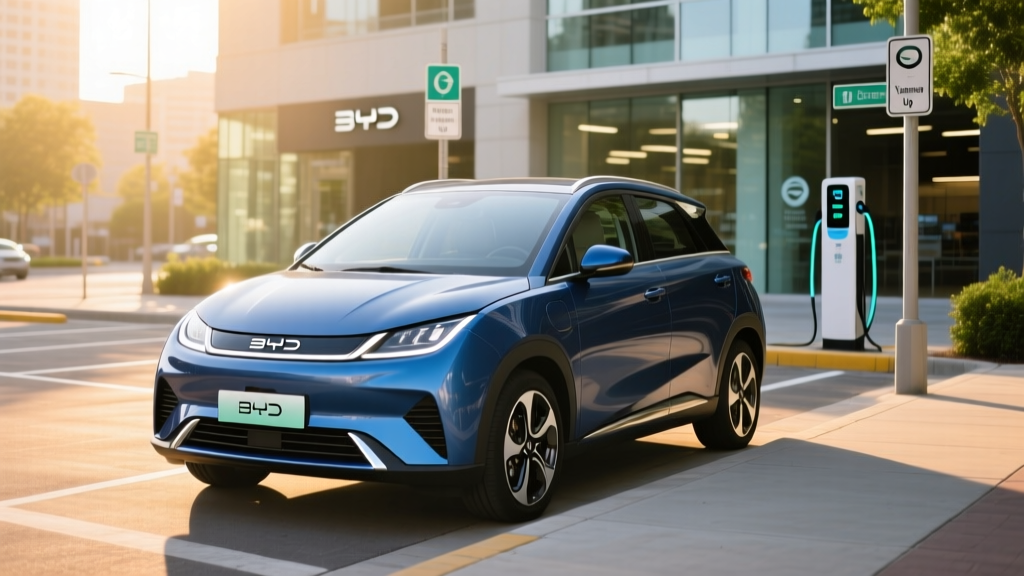
The BYD Yuan Up has become one of the most talked-about subcompact electric SUVs in global markets, offering a compelling mix of affordability, practical city dimensions, and BYD's proven Blade Battery technology. But for US-based EV shoppers, the conversation around the Yuan Up requires careful framing: availability, federal tax credit eligibility, and real-world charging performance all differ significantly from the marketing brochures circulating online. This review gives you the exact numbers you need to evaluate the BYD Yuan Up — whether you're tracking its potential US launch or considering it in a market where it's already on sale.
Range, Battery, and Real-World Efficiency
The BYD Yuan Up is built around BYD's in-house Blade Battery, a lithium iron phosphate (LFP) cell design that prioritizes cycle life, thermal stability, and cost over raw energy density. Two battery packs are available depending on market:
- 32 kWh (usable) — entry-level trim, FWD, ~94 hp
- 45.12 kWh (usable) — higher trim, FWD, ~174 hp
On the Chinese Light-Duty Vehicle Test Cycle (CLTC), the larger pack is rated for approximately 401 km (~249 miles). However, CLTC is notably optimistic compared to the US EPA cycle. Based on comparable BYD models tested under WLTP and EPA protocols, a realistic EPA-equivalent estimate for the 45 kWh variant would fall in the 190–220 mile range.
| Spec | Standard Range (32 kWh) | Extended Range (45 kWh) |
|---|---|---|
| Battery Chemistry | LFP (Blade) | LFP (Blade) |
| Usable Capacity | 32 kWh | 45.12 kWh |
| CLTC Range | ~301 km (187 mi) | ~401 km (249 mi) |
| Est. EPA Range | ~145–160 mi | ~190–220 mi |
| Motor Output | 70 kW / 94 hp | 130 kW / 174 hp |
| Drivetrain | FWD | FWD |
| 0-60 mph (est.) | ~12.0 sec | ~7.9 sec |
| Top Speed | ~93 mph | ~99 mph |
Charging Speed: DC Fast and Level 2
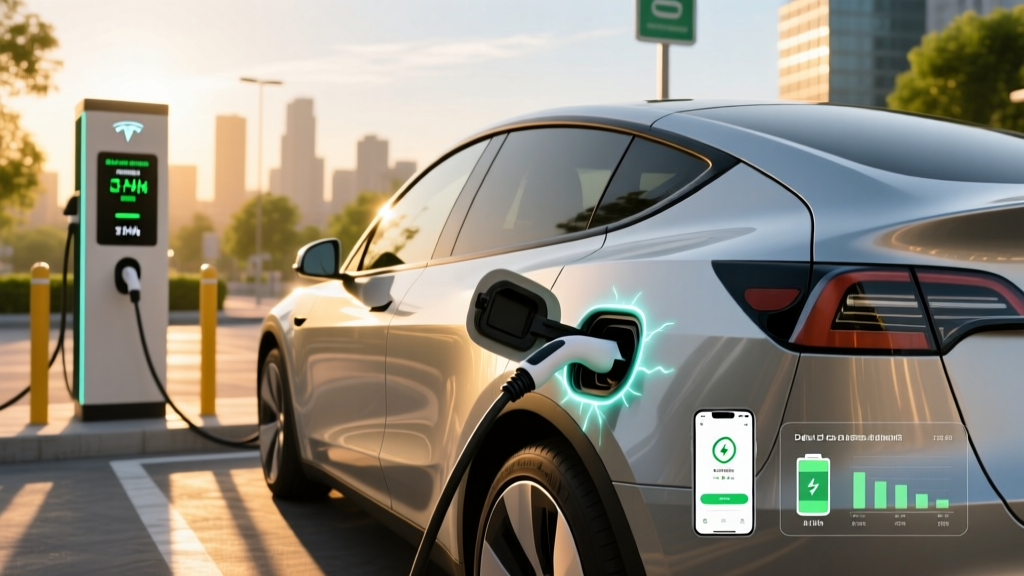
Charging is where subcompact EVs often reveal their compromises, and the Yuan Up is no exception. BYD equips the Yuan Up with a CCS2 port in most export markets (or GB/T in China). In a hypothetical US-spec model, a CCS1/NACS adapter would be needed for compatibility with American networks.
| Level | Power / Rate | 10–80% Time | Miles Added per Hour |
|---|---|---|---|
| Level 1 (120V) | ~1.4 kW | ~28+ hours (45 kWh) | ~3–4 mi/hr |
| Level 2 (240V, 32A) | ~7.7 kW | ~5.5 hours (45 kWh) | ~22–26 mi/hr |
| DC Fast Charge | Peak ~65 kW | ~35 minutes | N/A (session-based) |
A peak DC rate of ~65 kW is modest by 2026 standards. For comparison, the Hyundai Kona Electric peaks around 100 kW, and the Chevrolet Bolt EV (now discontinued) managed ~55 kW. The practical implication: a 10–80% session on a 150 kW public charger will still take roughly 35 minutes because the Yuan Up's onboard charge curve caps the draw well below what most modern DC stations can deliver. The LFP chemistry does tolerate frequent 100% charges better than NMC, so daily topping off to full is acceptable — a genuine ownership advantage for home-charging users.
On a Level 2 home charger at 7.7 kW, a full overnight charge is easily achievable in 5–6 hours. If you're installing a 240V/48A circuit, the Yuan Up's onboard charger is the bottleneck — it won't accept more than ~7.7 kW regardless of your charger's capacity.
Performance and Driving Dynamics
The 130 kW (174 hp) motor in the 45 kWh variant delivers adequate acceleration for a subcompact crossover. The estimated 7.9-second 0–60 mph time won't thrill enthusiasts, but it's perfectly competent for highway merging and urban driving. The single-speed reduction gear and instant torque delivery make it feel quicker around town than the stopwatch suggests.
The Yuan Up is front-wheel drive only — there is no AWD or dual-motor option. This is typical for the segment and keeps cost and weight down, but it limits the vehicle's appeal in regions with heavy snow. Ground clearance is approximately 6.7 inches, reasonable for light gravel but not off-road use.
Ride quality leans toward the firm side, which is common in BYD's smaller platforms. The suspension handles urban potholes acceptably but transmits sharper impacts into the cabin at highway speeds. Noise insulation is adequate but not class-leading; wind and tire noise become noticeable above 65 mph.
Interior, Cargo, and Technology
The Yuan Up's cabin follows BYD's current design language: a large floating center touchscreen (typically 12.8 inches on higher trims, rotatable between portrait and landscape), a digital instrument cluster, and a minimal physical button layout. The infotainment system runs BYD's DiLink platform, which supports wireless Apple CarPlay and Android Auto in most export-market configurations.
Interior materials are hard plastics on lower surfaces with soft-touch materials on the dashboard and door uppers — expected for the price point. Seating is synthetic leather on upper trims.
| Measurement | Value |
|---|---|
| Overall Length | ~169.7 in (4,310 mm) |
| Wheelbase | ~103.1 in (2,620 mm) |
| Rear Legroom (est.) | ~35.4 in |
| Cargo Volume (rear seats up) | ~14.5 cu ft (410 L) |
| Cargo Volume (rear seats folded) | ~46.6 cu ft (1,320 L) |
| Frunk | No |
Cargo space is competitive with the Hyundai Kona Electric and slightly behind the Kia Niro EV. The lack of a frunk (front trunk) is a missed opportunity given the compact motor packaging. A 60/40 split rear seat folds nearly flat, which is useful for longer items.
Driver Assistance Features
Upper trims of the Yuan Up include BYD's DiPilot ADAS suite:
- Adaptive cruise control (stop-and-go)
- Lane-keeping assist and lane departure warning
- Automatic emergency braking with pedestrian detection
- Blind-spot monitoring
- 360-degree surround-view camera
These are SAE Level 2 driver-assist features — the driver must remain fully engaged with hands on the wheel and eyes on the road at all times. This is not a self-driving system, and BYD does not market it as such.
Pricing and Tax Credit Eligibility
The BYD Yuan Up is currently sold in China, Southeast Asia, Latin America, and select European markets. As of 2026, BYD has not officially announced US retail availability for the Yuan Up. Pricing below reflects global-market MSRPs converted and adjusted for context:
| Trim | Battery | Approx. Price (USD) | US Availability |
|---|---|---|---|
| Standard (301 km CLTC) | 32 kWh | ~$13,500–$15,000 | Not available |
| Extended (401 km CLTC) | 45 kWh | ~$16,000–$18,500 | Not available |
These prices are remarkably low, but US pricing — if the Yuan Up ever launches here — would be significantly higher due to the 27.5% tariff on Chinese-built passenger vehicles (Section 301 tariffs, increased to 100% on EVs as of 2024 under updated USTR rules), homologation costs, dealer network setup, and compliance modifications. A realistic US MSRP, if BYD found a workaround (e.g., building in a non-China plant), would likely start around $28,000–$32,000.
Federal Tax Credit (§30D) Analysis
If the Yuan Up were sold in the US, qualifying for the IRS §30D federal EV tax credit would face steep hurdles:
- MSRP cap: SUVs must be under $80,000 — the Yuan Up would clear this easily.
- Income cap: Buyer AGI must be ≤$150,000 (single) / $300,000 (joint) — buyer-dependent.
- Battery sourcing: Critical minerals and battery components must meet escalating domestic-content thresholds. BYD's vertically integrated Chinese supply chain would almost certainly fail the critical-minerals and battery-component requirements, likely disqualifying the vehicle from the full $7,500 credit.
- FEOC restriction: Vehicles with battery components from a "foreign entity of concern" (which includes many Chinese state-linked manufacturers) are explicitly excluded from the credit.
Bottom line: even if sold in the US, the BYD Yuan Up would very likely not qualify for the $7,500 federal tax credit due to battery-sourcing and FEOC rules. Always verify current eligibility on the fueleconomy.gov tax credit database before making a purchase decision.
Warranty and Battery Longevity
BYD's global warranty terms vary by market, but typical coverage for the Yuan Up includes:
- Vehicle warranty: 6 years / 150,000 km (~93,000 miles) in most export markets
- Battery warranty: 8 years / 160,000 km (~100,000 miles), with a capacity retention threshold of approximately 70%
The LFP Blade Battery is one of the Yuan Up's strongest long-term assets. LFP chemistry typically delivers 3,000–5,000 charge cycles before reaching 80% capacity — significantly more than NMC cells. For a 45 kWh pack delivering ~200 real-world miles per cycle, that translates to 600,000–1,000,000 miles of theoretical battery life before meaningful degradation. In practice, calendar aging and environmental factors will matter more than cycle count for most owners.
BYD's Blade Battery has also demonstrated strong performance in nail-penetration and thermal runaway tests, a genuine safety advantage of LFP cell design. If the Yuan Up reaches the US, expect BYD to align its warranty with the segment standard of 8 years / 100,000 miles to match competitors like Hyundai and Kia.
Competitor Comparison and Verdict
For US buyers considering the subcompact EV space, here's how the Yuan Up would stack up against established rivals:
| Vehicle | EPA Range | DC Peak kW | Base MSRP | Tax Credit |
|---|---|---|---|---|
| BYD Yuan Up (45 kWh, projected) | ~210 mi | ~65 kW | ~$28,000–$32,000* | Unlikely |
| Hyundai Kona Electric | 261 mi | ~100 kW | ~$33,000 | Eligible (partial) |
| Volvo EX30 | 264 mi | ~153 kW | ~$36,000 | Eligible (partial) |
| Chevrolet Bolt EUV (if returning) | ~247 mi | ~55 kW | ~$28,000 | Likely eligible |
* Projected US pricing if BYD enters the market; not currently available.
Pros
- Extremely affordable in global markets
- LFP Blade Battery offers excellent cycle life and thermal safety
- Competitive interior tech (12.8" rotating screen, wireless CarPlay)
- Compact footprint ideal for urban parking
- Strong 360° camera and ADAS suite on upper trims
Cons
- Not available in the US (no announced launch date)
- Modest 65 kW DC fast-charge rate — slow for road trips
- Likely ineligible for $7,500 federal tax credit due to FEOC/sourcing rules
- No AWD option
- Real-world range drops sharply in cold weather (LFP limitation)
- No frunk
Who Should Consider the BYD Yuan Up?
The BYD Yuan Up is best suited for urban commuters in markets where it's currently sold who want an affordable, tech-forward subcompact EV for daily driving under 100 miles. Its LFP battery makes it ideal for owners who can charge at home nightly and don't need road-trip range. It is not a strong candidate for:
- US buyers (not available, unlikely to qualify for incentives)
- Frequent highway travelers (modest range and slow DC charging)
- Cold-climate drivers (LFP cold-weather losses are significant)
- Buyers needing AWD or towing capability
For US-based shoppers watching BYD's global expansion, the Yuan Up signals where the brand is heading — but the NHTSA regulatory environment, tariff barriers, and battery-sourcing rules make a near-term US launch unlikely. Keep your eyes on BYD's planned manufacturing facilities in Mexico, Brazil, and Southeast Asia for potential future models that could clear trade barriers.
Frequently Asked Questions
What is the real-world range of the BYD Yuan Up?
The 45 kWh variant achieves approximately 249 miles on the CLTC cycle, which translates to an estimated 190–220 miles EPA-equivalent. Real-world highway driving at 70 mph yields around 170–185 miles. In freezing temperatures, expect 140–160 miles due to LFP chemistry's cold-weather sensitivity.
How fast does the BYD Yuan Up charge?
DC fast charging peaks at approximately 65 kW, delivering a 10–80% charge in about 35 minutes. On a Level 2 home charger at 7.7 kW, a full charge takes roughly 5.5 hours. Level 1 (120V) trickle charging adds only 3–4 miles per hour.
Does the BYD Yuan Up qualify for the US federal EV tax credit?
Almost certainly not, even if it were sold in the US. The IRS §30D credit requires battery components and critical minerals to meet domestic-content thresholds, and BYD's Chinese supply chain would likely trigger the FEOC (foreign entity of concern) exclusion. Always check IRS guidelines for current rules.
Is the BYD Yuan Up worth buying vs. competitors?
In markets where it's sold at $15,000–$18,500, it offers exceptional value. For US buyers, it's not an option. The Hyundai Kona Electric, Volvo EX30, and any returning Chevrolet Bolt EUV offer stronger range, faster charging, better US service networks, and potential tax credit eligibility.
What is the LFP Blade Battery and why does it matter?
BYD's Blade Battery uses lithium iron phosphate (LFP) cells arranged in a structural blade format. LFP offers longer cycle life (3,000–5,000 cycles), better thermal stability (lower fire risk), and lower cost than NMC chemistry — but at the expense of energy density and cold-weather performance. You can safely charge LFP to 100% daily without accelerating degradation.
Will BYD sell cars in the United States?
As of 2026, BYD has not announced US retail passenger vehicle sales. The company sells electric buses and commercial vehicles in the US, but 100% tariffs on Chinese-built EVs and FEOC supply-chain restrictions make a consumer launch extremely challenging. BYD is building factories in Thailand, Brazil, Hungary, and potentially Mexico, which could eventually serve as export hubs.