Quick Answer: What Is the Can-Am EV?
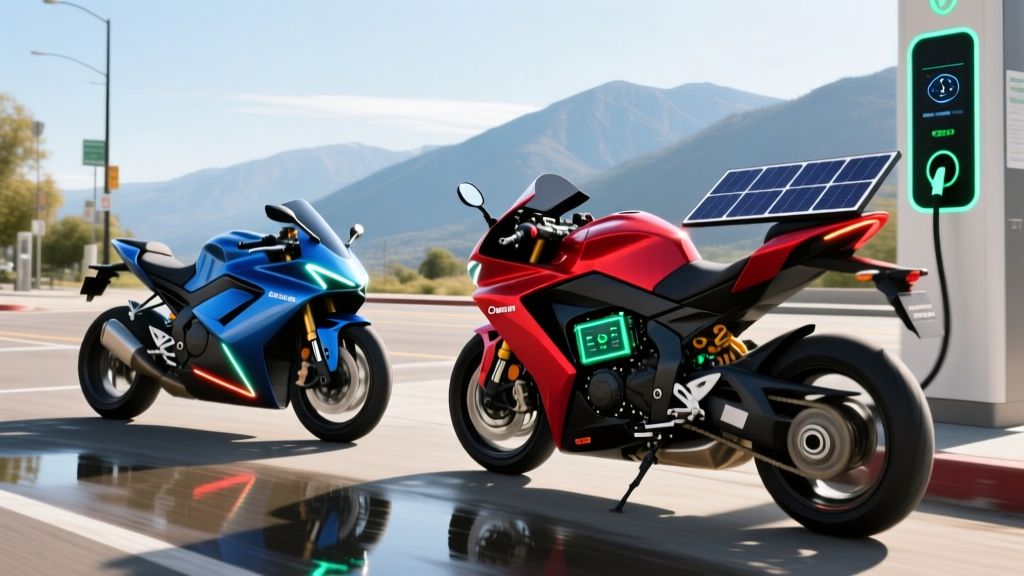
The Can-Am EV is BRP's electric motorcycle lineup, launching for the 2026 model year with two models: the Pulse (a street-standard commuter) and the Origin (a dual-sport adventure bike). Both share an 8.9 kWh (usable) lithium-ion battery, a liquid-cooled Rotax E-POWER motor producing 47 hp and 69 lb-ft of torque, and Level 2 (240V) AC charging. EPA-estimated range is approximately 100 miles city / 70 miles highway for the Pulse and slightly less for the knobby-tired Origin. Pricing starts at an MSRP of $13,999 for the Pulse and $14,499 for the Origin, before destination charges. Federal §30D tax credits do not apply to electric motorcycles — only four-wheeled vehicles qualify — so expect to pay full MSRP minus any state or local incentives.
What the Can-Am EV Actually Is (and Isn't)
If you're searching for "Can-Am EV," you've likely seen the hype and want hard numbers. BRP — the parent company behind Ski-Doo, Sea-Doo, and the original Can-Am three-wheelers — spent roughly seven years and over $1 billion developing its electric motorcycle platform. The result is two purpose-built electric motorcycles, not converted gas bikes with batteries bolted in.
Both the Pulse and Origin ride on the same chassis and powertrain architecture: a Rotax E-POWER motor mounted low in the frame (BRP calls this a "gearbox-integrated" layout), an 8.9 kWh NMC lithium-ion battery pack, and a single-speed reduction gear. There is no clutch, no shifting, and no engine vibration — just twist-and-go electric torque.
What the Can-Am EV is not: a long-range touring motorcycle or a replacement for a 300-mile highway cruiser. With roughly 100 miles of real-world mixed-use range, these bikes are optimized for urban commuting, weekend canyon rides, and light dual-sport exploration where charging access exists at your destination.
Specs at a Glance: Pulse vs. Origin
| Specification | Can-Am Pulse | Can-Am Origin |
|---|---|---|
| Motor | Rotax E-POWER (liquid-cooled) | Rotax E-POWER (liquid-cooled) |
| Horsepower | 47 hp (35 kW) | 47 hp (35 kW) |
| Torque | 69 lb-ft (93 Nm) | 69 lb-ft (93 Nm) |
| Battery (usable) | 8.9 kWh, NMC chemistry | 8.9 kWh, NMC chemistry |
| EPA Range (city/highway est.) | ~100 mi city / ~70 mi hwy | ~90 mi city / ~60 mi hwy |
| 0–60 mph | ~3.8 seconds | ~4.0 seconds |
| Top Speed | ~85 mph | ~80 mph |
| Charging (Level 2, 240V) | ~1.5 hours (0–80%) | ~1.5 hours (0–80%) |
| DC Fast Charging | Not available | Not available |
| Seat Height | 30.7 in | 34.2 in |
| Curb Weight | ~390 lbs | ~410 lbs |
| Riding Modes | Normal / Rain / Sport + Reverse | Normal / Rain / Sport + Reverse |
| Base MSRP | $13,999 | $14,499 |
| Powertrain Warranty | 2 years, unlimited miles | 2 years, unlimited miles |
Range Reality: What You'll Actually Get
The 8.9 kWh usable battery is modest by EV standards — for context, a Tesla Model Y carries roughly 75 kWh — but motorcycles weigh far less and require less energy to move. BRP targets approximately 100 miles of mixed-use range for the Pulse in ideal conditions (city riding, moderate temperatures, flat terrain).
Real-world caveats that matter:
- Highway riding at 70+ mph increases aerodynamic drag dramatically on a motorcycle. Expect highway-only range to drop to 60–70 miles on the Pulse and 50–65 miles on the Origin (knobby tires add rolling resistance).
- Cold weather (below 40°F) reduces lithium-ion battery performance. Expect 15–25% range loss in winter commuting, similar to EV cars. The Can-Am EV does include battery thermal management, which helps mitigate this, but cold chemistry losses are a physical reality.
- Aggressive riding in Sport mode draws more current and reduces range. Rain mode softens throttle response and can extend range modestly.
- Elevation and hills matter more on a small battery. Climbing mountain passes will consume energy faster; regenerative braking on descents recovers some, but not all.
For a commuter with a 20-mile round trip, the Can-Am EV offers comfortable margin. For riders wanting 150+ mile weekend rides, you'll need to plan stops at destinations with 240V outlets — and budget 90 minutes per charge session.
Charging: Level 2 Only, No DC Fast Charging
This is the single biggest ownership consideration for the Can-Am EV: there is no DC fast charging capability. Both models charge exclusively via Level 2 (240V AC) using a standard J1772 connector with a motorcycle-specific inlet. BRP provides a Level 2 charging cord with the bike.
| Charging Method | Power | Time (0–80%) | Miles Added per Hour |
|---|---|---|---|
| Level 1 (120V household) | ~1.2 kW | ~7–8 hours | ~10–12 mi/hr |
| Level 2 (240V, included cord) | ~3.3 kW (estimated) | ~1.5 hours | ~50–65 mi/hr |
| DC Fast Charging | N/A | N/A | N/A — not supported |
For daily commuters who can charge at home overnight on a standard 240V outlet (like a dryer plug or a dedicated NEMA 14-50), the Can-Am EV recharges fully while you sleep. If you rely on public charging, note that most public Level 2 stations deliver 6.6–19.2 kW — the bike's onboard charger will be the bottleneck at roughly 3.3 kW, meaning a full charge still takes about 2.5–3 hours regardless of station capacity.
Practical tip: If you're considering the Origin for adventure riding, scout your route for destination chargers at campgrounds, lodges, or restaurants with 240V access. Apps like PlugShare let you filter for Level 2 stations and check connector types. The lack of DC fast charging means spontaneous long-distance touring requires more planning than a gas motorcycle.
Cost Breakdown: Can-Am EV vs. Gas Motorcycle
The $13,999–$14,499 MSRP places the Can-Am EV in premium commuter territory — comparable to a well-equipped Kawasaki Ninja 650 or Honda CB650R. Here's how ownership costs compare over five years and 15,000 miles (a reasonable estimate for urban motorcycle commuting):
| Cost Category | Can-Am Pulse (EV) | Comparable Gas Bike (650cc) |
|---|---|---|
| Purchase Price (MSRP) | $13,999 | $9,500 |
| Federal Tax Credit (§30D) | $0 (motorcycles excluded) | $0 |
| State Incentives (varies) | $0–$1,500 (check your state) | $0 |
| Fuel / Electricity (15k mi) | ~$180 (at $0.15/kWh, 5 mi/kWh) | ~$1,200 (at $4.00/gal, 50 mpg) |
| Oil Changes (5 years) | $0 | ~$350 |
| Air Filter / Spark Plugs | $0 | ~$200 |
| Chain Maintenance | Chain lube/adjust (similar) | Chain lube/adjust (similar) |
| Brake Pad Replacement | Less wear (regen braking) | ~$300 |
| Insurance (5-year est.) | ~$2,500–$3,500 | ~$2,000–$3,000 |
| Total 5-Year Est. | ~$16,500–$18,000 | ~$13,500–$14,500 |
The Can-Am EV saves roughly $1,000–$1,500 in fuel and maintenance over five years, but the higher upfront MSRP means the total cost of ownership remains higher than a comparable gas motorcycle. The value proposition isn't pure economics — it's the riding experience: instant torque, zero vibration, zero exhaust heat, silent operation, and the ability to "refuel" at home.
Federal Tax Credits and Incentives: The Bad News
Under current IRS §30D Clean Vehicle Credit rules, the federal $7,500 EV tax credit applies only to four-wheeled vehicles with four wheels and a gross vehicle weight rating under 14,000 lbs. Electric motorcycles — including the Can-Am Pulse and Origin — do not qualify.
However, some states and local utilities offer incentives:
- California: The California Air Resources Board (CARB) has historically offered rebates for zero-emission motorcycles (check current availability at arb.ca.gov).
- Colorado: State EV tax credit may cover electric motorcycles — consult a tax professional for current-year eligibility.
- Utility rebates: Some municipal utilities offer $200–$500 rebates for electric motorcycle purchases or Level 2 charger installations.
Always verify current incentive availability with official state and utility sources before counting them into your budget.
Common Misconceptions About the Can-Am EV
| Myth | Fact |
|---|---|
| "It qualifies for the $7,500 federal tax credit." | No. §30D applies to four-wheeled vehicles only. Motorcycles are excluded under current IRS rules. |
| "It has DC fast charging for road trips." | No DC fast charging. Level 2 (240V) AC only, with a ~1.5-hour charge time to 80%. |
| "100-mile range means 100 miles highway." | EPA city range is ~100 mi; sustained 70 mph highway riding reduces range to ~60–70 miles due to aerodynamic drag. |
| "It's a BRP three-wheeler like the Spyder." | The Pulse and Origin are two-wheeled motorcycles, not three-wheeled roadsters. |
| "Electric motorcycles have no power." | 47 hp and 69 lb-ft of instant torque delivers a 3.8-second 0–60 mph time — quicker than most 650cc gas bikes. |
| "The battery will need replacing in a few years." | NMC batteries in thermally-managed systems typically retain 80%+ capacity after 500+ full charge cycles. BRP includes a 2-year powertrain warranty; long-term degradation data will emerge as bikes accumulate miles. |
Who Should Buy the Can-Am EV (and Who Shouldn't)
Buy the Can-Am Pulse if:
- Your daily commute is under 50 miles round-trip and you have home 240V charging.
- You want a quiet, vibration-free urban commuter with instant torque and zero emissions at the tailpipe.
- You value low running costs (pennies per mile for electricity) and minimal maintenance (no oil, filters, or spark plugs).
- You're drawn to new technology and the novelty of an electric motorcycle from an established powersports brand.
Buy the Can-Am Origin if:
- You want dual-sport capability (fire roads, gravel, light trails) with electric silence — a huge advantage on noise-sensitive public lands.
- Your adventure rides are within 50–60 miles of a charging source (home base, campground with 240V, or a destination charger).
- You prioritize low-speed torque and tractability over top-speed highway cruising.
Look elsewhere if:
- You need 200+ mile range for highway touring or long-distance commuting without multi-hour charge stops.
- You don't have access to 240V charging at home or work.
- You're on a tight budget and need the lowest possible purchase price — gas 300–650cc bikes start thousands less.
- You live in an area with extreme cold (below 0°F regularly) and need maximum range reliability year-round.
First-Time EV Motorcycle Buyer Checklist
If the Can-Am EV would be your first electric vehicle of any kind, here's what to nail down before you sign:
- Confirm your home charging setup. Do you have a 240V outlet (NEMA 14-50 or 6-20) within cord reach of where you'll park? If not, budget $500–$1,500 for a licensed electrician to install one. A panel upgrade may be needed in older homes — get a quote first.
- Map your typical rides. Use Google Maps to measure your commute and frequent routes. If most rides are under 40 miles one-way, the Can-Am EV works. If you regularly ride 80+ miles, you'll need mid-ride charging plans.
- Check your state's motorcycle licensing requirements. The Can-Am EV is a full motorcycle requiring a standard motorcycle endorsement (M-class license in most states). It is not a scooter or moped.
- Get insurance quotes before buying. Electric motorcycles can carry higher insurance premiums due to repair costs and limited actuarial data. Shop quotes from at least three insurers.
- Test ride one. Electric motorcycle throttle response is fundamentally different from gas — instant torque, no engine braking sound cues, and regenerative braking that slows the bike when you roll off the throttle. A test ride is essential to calibrate your muscle memory.
Frequently Asked Questions
Does the Can-Am EV qualify for any federal tax credit?
No. The IRS §30D Clean Vehicle Credit applies to four-wheeled vehicles only. Electric motorcycles, including the Can-Am Pulse and Origin, are not eligible for the federal $7,500 credit. Some state and utility incentives may apply — check your local programs.
How long does it take to charge the Can-Am EV?
On Level 2 (240V) power, the Can-Am EV charges from 0–80% in approximately 1.5 hours and reaches a full charge in roughly 2–2.5 hours. On a standard 120V household outlet (Level 1), a full charge takes 7–8 hours — viable for overnight top-ups if you have a ground-level outlet near your parking spot.
Can I take the Can-Am Origin on long adventure rides?
You can, but you'll need to plan carefully. With approximately 60–90 miles of real-world range (depending on terrain and speed) and no DC fast charging, multi-hour charge stops at 240V outlets are mandatory for rides exceeding ~60 miles one-way. This makes the Origin excellent for day rides from a base camp with charging access, but impractical for multi-day remote touring where electrical infrastructure is sparse.
How does the Can-Am EV compare to the Zero SR/S or LiveWire One?
The Zero SR/S offers a larger battery (~15.6 kWh nominal) and roughly 150+ miles of city range, plus optional DC fast charging — but starts above $20,000. The LiveWire One (from Harley-Davidson) offers ~146 miles city range and DC fast charging capability at a similar premium price. The Can-Am EV trades range and charging speed for a lower entry price, lighter weight, and the backing of a major powersports OEM. Your choice depends on whether range or affordability is your priority.
What is the battery warranty on the Can-Am EV?
BRP provides a 2-year, unlimited-mile powertrain warranty that covers the motor and battery. This is shorter than the 8-year/100,000-mile battery warranties typical in electric cars, reflecting the different usage patterns and regulatory requirements for motorcycles. Long-term battery degradation data will emerge as early adopters accumulate miles — BRP's liquid-cooled thermal management system should help preserve capacity over time.
Is the Can-Am EV suitable for beginner riders?
The 47 hp output and 390-lb curb weight are manageable for newer riders, and the riding modes (Rain mode softens throttle response) help. However, the instant torque delivery of an electric motor can surprise riders accustomed to the progressive power build of a gas engine. A Motorcycle Safety Foundation (MSF) course is strongly recommended for any new rider, regardless of powertrain type.