Tesla has increasingly moved toward a software-defined revenue model, locking several premium capabilities behind paid tiers. For 2026 Model 3 and Model Y buyers, understanding the feature paywall isn't optional — it's essential to calculating the true cost of ownership. The base sticker price is only the starting point; Full Self-Driving (Supervised), acceleration boosts, rear-seat heating, and even connectivity packages now live behind subscription gates or one-time unlocks.
This review dissects what you actually get at each price tier for the 2026 Tesla Model 3 and Model Y, what's worth paying for, and what's arguably not — while delivering the hard range, charging, and efficiency numbers you need to make an informed purchase.
2026 Tesla Model 3: Range, Battery, and Real-World Efficiency
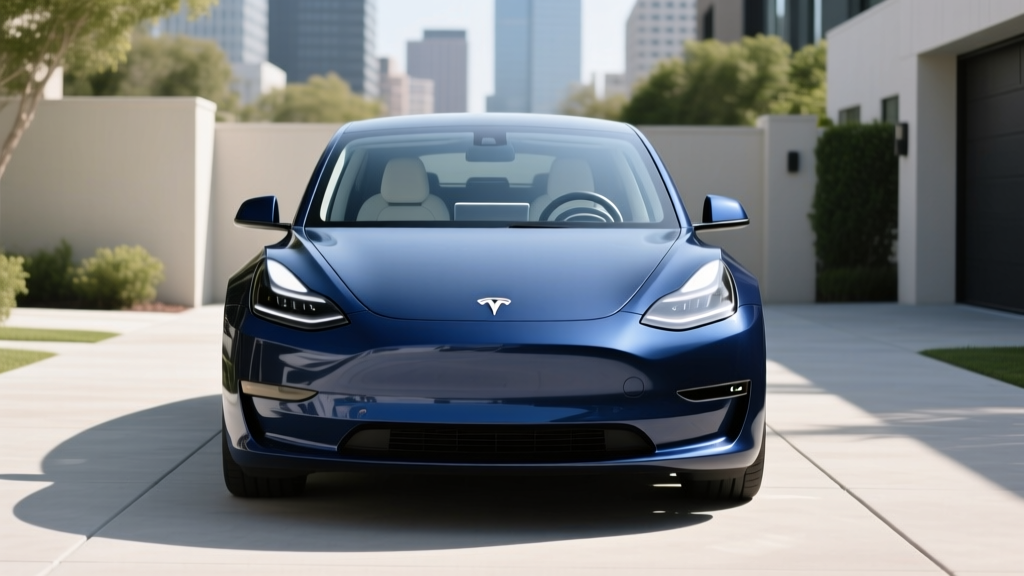
The refreshed Model 3 (codenamed "Highland") entered production in late 2023 and carries into 2026 with minor software and packaging updates. Three trims are available, each with distinct battery chemistry and range profiles.
| Spec | Model 3 RWD | Model 3 Long Range AWD | Model 3 Performance |
|---|---|---|---|
| EPA Range | 272 mi | 341 mi | 315 mi |
| Battery (usable) | ~60 kWh (LFP) | ~79 kWh (NMC) | ~79 kWh (NMC) |
| 0-60 mph | 5.8 sec | 4.2 sec | 2.9 sec |
| Horsepower | 271 hp | 346 hp | 510 hp |
| Drivetrain | RWD | Dual-motor AWD | Dual-motor AWD |
| MPGe (combined) | 132 MPGe | 131 MPGe | 121 MPGe |
| Efficiency | 25 kWh/100mi | 26 kWh/100mi | 28 kWh/100mi |
| Base MSRP | $38,990 | $44,990 | $50,990 |
2026 Tesla Model Y: The Volume Seller Under the Paywall Lens
The Model Y remains Tesla's global best-seller and the most-purchased EV in the United States. A mid-cycle refresh ("Juniper") brought styling and suspension updates that carry through 2026. The paywall conversation is especially relevant here because Model Y buyers often load up on options for family use.
| Spec | Model Y RWD | Model Y Long Range AWD | Model Y Performance |
|---|---|---|---|
| EPA Range | 260 mi | 308 mi | 277 mi |
| Battery (usable) | ~60 kWh (LFP) | ~79 kWh (NMC) | ~79 kWh (NMC) |
| 0-60 mph | 6.6 sec | 4.8 sec | 3.5 sec |
| Horsepower | 271 hp | 384 hp | 510 hp |
| Drivetrain | RWD | Dual-motor AWD | Dual-motor AWD |
| MPGe (combined) | 128 MPGe | 122 MPGe | 115 MPGe |
| Cargo (rear seats up) | 30 cu ft | 30 cu ft | 30 cu ft |
| Cargo (rear seats down) | 72 cu ft | 72 cu ft | 72 cu ft |
| Base MSRP | $44,990 | $49,990 | $53,990 |
For family buyers, the Model Y Long Range AWD hits the sweet spot: 308 miles EPA, dual-motor traction for snow-belt states, and enough cargo volume to swallow a double stroller plus groceries. Source: fueleconomy.gov.
Charging Speed: DC Fast Charge and Home Level 2 Rates
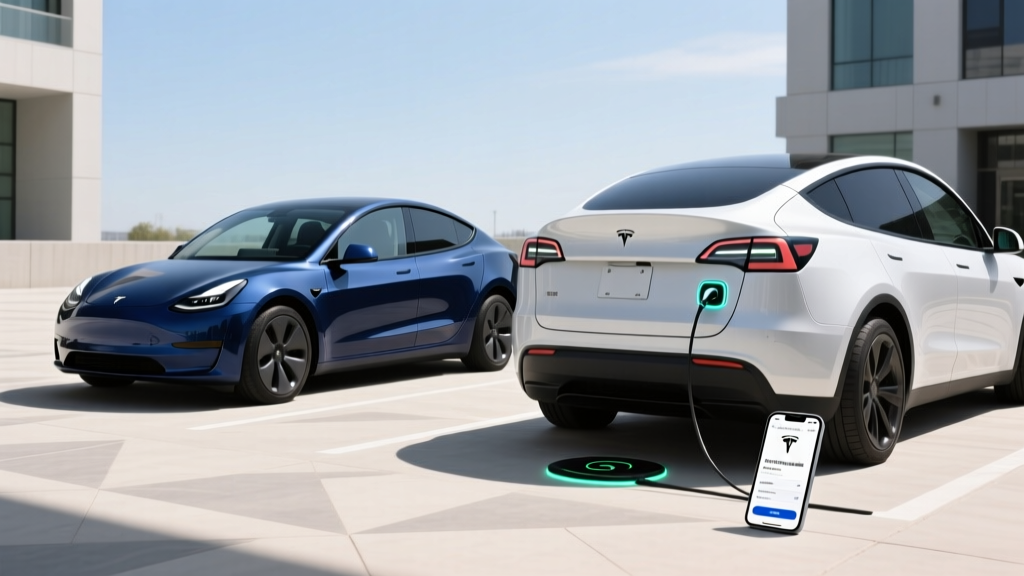
Charging speed is where the Tesla ecosystem earns its reputation — and where the paywall stays relatively open. Tesla does not currently lock faster charging behind a software paywall; peak charge rates are a function of battery hardware and chemistry, not subscription status.
| Charging Level | Model 3 LR / Performance | Model 3 RWD (LFP) | Model Y LR / Perf |
|---|---|---|---|
| DC Fast Charge (peak) | 250 kW | 170 kW | 250 kW |
| 10-80% DCFC Time | ~25 min | ~30 min | ~27 min |
| Level 2 (240V, 48A) | 11.5 kW (~44 mi/hr) | 11.5 kW (~44 mi/hr) | 11.5 kW (~44 mi/hr) |
| Level 1 (120V) | ~1.3 kW (~5 mi/hr) | ~1.3 kW (~5 mi/hr) | ~1.3 kW (~5 mi/hr) |
| Connector | NACS (native) | NACS (native) | NACS (native) |
Charging curve reality: The 250 kW peak on NMC models is not sustained. Expect ~250 kW from roughly 10-30% State of Charge (SoC), tapering to ~150 kW by 50%, and ~60 kW above 80%. This is why Tesla quotes 10-80% times rather than 0-100% — charging above 80% adds significant time. Preconditioning the battery (navigating to a Supercharger in the Tesla nav) is essential for hitting peak rates in cold weather.
The LFP RWD models charge slower on DCFC but have a hidden advantage: Tesla recommends charging LFP batteries to 100% regularly, which means your usable daily range from a 60 kWh LFP pack is closer to the full EPA number. With NMC, Tesla recommends an 80% daily limit to preserve longevity, effectively making your daily usable range ~273 miles on the LR Model 3.
The Feature Paywall: What Tesla Locks Behind Subscriptions and One-Time Purchases
Here's where the rubber meets the revenue stream. Tesla's 2026 feature paywall breaks into three categories: recurring subscriptions, one-time software purchases, and hardware-gated unlocks.
Full Self-Driving (Supervised) — The Big Ticket
FSD (Supervised) remains a SAE Level 2 driver-assistance system, not autonomous driving. The driver must remain attentive with hands on the wheel. FSD adds automated lane changes, traffic light/stop sign recognition, and city street navigation on top of standard Autopilot (which includes Traffic-Aware Cruise Control and Autosteer on highways).
Pricing as of 2026:
- FSD Monthly Subscription: $99/month (reduced from the original $199)
- FSD One-Time Purchase: $8,000
- Basic Autopilot: Included free with all vehicles
- Enhanced Autopilot: $6,000 one-time (adds Navigate on Autopilot, Auto Lane Change, Autopark, Summon)
Is FSD worth it? For most buyers, the $99/month subscription is the rational choice. You can activate it for a road trip and cancel when you're back to commuting. The $8,000 lump sum only makes financial sense if you plan to use it daily for 7+ years — and there's no guarantee Tesla won't alter the pricing model or capabilities. FSD remains a beta product with ongoing regulatory scrutiny from NHTSA.
Other Paywalled Features
- Acceleration Boost: $2,000 one-time (Model 3/Y Long Range — drops 0-60 by ~0.5 sec)
- Premium Connectivity: $9.99/month or $99/year (satellite maps, live traffic, Sentry Mode clips over cellular, media streaming over LTE)
- Rear Heated Seats: Was briefly a $300 unlock; now included on 2026 models
- Sentry Mode: Free to use, but requires Premium Connectivity for remote clip viewing
The trend is clear: Tesla is testing how much software value it can extract post-sale. Buyers should budget for at least Premium Connectivity ($99/yr) and evaluate FSD on a month-to-month basis rather than committing $8,000 upfront.
Pricing, Tax Credits, and True Cost of Ownership
Federal EV tax credit eligibility under IRS §30D is subject to MSRP caps, buyer income limits, and battery component/critical mineral sourcing requirements. Here's the current landscape for 2026:
| Model | Base MSRP | §30D Credit Eligibility | Est. After-Credit Price |
|---|---|---|---|
| Model 3 RWD | $38,990 | Eligible (up to $7,500) | ~$31,490 |
| Model 3 Long Range AWD | $44,990 | Eligible (up to $7,500) | ~$37,490 |
| Model 3 Performance | $50,990 | Eligible (under $55k sedan cap) | ~$43,490 |
| Model Y RWD | $44,990 | Eligible (up to $7,500) | ~$37,490 |
| Model Y Long Range AWD | $49,990 | Eligible (under $80k SUV cap) | ~$42,490 |
| Model Y Performance | $53,990 | Eligible (under $80k SUV cap) | ~$46,490 |
- MSRP Cap: Sedans ≤ $55,000; SUVs/trucks/vans ≤ $80,000 (Model Y classified as SUV)
- Income Cap: AGI ≤ $150,000 (single), $225,000 (head of household), $300,000 (joint)
- Battery Sourcing: Critical minerals and battery components must meet escalating domestic/free-trade partner thresholds
- Point-of-Sale Transfer: Credit can be applied at purchase, reducing out-of-pocket cost immediately
- Verification: Confirm eligibility at irs.gov — rules change frequently
5-Year Cost Snapshot (Model 3 Long Range AWD, 15,000 mi/yr):
- Purchase (after credit): ~$37,490
- Electricity (national avg $0.16/kWh, 26 kWh/100mi): ~$1,950/yr → $9,750 over 5 years
- Insurance (national EV avg): ~$2,200/yr → $11,000 over 5 years
- Maintenance (no oil changes, minimal brake wear): ~$400/yr → $2,000 over 5 years
- Premium Connectivity: $495 over 5 years
- Estimated 5-year total: ~$60,735 (before depreciation)
Interior, Tech, and Daily Usability
The Model 3 Highland refresh brought meaningful interior upgrades: ventilated front seats, ambient lighting, rear touchscreen for passengers, improved sound insulation, and a refined suspension that finally addresses the harsh ride complaint of pre-2024 models.
Model 3 interior dimensions:
- Front legroom: 42.7 in
- Rear legroom: 35.2 in
- Cargo (trunk + frunk): 23 cu ft total
Model Y interior dimensions:
- Front legroom: 41.8 in
- Rear legroom: 40.5 in
- Cargo (rear seats up): 30 cu ft
- Cargo (rear seats folded): 72 cu ft
- Optional 7th row (rare, tight): available on select trims
Standout tech:
- 15.4" center touchscreen (all functions routed through it — no physical stalks on refresh)
- Tesla Vision (camera-only, no radar or ultrasonic sensors)
- Over-the-air updates that add features post-purchase
- Sentry Mode dashcam recording (360°)
- Dog Mode, Camp Mode, Theater Mode
Notable drawbacks:
- Turn signals on steering wheel (controversial; replaces stalk)
- No Apple CarPlay or Android Auto
- Phantom braking incidents still reported with Autopilot
- Panel gap quality improved but still inconsistent vs. legacy OEMs
- No spare tire (tire repair kit only)
Pros, Cons, and the Verdict
- Class-leading Supercharger network access (17,000+ North American stalls)
- Excellent energy efficiency (25-28 kWh/100mi)
- Strong §30D tax credit eligibility across trims
- LFP option for worry-free daily 100% charging
- OTA updates continuously improve the vehicle
- 250 kW DCFC on NMC trims is among the fastest available
- Best-in-class cargo space for the Model Y segment
- FSD paywall ($8,000 or $99/mo) for features competitors include or price lower
- Turn-signal buttons on wheel take adaptation
- No CarPlay/Android Auto — a dealbreaker for some
- Insurance premiums run 15-25% higher than ICE equivalents
- Tesla Vision (no ultrasonics) means parking assist is less reliable
- Service center wait times remain long in many metro areas
- Premium Connectivity paywall for features that should be standard at this price
Who Should Buy the Model 3 or Model Y in 2026?
Choose the Model 3 RWD if: You commute under 40 miles round-trip, can charge at home, and want the lowest entry price after tax credits (~$31,490). The LFP battery rewards daily 100% charging and won't degrade as noticeably as NMC at high SoC.
Choose the Model 3 Long Range AWD if: You take regular road trips (300+ miles), live in a cold-weather state, or need AWD traction. The 341-mile EPA range provides real buffer.
Choose the Model Y Long Range AWD if: You need family cargo space, prefer a crossover seating position, and want the best balance of range (308 mi) and utility. This is the default EV for households with children.
Choose the Model Y Performance if: Acceleration thrills matter and you're willing to sacrifice 30 miles of range for a 3.5-second 0-60.
Look elsewhere if: You refuse to abandon CarPlay, need a physical dealership for service, or want a vehicle that doesn't rely on a touchscreen for mirror adjustment and glovebox access.
Competitor Check: Model 3/Y vs. the Field
The Model 3's closest rivals — the Hyundai Ioniq 6 (361 mi EPA, $39,000), BMW i4 eDrive40 (301 mi, $52,200), and Polestar 2 (276 mi, $49,900) — each offer something Tesla doesn't: CarPlay, physical controls, or dealer service networks. The Ioniq 6 undercuts on price and beats on range, but lacks Supercharger access.
The Model Y faces the Ford Mustang Mach-E (312 mi, $42,995), Hyundai Ioniq 5 (303 mi, $41,800), and Kia EV6 (310 mi, $42,900). The Ioniq 5 charges faster (800V architecture, 10-80% in ~18 min) but has less cargo room and no NACS connector without an adapter.
Tesla's moat remains the Supercharger network, energy efficiency, and software ecosystem. Whether that justifies the paywall model depends on your tolerance for subscription-based car ownership.
Warranty Coverage
| Coverage | Model 3 RWD | Model 3 LR/Perf & Model Y |
|---|---|---|
| Basic Vehicle | 4 yr / 50,000 mi | 4 yr / 50,000 mi |
| Battery & Drive Unit | 8 yr / 100,000 mi | 8 yr / 120,000 mi |
| Battery Capacity Retention | ≥70% | ≥70% |
Tesla's battery warranty guarantees at least 70% capacity retention over the warranty period. In practice, NMC Tesla packs have shown ~10-12% degradation at 100,000 miles based on fleet data, while LFP packs degrade more slowly but start from a smaller total capacity. Battery replacement out of warranty remains costly — estimated $12,000-$16,000 for a Model 3/Y pack.
Frequently Asked Questions
What is the real-world range of the 2026 Tesla Model 3 and Model Y?
The Model 3 Long Range AWD delivers ~280-300 miles on highway trips at 75 mph and drops to 220-240 miles in sub-freezing winter conditions. The Model Y Long Range AWD returns ~260-280 miles highway. City driving with regenerative braking can actually exceed EPA estimates in mild weather.
How fast does the Model 3/Y charge at home and on DC fast chargers?
On a home Level 2 charger (240V/48A), both vehicles add ~44 miles of range per hour at 11.5 kW. On a Tesla Supercharger V3/V4, the NMC models peak at 250 kW and charge 10-80% in ~25-27 minutes. The LFP RWD models peak at 170 kW and take ~30 minutes for the same 10-80% session.
How much does a Model 3 or Model Y cost after the federal tax credit?
After the maximum $7,500 §30D credit (assuming you meet income and sourcing requirements), the Model 3 RWD starts at approximately $31,490, the Model 3 LR AWD at ~$37,490, the Model Y RWD at ~$37,490, and the Model Y LR AWD at ~$42,490. Point-of-sale transfer lets you apply this at purchase.
Does the Tesla Model 3 and Model Y qualify for the federal EV tax credit?
Yes, all 2026 Model 3 and Model Y trims fall under their respective MSRP caps ($55,000 for sedans, $80,000 for SUVs). However, buyer income caps ($150k single / $300k joint) and battery sourcing requirements apply. Verify current eligibility at irs.gov before purchasing.
Is the Tesla feature paywall worth it — should I subscribe to FSD?
For most drivers, the $99/month FSD subscription is the smarter play over the $8,000 lump sum. Activate it for road trips or complex commutes, cancel when you don't need it. Basic Autopilot (included free) handles highway driving competently for daily commuters. Premium Connectivity at $99/year is a near-must for navigation maps and Sentry Mode remote access.
Is the Model 3 or Model Y worth buying vs. competitors in 2026?
If Supercharger access, energy efficiency, and software updates are your top priorities, yes. If you prefer CarPlay, physical controls, or a traditional dealer service experience, the Hyundai Ioniq 5/6 or Ford Mach-E are compelling alternatives with comparable range and faster peak charging (in the Hyundai/Kia case). The Tesla paywall model is a trade-off: you get continuous OTA improvements but pay ongoing subscription fees for features some competitors bundle.