Why the Used Tesla Model 3 Still Dominates the Pre-Owned EV Market
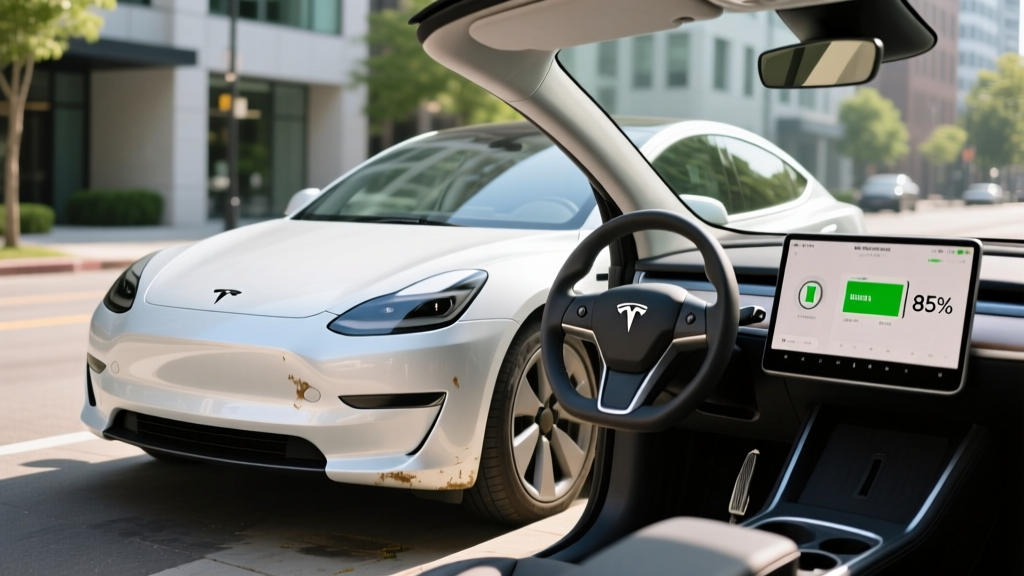
If you have been browsing EV listings, the Model 3 used market is likely where your search started — and for good reason. With over two million units produced globally since 2017, the Model 3 is the most widely adopted electric sedan in history. That volume means competitive pricing, abundant service data, and a mature Supercharger network built around it. But not every used Model 3 is created equal. Battery chemistry, drivetrain, and software generation vary significantly across model years, and a 2019 Standard Range Plus is a fundamentally different ownership proposition than a 2024 Highland Long Range.
This guide dissects what matters when buying a pre-owned Model 3: real-world range you can actually count on, charging infrastructure compatibility, battery degradation realities, and whether the federal tax credit applies to your specific purchase.
Generations and Trims: Know What You Are Looking At
The used Model 3 market spans three distinct hardware generations. Understanding which one you are buying prevents costly surprises.
| Generation | Model Years | Key Hardware | Battery Options |
|---|---|---|---|
| Pre-refresh (original) | 2018–2020 | HW3.0 computer, ultrasonic sensors, chrome trim | 50 kWh (SR+), 75 kWh (LR/Perf) |
| Mid-cycle (HW3 refresh) | 2021–2023 | Black chrome delete, heat pump (2021+), matrix LED (2022+) | 55 kWh LFP (RWD), 75 kWh NMC (LR/Perf) |
| Highland (full refresh) | 2024–present | Redesigned body, ventilated seats, rear screen, ambient lighting, HW4.0 | 57 kWh LFP (RWD), 79 kWh NMC (LR) |
The most consequential split is battery chemistry. Starting in late 2021, Tesla introduced lithium iron phosphate (LFP) cells for the base rear-wheel-drive trim, while Long Range and Performance variants retained nickel manganese cobalt (NMC) packs. This matters enormously for used buyers: LFP batteries tolerate daily 100% charging and show slower calendar degradation, while NMC packs prefer an 80–90% daily ceiling but offer higher energy density and better cold-weather performance.
Real-World Range: What the EPA Sticker Does Not Tell You
EPA estimates provide a standardized baseline, but your actual mileage depends heavily on driving style, climate, and terrain. Here is what to expect from the most common used Model 3 configurations.
| Trim / Year | EPA Range | Real-World Highway (70 mph) | Cold Weather (20°F) |
|---|---|---|---|
| 2023 RWD (LFP, 55 kWh) | 272 mi | ~225–240 mi | ~190–210 mi |
| 2023 Long Range AWD (75 kWh) | 333 mi | ~275–295 mi | ~230–255 mi |
| 2024 Highland RWD (LFP, 57 kWh) | 272 mi | ~230–245 mi | ~195–215 mi |
| 2024 Highland LR AWD (79 kWh) | 341 mi | ~285–305 mi | ~240–265 mi |
Note: Highway efficiency drops at sustained speeds above 70 mph due to aerodynamic drag. Cold-weather figures assume no preconditioning and cabin heating active. Heat pump-equipped models (2021+) lose ~15–20% range in cold; pre-2021 resistive-heat models lose 25–35%.
The Highland refresh improved the drag coefficient to 0.219 Cd, which translates to roughly 3–5% better highway efficiency over the pre-refresh body. If your commute is mostly stop-and-go city driving, expect results closer to — or even slightly above — the EPA sticker thanks to aggressive regenerative braking recapturing energy.
Charging Speed: DC Fast Charge and Home Level 2
Charging speed is the single most common regret among used EV buyers who did not research it beforehand. The Model 3's DC fast-charge capability varies by battery pack and model year.
| Configuration | Peak DC Rate | 10–80% Time | Level 2 (240V / 48A) |
|---|---|---|---|
| RWD (LFP, 55–57 kWh) | 170 kW | ~25 min | ~30 mi/hr (11.5 kW) |
| Long Range / Perf (NMC, 75–79 kWh) | 250 kW | ~18–22 min | ~44 mi/hr (11.5 kW) |
Critical nuance on charge curves: The 250 kW peak on Long Range models is sustained only between roughly 10–30% State of Charge (SoC). Above 50%, the rate tapers significantly — expect ~100 kW at 60% and ~45 kW at 80%. This is normal lithium-ion behavior, not a defect. The LFP pack in the RWD has a flatter charge curve but a lower peak, meaning its 10–80% time is only marginally longer despite the lower kW figure.
For home charging, every Model 3 supports up to 11.5 kW on a Level 2 Wall Connector (48 amps on a 60-amp circuit). This adds roughly 30–44 miles of range per hour, meaning a full overnight charge from 20% to 80% takes about 6–8 hours depending on pack size. Installation costs for a home Level 2 setup typically run $800–$2,000 including a Tesla Wall Connector and electrician labor, though older homes may require a panel upgrade ($1,500–$3,000 additional).
Battery Health, Degradation, and What to Inspect
Battery longevity is the top concern for any used EV buyer, and the Model 3 has accumulated enough fleet data to provide reliable projections.
NMC packs (Long Range / Performance): Tesla's 2023 Impact Report showed an average degradation of ~12% at 150,000 miles for Model 3/Y NMC packs. In practice, most 2018–2020 Long Range examples with 50,000–80,000 miles retain 88–93% of original capacity. The degradation curve is steepest in the first 20,000 miles (~3–5% loss), then flattens considerably.
LFP packs (RWD, 2021+): LFP chemistry shows slower degradation — typically 5–8% at 100,000 miles — and tolerates regular 100% charging without accelerated wear. Tesla recommends charging LFP vehicles to 100% at least weekly for accurate SoC calibration. If you are buying a used LFP Model 3, ask the owner whether they followed this practice; an LFP pack routinely kept at 60% may show inaccurate range estimates until recalibrated.
The battery and drive unit warranty covers 8 years or 100,000 miles (RWD) or 8 years or 120,000 miles (Long Range / Performance), whichever comes first, with a minimum 70% capacity retention threshold. This warranty transfers to subsequent owners automatically — no paperwork required. A 2019 Long Range with 75,000 miles still has battery coverage through 2027 or 120,000 miles.
Performance, Efficiency, and Daily Drivability
| Trim | 0–60 mph | Horsepower | Drivetrain | MPGe (combined) | kWh/100 mi |
|---|---|---|---|---|---|
| RWD (LFP) | 5.8 sec | 283 hp | Rear-wheel drive | 132 MPGe | 25 kWh |
| Long Range AWD | 4.2 sec | 346 hp | Dual-motor AWD | 131 MPGe | 26 kWh |
| Performance / LR Perf | 3.1 sec | 450 hp | Dual-motor AWD | 113 MPGe | 30 kWh |
Efficiency figures sourced from fueleconomy.gov reflect combined city/highway driving. The Model 3 remains one of the most efficient EVs sold in the US, thanks in part to its low drag coefficient and Tesla's heat pump (standard from 2021 onward), which dramatically reduces cabin-heating energy draw in cold weather.
Cargo and interior space: The Model 3 offers 23 cu ft of total cargo volume (15 cu ft trunk + 8 cu ft frunk on pre-Highland; the Highland eliminates the frunk partition but maintains similar total volume). Rear legroom is 35.2 inches — adequate for adults under 6 feet but tighter than a Hyundai Ioniq 6 (37.0 in) or BMW i4 (35.8 in). The panoramic glass roof creates an airy cabin but contributes to cabin heat in summer; ceramic tint is a common aftermarket upgrade among used owners.
Pricing, Tax Credits, and Total Cost of Ownership
Used Model 3 pricing has stabilized after significant depreciation in 2023–2024. As of early 2026, typical market values are:
| Configuration | Mileage Range | Typical Price |
|---|---|---|
| 2018–2020 Long Range AWD | 50k–80k mi | $19,000–$25,000 |
| 2021–2023 RWD (LFP) | 20k–50k mi | $22,000–$28,000 |
| 2021–2023 Long Range AWD | 20k–50k mi | $27,000–$34,000 |
| 2024 Highland RWD | 5k–20k mi | $30,000–$35,000 |
| 2024 Highland LR AWD | 5k–20k mi | $35,000–$42,000 |
Does a Used Model 3 Qualify for the Federal Tax Credit?
Yes — potentially. Under IRS §25E, the Previously Owned Clean Vehicle Credit provides up to $4,000 or 30% of the sale price (whichever is lower) for qualifying used EVs. Key requirements:
- Sale price cap: The vehicle must sell for $25,000 or less to qualify.
- Buyer income limits: Adjusted gross income must not exceed $75,000 (single), $112,500 (head of household), or $150,000 (joint).
- Vehicle age: The model year must be at least two years older than the calendar year of purchase (e.g., a 2024 model qualifies in 2026).
- Dealer requirement: The sale must be through a licensed dealer who reports the transaction to the IRS; private-party sales do not qualify.
- First-time transfer: The credit applies only to the first qualified resale since August 16, 2022.
This means a 2021 Model 3 RWD (LFP) purchased from a dealer for $24,500 in 2026 could net a $4,000 credit for an eligible buyer — effectively bringing the net cost to $20,500. A Long Range at $28,000 exceeds the price cap and does not qualify. Always verify eligibility with a tax professional before relying on the credit.
Standout Tech, Drawbacks, and Competitor Comparison
- Access to the Tesla Supercharger network — still the most reliable DC fast-charging infrastructure in North America, with over 6,000 US stalls as of 2025
- Over-the-air updates continue to add features to older hardware (e.g., improved Autopilot visualization, new app features)
- Industry-leading efficiency (kWh/100 mi) reduces charging costs
- Strong safety ratings: 5-star NHTSA overall, IIHS Top Safety Pick+ (2022–2024 models with acceptable headlight rating)
- Minimal maintenance: no oil changes, rare brake pad replacement (regen handles most deceleration)
- Pre-Highland ride quality is firm; road noise is noticeable at highway speeds
- No Apple CarPlay or Android Auto — all navigation and media run through Tesla's proprietary interface
- Rear visibility is limited; reliance on cameras for parking can frustrate some drivers
- Insurance costs run 15–30% higher than comparable gas sedans (nationwide average ~$2,200–$2,800/yr depending on trim and driver profile)
- Autopilot is SAE Level 2 driver assistance, not self-driving — hands-on-wheel supervision is mandatory at all times
How Does It Compare to Key Competitors?
In the used EV sedan market, the Model 3's primary alternatives are the Hyundai Ioniq 6, BMW i4, and Polestar 2. The Ioniq 6 offers more rear-seat room and 800V architecture for faster DC charging, but lacks Supercharger access (though NACS adapters are becoming available). The BMW i4 delivers superior ride refinement and Apple CarPlay but costs 20–30% more on the used market. The Polestar 2 provides distinctive Scandinavian design and Google Built-in, but its smaller dealer network and slower charging make it less practical for road trips.
The Model 3's decisive advantages remain the Supercharger network, efficiency, and software ecosystem. Its disadvantages are ride comfort (pre-Highland) and the walled-garden infotainment approach.
Who Should Buy a Used Model 3 — and Who Should Look Elsewhere
- You need a daily commuter with 250+ real-world miles of range and access to the best fast-charging network in the country
- You can charge at home (Level 2) and want minimal operating costs (~$0.04–$0.06 per mile on residential electricity)
- You value over-the-air updates and a tech-forward interface
- You want a used EV that qualifies for the $4,000 federal credit under the $25,000 price cap
- You regularly carry rear-seat passengers over 6 feet tall (consider the Ioniq 6 or an SUV like the Model Y)
- You require Apple CarPlay/Android Auto integration
- You need towing capability (the Model 3 is not rated for towing in the US market)
- You live in an area with limited Supercharger coverage and no home charging option
Frequently Asked Questions
What is the real-world range of a used Model 3?
For the most common used configurations, expect 225–245 miles on the highway for the RWD (LFP) and 275–305 miles for the Long Range AWD at 70 mph in moderate temperatures. Cold weather (below 32°F) reduces these figures by 15–30% depending on whether the car has a heat pump (2021+ models).
How fast does a used Model 3 charge?
Long Range models peak at 250 kW on a V3 Supercharger, reaching 10–80% in approximately 18–22 minutes. The RWD (LFP) peaks at 170 kW with a 10–80% time of about 25 minutes. At home on a 48-amp Level 2 charger, expect 30–44 miles of range added per hour.
Does a used Model 3 qualify for the federal EV tax credit?
Under IRS §25E, a used Model 3 can qualify for up to $4,000 if the sale price is $25,000 or less, the buyer meets income limits ($75k single / $150k joint), and the purchase is through a licensed dealer. The vehicle's model year must be at least two years prior to the purchase year. Consult a tax professional to confirm eligibility.
Is a used Model 3 worth buying versus competitors?
The Model 3 offers the best combination of range, efficiency, charging network access, and software support in the used EV sedan segment. Competitors like the Hyundai Ioniq 6 offer more interior space and faster charging architecture, while the BMW i4 provides superior refinement — but neither matches the Model 3's total ownership ecosystem at comparable pricing.
What are the biggest pros and cons?
Top pros: Supercharger network, class-leading efficiency, OTA updates, strong safety ratings, low maintenance costs. Top cons: firm ride (pre-2024), no CarPlay/Android Auto, higher insurance premiums, limited rear-seat legroom, and Autopilot requires constant driver supervision (SAE Level 2, not self-driving).
How long will a used Model 3 battery last?
Data from Tesla's fleet indicates NMC packs (Long Range) degrade approximately 12% at 150,000 miles, while LFP packs (RWD) degrade 5–8% at 100,000 miles. The battery warranty covers 8 years / 100,000–120,000 miles with a 70% minimum retention threshold, and it transfers to subsequent owners. Most Model 3 batteries are projected to retain 80%+ capacity at 200,000 miles under normal use.