The Tuning Case for the Tesla Model 3
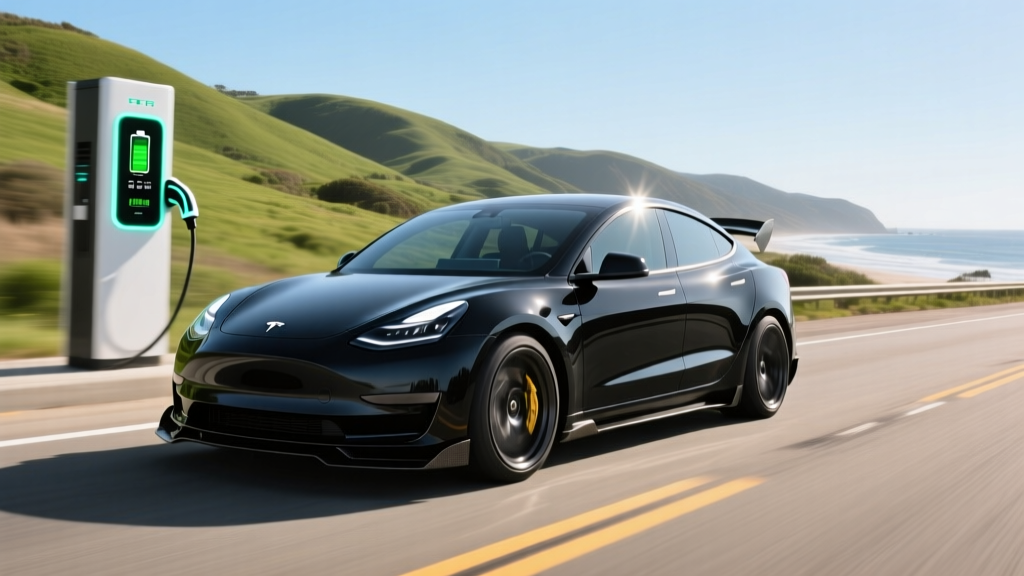
The Tesla Model 3 Highland refresh brought sharper styling, a quieter cabin, and incremental efficiency gains — but for a segment of owners, the real question is what happens after you take delivery. Tesla Model 3 tuning has evolved into a surprisingly deep ecosystem, from simple software unlocks to suspension overhauls and wheel/tire packages that fundamentally alter the car's character. Unlike internal-combustion tuning, where you're chasing boost pressure and exhaust flow, EV tuning revolves around software maps, thermal management, weight reduction, and aerodynamics.
This review covers the 2026 Tesla Model 3 lineup as a baseline — its factory specs, range, charging, and pricing — then layers in what the tuning landscape actually looks like, what it costs, and where the real-world trade-offs land. Whether you're considering a Long Range AWD for cross-country road trips or eyeing a Performance variant for track days, the numbers below will anchor your decisions.
2026 Tesla Model 3: Factory Specs at a Glance
| Spec | RWD Standard Range | Long Range AWD | Performance AWD |
|---|---|---|---|
| EPA Range | 272 mi | 363 mi | 315 mi |
| Battery (usable) | ~60 kWh (LFP) | ~75 kWh (NMC) | ~75 kWh (NMC) |
| Drivetrain | RWD, single motor | AWD, dual motor | AWD, dual motor |
| Horsepower | 271 hp | 346 hp | 510 hp |
| 0-60 mph | 5.8 sec | 4.2 sec | 2.9 sec |
| Peak DC Charge Rate | 170 kW | 250 kW | 250 kW |
| 10-80% DC Time | ~30 min | ~25 min | ~25 min |
| Level 2 Rate | 11.5 kW (~44 mi/hr) | 11.5 kW (~44 mi/hr) | 11.5 kW (~44 mi/hr) |
| MPGe (combined) | 132 MPGe | 131 MPGe | 116 MPGe |
| Efficiency | 25 kWh/100 mi | 25 kWh/100 mi | 29 kWh/100 mi |
| Base MSRP | $38,990 | $44,990 | $52,990 |
| Battery Warranty | 8 yr / 100,000 mi | 8 yr / 120,000 mi | 8 yr / 120,000 mi |
Sources: EPA fueleconomy.gov, Tesla Model 3 Design Studio.
What Tesla Model 3 Tuning Actually Looks Like
Unlike the aftermarket world for a BMW M3 or Subaru WRX, Tesla Model 3 tuning doesn't involve intakes, downpipes, or ECU flashes in the traditional sense. Tesla tightly controls its software stack, so the tuning avenues are narrower but still meaningful:
Software & Performance Unlocks
- Acceleration Boost ($2,000 OTA): Tesla's own over-the-air upgrade for the Long Range AWD drops the 0-60 time from 4.2 seconds to approximately 3.7 seconds. This is a software torque/torque-curve unlock — no hardware changes — and it's the single most cost-effective performance mod available.
- Track Mode (Performance trim only): Enables customizable torque distribution, regen tuning, and cooling management for closed-course driving. Not an aftermarket add — it's factory-included on the Performance.
- Third-party software tuning: Companies like Ingenext and EV Tuning offer OBD-port modules that can adjust throttle response, raise top speed, or enable features Tesla gates behind paywalls. These carry real risks: potential warranty complications and incompatibility with future OTA updates.
Wheels, Tires & Suspension
- Lightweight forged wheels: Swapping the factory 19" Nova or 20" performance wheels for lightweight forged options (e.g., 18" or 19" from TSportline, Vorsteiner, or HRE) can reduce unsprung mass by 5–8 lbs per corner. The result: sharper turn-in, marginally improved efficiency, and better ride quality.
- Tire compound selection: Moving from the stock Michelin Pilot Sport 4S to a Michelin Pilot Sport EV or Continental EcoContact 6 Q can recover 10–15 miles of range. Conversely, sticky track rubber (Michelin Pilot Sport Cup 2) costs range but dramatically improves grip.
- Coilovers and lowering springs: Mountain Pass Performance, EMD, and Unplugged Performance offer adjustable coilover systems ($1,800–$4,500) that reduce body roll and allow ride-height tuning. The Highland's revised suspension is already more compliant than the pre-2024 model, so coilovers are primarily for track or aggressive canyon use.
Aerodynamics & Weight
- Carbon-fiber splitters, diffusers, and spoiler caps: Mostly cosmetic at street speeds, but functional aero add-ons can improve high-speed stability and reduce drag coefficient marginally (claimed 2–5% Cd improvement from vendors like Vorsteiner and EVo Customs).
- Interior weight reduction: Removing rear seats (for track use), swapping to carbon-fiber bucket seats, and deleting sound deadening can shed 80–150 lbs, which directly improves both acceleration and efficiency.
Range & Charging: What the Numbers Mean for Owners
| Charging Method | Power / Rate | Miles Added per Hour | Best Use Case |
|---|---|---|---|
| Level 1 (120V standard outlet) | ~1.4 kW | ~5 mi/hr | Emergency / overnight trickle |
| Level 2 (240V home wall connector) | 11.5 kW | ~44 mi/hr | Daily home charging |
| DC Fast Charge (Supercharger V3) | Up to 250 kW peak | ~1,000 mi/hr at peak | Road trips, 10-80% in ~25 min |
| DC Fast Charge (Supercharger V4) | Up to 250 kW (current vehicles) | ~1,000 mi/hr at peak | Future headroom; Model 3 limited to 250 kW |
The 250 kW peak charge rate applies to the Long Range and Performance trims. Here's what the charge curve actually looks like in practice: the car sustains approximately 220–250 kW from 10% to roughly 35% state of charge (SoC), then tapers to ~150 kW by 55% SoC, and drops below 100 kW past 70%. This is why Tesla quotes 10-80% times rather than 0-100% — the final 20% can take as long as the first 70%.
For the RWD Standard Range with its LFP battery, Tesla recommends periodic charging to 100% to maintain cell-balancing accuracy. With NMC batteries in the Long Range and Performance, daily charging to 80–90% is preferred for long-term battery health, saving 100% for road trips.
Home Charging Setup Costs
A Tesla Wall Connector on a dedicated 60-amp circuit delivers the full 11.5 kW (48 amps continuous). Expect $800–$1,500 for a straightforward installation (panel to garage run under 30 feet). If your electrical panel needs a 200-amp service upgrade, add $1,500–$3,500. The Wall Connector itself costs approximately $425.
Pricing, Tax Credits & Total Cost
| Trim | Base MSRP | Est. Destination | Federal Credit (§30D) | Effective Price (if eligible) |
|---|---|---|---|---|
| RWD Standard Range | $38,990 | $1,390 | Up to $7,500 | ~$32,880 |
| Long Range AWD | $44,990 | $1,390 | Up to $7,500 | ~$38,880 |
| Performance AWD | $52,990 | $1,390 | Up to $7,500 | ~$46,880 |
The federal §30D EV tax credit has specific eligibility requirements that change with IRS guidance. As of 2026, key constraints include:
- MSRP cap: Sedans must be at or below $55,000. The RWD and Long Range qualify; the Performance at $52,990 also qualifies, but adding options (FSD, premium paint, 20" wheels) can push it over the cap.
- Buyer income cap: Modified AGI must not exceed $150,000 (single), $225,000 (head of household), or $300,000 (joint filers).
- Battery sourcing requirements: Increasingly strict critical-mineral and battery-component sourcing rules apply. Tesla's shifting supply chain means eligibility can change mid-year. Always verify current status at IRS.gov.
- Point-of-sale transfer: Since 2024, buyers can transfer the credit to the dealer at purchase, reducing the out-of-pocket price directly rather than waiting for a tax refund.
Tech, Interior & Driver Assistance
The Highland Model 3 interior is a study in minimalism — a single 15.4-inch center touchscreen handles virtually all vehicle functions, including climate controls (no physical vents or buttons). The rear passengers get an 8-inch screen for climate and media, a meaningful upgrade over the pre-refresh model.
Standout Tech
- Ambient lighting and ventilated seats: The Highland added both, addressing two of the most common complaints about the pre-2024 Model 3.
- Improved NVH: Acoustic glass on all windows, additional sound deadening, and revised suspension bushings make the 2026 Model 3 noticeably quieter at highway speeds — roughly 2–3 dB improvement measured at 70 mph.
- Autopilot (standard): Includes adaptive cruise control, lane centering, and automatic emergency braking. This is an SAE Level 2 driver-assistance system — the driver must remain engaged with hands on the wheel and eyes on the road at all times.
- FSD (Supervised): Tesla's optional $8,000 upgrade (or $99/month subscription) adds automated lane changes, traffic light/stop sign recognition, and city street navigation. Despite the name, this remains an SAE Level 2 system requiring full driver supervision. It is not self-driving.
Notable Drawbacks
- Turn signal stalks eliminated — signals are now on the steering wheel buttons, which frustrates many drivers during roundabouts and lane changes.
- No Apple CarPlay or Android Auto; you're fully in Tesla's ecosystem.
- Gear selection moved to the touchscreen (with a backup roof console), removing the traditional stalk.
- Rear visibility is compromised by the sloping rear glass and thick C-pillars; the backup camera is essential.
Pros
- Class-leading efficiency (25 kWh/100 mi on LR AWD)
- Access to the Supercharger network — the most reliable DC fast-charging ecosystem in North America
- Over-the-air updates continuously add features
- Acceleration Boost is the cheapest performance upgrade in the industry ($2,000 for ~0.5 sec off 0-60)
- Strong resale value relative to most EVs
- Minimalist interior is genuinely premium post-Highland
Cons
- Stalk-less controls (turn signals, gear selector) require real adaptation
- No Apple CarPlay/Android Auto
- Third-party tuning mods risk warranty complications and OTA update conflicts
- Ride quality on 20" Performance wheels is firm on broken pavement
- LFP battery in RWD loses more absolute range in cold weather due to smaller pack
- Cargo space (23 cu ft trunk + frunk) trails some competitors
How the Model 3 Stacks Up Against Competitors
The Model 3's tuning ecosystem is unique in the EV sedan segment, but the competition has narrowed the gap on factory performance and comfort:
- BMW i4 eDrive40 / M50: More traditional interior with physical controls, CarPlay, and comparable range (307 mi EPA for eDrive40). The M50 does 0-60 in 3.7 seconds. However, BMW's DC fast-charging tops out at 205 kW, and the Supercharger network advantage still favors Tesla for road-trippers.
- Hyundai Ioniq 6 SE/Limited: 361 miles EPA (SE Long Range), 800V architecture enabling 10-80% in ~18 minutes at 350 kW chargers, and a more spacious rear seat. Tuning aftermarket is far less developed.
- Polestar 2: Attractive Scandinavian design, CarPlay support, and an available Performance Pack (Ohlins dampers, Brembo brakes) that's factory-engineered — no warranty worries. Range tops out at 320 mi EPA.
If aftermarket customization and software tunability are high on your priority list, the Model 3 remains the platform with the deepest ecosystem. If you prioritize charging speed above all, the Ioniq 6's 800V architecture is the better engineering answer. If you want a driver-focused cockpit with traditional controls, the i4 wins.
Who Should Buy (and Tune) the Model 3?
Frequently Asked Questions
What is the real-world range of the 2026 Tesla Model 3?
The EPA rates the Long Range AWD at 363 miles, but real-world highway driving at 70–75 mph typically yields 290–310 miles. In cold weather (below 30°F), expect 240–260 miles. The RWD Standard Range delivers roughly 220–240 miles in mixed real-world use vs. its 272-mile EPA rating.
How fast does the Model 3 charge at home and on the road?
At home on a Level 2 Tesla Wall Connector (11.5 kW), you add approximately 44 miles of range per hour — enough to fully replenish the Long Range overnight in about 8 hours. On a V3 Supercharger, the Long Range and Performance peak at 250 kW, reaching 10-80% in roughly 25 minutes. The RWD Standard Range peaks at 170 kW, taking about 30 minutes for the same 10-80% session.
How much does the Model 3 cost after the federal tax credit?
If you meet all §30D requirements — income under the cap, the vehicle under the $55,000 MSRP limit, and battery sourcing compliance — the RWD Standard Range drops to approximately $32,880, the Long Range AWD to ~$38,880, and the Performance to ~$46,880. Always confirm current eligibility at IRS.gov before purchasing, as sourcing rules update periodically.
Does the Model 3 qualify for the full $7,500 federal EV tax credit?
It can, but eligibility depends on your income (under $150K single / $300K joint), the configured MSRP staying at or below $55,000 for sedans, and Tesla's battery meeting current-year critical-mineral and component-sourcing thresholds. The credit can be transferred to the dealer at point of sale since 2024, reducing your purchase price directly.
Is Tesla Model 3 tuning worth it vs. buying a competitor?
If you value the Supercharger network, over-the-air updates, and the deepest EV aftermarket ecosystem, yes — the Model 3 is still the most tunable EV sedan available. The $2,000 Acceleration Boost alone delivers performance-per-dollar that no competitor matches. However, if you want 800V ultra-fast charging (Hyundai Ioniq 6), a traditional luxury interior (BMW i4), or factory-engineered performance without warranty risk (Polestar 2 Performance Pack), those alternatives deserve serious consideration.
Will aftermarket tuning void my Tesla warranty?
Tesla's warranty covers defects in materials and workmanship for 4 years/50,000 miles (basic) and 8 years/100,000–120,000 miles (battery and drive unit). Tesla's position, per the Magnuson-Moss Warranty Act, is that they must prove an aftermarket part caused a specific failure to deny a claim. In practice, third-party OBD software modules and non-OEM suspension components have led to warranty disputes. The safest tuning path is Tesla's own Acceleration Boost and cosmetic-only mods (wheels, wrap, aero).
What cargo and passenger space does the Model 3 offer?
The Model 3 provides 23 cubic feet of trunk space (including the under-floor sub-trunk) plus approximately 3.1 cubic feet in the front trunk (frunk), for a total of ~26 cu ft. Rear legroom is 35.2 inches — adequate for adults under 6 feet but tighter than the Hyundai Ioniq 6 (37.7 in) or BMW i4 (36.0 in). Front headroom is 40.3 inches; rear headroom is 37.8 inches, limited by the sloping roofline.