Quick Answer: What Is the Ford Ranchero EV Pickup Trademark?
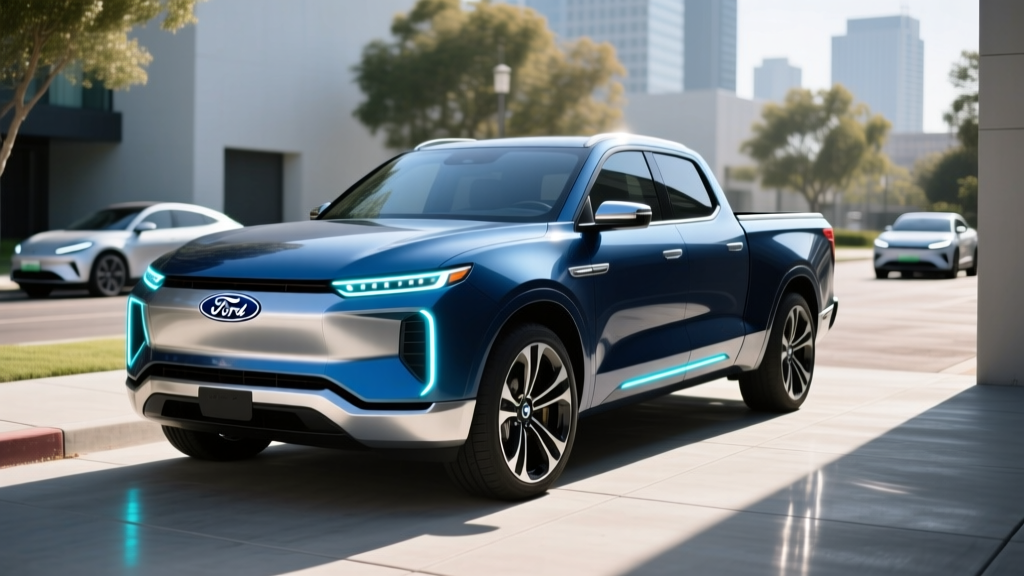
Ford filed a trademark application for the "Ranchero" nameplate in connection with electric vehicles, sparking industry speculation about a compact or midsize EV pickup revival. As of early 2026, Ford has not officially confirmed a production Ranchero EV. The trademark signals intent but does not guarantee a vehicle will reach showrooms. If it does materialize, expect a unibody compact EV pickup targeting the $35,000–$50,000 range, competing directly with the Hyundai Santa Cruz (if it goes electric) and filling a gap below the F-150 Lightning in Ford's truck lineup.
Why the Ford Ranchero EV Pickup Trademark Matters
Trademarks are the automotive industry's open secret — they reveal strategic intent long before press releases. Ford's Ranchero filing covers "land vehicles" and "electric vehicles" specifically, according to USPTO records. The original Ford Ranchero, produced from 1957 to 1979, was a car-based coupe utility — essentially a sedan with a truck bed. Reviving it as an EV makes strategic sense for several reasons:
- Compact EV truck gap: The F-150 Lightning starts around $55,000 and is a full-size truck. Ford lacks a smaller, more affordable electric pickup.
- Unibody platform leverage: Ford's GE2 platform (underpinning the Mustang Mach-E) and the flexible TE1 architecture could support a smaller pickup form factor.
- Urban and lifestyle truck demand: The Hyundai Santa Cruz and Ford Maverick proved that compact trucks sell — the Maverick hybrid became one of Ford's highest-volume models shortly after launch.
The trademark alone doesn't confirm production. Automakers routinely file defensive trademarks to prevent competitors from using legacy nameplates. But paired with Ford's public commitment to expanding its EV portfolio, the Ranchero name on a compact electric truck is plausible.
Speculative Specs: What a Ranchero EV Could Look Like
Based on Ford's existing EV architecture, battery supply chain, and the competitive compact truck segment, here's a data-grounded projection of what a production Ranchero EV might deliver. All figures are estimated and subject to change if the vehicle is officially announced.
| Attribute | Estimated Spec | Basis |
|---|---|---|
| Battery Capacity | 70–85 kWh usable (NMC) | Mach-E Extended Range uses ~91 kWh; smaller truck = smaller pack |
| EPA Range (est.) | 250–310 miles | Pickup aerodynamics reduce efficiency vs. crossover counterparts |
| Peak DC Fast Charge | 150–190 kW | Mach-E peaks ~150 kW; F-150 Lightning peaks ~190 kW |
| 10–80% Charge Time | ~28–38 minutes | Typical NMC charge curve with taper above 80% |
| Level 2 Charging | 10.5 kW (mobile charger) / 19.2 kW (Ford Connected Charge Station) | Current Ford EV hardware |
| Horsepower | 290–350 hp (RWD or AWD) | Mach-E Select RWD: 290 hp; GT: 480 hp |
| 0–60 mph (est.) | 5.5–7.0 seconds | Compact truck weight + single/dual motor options |
| Payload Capacity | 1,200–1,500 lbs | Maverick: 1,500 lbs; EV battery weight reduces payload |
| Towing Capacity | 2,000–4,000 lbs | Maverick: 2,000 lbs (hybrid); F-150 Lightning: 7,700–10,000 lbs |
| Bed Length | ~4.5 feet | Compact lifestyle truck segment norm |
| Base MSRP (est.) | $35,000–$42,000 | Below Lightning, above Maverick Hybrid ($28,000+) |
| Federal Tax Credit | Up to $7,500 (§30D) — eligibility TBD | Depends on battery sourcing, MSRP cap ($80k trucks), income limits |
Real-world range caveat: If the EPA sticker reads 300 miles, expect roughly 230–260 miles in mixed highway driving at 70+ mph, and potentially 180–210 miles in sub-freezing winter conditions. Pickup truck aerodynamics and battery thermal management in cold weather significantly reduce real-world range compared to the EPA combined estimate.
Ranchero EV vs. Gas Compact Trucks: Cost Comparison
The most relevant comparison for a potential Ranchero EV buyer isn't another EV — it's the Ford Maverick, Hyundai Santa Cruz, and Chevrolet Colorado. Here's how a compact EV truck stacks up against its gas and hybrid counterparts over a 5-year ownership horizon, assuming 15,000 miles/year.
| Cost Factor | Ranchero EV (est.) | Maverick Hybrid | Maverick EcoBoost (gas) |
|---|---|---|---|
| Base MSRP | $38,000 | $28,500 | $26,500 |
| Federal Tax Credit | Up to –$7,500 | $0 | $0 |
| Effective Purchase Price | $30,500 | $28,500 | $26,500 |
| Fuel/Charging (5 yr) | $3,750 (home L2, $0.14/kWh) | $5,625 (42 MPG, $3.50/gal) | $8,750 (26 MPG, $3.50/gal) |
| Maintenance (5 yr) | ~$1,500 | ~$3,000 | ~$3,500 |
| Insurance (5 yr avg) | ~$9,500 | ~$7,500 | ~$7,200 |
| 5-Year Total Cost | ~$45,250 | ~$44,625 | ~$45,950 |
Key takeaways: The Ranchero EV's higher upfront cost is partially offset by the federal tax credit (if eligible under current IRS §30D rules) and lower per-mile energy costs. Maintenance savings are meaningful — no oil changes, fewer brake replacements thanks to regenerative braking, and no transmission fluid. However, EV insurance premiums run 15–25% higher than gas equivalents, which narrows the savings gap.
Real-World Ownership: What First-Time EV Truck Buyers Must Know
If the Ranchero EV enters production, buyers transitioning from gas trucks should prepare for a fundamentally different ownership experience — one with major advantages and real constraints.
Home Charging Is Non-Negotiable for Most Owners
Level 2 home charging (240V, 32–48 amps) delivers roughly 25–35 miles of range per hour of charging. A full overnight charge from 20% to 80% takes 5–7 hours, making daily driving essentially effortless. But installation costs vary widely:
- Best case: Existing 200-amp panel, short conduit run — $500–$1,200 for electrician + permit
- Typical case: Panel adequate, moderate run — $1,200–$2,500
- Worst case: Panel upgrade to 200A required — $3,000–$5,000+
If you cannot install a Level 2 charger at home (apartment living, HOA restrictions, street parking only), EV truck ownership becomes significantly less convenient. Relying on public DC fast charging adds time, cost, and unpredictability to your routine.
Cold Weather Hits Trucks Harder
EV batteries lose 20–35% of usable range in sustained sub-30°F temperatures. A pickup's larger frontal area and higher rolling resistance compound the effect. If you live in the upper Midwest or Northeast and regularly drive 200+ miles in winter, plan for reduced range and longer charge times. Battery preconditioning (heating the pack before fast charging) is essential — Ford includes this on the Lightning and Mach-E, and the Ranchero EV would almost certainly feature it.
Towing Drastically Reduces Range
The F-150 Lightning loses roughly 40–50% of its EPA range when towing near its maximum capacity. A smaller Ranchero EV with a 2,000–4,000 lb tow rating would see similar proportional losses. If you tow a trailer or boat regularly, a compact EV truck may not be practical for those trips — this is where a hybrid Maverick or full-size Lightning retains an advantage.
Common Misconceptions About the Ranchero EV Trademark
| Myth | Fact |
|---|---|
| "The trademark means the Ranchero EV is confirmed for production." | Trademarks protect brand names. Ford files many trademarks for vehicles that never reach production. It signals interest, not commitment. |
| "It will be a full-size truck like the F-150 Lightning." | The Ranchero nameplate historically denotes a compact, car-based utility. All evidence points to a sub-F-150 compact or midsize truck. |
| "It will definitely qualify for the $7,500 tax credit." | Under 2026 IRS §30D rules, eligibility depends on battery component sourcing, critical mineral requirements, buyer income caps ($150k single / $300k joint), and MSRP caps ($80,000 for trucks). Ford must certify compliance per vehicle. |
| "EV trucks can't tow anything." | EV trucks tow well — the issue is range reduction while towing, not capability. A 3,000-lb tow rating is practical for small trailers and boats. |
| "I'll save thousands on fuel immediately." | Fuel savings are real but modest on a per-year basis (~$500–$1,000/yr vs gas). The savings accumulate over 5–10 years and are offset by higher insurance and potentially higher purchase price. |
Decision Framework: Should You Wait for the Ranchero EV?
Buy Now (Don't Wait)
- Choose the Ford Maverick Hybrid if you need a compact truck today, want 42 MPG combined, and your budget is under $32,000.
- Choose the F-150 Lightning if you need full-size capability, 320+ mile range, and can absorb a $55,000+ starting price.
- Choose the Rivian R1T if you want a premium midsize EV truck with proven off-road capability and don't mind a $70,000+ price.
Wait and Watch
- Wait for the Ranchero EV if you want a compact, affordable EV truck (sub-$40k), don't need heavy towing, have home Level 2 charging, and can wait 18–36 months for potential production.
- Wait if tax credit rules are in flux — current §30D sourcing requirements may shift, potentially expanding or restricting eligibility by the time the Ranchero reaches market.
What to Watch For Next
Ford typically moves from trademark filing to production announcement within 18–36 months — but not always. Key signals to monitor:
- Official teaser or concept reveal at auto shows or Ford investor events
- Supply chain indicators: Battery allocation shifts from SK On or CATL toward compact-truck-sized packs
- Plant investment announcements: Retooling at Hermosillo (original Ranchero production site) or Cuautitlán would strongly suggest a compact truck program
- EPA certification filings: These appear 6–12 months before production and confirm exact range, efficiency, and battery specs on fueleconomy.gov
Until Ford officially confirms the vehicle, treat all specifications as estimates. We'll update this guide with verified data when it becomes available.
Frequently Asked Questions
Is the Ford Ranchero EV pickup officially confirmed?
No. Ford has filed a trademark for the Ranchero name in connection with electric vehicles, but the company has not announced a production vehicle. The trademark indicates strategic interest, not a guaranteed product launch.
When could the Ranchero EV go on sale?
If Ford greenlights production, a realistic timeline would be late 2027 to 2029, based on typical automotive development cycles from trademark filing to showroom delivery.
How much would the Ranchero EV cost?
Based on segment positioning below the F-150 Lightning and above the Maverick Hybrid, a reasonable estimate is $35,000–$42,000 base MSRP, potentially qualifying for up to $7,500 in federal tax credits depending on sourcing and buyer eligibility.
Would the Ranchero EV qualify for the federal tax credit?
Possibly, but it depends on where battery components and critical minerals are sourced, the final MSRP (must be under $80,000 for trucks), and buyer income (under $150,000 single / $300,000 joint filer). Check current IRS §30D guidelines at time of purchase, as rules evolve.
What's the difference between the Ranchero EV and the F-150 Lightning?
The F-150 Lightning is a full-size, body-on-frame electric truck with 230–320 miles of EPA range, up to 10,000 lbs towing, and a $55,000+ starting price. A Ranchero EV would be a smaller, unibody compact truck with less towing capacity but a lower price and potentially better efficiency for daily commuting.
Can I reserve a Ranchero EV now?
No. Ford has not opened reservations for any Ranchero-branded vehicle. Be wary of third-party sites claiming to accept deposits.