Quick Verdict: The Baseline EV Benchmark Gets Sharper
The Tesla Model 3 in its base rear-wheel-drive configuration — commonly searched as the Tesla Model 3 Standard trim — remains the reference point against which every new compact electric sedan is measured. For 2026, Tesla continues to sell the RWD Model 3 with a lithium iron phosphate (LFP) battery, an EPA-estimated 363 miles of range, and a starting MSRP that undercuts most rivals while delivering Supercharger network access, over-the-air updates, and class-leading efficiency. It is not perfect: the minimalist interior polarizes, the lack of physical controls frustrates some drivers, and insurance costs run higher than segment averages. But if you want a data-backed answer to "which EV should I buy first?" — this is still the spreadsheet winner for commuters and solo drivers who can charge at home.
Range, Battery, and Efficiency: LFP Chemistry Explained
The 2026 Tesla Model 3 RWD packs an LFP (lithium iron phosphate) battery with approximately 60 kWh of usable capacity. LFP chemistry trades some energy density for superior cycle life, thermal stability, and the ability to routinely charge to 100% without accelerating degradation — a significant daily-ownership advantage over NMC (nickel manganese cobalt) packs that prefer an 80% daily ceiling.
EPA Estimated: 363 miles
Real-World Highway (70 mph, mild weather): ~300–320 miles
Real-World Cold Weather (below 32°F, mixed driving): ~240–270 miles
City / Stop-and-Go (regen-heavy): ~340–360 miles
LFP packs lose proportionally more range in extreme cold than NMC chemistries due to higher internal resistance at low temperatures. Plan charging stops accordingly on winter road trips. Source: fueleconomy.gov
| Specification | Value |
|---|---|
| EPA Range | 363 miles |
| Battery (usable) | ~60 kWh, LFP |
| Efficiency | 132 MPGe combined / 25 kWh/100 mi |
| Drivetrain | Rear-Wheel Drive (single motor) |
| Horsepower | 271 hp |
| 0–60 mph | 5.8 seconds |
| Top Speed | 125 mph |
| Max DC Fast Charge | 170 kW peak |
| 10–80% DC Charge Time | ~25 minutes |
| Level 2 Home Charge Rate | 11.5 kW (~44 mi/hr) |
| Cargo Volume | 23 cu ft (trunk + frunk) |
| Rear Legroom | 35.2 inches |
| Battery Warranty | 8 years / 100,000 miles (70% retention) |
| Base MSRP | $38,990 (before incentives) |
Efficiency is where the Model 3 RWD shines. At roughly 25 kWh per 100 miles combined, it sips electrons more frugally than nearly any other EV on the market. That efficiency translates directly to lower charging costs and more miles per minute at a DC fast charger.
Charging Speed: Home, Public, and the Supercharger Advantage
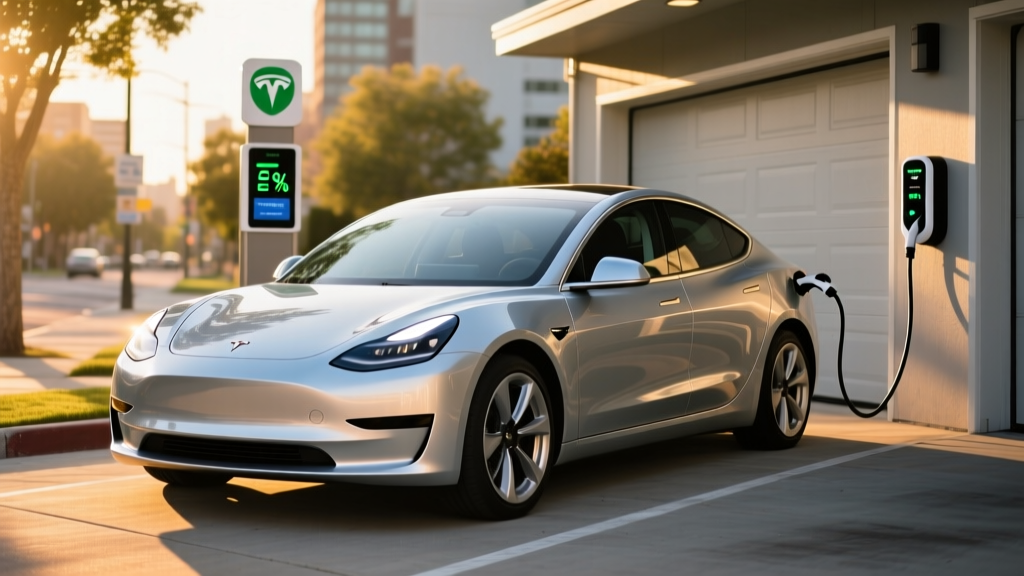
Charging is where Tesla's vertical integration still pays dividends. The Model 3 RWD supports a peak DC fast-charge rate of 170 kW, which is modest compared to 800-voltage architecture rivals (Hyundai Ioniq 5 peaks at ~240 kW) but is offset by the reliability and density of the Tesla Supercharger network. On a V3 or V4 Supercharger, expect a 10–80% session in approximately 25 minutes. The charge curve tapers noticeably above 60% state of charge — a characteristic of LFP packs — so plan to unplug at 80% on road trips rather than waiting for those final slow miles.
| Charging Level | Power | Miles Added per Hour | Typical Use Case |
|---|---|---|---|
| Level 1 (120V household) | ~1.4 kW | ~5 mi/hr | Emergency / overnight trickle |
| Level 2 (240V, 48A Wall Connector) | 11.5 kW | ~44 mi/hr | Daily home charging (full charge ~6 hours) |
| DC Fast (Supercharger V3/V4) | Up to 170 kW peak | ~700+ mi/hr at peak | Road trips, 10–80% in ~25 min |
For home charging, Tesla's Gen 3 Wall Connector ($475) on a 60-amp circuit delivers the full 11.5 kW. A typical professional installation runs $800–$2,000 depending on panel proximity and local permitting. If your electrical panel is maxed at 100 amps, a panel upgrade to 200 amps can add $1,500–$3,000 — get a quote from a licensed electrician before committing.
Performance and Driving Dynamics
The single rear motor produces 271 horsepower and 317 lb-ft of torque, pushing the Model 3 RWD from 0–60 mph in 5.8 seconds. That's brisk enough for confident highway merging and genuinely fun on back roads, though it trails the dual-motor Long Range (4.2 seconds) and Performance variants. The RWD model's lighter front end gives it slightly more neutral handling than its AWD siblings, and the low center of gravity keeps body roll minimal through corners.
Regenerative braking in the Model 3 is aggressive by default, enabling one-pedal driving in most scenarios. Tesla removed the user-adjustable regen setting in recent model years, so new owners should expect a brief adaptation period. The ride quality on the refreshed "Highland" chassis is noticeably improved over pre-2024 models — firmer than a Toyota Camry but compliant over most pavement imperfections.
Pricing, Tax Credits, and Total Cost of Ownership
The 2026 Tesla Model 3 RWD starts at $38,990 (including destination fee), making it one of the most affordable premium electric sedans available. Common add-ons include paint colors ($1,000–$2,500), 19-inch wheels ($1,500), and the Full Self-Driving (Supervised) package ($8,000 one-time or $99/month). A sensibly equipped example in a no-cost paint (Stealth Grey or Pearl White) stays near the $39,000 mark.
| Item | Amount |
|---|---|
| Base MSRP (incl. destination) | $38,990 |
| Federal §30D Tax Credit (if eligible) | Up to $7,500 |
| Effective Price After Credit | ~$31,490 |
Federal tax credit eligibility is not automatic. Under IRS §30D rules, the buyer must meet income caps (modified AGI ≤ $150,000 single / $300,000 joint), the vehicle MSRP must be ≤ $55,000 for sedans, and the battery must meet critical-mineral and component-sourcing thresholds that tighten each year. Tesla has historically qualified for the full $7,500 on the Model 3 RWD, but supply-chain shifts can alter eligibility mid-year. The credit can now be transferred at point of sale as an instant discount. Always verify current eligibility on irs.gov or with a tax professional before purchasing.
On a 5-year ownership basis, the Model 3 RWD benefits from minimal maintenance (no oil changes, no transmission fluid, reduced brake wear from regen), lower per-mile energy costs versus gasoline, and strong residual values. Insurance, however, typically runs 15–25% higher than a comparably priced gas sedan — get quotes before buying.
Interior, Technology, and Driver Assistance
The Model 3 cabin is defined by radical minimalism. A single 15.4-inch touchscreen handles infotainment, climate, navigation, and vehicle settings. There is no instrument cluster, no head-up display, and turn signals are on the steering wheel (a change introduced with the Highland refresh that remains divisive). Rear passengers get a small 8-inch touchscreen for climate and media control.
The infotainment system is responsive, supports Netflix/YouTube while parked, and integrates seamlessly with Tesla's navigation and Supercharger routing. However, Apple CarPlay and Android Auto are not supported — a dealbreaker for some buyers accustomed to phone projection.
Tesla's Autopilot (standard) and Full Self-Driving Supervised ($8,000 option) are SAE Level 2 driver-assist systems. They provide adaptive cruise control, lane centering, and automated lane changes, but the driver must remain fully attentive and hands-on (or eyes-on) at all times. These are not autonomous or self-driving systems. Autopilot is included; FSD (Supervised) adds features like traffic-light recognition and city street navigation, but requires constant supervision.
Standard safety equipment includes automatic emergency braking, blind-spot monitoring, lane departure warning, and eight cameras providing 360-degree visibility. The Model 3 earns top marks from NHTSA (5-star overall) and the IIHS (Top Safety Pick+).
Pros, Cons, and Who Should Buy
- 363 miles EPA range — longest in its price class
- LFP battery allows routine 100% charging without degradation concern
- Best-in-class efficiency (25 kWh/100 mi) lowers charging costs
- Supercharger network reliability still leads public charging
- Over-the-air updates add features post-purchase
- Strong resale value relative to EV peers
- 23 cu ft cargo (trunk + frunk) beats many compact SUVs
- No Apple CarPlay / Android Auto
- Turn signals on steering wheel take adjustment
- Rear seat space (35.2" legroom) is tight for tall adults
- Insurance premiums run 15–25% above segment average
- 170 kW peak DC charge rate trails 800V competitors
- LFP cold-weather range loss is more pronounced than NMC
- No physical buttons or knobs — all controls are touchscreen
Who it suits best: Solo commuters, couples without rear-seat car seats, and tech-forward buyers who prioritize range and efficiency over luxury materials. It's an outstanding first EV for homeowners with garage charging access. Road-trippers will appreciate the Supercharger network, though winter travelers in the northern tier should plan for 25–30% range loss.
Who should look elsewhere: Families needing generous rear-seat room (consider the Model Y or Hyundai Ioniq 5), drivers who rely on CarPlay, and those in extreme-cold climates where LFP's winter penalty stings more. If you regularly carry four adults, the Model 3's rear quarters will feel cramped.
Frequently Asked Questions
What is the real-world range of the Tesla Model 3 Standard trim?
The EPA rates it at 363 miles, but expect roughly 300–320 miles on highway road trips at 70 mph in mild weather, and as low as 240–270 miles in sub-freezing temperatures. City driving with frequent regenerative braking can match or slightly exceed the EPA sticker.
How fast does the Model 3 RWD charge at home and on the road?
At home on a Level 2 (240V, 48A) Tesla Wall Connector, it charges at 11.5 kW, adding about 44 miles of range per hour — a full charge takes roughly 6 hours. On a DC fast charger (Supercharger V3/V4), it peaks at 170 kW and reaches 10–80% in approximately 25 minutes.
Does the 2026 Tesla Model 3 qualify for the federal EV tax credit?
The Model 3 RWD has historically qualified for the full $7,500 federal tax credit under IRS §30D, which can be applied at point of sale. Eligibility depends on buyer income (≤$150K single / ≤$300K joint), the vehicle's MSRP (must be ≤$55K for sedans), and battery-component and critical-mineral sourcing requirements that tighten annually. Confirm current status at irs.gov before purchasing.
Is the Model 3 Standard trim worth buying over competitors?
If you value range-per-dollar, Supercharger access, and efficiency, yes — it's the segment benchmark. If you prioritize interior space, physical controls, CarPlay support, or faster DC charging, rivals like the Hyundai Ioniq 6, Chevrolet Bolt (returning for 2026), or BMW i4 may suit you better. Test-drive both before deciding.
What is the battery warranty on the Model 3 RWD?
Tesla covers the battery and drive unit for 8 years or 100,000 miles (whichever comes first), guaranteeing a minimum of 70% capacity retention. LFP chemistry's superior cycle life means most owners will see minimal degradation within this period — real-world data from high-mileage Teslas shows 90%+ retention at 100K miles is common.
How much does it cost to charge a Model 3 at home versus gas?
At the US average residential electricity rate of ~$0.16/kWh, a full 60 kWh charge costs about $9.60 for 363 miles — roughly $0.026 per mile. A comparable gas sedan at 30 MPG and $3.50/gallon costs ~$0.117 per mile. Over 15,000 miles annually, home charging saves approximately $1,350 per year.