The P100D at a Glance: Quick Verdict
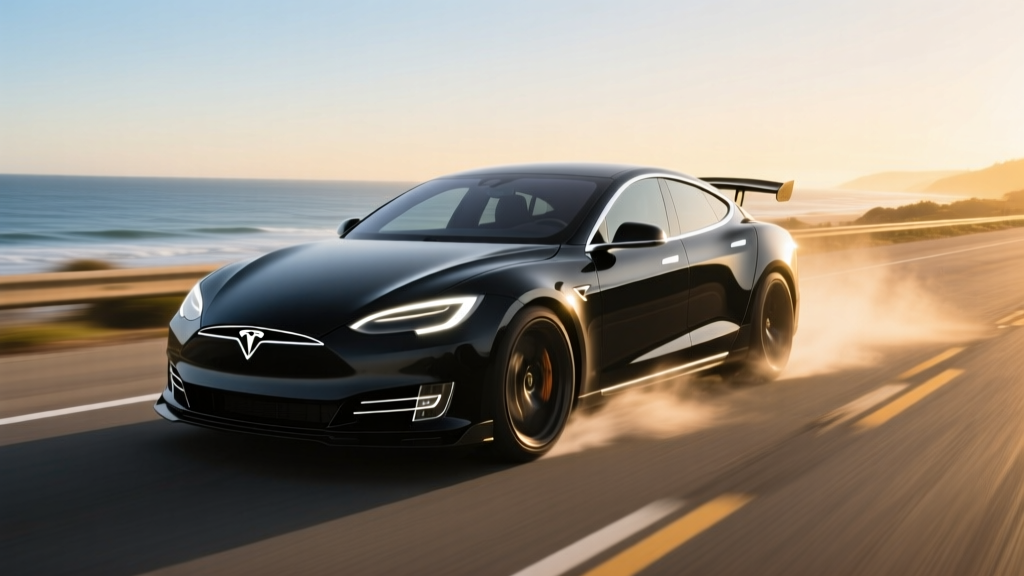
The Tesla Model S P100D with Ludicrous Mode was, at its 2016–2019 production run, the quickest-accelerating production sedan on the planet. Its headline Tesla P100D 0-60 time of approximately 2.5 seconds (with rollout subtracted) remains startling even by today's standards. But raw acceleration is only one dimension of EV ownership. This review examines the P100D through the lens of a 2026 used-EV buyer: real-world range on its 100 kWh battery, DC fast-charging limitations on older Supercharger hardware, long-term battery degradation expectations, and whether this legacy flagship still delivers against modern competitors like the Lucid Air, Porsche Taycan, and the current Model S Plaid.
Note: The P100D was discontinued in 2019 and is available only on the used market. This review reflects owner data, EPA records, and Tesla's original specifications. For current new-vehicle options, see our Model S Plaid coverage.
Tesla P100D 0-60, Horsepower, and Performance Data
The P100D pairs a 100 kWh battery pack with a dual-motor all-wheel-drive layout. The rear motor is a large induction unit; the front motor is a smaller induction unit providing torque vectoring and traction. Combined system output is approximately 762 horsepower and 791 lb-ft of torque in Ludicrous Mode.
| Metric | Value |
|---|---|
| 0-60 mph (Ludicrous, rollout subtracted) | 2.5 seconds |
| 0-60 mph (standard launch) | ~3.7 seconds |
| Quarter-mile | 10.9 seconds @ 125 mph |
| Horsepower (combined, Ludicrous) | ~762 hp |
| Torque | ~791 lb-ft |
| Top Speed | 155 mph (electronically limited) |
| Drivetrain | Dual-motor AWD |
| Curb Weight | ~4,940 lbs |
The 2.5-second figure requires specific conditions: a full battery (above 95% SoC), warm battery temperature (preconditioned), dry pavement, and Ludicrous Mode engaged with launch control activated. In real-world street driving with a partial charge, expect 3.0–3.8 seconds — still blisteringly quick, but not quite the headline number.
Battery Capacity, Chemistry, and EPA Range
The P100D's 100 kWh battery pack uses NMC (nickel manganese cobalt) chemistry — specifically Panasonic NCA cells in a 18650 format in early P100Ds, transitioning to 2170-format cells in later production. This is a high-energy-density pack optimized for power delivery, which is why it enables the Ludicrous launch. The usable capacity is approximately 98 kWh, with a top and bottom buffer protecting the cells.
EPA sticker: 315 miles (Model S P100D, 2017–2019)
Real-world highway (70 mph, 72°F): ~260–280 miles
Real-world cold weather (32°F, highway): ~210–235 miles
City driving with regen: ~290–310 miles
The P100D's range is most sensitive to highway speed and temperature. The large, heavy pack and older thermal management system mean cold-weather losses can reach 25–30%. Preconditioning the battery before driving recovers some of this loss.
According to fueleconomy.gov, the Model S 100D/P100D achieved a combined MPGe of 104 MPGe (109 city / 99 highway) and consumed approximately 32 kWh per 100 miles. These figures are competitive for a 2017-era luxury sedan but fall behind modern benchmarks like the Lucid Air Grand Touring (131 MPGe combined).
Charging Speed: DC Fast Charge and Home Level 2
This is where the P100D shows its age most clearly. The vehicle uses Tesla's proprietary connector (pre-NACS standardization) and its onboard charge controller limits DC fast-charging throughput compared to modern platforms.
| Charging Level | Power | Speed | Notes |
|---|---|---|---|
| Level 1 (120V) | ~1.4 kW | ~3–4 miles/hour | Emergency only |
| Level 2 (240V, 48A) | ~11.5 kW | ~34 miles/hour | Full overnight charge in ~9 hrs |
| Level 2 (240V, 72A dual charger option) | ~17.3 kW | ~51 miles/hour | Rare option, requires 100A circuit |
| DC Fast Charge (Supercharger V2) | Peak ~120 kW | 10-80% in ~45 min | Tapers significantly above 60% |
| DC Fast Charge (Supercharger V3/V4) | Capped ~150 kW | 10-80% in ~38 min | Battery management limits peak |
The P100D's charging curve is notably aggressive in tapering. While a modern Model S Plaid or Hyundai Ioniq 5 can sustain peak charge rates up to 50–60% SoC, the P100D begins tapering around 40–45% SoC, and charging speed drops sharply above 70%. On a road trip, plan for 35–50-minute stops at Superchargers to go from 10% to 80%.
For home charging, a Wall Connector at 48 amps on a 60-amp circuit is the practical sweet spot, adding roughly 34 miles of range per hour. Expect a full 0–100% charge in about 9 hours. Installation costs for a Level 2 home setup typically range from $800–$2,500 depending on panel capacity and conduit runs — consult a licensed electrician for your specific situation.
Interior, Cargo, and Daily Practicality
The P100D is built on the same Model S platform that has been in production since 2012, meaning interior dimensions are generous but the design language reflects its era. The 17-inch center touchscreen was class-leading in 2016 but lacks the resolution and responsiveness of Tesla's current AMD Ryzen-based infotainment.
| Dimension | Measurement |
|---|---|
| Front legroom | 42.7 inches |
| Rear legroom | 35.4 inches |
| Cargo (rear trunk) | 26.3 cu ft |
| Frunk (front trunk) | 5.3 cu ft |
| Total cargo with rear seats folded | 58.1 cu ft |
| Seating capacity | 5 adults (optional 7-seat with rear-facing third row) |
Standout tech features: Over-the-air software updates (still receiving updates in 2026, though major hardware-dependent features like the new UI are limited to HW3+ vehicles), HEPA air filtration with Bioweapon Defense Mode, air suspension with adjustable ride height, and access to the Tesla Supercharger network (now with NACS adapter compatibility for non-Tesla chargers via CCS adapter).
Notable drawbacks: The P100D uses Tesla's older HW2/2.5 Autopilot computer, which cannot run the latest FSD neural networks. Panel gaps and interior materials from this era drew consistent criticism. The pano glass roof on 2016–2017 models has known leak issues. The MCU1 (first-gen media control unit) in pre-2018 cars is sluggish and prone to failure — many owners have upgraded to MCU2.
Pricing, Tax Credits, and Used Market Value
The P100D is no longer sold new. Original MSRP ranged from approximately $134,500 to $155,000+ depending on options (Ludicrous Mode was a $10,000 add, FSD was $8,000). In the 2026 used market, a well-maintained P100D with 40,000–70,000 miles typically sells for $35,000–$55,000, depending on battery health, mileage, and service history.
- Vehicle must be at least 2 model years old (P100D qualifies)
- Sale price must be $25,000 or less — most P100Ds exceed this cap
- Buyer AGI: ≤$75,000 single / ≤$150,000 married filing jointly
- Credit amount: 30% of sale price, max $4,000
- Must purchase from a licensed dealer (private sales excluded)
- Source: IRS.gov §25E
Bottom line: Most P100Ds on the used market are priced above the $25,000 cap, meaning the majority of buyers will not qualify for the federal used-EV tax credit. If you find a high-mileage example below $25,000 from a dealer, verify battery health carefully before purchase. Always consult a tax professional for your specific situation.
Pros and Cons: The P100D in 2026
- 0-60 in 2.5 sec still rivals modern supercars
- 315-mile EPA range remains practical for road trips
- Tesla Supercharger network access (best in class)
- Air suspension, premium audio, HEPA filtration
- OTA updates still adding features in 2026
- Massive depreciation = strong used value
- Frunk + hatchback versatility
- DC fast charging capped ~120-150 kW (slow by 2026 standards)
- HW2/2.5 Autopilot hardware outdated for FSD
- Out-of-warranty battery replacement: $15,000–$22,000
- Older interior materials and panel gaps
- Cold-weather range loss up to 30%
- No heat pump (resistance heating drains range)
- Most examples exceed used-EV credit price cap
Warranty and Battery Longevity
When new, the P100D carried Tesla's standard warranty:
- Battery & Drive Unit: 8 years / unlimited miles (retained capacity threshold: 70% for 100 kWh packs)
- Basic Vehicle: 4 years / 50,000 miles
Given that production ended in 2019, most P100Ds are now outside the basic warranty but may still have battery/drive unit coverage if under 8 years from original delivery. By 2026–2027, virtually all will have aged out of battery warranty.
Real-world degradation data from owner surveys and TeslaFi fleet data suggests the 100 kWh NMC/NCA pack retains approximately 85–90% capacity at 80,000 miles and 80–85% at 120,000 miles, assuming typical charging habits (daily limit set to 80–90%, occasional 100% for trips). Packs that were frequently charged to 100% and DC fast-charged show accelerated degradation, sometimes dropping to 75% capacity by 100,000 miles.
An out-of-warranty battery replacement from Tesla currently costs approximately $15,000–$22,000 for a 100 kWh pack. Third-party repair shops can sometimes replace individual modules for $3,000–$7,000, but this is less common for the 100 kWh pack architecture.
Who Should Buy a P100D in 2026?
- You want supercar acceleration in a 4-door sedan under $50,000
- You have reliable home Level 2 charging (daily driving is 95% of use)
- You value Supercharger network access for road trips
- You're comfortable with out-of-warranty EV ownership risk
- You don't need the latest Autopilot/FSD hardware
- You need fast DC charging for frequent 300+ mile road trips (consider Ioniq 5, Model S Plaid, or Lucid Air)
- You want current-generation FSD capability
- You need a warranty — certified pre-owned Model 3/Y may be safer
- Cold-weather range is critical (heat-pump-equipped EVs fare better)
Frequently Asked Questions
What is the real-world range of the Tesla P100D?
The EPA rates the P100D at 315 miles. In real-world highway driving at 70 mph and moderate temperatures, expect 260–280 miles. In cold weather (below freezing), that drops to 210–235 miles. City driving with regenerative braking can approach the EPA figure at 290–310 miles.
How fast does the P100D charge on DC fast chargers and at home?
On a V2 Supercharger, the P100D peaks around 120 kW and takes roughly 45 minutes for a 10–80% charge. On V3/V4 Superchargers, it's capped around 150 kW, shaving a few minutes. At home on a 48-amp Level 2 charger, it adds about 34 miles per hour and fully charges in approximately 9 hours.
Does the Tesla P100D qualify for any federal EV tax credit?
The P100D may qualify for the IRS §25E used clean vehicle credit of up to $4,000, but only if the sale price is $25,000 or less, the buyer meets income caps, and the purchase is from a licensed dealer. Most P100Ds on the used market sell for $35,000–$55,000, exceeding the price cap. Consult a tax professional and review current rules at IRS.gov.
Is the P100D worth buying vs. a modern EV in 2026?
For raw acceleration per dollar, the P100D is hard to beat — a 2.5-second 0-60 car for $40,000 is extraordinary. However, its DC fast-charging speed, older Autopilot hardware, and out-of-warranty risk are real trade-offs. If you primarily drive locally with home charging and want an adrenaline-rush daily driver, it's compelling. For road-trip-heavy buyers, a newer Model 3 Long Range or Hyundai Ioniq 5 offers better charging and warranty coverage.
What's the biggest risk of buying a used P100D?
Battery replacement cost is the primary financial risk: $15,000–$22,000 out of warranty. Before purchasing, request a battery health report (State of Health percentage), review charging history via TeslaFi or similar, and check whether the drive unit has been replaced. Air suspension failures ($2,000–$4,000 per corner) and MCU1 failures are also common on higher-mileage examples.
Can the P100D use non-Tesla chargers?
Yes, with an adapter. Tesla now offers a CCS adapter that allows P100D owners to charge at Electrify America, EVgo, and other CCS-equipped networks. The car uses Tesla's proprietary connector natively. With the industry's shift to NACS, Tesla Superchargers remain the most reliable network for this vehicle.