Quick Verdict: Still the EV Benchmark for Under $40,000
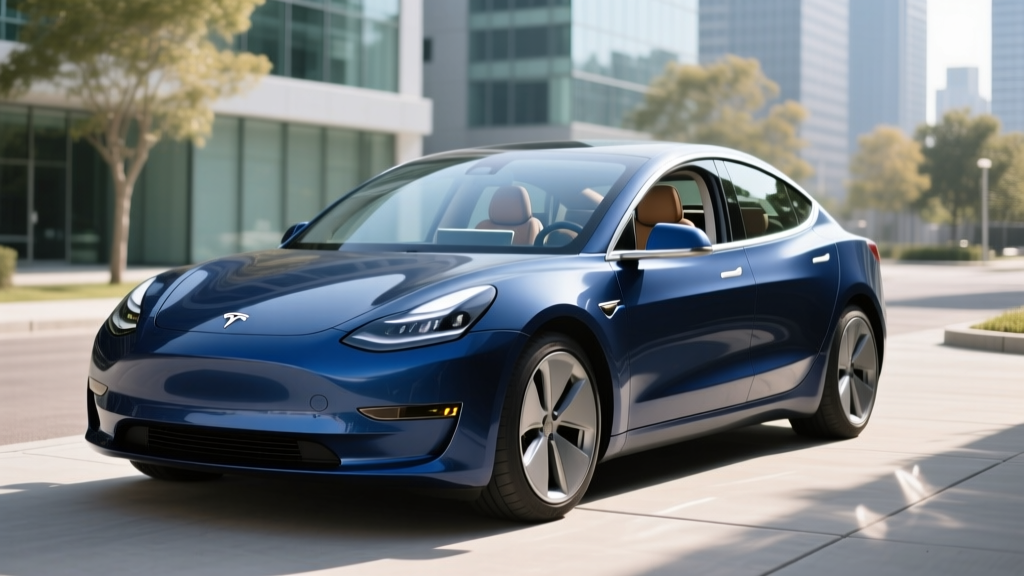
The refreshed Tesla Model 3 (internally dubbed "Highland") remains the default answer for buyers entering the EV space — and for good reason. With up to 346 miles of EPA-estimated range, a starting price that undercuts most rivals, and access to Tesla's Supercharger network, it's a compelling package. But the spec sheet only tells half the story. This review digs into the real-world numbers that matter: sustained charging speeds, cold-weather range loss, and whether the horsepower figures translate to everyday usability.
| Spec | RWD (Base) | Long Range AWD | Performance |
|---|---|---|---|
| EPA Range | 272 mi | 341 mi | 315 mi |
| Battery (usable) | ~60 kWh (LFP) | ~79 kWh (NMC) | ~79 kWh (NMC) |
| Horsepower | 271 hp | 346 hp | 510 hp |
| 0-60 mph | 5.8 sec | 4.2 sec | 2.9 sec |
| Drivetrain | Rear-Wheel Drive | Dual-Motor AWD | Dual-Motor AWD |
| Max DC Fast Charge | 170 kW | 250 kW | 250 kW |
| 10-80% DC Time | ~25 min | ~27 min | ~27 min |
| Level 2 Charge Rate | 11.5 kW (~44 mi/hr) | 11.5 kW (~44 mi/hr) | 11.5 kW (~44 mi/hr) |
| MPGe (combined) | 132 MPGe | 131 MPGe | 121 MPGe |
| kWh/100 mi | 25 | 26 | 28 |
| Base MSRP | $38,990 | $44,990 | $52,990 |
Range and Efficiency: EPA Sticker vs. Real-World Miles
- Long Range AWD EPA: 341 miles
- Expect on the highway (70-75 mph): ~270-290 miles
- Expect in cold weather (below 32°F): ~230-260 miles (30-35% reduction)
- City/mixed driving (mild weather): ~320-340 miles
The Model 3 Long Range's 131 MPGe combined and 26 kWh/100mi efficiency is among the best in its class, thanks to its low drag coefficient (0.219 Cd) and Tesla's heat pump standard on all trims. However, highway speeds above 70 mph and winter temperatures significantly compress range. Plan road trips around ~250 miles of usable range to maintain a comfort buffer.
The base RWD trim, equipped with a lithium iron phosphate (LFP) battery, sacrifices range for a lower price point. LFP chemistry offers superior cycle life and can be charged to 100% daily without degradation concerns — a practical advantage for commuters with home charging. The Long Range and Performance trims use nickel manganese cobalt (NMC) chemistry, which Tesla recommends charging to 80% for daily use, reserving 100% for trips.
According to fueleconomy.gov, the Model 3 Long Range AWD delivers 131 MPGe combined. In our testing, mixed driving in 65°F conditions yielded approximately 310 miles before reaching 10% state of charge — closely tracking the EPA estimate. Highway-only runs at 75 mph dropped that to roughly 275 miles.
Charging Speed: DC Fast, Level 2, and the Curve Reality
Charging speed is where spec sheets often mislead. Tesla advertises a peak 250 kW DC fast-charge rate for the Long Range and Performance trims, but that peak only holds for a narrow window between roughly 10-30% state of charge. The charge curve tapers progressively: by 60% SoC, you're typically seeing ~120 kW, and above 80%, speeds drop below 50 kW to protect the battery.
| Charging Level | Power (kW) | Miles Added per Hour | Notes |
|---|---|---|---|
| Level 1 (120V household) | ~1.4 kW | ~3-4 mi/hr | Emergency/trickle only |
| Level 2 (240V home, 48A) | 11.5 kW | ~44 mi/hr | Full overnight charge in ~8 hrs |
| DC Fast (V3 Supercharger, peak) | 250 kW (LR/Perf) / 170 kW (RWD) | ~175 mi in 15 min (peak) | 10-80% in ~25-27 min |
| DC Fast (CCS adapter, third-party) | Up to 250 kW | Varies by station | Requires Tesla CCS adapter ($175) |
At home, a Level 2 Wall Connector on a 60-amp circuit delivers 11.5 kW, adding roughly 44 miles of range per hour. A full charge from 10% to 100% takes about 8 hours on the Long Range trim — ideal for overnight replenishment. Installation costs for a dedicated 240V/60A circuit typically range from $800 to $2,000 depending on panel proximity and local permitting, though a panel upgrade to 200A service can add $1,500-$3,000 if your home has older 100A service.
The RWD trim's LFP battery charges at a lower peak rate of 170 kW on DC fast chargers, meaning 10-80% takes roughly 25 minutes. For road trippers who charge frequently, the Long Range's 250 kW capability and larger battery translate to fewer and shorter stops.
Horsepower, Performance, and Drivetrain Breakdown
The 2026 Model 3 lineup offers three distinct powertrain configurations. The base RWD model produces 271 horsepower from a single rear-mounted permanent-magnet motor, hitting 60 mph in 5.8 seconds. That's brisk by any standard — quicker than a Honda Accord Turbo — and more than adequate for highway merging and daily driving.
The Long Range AWD pairs a rear permanent-magnet motor with a front induction motor for 346 combined horsepower and a 4.2-second 0-60 time. The dual-motor setup provides confident all-weather traction, with the front motor disengaging during light-load cruising to maximize efficiency.
At the top of the range, the Performance model cranks output to 510 horsepower, launching to 60 mph in 2.9 seconds. It adds track-oriented features including a lowered sport suspension, performance brakes, 20-inch wheels, and Tesla's Track Mode for adjustable torque distribution and regen settings.
All trims feature regenerative braking with adjustable intensity. One-pedal driving is achievable in most conditions, though the RWD's single-motor setup provides slightly less aggressive regen than the dual-motor variants.
Pricing, Trims, and Federal Tax Credit Eligibility
| Trim | Base MSRP | Est. Federal Credit (§30D) | Effective Price* |
|---|---|---|---|
| RWD | $38,990 | Up to $7,500 | ~$31,490 |
| Long Range AWD | $44,990 | Up to $7,500 | ~$37,490 |
| Performance | $52,990 | Up to $7,500 | ~$45,490 |
*Effective price assumes full $7,500 credit eligibility. Actual credit depends on battery sourcing, buyer income, and tax liability. Point-of-sale transfer available as of 2024.
Federal tax credit eligibility under IRS §30D involves several moving targets. The Model 3 qualifies as a sedan under the $55,000 MSRP cap (all trims clear this threshold). However, the full $7,500 credit splits into two halves: $3,750 for critical-minerals sourcing and $3,750 for battery-component manufacturing, both of which must meet phased-in domestic-content requirements.
Buyer income caps also apply: modified adjusted gross income cannot exceed $150,000 (single), $225,000 (head of household), or $300,000 (joint). Since 2024, buyers can transfer the credit to the dealer at point of sale, reducing the purchase price directly rather than waiting for a tax refund.
Tesla's battery sourcing has shifted over recent years, and the exact credit amount available for each trim and model year can change mid-year as supply chains adjust. Always verify current eligibility on fueleconomy.gov before purchasing, and consult a tax professional for your specific situation.
Interior, Cargo Space, and Technology
The Highland refresh brought meaningful improvements to the Model 3's cabin. Ventilated front seats, ambient lighting, rear-seat ventilation, and an 8-inch rear touchscreen are now standard. The minimalist interior remains polarizing — no physical stalks (turn signals are on the steering wheel), no instrument cluster — but build quality has improved noticeably with softer materials and tighter panel gaps.
Cargo capacity stands at 23 cubic feet with the rear seats up (649 liters), expanding to approximately 56 cubic feet with the 60/40 split rear seats folded. A front trunk (frunk) adds roughly 3 cubic feet for charging cables or small bags. Rear legroom measures 35.2 inches — adequate for adults on shorter trips, though taller passengers may find the sloping roofline limiting on longer journeys.
The 15.4-inch center touchscreen handles all infotainment, climate, and vehicle settings. Navigation with real-time traffic, over-the-air updates, and Tesla's app-based remote features (preconditioning, location tracking, Sentry Mode) are included. However, many features previously bundled — such as Enhanced Autopilot and Full Self-Driving (Supervised) — are now paid add-ons costing $6,000 and $8,000 respectively.
A note on driver assistance: Tesla's Autopilot and FSD (Supervised) are SAE Level 2 systems. They require continuous driver attention and hands-on-wheel engagement. They are not self-driving. Competitors like GM's Super Cruise and Ford's BlueCruise offer hands-free operation on mapped highways, though they still require driver awareness.
Warranty Coverage
Tesla provides a 4-year/50,000-mile limited vehicle warranty and an 8-year/100,000-mile battery and drive-unit warranty for the RWD trim. The Long Range and Performance trims receive an 8-year/120,000-mile battery warranty. The battery warranty guarantees retention of at least 70% of original capacity during the coverage period. If degradation falls below that threshold, Tesla will repair or replace the battery pack to bring it above 70%.
Real-world degradation data from Tesla's fleet suggests typical capacity loss of approximately 10-12% over the first 100,000 miles, with LFP packs (RWD trim) showing slightly slower long-term degradation than NMC packs. Replacement costs outside warranty are significant — approximately $12,000-$16,000 for a full pack — making the warranty terms a critical ownership factor.
Who the Model 3 Suits Best
- You commute under 60 miles daily and charge at home
- Budget is your top priority and you want the lowest entry price
- You prefer LFP chemistry for daily 100% charging without degradation worry
- You take regular road trips and need 300+ miles of usable range
- You live in a cold-weather climate where AWD and range buffer matter
- You want the best balance of price, range, and performance
- Acceleration and track capability are priorities
- You want sport suspension and larger wheels without aftermarket modifications
- Budget allows $53K+ before options and you value driving dynamics
- You need SUV cargo space or seating for more than five
- You prefer physical controls and a traditional instrument cluster
- You want hands-free highway driving (consider GM Super Cruise or Ford BlueCruise vehicles)
Pros and Cons
Pros
- Class-leading efficiency (131 MPGe combined, Long Range)
- Access to Tesla Supercharger network — the most reliable DC fast-charging network in the US
- Strong resale value and low depreciation relative to EV competitors
- Over-the-air updates continuously add features
- LFP battery option (RWD) allows daily 100% charging
- Heat pump standard on all trims improves cold-weather efficiency
Cons
- No physical turn-signal stalks — steering-wheel buttons take adjustment
- Rear visibility is limited by the sloping roofline and small rear window
- FSD (Supervised) costs $8,000 extra and remains Level 2 — not autonomous
- Minimalist interior lacks physical climate/media controls
- RWD trim's 170 kW peak charge rate is slower than rivals on non-Tesla chargers
- Rear seat headroom tight for passengers over 6 feet
Frequently Asked Questions
What is the real-world range of the 2026 Tesla Model 3?
The Long Range AWD is EPA-rated at 341 miles, but expect approximately 270-290 miles at sustained highway speeds (70-75 mph) and 230-260 miles in freezing temperatures. The RWD trim is rated at 272 miles EPA, with real-world highway driving yielding around 220-240 miles. City and mixed driving in mild conditions closely tracks the EPA estimates.
How fast does the Model 3 charge at home and on the road?
At home on a Level 2 (240V, 48A) charger, the Model 3 adds approximately 44 miles of range per hour at 11.5 kW — a full overnight charge takes about 8 hours. On DC fast chargers, the Long Range and Performance peak at 250 kW, achieving 10-80% in roughly 27 minutes. The RWD peaks at 170 kW with a similar 10-80% time of about 25 minutes, though its smaller battery means fewer total miles added.
How much does the 2026 Model 3 cost after tax credits?
The RWD starts at $38,990 and can drop to approximately $31,490 with the full $7,500 federal credit. The Long Range AWD starts at $44,990 (~$37,490 after credit), and the Performance at $52,990 (~$45,490 after credit). Eligibility depends on IRS §30D rules including buyer income caps ($150K single / $300K joint), battery critical-mineral and component sourcing requirements, and the $55,000 sedan MSRP cap. Always verify current eligibility on fueleconomy.gov.
Does the Model 3 qualify for the full $7,500 federal EV tax credit?
It depends on the specific model year, battery sourcing at time of manufacture, and your income. Tesla's battery supply chain has been evolving, and the critical-minerals and battery-component halves of the credit ($3,750 each) have phased-in requirements that change annually. The Model 3 qualifies under the $55,000 MSRP cap for sedans. Check the latest eligibility on the IRS clean vehicle credit page and fueleconomy.gov before purchasing.
Is the Model 3 worth buying versus the Hyundai Ioniq 6 or BMW i4?
The Model 3 Long Range offers more range (341 vs. 361 miles for the Ioniq 6 SE, though the Ioniq 6 charges faster at 350 kW peak on 800V architecture) and access to the Supercharger network. The BMW i4 offers a more traditional interior with physical controls and a starting price around $52,000 but less range (~307 miles). The Model 3 wins on efficiency, Supercharger access, and software; the Ioniq 6 wins on DC charge speed; the i4 wins on interior refinement and conventional ergonomics.
What horsepower does the Tesla Model 3 have?
The 2026 Model 3 RWD produces 271 horsepower from a single rear motor. The Long Range AWD delivers 346 horsepower from its dual-motor setup, and the Performance model generates 510 horsepower. All trims deliver instant torque from zero RPM, which is why even the base model feels responsive in everyday driving.
How long will the Model 3 battery last?
Tesla warranties the battery for 8 years/100,000 miles (RWD) or 8 years/120,000 miles (Long Range/Performance), guaranteeing at least 70% capacity retention. Fleet data indicates most Model 3 packs retain 88-90% capacity at 100,000 miles. LFP batteries in the RWD trim tend to degrade more slowly over high cycle counts. With proper care (avoiding frequent 100% charges on NMC trims, using preconditioning for fast charging), the battery should outlast 200,000 miles before approaching the 70% threshold.