Quick Answer: Is a Chevy EV Right for You?
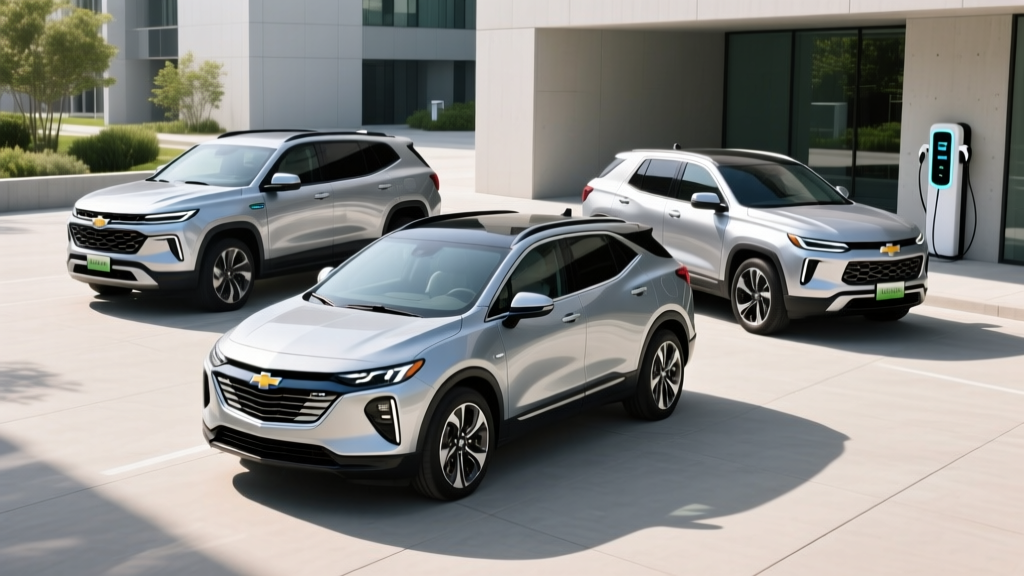
Chevrolet's 2026 battery-electric lineup spans three distinct models built on GM's Ultium platform: the Equinox EV (compact crossover, EPA range up to 319 miles, starting ~$33,600), the Blazer EV (midsize crossover, up to 324 miles, starting ~$44,600), and the Silverado EV (full-size truck, up to 492 miles, starting ~$57,900). All three support DC fast charging at 150–350 kW and qualify for varying levels of the federal §30D tax credit depending on trim, battery sourcing, and buyer income. The Equinox EV is the strongest value play for daily commuters with home charging; the Silverado EV targets truck buyers who tow moderately and want fuel-cost savings; the Blazer EV sits between them for families needing more space. If you lack reliable home or workplace Level 2 charging, any of these models will cost you more time and money on public DC fast charging — factor that in before committing.
The 2026 Chevy EV Lineup at a Glance
GM has consolidated its Chevrolet EV offerings around the Ultium battery architecture, which uses NMC (nickel manganese cobalt) chemistry across all three models. This chemistry prioritizes energy density — meaning more range per pound — but it also means you'll want to follow the 20–80% daily charging rule to minimize long-term degradation. Unlike LFP batteries found in some Tesla and Ford models, NMC cells don't tolerate regular 100% sessions as gracefully.
| Spec | Equinox EV | Blazer EV | Silverado EV |
|---|---|---|---|
| EPA Range (max trim) | 319 mi (LT2 FWD) | 324 mi (2LT AWD) | 492 mi (4WT Max Range) |
| Battery (usable) | ~85 kWh NMC | ~102 kWh NMC | ~200 kWh NMC (Max Range) |
| DC Fast Charge (peak) | 150 kW | 190 kW | 350 kW |
| 10–80% DCFC Time | ~34 min | ~30 min | ~25 min |
| Level 2 Rate | 11.5 kW | 11.5 kW | 19.2 kW (available) |
| 0–60 mph | ~7.8 sec (FWD) | ~5.4 sec (AWD) | ~4.5 sec (4WT) |
| Horsepower | 213 hp (FWD) | 288–557 hp | 510–754 hp |
| Towing Capacity | 1,500 lb | 1,500 lb | 12,500 lb (4WT) |
| Base MSRP | ~$33,600 | ~$44,600 | ~$57,900 |
| Battery Warranty | 8 yr / 100k mi | 8 yr / 100k mi | 8 yr / 100k mi |
Real-World Range vs. EPA Sticker
EPA range is measured under mixed driving conditions at moderate temperatures. Here's what to actually expect:
- Highway driving (70–80 mph): Subtract 10–15%. The Equinox EV's 319-mile sticker drops to roughly 270–285 miles at sustained interstate speeds.
- Cold weather (below 32°F): Subtract 20–30%. The Blazer EV's 324 miles could fall to 225–260 miles in freezing conditions without preconditioning. All three models include a heat pump, which helps but doesn't eliminate the loss.
- Towing (Silverado EV): Expect a 40–50% range reduction when pulling near max capacity. A 492-mile truck towing 10,000 pounds may deliver only 250–290 miles.
Chevy EV vs. Gas: Real Cost Comparison
The upfront price of a Chevy EV is often higher than its gas counterpart, but operating costs tell a different story — especially if you charge at home on a residential electricity rate. Let's compare the Equinox EV to the gas Equinox over five years and 75,000 miles.
| Cost Factor | Equinox EV (LT2 FWD) | Gas Equinox (LT AWD) |
|---|---|---|
| Base MSRP | $33,600 | $31,400 |
| Federal Tax Credit (§30D) | Up to $7,500* | $0 |
| Effective Purchase Price | ~$26,100 | $31,400 |
| Fuel / Electricity (75k mi) | ~$2,625 (home, $0.14/kWh) | ~$8,440 ($3.50/gal, 26 MPG) |
| Maintenance (75k mi) | ~$600 | ~$2,800 |
| Insurance (avg/yr) | ~$1,950 | ~$1,650 |
| 5-Year Total (purchase + fuel + maint + ins) | ~$42,600 | ~$53,040 |
*Federal §30D credit eligibility depends on MSRP caps (SUVs: ≤$80,000), buyer AGI limits ($150k single / $300k joint), battery critical-mineral and component sourcing requirements, and point-of-sale transfer election. Always verify current rules at IRS.gov and confirm with a tax professional.
The Equinox EV saves roughly $10,400 over five years in this scenario — but that math assumes consistent home charging at average residential rates. If you're paying $0.40–$0.60/kWh at public DC fast chargers (common on Electrify America and EVgo), your fuel cost jumps to $5,000–$7,500, erasing much of the advantage.
Charging the Chevy EV Lineup: What You Need to Know
All 2026 Chevy EVs come equipped with the NACS (North American Charging Standard) connector, meaning native access to Tesla Supercharger stations — a significant network advantage over CCS-only vehicles. GM completed its NACS transition for the 2025 model year, so no adapter is needed.
| Level | Power | Miles Added/Hour (Equinox EV) | Typical Use |
|---|---|---|---|
| Level 1 (120V) | ~1.4 kW | ~4 mi/hr | Overnight top-up, emergencies |
| Level 2 (240V, 48A) | 11.5 kW | ~34 mi/hr | Home daily charging, workplaces |
| DC Fast (Equinox) | 150 kW peak | ~180 mi in 15 min | Road trips, quick stops |
| DC Fast (Silverado) | 350 kW peak | ~200 mi in 10 min | Road trips (requires 350 kW station) |
Home Charging Installation: Budget Realistically
A Level 2 home charger is practically mandatory for convenient Chevy EV ownership. Here's what installation actually costs:
| Item | Cost Range |
|---|---|
| Level 2 Charger (hardwired, 48A) | $400–$700 |
| Electrician (240V/50A circuit run) | $800–$2,500 |
| Permit & Inspection | $100–$300 |
| Electrical Panel Upgrade (if needed) | $1,500–$3,500 |
| Total (no panel upgrade) | $1,300–$3,500 |
| Total (with panel upgrade) | $2,800–$7,000 |
Have a licensed electrician evaluate your panel before purchasing. A 200-amp service panel is typically sufficient; older 100-amp panels almost always need upgrading. The Silverado EV's available 19.2 kW Level 2 capability requires a dedicated 80A circuit — confirm your home's electrical capacity supports this before selecting that option.
Preconditioning matters: All three Chevy EVs allow you to precondition the battery while plugged in, warming it to optimal temperature before a DC fast-charging session. This can shave 5–10 minutes off your 10–80% charge time in cold weather. Set departure times in the MyChevy app to precondition automatically.
Federal Tax Credit & Incentive Reality for Chevy EVs
The §30D Clean Vehicle Credit offers up to $7,500, split into two halves: $3,750 for meeting critical-mineral sourcing thresholds and $3,750 for battery-component sourcing. As of 2026, GM's Ultium battery packs are assembled in the U.S., and the company has been steadily increasing domestic critical-mineral supply. However, the exact credit amount varies by model and model year as sourcing requirements tighten annually.
§30D Eligibility Checklist (2026 Rules)
- MSRP Cap: Vans/SUVs/pickups ≤ $80,000; sedans ≤ $55,000. All current Chevy EV trims fall under the cap.
- Buyer AGI Limits: ≤ $150,000 (single), ≤ $225,000 (head of household), ≤ $300,000 (married filing jointly).
- Battery Sourcing: Critical minerals and battery components must meet escalating domestic/free-trade-agreement thresholds. Foreign Entity of Concern (FEOC) restrictions apply.
- Point-of-Sale Transfer: You can transfer the credit to the dealer at purchase, reducing your out-of-pocket cost immediately — even if you have no tax liability.
- VIN Verification: Confirm your specific vehicle's eligibility at fueleconomy.gov before signing paperwork.
Common Chevy EV Misconceptions — Corrected
| Myth | Fact |
|---|---|
| "The battery will need replacing in 5 years." | GM warrants the Ultium battery for 8 years/100,000 miles with a minimum 60% capacity retention threshold. Real-world NMC degradation data from comparable Ultium packs shows roughly 5–8% loss over the first 100,000 miles under normal use. |
| "I can charge on any public station." | Chevy EVs now use NACS natively. Most Electrify America and EVgo stations still primarily offer CCS1 connectors. You'll have full Supercharger access, but verify non-Tesla network compatibility for your routes. |
| "The Silverado EV tows just like a gas truck." | While rated for up to 12,500 lb, towing near max capacity cuts range by 40–50%. A 492-mile Silverado EV may deliver only 250–290 miles with a heavy trailer. Plan charging stops accordingly. |
| "EVs cost more to insure, always." | Insurance premiums for the Equinox EV average 15–20% higher than the gas version, but the gap narrows for the Blazer EV and Silverado EV. Shop quotes from multiple carriers — some now offer EV-specific discounts. |
| "Super Cruise means I don't need to pay attention." | Super Cruise is an SAE Level 2 driver-assistance system. It requires continuous driver supervision on pre-mapped divided highways. The driver-monitoring camera will alert and disengage if you look away. This is not autonomous driving. |
SAE Automation Level: Super Cruise
Chevrolet's Super Cruise and available Ultra Cruise are Level 2 systems under the SAE J3016 framework. The vehicle handles steering and speed on compatible roads, but the driver must remain engaged, monitor the road, and be prepared to take over instantly. Only Level 4 systems (like Waymo's robotaxi service) operate without a human driver.
Decision Framework: Which Chevy EV Fits Your Life?
Choose the Equinox EV if:
- Your daily commute is under 80 miles round-trip
- You have (or can install) Level 2 home charging
- Your budget is $30,000–$40,000 and you want maximum value per dollar
- You don't need to tow more than 1,500 lb
- You want the lowest operating cost in the Chevy EV lineup
Choose the Blazer EV if:
- You need more rear-seat room and cargo space for a family
- You want optional AWD and stronger acceleration (SS trim: 557 hp)
- Your budget is $44,000–$60,000
- You take regular road trips and value 190 kW DC fast charging
Choose the Silverado EV if:
- You need a full-size truck bed and up to 12,500 lb towing capacity
- You want maximum range (492 mi on Max Range trim) for long hauls
- Your budget is $55,000–$90,000+
- You have access to 350 kW DC fast chargers on your common routes
- You understand that towing significantly reduces effective range
Don't choose a Chevy EV yet if:
- You lack reliable Level 2 charging at home or work (apartment dwellers without charging access should consider a PHEV like the upcoming Chevy Equinox PHEV or a Toyota RAV4 Prime)
- Your regular routes run through DC fast-charging deserts (rural stretches with no Supercharger or public infrastructure)
- You frequently tow heavy trailers in sub-freezing weather — the range penalty compounds severely
Ownership Costs: 5-Year Breakdown by Model
| Cost Category | Equinox EV | Blazer EV | Silverado EV |
|---|---|---|---|
| Purchase (after est. credit) | ~$26,100 | ~$37,100 | ~$50,400 |
| Home Charger Install | $2,000 | $2,000 | $2,500 |
| Electricity (75k mi, home) | $2,625 | $3,150 | $4,200 |
| Maintenance (75k mi) | $600 | $700 | $900 |
| Insurance (5 yr est.) | $9,750 | $10,500 | $11,250 |
| Estimated Depreciation | $9,500 | $14,000 | $18,000 |
| 5-Year Total Cost | ~$50,575 | ~$67,450 | ~$87,250 |
Estimates based on 15,000 mi/yr, $0.14/kWh residential rate, 2026 average insurance premiums. Depreciation figures are estimates based on current EV resale trends from iSeeCars and Kelley Blue Book data. Actual results vary by market, condition, and incentive changes.
Frequently Asked Questions
What does the reader want to know about buying a Chevy EV in 2026?
Most buyers are weighing three things: whether the range covers their real driving needs, whether they can charge conveniently at home, and whether the total cost undercuts a comparable gas vehicle. The Equinox EV answers all three affirmatively for most commuters. The Blazer EV and Silverado EV require more scrutiny on charging access and use-case fit, particularly for towing and long-distance travel.
How does a Chevy EV compare to a gas Equinox, Blazer, or Silverado?
On purchase price alone, gas versions still win — until you factor in the federal tax credit. The Equinox EV's effective price after a potential $7,500 credit undercuts the gas Equinox. Over five years, fuel and maintenance savings typically add $8,000–$12,000 in savings. However, EV insurance premiums run 15–20% higher, and if you cannot charge at home, public DCFC costs narrow the gap significantly. According to fueleconomy.gov, the Equinox EV achieves 114 MPGe combined versus the gas Equinox's 26 MPG combined.
What are the real costs and savings of owning a Chevy EV?
Home charging at $0.14/kWh costs roughly $0.035–$0.045 per mile depending on the model's efficiency. A gas Equinox at $3.50/gallon and 26 MPG costs about $0.135 per mile — roughly 3x more. Maintenance savings come from eliminating oil changes, spark plugs, transmission fluid, and reducing brake wear through regenerative braking. Over 75,000 miles, expect to save $5,000–$6,000 on fuel and $2,000+ on maintenance. Offset this against higher insurance ($1,500–$2,000 over 5 years) and potential home charger installation ($1,300–$3,500).
What should a first-time Chevy EV buyer know before purchasing?
Five things: (1) Install a Level 2 home charger before or immediately after delivery — it transforms the ownership experience. (2) Set your daily charge limit to 80% to preserve NMC battery health; only charge to 100% before long trips. (3) Use the MyChevy app to precondition the battery before DC fast charging, especially in cold weather. (4) Verify your specific VIN's tax credit eligibility at fueleconomy.gov before signing — credit amounts can change with sourcing updates. (5) Understand the charge curve: peak kW rates apply only between roughly 10–50% state of charge. Above 80%, charging slows dramatically to protect the battery. Plan road-trip stops to charge from 10–80%, not 0–100%.
Does the Chevy EV battery degrade quickly?
GM's Ultium NMC packs are liquid-cooled with active thermal management, which significantly slows degradation compared to passively cooled packs. Expect roughly 2–3% capacity loss in the first year (the initial "knee"), then approximately 0.5–1% per year thereafter under normal use. The 8-year/100,000-mile warranty guarantees at least 60% of original capacity — a conservative floor. Real-world data from early Ultium vehicles suggests most packs will retain 85–90% capacity at the 100,000-mile mark.
Can I use Tesla Superchargers with a Chevy EV?
Yes. All 2026 Chevy EVs feature the native NACS charge port, granting direct access to the Tesla Supercharger network without an adapter. This is one of the strongest practical advantages of the Chevy EV lineup over competing CCS-equipped vehicles, as the Supercharger network remains the most reliable and widespread DC fast-charging infrastructure in the U.S.