The Tesla Model 3 remains the benchmark compact electric sedan in 2026, offering class-leading efficiency, access to the Supercharger network, and a minimalist cabin that forces owners to solve one problem immediately: where to mount your phone. Because Tesla's 15.4-inch center touchscreen handles navigation, media, and climate controls, there is no traditional instrument cluster and no dedicated phone cubby with a wireless charger in plain sight. That makes choosing the right Tesla phone holder a genuine ownership essential — not an afterthought.
This review covers the 2026 Tesla Model 3 in full — range, charging, performance, pricing, and tax-credit eligibility — and then tackles the phone-mount question with specific product recommendations for both the refreshed Highland-body Model 3 and prior-generation cars still on the road.
2026 Tesla Model 3: Quick Verdict
The 2026 Model 3 Long Range AWD delivers 341 miles of EPA-estimated range, 250 kW peak DC fast charging, and dual-motor all-wheel drive starting at $42,490 before incentives. It is the efficiency king of the segment — 132 MPGe combined, or roughly 25 kWh per 100 miles — and it remains the most affordable way into the Supercharger ecosystem. The cabin is quieter and better-built than pre-2024 Highland cars, but the phone-mounting situation hasn't improved from the factory. Plan to spend $25–$60 on an aftermarket Tesla phone holder to keep your device accessible for two-factor authentication, toll apps, or CarPlay-via-mirrorlink workarounds.
Range, Efficiency, and Real-World Expectations
| Spec | Model 3 RWD | Model 3 Long Range AWD | Model 3 Performance |
|---|---|---|---|
| EPA Range | 272 mi | 341 mi | 315 mi |
| Battery (usable) | 57.5 kWh (LFP) | 75 kWh (NMC) | 75 kWh (NMC) |
| MPGe (combined) | 142 MPGe | 132 MPGe | 124 MPGe |
| Efficiency (kWh/100 mi) | 24 | 25 | 27 |
| 0–60 mph | 5.8 sec | 4.2 sec | 2.9 sec |
| Horsepower | 271 hp | 346 hp | 510 hp |
| Drivetrain | RWD | Dual-Motor AWD | Dual-Motor AWD |
Tesla's heat pump (standard on all 2026 Model 3 trims) recovers waste heat from the drive unit to warm the cabin, cutting winter range loss roughly in half compared to older resistive-heater EVs. Still, physics wins: a 341-mile car becomes a ~250-mile car on a 10°F January morning in Minneapolis. According to fueleconomy.gov, the Long Range AWD achieves 132 MPGe combined — besting the Hyundai Ioniq 6 (140 MPGe on smaller battery) and the BMW i4 eDrive40 (109 MPGe).
Charging Speed: DC Fast, Level 2, and Level 1
| Charging Level | Power / Rate | Speed (miles added) | Notes |
|---|---|---|---|
| DC Fast Charge (peak) | 250 kW (Long Range/Perf) 175 kW (RWD LFP) | ~1,000 mi/hr at peak | 10–80% in ~25 min (LR); tapers sharply above 80% |
| Level 2 (home, 48A) | 11.5 kW | ~37 mi/hr | Full charge in ~7–8 hrs; requires 60A circuit |
| Level 2 (home, 32A) | 7.7 kW | ~25 mi/hr | Full charge in ~10–11 hrs; 40A circuit |
| Level 1 (120V outlet) | ~1.4 kW | ~4–5 mi/hr | Emergency/trickle only; ~60 hrs for full charge |
The Model 3 Long Range and Performance peak at 250 kW on a V3 or V4 Supercharger, but that peak only holds between roughly 10% and 30% state of charge. By 50%, you're at ~150 kW; by 80%, you've dropped below 60 kW. A realistic 10–80% session takes about 25 minutes at a V3 Supercharger with a preconditioned battery. Skip preconditioning and add 5–10 minutes.
The RWD model with its LFP battery peaks at 175 kW — slower, but LFP cells tolerate regular 100% charging without accelerated degradation, so you can charge to full daily and simply use less of the battery on short commutes. Tesla recommends 100% charge at least weekly for LFP packs to maintain cell-balancing accuracy.
For home Level 2 charging, the onboard charger accepts up to 11.5 kW (48 amps). A Tesla Wall Connector on a dedicated 60-amp circuit delivers the full rate — roughly 37 miles of range per hour of charging. Budget $500–$1,500 for professional installation depending on panel proximity, per typical electrician quotes. If your panel is maxed out, a load-management device or panel upgrade can add $1,500–$3,000.
Performance, Ride, and Daily Drivability
The 2026 Model 3 Performance does 0–60 mph in 2.9 seconds with 510 hp from its dual-motor setup, putting it in sports-car territory. But most buyers should look at the Long Range AWD: 4.2 seconds to 60 is quick by any sedan standard, and the all-wheel-drive traction handles rain and light snow confidently.
The post-Highland refresh (introduced for the 2024 model year and carried forward into 2026) brought meaningful improvements: acoustic glass all around, redesigned suspension bushings, ventilated front seats, ambient lighting, and rear-seat ventilation with a small touchscreen for rear passengers. Road noise dropped measurably — roughly 3–4 dB at highway speed versus the pre-2024 car. The ride is firm but controlled; it's a sport sedan, not a luxury barge.
Cargo space measures 23 cu ft combined (trunk + frunk), which is competitive with the BMW i4 (22 cu ft) but trails the Hyundai Ioniq 6's 25 cu ft. Rear legroom is 35.3 inches — adequate for adults under 6 feet but tight for taller passengers on long trips.
Pricing, Trims, and Federal Tax Credit Eligibility
| Trim | Base MSRP | Est. After §30D Credit* | Key Features |
|---|---|---|---|
| Model 3 RWD | $36,490 | ~$28,990 | LFP battery, 272 mi range, basic Autopilot |
| Model 3 Long Range AWD | $42,490 | ~$34,990 | NMC battery, 341 mi range, AWD, premium interior |
| Model 3 Performance | $49,490 | ~$41,990 | Track mode, adaptive dampers, 315 mi range |
*Federal tax credit estimates assume buyer meets all IRS §30D requirements. Credit amount and eligibility vary by sourcing compliance, buyer income, and MSRP caps. Always verify current rules at irs.gov or consult a tax professional.
The §30D clean-vehicle credit offers up to $7,500, split into two $3,750 halves: one for battery-critical-minerals sourcing and one for battery-component manufacturing. As of 2026, Tesla's US-built Model 3 qualifies for the full $7,500 for eligible buyers, but you must meet these thresholds:
- Income caps: Modified AGI ≤ $150,000 (single), ≤ $225,000 (head of household), ≤ $300,000 (joint)
- MSRP cap: Vehicle base MSRP must not exceed $55,000 for sedans (all Model 3 trims qualify)
- Point-of-sale transfer: You can transfer the credit to the dealer at purchase, reducing your out-of-pocket cost immediately — no need to wait for tax filing
- Battery sourcing: Must meet critical-minerals and battery-component requirements per IRS guidance; Tesla's Fremont and Austin-built Model 3 currently qualifies
If your income exceeds the caps, you lose the federal credit entirely. Some states (California, Colorado, Massachusetts) offer additional rebates — check your state energy office for current programs.
Tech, Autopilot, and the Phone-Mount Problem
The 2026 Model 3 runs Tesla's latest software on the 15.4-inch center touchscreen with AMD Ryzen processor. Standard features include Basic Autopilot (SAE Level 2 lane-keeping and adaptive cruise), over-the-air updates, Sentry Mode dashcam recording, and Tesla Profiles for driver-specific settings.
FSD (Supervised) remains a $8,000 add-on or $99/month subscription. It handles highway on-ramps, lane changes, and city-street navigation, but it still makes errors at construction zones, unprotected left turns, and complex intersections. Budget for it only if you commute on well-mapped highways daily and understand you're paying for beta-level convenience, not autonomy.
Why You Need a Tesla Phone Holder
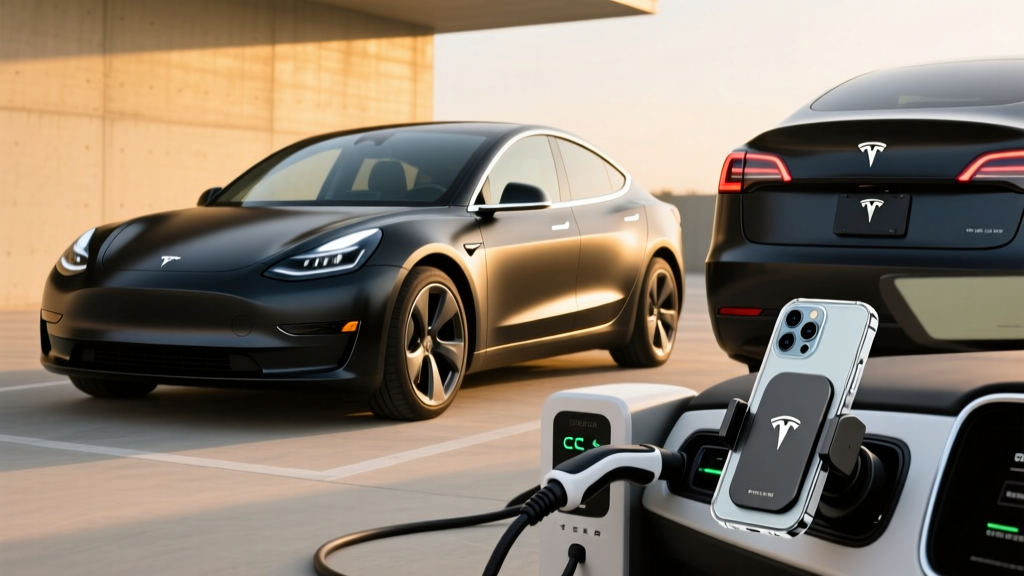
The Model 3 has no built-in wireless phone charger that positions the device for easy viewing. The center console has a Qi wireless pad (post-Highland refresh), but it faces downward into a cubby — invisible while driving. For drivers who rely on phone-based toll transponders, parking apps, two-factor authentication for work, or simply want a backup navigation display, a dedicated Tesla phone holder is essential.
Here are the best Tesla phone holder options for the 2026 Model 3 (Highland body):
- Taptes MagSafe Dashboard Mount ($35–$45): Clips to the left edge of the center screen bezel. Positions phone at eye-level without blocking the road view. Works with MagSafe and Qi2 cases. Best for iPhone 15/16 and Samsung Galaxy S25 users.
- Baseus Tesla-Specific Air Vent Mount ($25–$30): Attaches to the hidden rear air vents (accessible via the rear-screen HVAC controls). Low profile, but requires reaching further for the phone.
- Jowua Console Dock ($55–$65): Replaces the center-console lid with a dock that angles your phone toward the driver. Includes USB-C passthrough charging. Premium fit and finish.
- Spigen MagFit Vent Mount ($20–$28): Generic magnetic vent mount that works on the Model 3's slim horizontal vents with a small adapter clip. Budget-friendly, solid hold at highway speed.
Avoid suction-cup windshield mounts — Tesla's laminated acoustic glass doesn't hold suction well, and windshield mounts can trigger obstruction warnings in states with strict windshield-visibility laws.
Warranty, Battery Longevity, and Ownership Costs
Tesla covers the Model 3 with a 4-year/50,000-mile limited vehicle warranty and an 8-year/120,000-mile (Long Range/Performance) or 8-year/100,000-mile (RWD) battery and drive-unit warranty. The battery warranty guarantees at least 70% capacity retention over the warranty period.
Real-world degradation data from Tesla's fleet shows NMC packs (Long Range/Performance) losing roughly 10–12% capacity over 100,000 miles, with most loss occurring in the first 20,000 miles before stabilizing. LFP packs (RWD) degrade slightly more slowly but start with less total capacity. According to Tesla's 2025 Impact Report, Model 3 batteries retain an average of 85% capacity at 150,000 miles.
Insurance costs are the ownership wildcard. The Model 3 averages $2,200–$2,800/year for full coverage depending on state and driver profile — higher than comparable ICE sedans due to expensive sensor/camera repairs after collisions. Tesla's own insurance product (available in most states) uses real-time driving data and can be 10–20% cheaper for safe drivers.
Model 3 vs. Key Competitors: Is It Worth Buying?
- Best-in-class efficiency: 132 MPGe / 25 kWh per 100 mi
- Supercharger network: 6,000+ V3/V4 stalls in North America
- LFP option (RWD) for daily 100% charging without guilt
- OTA updates add features years after purchase
- Strong resale value relative to non-Tesla EVs
- No physical stalks — turn signals on steering wheel buttons (Highland)
- No Apple CarPlay / Android Auto support
- Phone charging cubby faces away from driver
- FSD still requires full supervision; expensive add-on
- Insurance premiums above segment average
Choose the Model 3 Long Range AWD if: You want maximum range per dollar, access to the most reliable DC fast-charging network, and a sport-sedan driving feel. It's the default recommendation for tech-forward commuters and road-trippers.
Choose the Hyundai Ioniq 6 instead if: You need Apple CarPlay, prefer physical buttons and stalks, or want a more traditional sedan silhouette. The Ioniq 6 SE offers 361 miles EPA and 800V charging (10–80% in ~18 min) starting at ~$38,000.
Choose the BMW i4 eDrive40 if: You want premium build quality, a more traditional luxury interior, and don't mind paying $52,000+ for a shorter 307-mile range.
Who the 2026 Tesla Model 3 Suits Best
Commuters: The RWD model at $36,490 with LFP battery is ideal for a 30–50-mile daily commute. Charge to 100% nightly on a home Level 2, and you'll barely cycle the battery — maximizing longevity.
Road-trippers: The Long Range AWD with 341 miles and Supercharger access is the best EV in this price range for cross-country travel. Plan stops every 200–230 miles at V3 stalls for 20-minute charge breaks.
Families: Rear-seat space is adequate for two kids in boosters but tight for three across. If you need a family EV, the Model Y (330 mi, more cargo and headroom) is the better call.
Performance enthusiasts: The Performance trim at $49,490 with adaptive dampers, track mode, and 2.9-second 0–60 is a legitimate sports sedan that happens to be electric. No gas car at this price matches the instant torque delivery.
Frequently Asked Questions
What is the real-world range of the 2026 Tesla Model 3?
The EPA rates the Long Range AWD at 341 miles. In real-world 70-mph highway driving at 65–75°F, expect 285–305 miles. In freezing weather, drop that to 230–250 miles. The RWD model with its smaller LFP battery delivers about 230 real-world highway miles.
How fast does the Model 3 charge at home and on the road?
On a DC fast charger, the Long Range/Performance peaks at 250 kW (10–80% in ~25 min). The RWD LFP peaks at 175 kW (10–80% in ~30 min). At home on a 48-amp Level 2, all trims accept 11.5 kW, adding ~37 miles per hour.
Does the 2026 Model 3 qualify for the federal EV tax credit?
Yes — all three trims currently qualify for the full $7,500 §30D credit for eligible buyers (income under $150K single / $300K joint, MSRP under $55K cap for sedans). The credit can be transferred at point of sale. Verify current eligibility at irs.gov.
What is the best Tesla phone holder for the 2026 Model 3?
The Taptes MagSafe screen-bezel mount ($35–$45) is the top pick for most drivers — it positions the phone near eye level without blocking visibility. For a cleaner integrated look, the Jowua Console Dock ($55–$65) replaces the console lid with an angled phone dock and USB-C passthrough.
Is the Model 3 worth buying over the Hyundai Ioniq 6 or BMW i4?
The Model 3 wins on charging-network access (Supercharger), efficiency, and software. The Ioniq 6 wins on charging speed (800V architecture), CarPlay support, and slightly more range. The BMW i4 wins on build quality and traditional luxury. For most buyers, the Model 3 Long Range AWD at ~$35K after the tax credit is the strongest value.
How long will the Model 3 battery last?
Tesla's battery warranty covers 8 years / 100,000–120,000 miles (depending on trim) with at least 70% capacity retention. Fleet data shows ~85% capacity at 150,000 miles for NMC packs. LFP packs degrade slightly slower. A full battery replacement out of warranty costs $12,000–$16,000 at a Tesla service center.