Quick Answer: Are Electric PWCs Worth It in 2026?
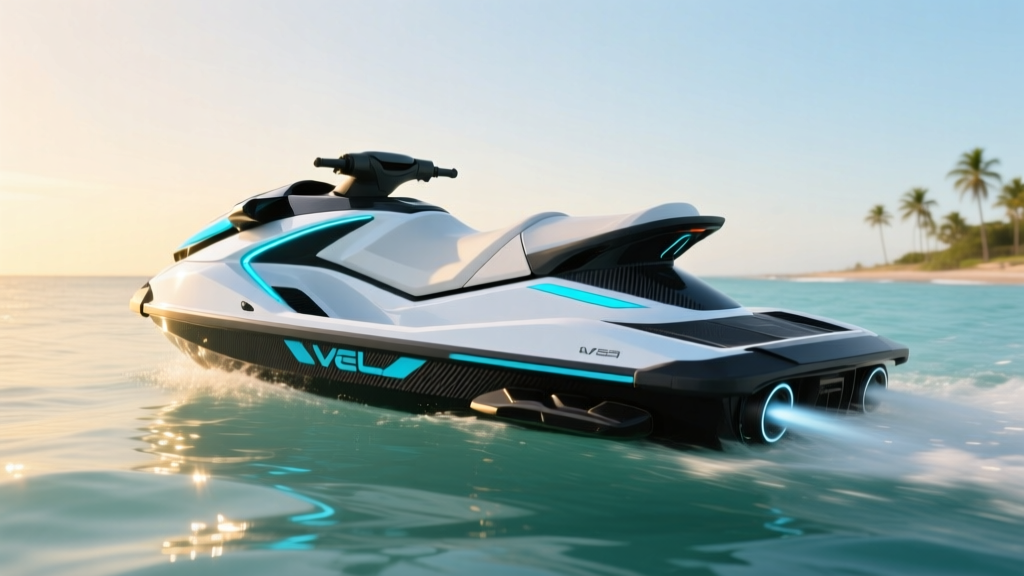
An electric PWC (personal watercraft) is a battery-powered alternative to a gas jet ski, using an electric motor and lithium-ion pack instead of a 2-stroke or 4-stroke combustion engine. As of 2026, the market is led by Taiga Motors (Orca series) with emerging competition from BRP/Sea-Doo and Chinese brands. Expect base prices of $15,000–$24,000, real-world ride times of 45–90 minutes depending on throttle use, and battery capacities in the 20–23 kWh range. Electric PWCs deliver instant torque, near-silent operation, and zero on-water exhaust — but they cost more upfront than comparable gas models, require shore-power access for recharging, and lack the 5+ hour endurance of a gas craft.
Important scope note: AutoEdgeView specializes in electric cars, trucks, and SUVs. Because readers searching for "electric PWC" are often cross-shopping their entire electrified lifestyle, we've assembled this guide using manufacturer specs and marine-industry data. For our core EV auto coverage, browse our main reviews.
What Is an Electric PWC — and How Does It Differ From a Gas Jet Ski?
A personal watercraft is a small, jet-propelled vessel you ride standing or seated. Gas PWCs from Sea-Doo, Yamaha, and Kawasaki dominate the market with 60–300 HP engines burning 8–25 gallons per hour. An electric PWC replaces the internal-combustion engine with a motor controller and a sealed lithium-ion battery (typically NMC chemistry for energy density). Propulsion still comes from a water jet pump, but the prime mover is silent, vibration-free, and requires no winterization of fuel systems, carburetors, or exhaust manifolds.
The key physics difference: energy density. Gasoline stores roughly 33.7 kWh per gallon. A 15-gallon gas PWC tank holds ~505 kWh of chemical energy; even at 25% thermal efficiency, that's ~125 usable kWh. A Taiga Orca's 23 kWh battery holds about one-fifth of that usable energy — which is why electric ride times are measured in minutes, not half-days. The trade-off is that electric drivetrains convert 85–90% of battery energy into motion, versus ~20–25% for gas, and they don't idle or waste energy at low speeds.
2026 Electric PWC Spec Comparison
| Spec | Taiga Orca Carbon | Taiga Orca Performance | BRP Sea-Doo (announced) | Gas baseline: Sea-Doo RXP-X 325 |
|---|---|---|---|---|
| Motor output | ~180 HP | ~160 HP | TBA (preliminary) | 325 HP (supercharged) |
| Battery capacity | ~23 kWh (NMC) | ~20 kWh (NMC) | Announced, unconfirmed | N/A — 15.9 gal fuel tank |
| Top speed | ~65 mph | ~62 mph | TBA | ~70 mph |
| 0–30 mph | ~3.0 sec | ~3.4 sec | TBA | ~2.5 sec |
| Real-world ride time (mixed use) | ~75–90 min | ~60–75 min | TBA | 4–6 hours (varies by throttle) |
| Charge time (240V Level 2) | ~2.5 hr (10–80%) | ~2 hr (10–80%) | TBA | Refuel: ~3 min |
| Base MSRP | ~$23,990 USD | ~$17,490 USD | TBA | ~$21,599 USD |
| Warranty | 5 yr powertrain, 2 yr battery | 5 yr powertrain, 2 yr battery | TBA | 1 yr limited (BRP) |
Sources: Taiga Motors official spec sheets; BRP press announcements; Sea-Doo RXP-X published specs. All electric PWC figures are manufacturer-stated; expect real-world ride time to drop 15–25% with aggressive throttle, cold water, or heavy passenger loads.
Electric PWC vs Gas: Cost-to-Operate Breakdown
The sticker price of an electric PWC stings — but operating costs tilt hard in the electric direction. Here's a 5-year/500-hour ownership model assuming $0.16/kWh residential electricity and $5.20/gallon premium marine fuel:
| Cost category (5 yr / 500 hr) | Electric PWC (Taiga Orca Perf.) | Gas PWC (Sea-Doo RXP-X 325) |
|---|---|---|
| Purchase price | $17,490 | $21,599 |
| Fuel / electricity | ~$2,400 (15 kWh/ride-hr avg) | ~$18,200 (7 gal/hr avg) |
| Engine maintenance (oil, plugs, winterization, impeller service) | ~$400 | ~$3,200 |
| Insurance (avg annual × 5) | ~$2,750 | ~$2,250 |
| Estimated 5-yr total cost | ~$23,040 | ~$45,249 |
| Cost per ride-hour | ~$46 | ~$90 |
Gas PWCs burn fuel at an astonishing rate — wide-open throttle on a supercharged 325 HP model can exceed 20 gal/hr. At mixed use, expect 7 gal/hr. That math is why marina owners and daily riders are the strongest electric PWC candidates. Casual weekend riders (30–50 hours/year) may not recoup the purchase premium within five years, but they still benefit from silent operation and zero exhaust fumes at the dock.
Real-World Ownership: Charging, Climate, and the Dock Problem
The single biggest ownership variable for an electric PWC isn't the battery — it's whether you have reliable shore power. Unlike electric cars, which benefit from a growing DC fast-charging network, PWCs charge almost exclusively at the dock, in the garage, or on the trailer via a standard NEMA 14-50 (240V) outlet or 120V household plug.
Charging realities
- Level 1 (120V, 12A): ~1.4 kW — adds roughly 5–6 minutes of ride time per hour of charging. A full recharge takes 15+ hours. Fine for overnight top-offs, inadequate for same-day turnarounds.
- Level 2 (240V, 32–40A): ~7–10 kW — 10–80% in roughly 2 to 2.5 hours. This is the realistic baseline for owners who ride multiple sessions per day.
- DC fast charging: Currently unavailable on most production electric PWCs. Taiga has discussed marine DCFC compatibility but infrastructure at marinas is essentially nonexistent in 2026.
Climate and water-temperature effects
Lithium-ion batteries lose usable capacity in cold conditions. In water temperatures below 50°F (10°C), expect 10–20% range reduction — the same physics that affect EVs in winter. Taiga's battery pack includes thermal management, but cold water is a massive heat sink. Summer riders in Florida or Lake Havasu will see spec-sheet ride times; early-season riders in the Great Lakes will not.
Storage and winterization
Electric PWCs simplify winter storage — no fuel stabilizer, no fogging the cylinders — but the battery must be stored at a partial state of charge (~50% SoC) in a temperature-controlled environment to avoid degradation. Leaving an NMC pack at 100% SoC in a freezing garage for five months is a fast path to capacity loss.
Common Electric PWC Misconceptions
| Myth | Fact |
|---|---|
| "Electric PWCs are slow." | Taiga Orca Carbon hits ~65 mph with 180 HP and instant torque. Acceleration to 30 mph beats many mid-range gas PWCs. Top-end speed still favors supercharged gas models. |
| "The battery won't last." | NMC marine packs are rated for ~1,000+ full cycles to 80% capacity. At 50 rides/year, that's 20+ years of typical use before meaningful degradation. |
| "They're unsafe around water." | Marine-grade EV packs are sealed to IP67/IP68 standards and isolated from the hull. No documented electrocution incidents in production electric PWCs as of 2026. |
| "I can charge at any marina." | Most marinas offer 30A/50A shore power for boats, but adapters and billing vary. Confirm NEMA 14-50 or L14-30 availability before assuming you can plug in. |
| "Federal EV tax credits apply." | The IRS §30D clean vehicle credit applies to highway-capable 4-wheeled vehicles — not PWCs. Some states and local air-quality districts offer marine electrification rebates; check your state's energy office. |
Decision Framework: Should You Buy an Electric PWC?
Choose an electric PWC if:
- You ride primarily on lakes with wake/noise restrictions (many lakes ban gas PWCs during early-morning and evening hours).
- You have dock-side 240V power or a garage with a NEMA 14-50 outlet near your trailer.
- You ride 2–3 sessions of 30–45 minutes, not all-day endurance runs.
- You value zero exhaust smell, silent operation, and minimal winterization.
- You operate a rental fleet or marina where per-hour fuel cost dominates profitability.
Stick with a gas PWC if:
- You regularly ride 4+ hours per outing (offshore, touring, or island-hopping).
- You trailer long distances and need rapid refueling at gas stations.
- Top speed above 70 mph matters (performance racing, tow sports at extreme speeds).
- Your dock or storage location has no shore power and installing a 240V circuit isn't feasible.
- Upfront budget is under $15,000.
First-Time Buyer Checklist
- Audit your power. Before ordering, confirm you have (or can install) a 240V/40A circuit near where the PWC will be stored or docked. Budget $500–$1,800 for an electrician to run a dedicated NEMA 14-50 if needed.
- Verify marina compatibility. Call your home marina and ask about shore-power adapter policy and per-kWh billing.
- Test ride before buying. Taiga has a limited demo network; BRP demos are expected as their model launches. The throttle response and sound signature of an electric PWC feel fundamentally different from gas — some riders love it, some miss the rumble.
- Check insurance. Marine insurers (Markel, Progressive Boat, Geico Marine) are still building actuarial tables for electric PWCs. Get a quote before committing — premiums can run 10–25% higher than equivalent gas models due to battery replacement cost.
- Understand warranty limits. Battery warranties typically guarantee 70–80% capacity retention at 2 years. Read the fine print on water-ingress exclusions and improper-storage clauses.
- Don't expect tax credits. Unlike electric cars, PWCs don't qualify for the federal §30D credit. Search for state clean-marine or lake-protection grants instead.
Frequently Asked Questions
How long does an electric PWC battery last on a single charge?
Real-world ride time ranges from ~45 minutes at wide-open throttle to ~90 minutes at mixed cruising speeds on a 20–23 kWh pack. Compare this to 4–6 hours on a gas PWC's 15-gallon tank. If your typical outing is under 75 minutes, an electric PWC covers it comfortably; if you ride all day, gas remains the pragmatic choice.
Can I charge an electric PWC from a standard 120V outlet?
Yes, but slowly. At ~1.4 kW, a full recharge takes 15+ hours. Most owners install a 240V NEMA 14-50 outlet (same as an EV home charger) to cut recharge time to ~2–2.5 hours for a 10–80% cycle.
What happens if the battery dies on the water?
Electric PWCs include a reserve buffer and low-SoC warnings, similar to an EV's turtle mode. If depleted, the craft floats and must be towed — you cannot "refuel" on-water. Plan rides with a 15–20% SoC buffer, especially against wind or current on the return leg.
Are electric PWCs allowed on all lakes?
Yes — and they're often preferred. Many lakes with noise or emission restrictions (e.g., certain reservoirs in California, New York's Lake George) ban or restrict gas PWCs but welcome electric. Always check local rules; some "electric only" lakes are prime use cases.
Will battery replacement cost as much as a new PWC?
Out-of-warranty marine NMC pack replacement is estimated at $5,000–$8,000 in 2026 — significant, but comparable to a full gas-engine rebuild on a high-hour PWC. With 1,000+ cycle ratings, most original owners will never need a replacement pack.
How does this compare to electrifying my boat?
Electric outboards (from brands like ePropulsion and Torqeedo) share the same lithium-ion tech but face worse range challenges due to hull drag. PWCs are lighter and more hydrodynamically efficient per kWh, making them the most mature electric-watercraft category today.
For authoritative EV auto data referenced in this guide's comparison methodology, see fueleconomy.gov and the IRS clean vehicle credit page. Marine-specific regulations vary by state; consult your state's boating authority for lake-specific rules.