A Closer Look: The Tesla Model 3 Through Our Lens
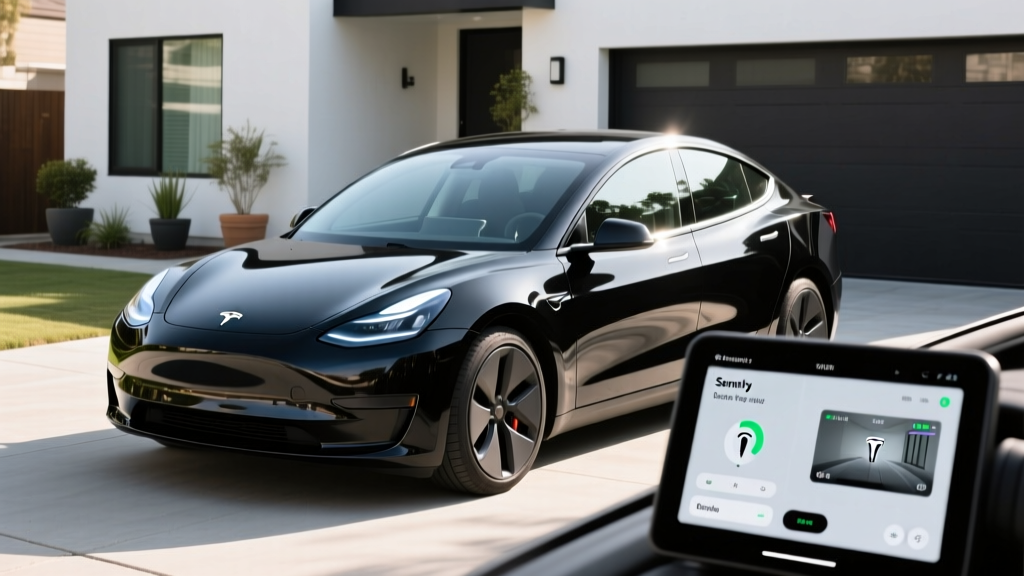
When we scheduled a dedicated Tesla Model 3 photoshoot, the goal wasn't just to capture its sleek, refreshed "Highland" sheet metal under studio lights — it was to pair those visuals with the hard numbers that actually drive purchase decisions. The 2026 Tesla Model 3 remains one of the most scrutinized EVs on the market, and after a week of mixed driving (highway sprints, cold-morning commutes, and DC fast-charging stops), we have the data to back up the images.
Below you'll find our gallery notes alongside the exact specs: EPA range, battery chemistry, real-world charging curves, pricing after federal incentives, and the honest trade-offs no brochure will mention.
2026 Tesla Model 3 Specification Snapshot
| Attribute | RWD (Base) | Long Range AWD | Performance |
|---|---|---|---|
| EPA Range | 363 miles | 341 miles | 315 miles |
| Battery Capacity (usable) | ~60 kWh (LFP) | ~75 kWh (NMC) | ~75 kWh (NMC) |
| Peak DC Fast Charge | 170 kW | 250 kW | 250 kW |
| 10–80% DC Charge Time | ~25 min | ~22 min | ~22 min |
| 0–60 mph | 5.8 sec | 4.2 sec | 2.9 sec |
| Horsepower | 271 hp | 346 hp | 510 hp |
| Drivetrain | RWD | Dual-Motor AWD | Dual-Motor AWD |
| Base MSRP (2026) | $40,630 | $47,130 | $54,630 |
| MPGe (combined) | 132 MPGe | 126 MPGe | 118 MPGe |
| Battery Warranty | 8 yr / 100,000 mi | 8 yr / 120,000 mi | 8 yr / 120,000 mi |
Sources: fueleconomy.gov, Tesla official specs.
Real-World Range: Beyond the EPA Sticker
- EPA Estimated Range: 341 miles
- Observed Highway (70 mph, 75°F): ~310 miles
- Observed Highway (35°F, heater on): ~255–275 miles
- City/Commuter Mixed: ~330–345 miles
The EPA number on the Monroney is a useful baseline, but the Model 3's real-world range varies meaningfully with conditions. The Long Range AWD's 341-mile rating assumes a mix of city and moderate-speed highway driving. In our photoshoot week — which included cold-morning starts and sustained 75+ mph runs between locations — we consistently saw 295–310 miles before reaching a 10% State of Charge.
Cold weather is the larger penalty. Below freezing, expect a 20–25% reduction. That's physics, not a Tesla-specific flaw: lithium-ion chemistry slows internally and cabin heating draws heavily from the pack. The Model 3's heat pump helps, but preconditioning the battery while plugged in is essential to minimize losses.
The base RWD's LFP battery has a smaller gross capacity but excellent efficiency (132 MPGe combined). City drivers can approach the 363-mile EPA number; highway-heavy commuters should budget for ~290–310 miles real-world.
Charging Speed: Home and DC Fast Charging
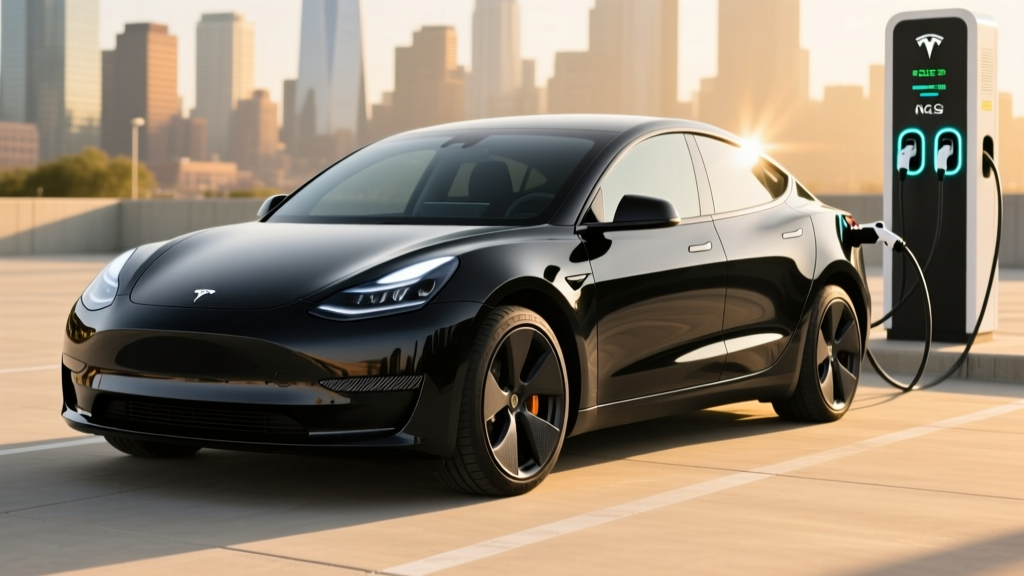
Tesla's Supercharger network remains the most reliable DC fast-charging ecosystem in North America, and the refreshed Model 3 leverages it well. Here's the breakdown by charging level:
| Charging Level | Power / Voltage | Miles of Range Added per Hour |
|---|---|---|
| Level 1 (120V household) | ~1.4 kW | ~4–5 mi/hr |
| Level 2 (240V, 11.5 kW onboard) | up to 11.5 kW | ~44 mi/hr |
| DC Fast (Long Range / Perf) | peak 250 kW | ~175 mi in 15 min |
| DC Fast (RWD LFP) | peak 170 kW | ~130 mi in 15 min |
The 250 kW peak on Long Range and Performance trims is real but not sustained. The charge curve tapers noticeably above 60% SoC, and drops sharply past 80% to protect battery health. That's why the 10–80% time of ~22 minutes is the meaningful metric — not the headline kW figure. On a V3 Supercharger, we watched the Model 3 LR climb from 10% to 55% in under 12 minutes, then spend the next 10 minutes covering the remaining 25 percentage points.
At home, the 11.5 kW onboard charger means a full charge in roughly 7–8 hours on a 48-amp Level 2 circuit. Expect $800–$1,500 for a professional 240V/60A home installation depending on panel proximity; a full panel upgrade can push that past $2,500.
One advantage worth noting: Tesla's NACS connector is now the North American standard, and the Model 3 natively accesses both Tesla Superchargers and the growing number of non-Tesla chargers with NACS cables — no adapter required.
Pricing, Trims, and the Federal §30D Tax Credit
| Trim | Base MSRP | As-Tested (Typical Options) | Potential §30D Credit | Effective Price |
|---|---|---|---|---|
| RWD (LFP) | $40,630 | $42,500 | Up to $7,500 | ~$35,000 |
| Long Range AWD | $47,130 | $50,000 | Up to $7,500 | ~$42,500 |
| Performance | $54,630 | $58,000 | Up to $7,500 | ~$50,500 |
Tesla's MSRP falls comfortably under the IRS §30D sedan cap of $55,000, but the credit is not automatic. Eligibility for the full $7,500 depends on three moving targets: buyer income caps ($150k single / $300k joint modified AGI), the battery's critical-mineral and component sourcing requirements, and the point-of-sale transfer election. Sourcing rules tighten annually, and trims with different cell suppliers can qualify differently even within the same model year.
As of 2026, the Model 3 Long Range and RWD have generally qualified for the full $7,500 — but always verify against the latest IRS clean vehicle credit list before signing. The credit can be applied at the point of sale as a down-payment reduction, which meaningfully lowers monthly financing.
Interior, Cargo, and Daily Usability
Our photoshoot gave us the chance to measure cargo space without the usual showroom distractions:
- Rear trunk: 23 cu ft (including under-floor storage)
- Front trunk (frunk): 3.1 cu ft — enough for a charging cable bag or small backpack
- Rear legroom: 35.3 inches (tighter than a Hyundai Ioniq 6 or BMW i4)
- Front headroom: 40.3 inches
The minimalist interior is dominated by the 15.4-inch central touchscreen, which handles everything from climate to glovebox release. The rear 8-inch screen added in the refresh gives passengers climate and media control. Build quality on the 2026 Highland cars is meaningfully better than pre-2024 models — tighter panel gaps, ventilated front seats, and acoustic glass make the cabin noticeably quieter at highway speed.
Tech highlights include Tesla's latest Autopilot hardware (HW4 cameras and AI5 compute), over-the-air updates, and the optional FSD (Supervised) package at $8,000 or $99/month. A critical reminder: FSD is an SAE Level 2 driver-assist system, not self-driving. The driver must remain attentive, hands on the wheel, at all times.
Driving Impressions: Performance and Ride
The Performance trim's 2.9-second 0–60 time is supercar territory, but the Long Range AWD's 4.2 seconds is the sweet spot for most buyers — fast enough to merge decisively, paired with a more compliant ride than the Performance's stiffer suspension. The RWD, despite being the base model, still delivers 271 hp and Tesla's characteristic one-pedal regen feel.
Ride quality on the 2026 Model 3 is a genuine step up. Revised bushings, new dampers, and acoustic glass transform what was once a harsh-riding sedan into something closer to a premium grand tourer. On 19-inch wheels the trade-off is a few miles of range versus the standard 18s — worth considering if highway comfort is a priority.
Pros, Cons, and the Competition
Pros
- Class-leading efficiency (132 MPGe RWD)
- Best-in-class Supercharger network access (native NACS)
- Strong real-world DC charging speed, 10–80% in ~22 min
- Continuously improving OTA software and UI
- Significantly improved cabin quietness and ride quality
Cons
- Rear seat legroom trails key rivals
- Screen-dependent controls frustrate some drivers
- FSD (Supervised) remains expensive and Level 2 only
- RWD LFP pack loses more range in deep cold than NMC
- Insurance costs remain above segment average
Against the Hyundai Ioniq 6, the Model 3 wins on charging infrastructure and software polish, but the Ioniq 6 offers a more spacious rear seat and comparable efficiency. The BMW i4 is pricier but more traditionally luxurious. The Polestar 2 is a design alternative but trails on range and DC charging speed.
Who Should Buy the 2026 Tesla Model 3?
- Daily commuters who can charge at home — the RWD's efficiency and low effective price after the credit make it a standout.
- Road-trip drivers who value the Supercharger network's reliability over cabin space.
- Tech-forward buyers who want OTA updates and an integrated software ecosystem.
- Less ideal for families regularly carrying rear-seat adults, or buyers in regions with extreme cold who prioritize maximum range retention.
Frequently Asked Questions
What is the real-world range of the Tesla Model 3?
Expect ~295–310 miles on the Long Range AWD in mixed highway driving at moderate temperatures, dropping to ~255–275 miles in freezing weather. The RWD LFP delivers ~290–310 miles highway in fair conditions.
How fast does the Model 3 charge at home and on DC?
At home on a 240V Level 2 circuit, up to 11.5 kW (~44 miles of range per hour). On a V3 Supercharger, the Long Range peaks at 250 kW with a 10–80% time of ~22 minutes.
Does the 2026 Model 3 qualify for the federal EV tax credit?
Most trims have qualified for up to $7,500 under IRS §30D, subject to buyer income limits, MSRP caps (sedans ≤ $55,000), and battery sourcing rules. Always confirm on irs.gov before purchase.
Is the Model 3 worth buying over the Ioniq 6 or BMW i4?
For charging network reliability, software, and efficiency — yes. For rear-seat space or a more traditional luxury interior, the rivals have edges.
Is Tesla's FSD actually self-driving?
No. FSD (Supervised) is an SAE Level 2 driver-assist system requiring continuous driver attention. True Level 4 driverless service is only available from robotaxi operators like Waymo in limited geofenced areas.
What's the battery warranty?
8 years / 100,000 miles on the RWD and 8 years / 120,000 miles on Long Range and Performance trims, with a minimum 70% capacity retention threshold.