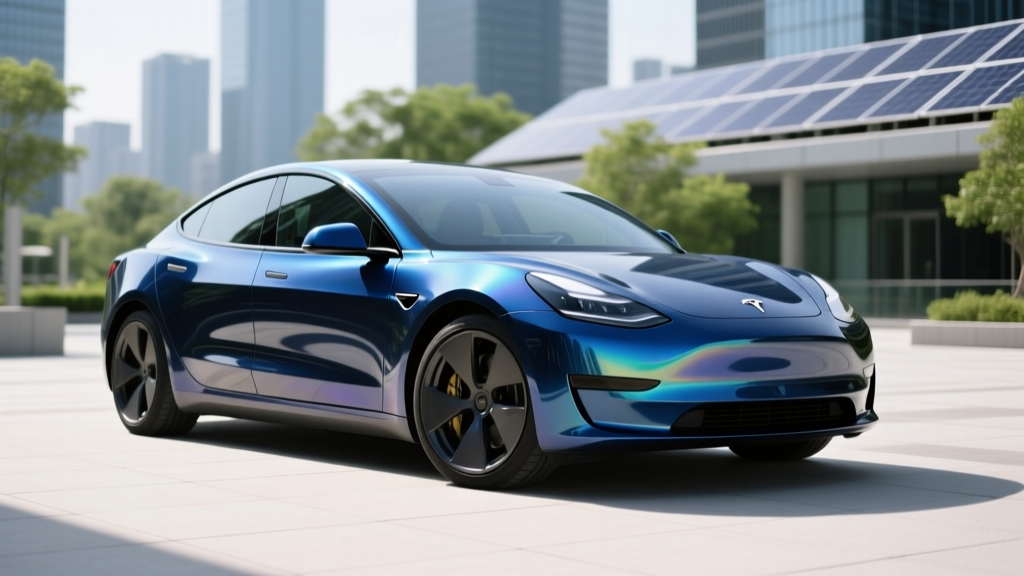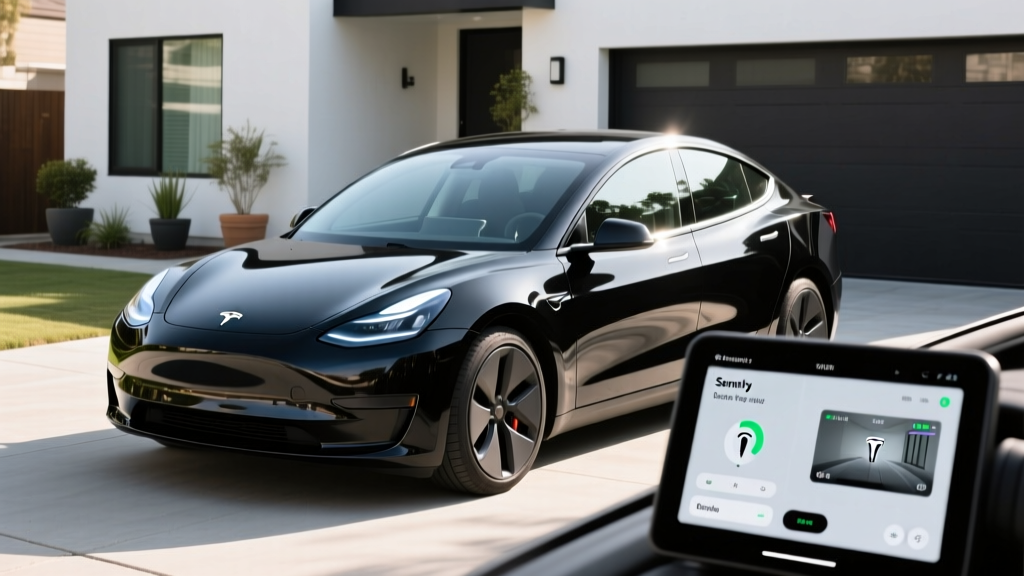
Tesla's Sentry Mode is one of the most practical security features in any vehicle — a network of external cameras that records incidents around your parked car and alerts you via the mobile app. But for new owners, one question consistently comes up: how to view Sentry videos on Tesla? This guide walks you through every method — in-car, mobile app, and USB export — while also delivering the full 2026 Tesla Model 3 Long Range AWD profile: real-world range, charging speeds, pricing, and whether it's still the EV to beat in the premium sedan segment.
How to View Sentry Videos on Tesla: All Three Methods
Sentry Mode captures 10-minute clips triggered by motion, proximity alerts, or forced-entry events. Tesla gives you three distinct ways to review those recordings, each with trade-offs in convenience and detail.
Method 1: In-Car Touchscreen Viewer
On the 2026 Model 3's 15.4-inch center display, navigate to Controls → Safety → Sentry Mode → View Clips. The built-in viewer lets you scrub through timestamped events, filter by camera angle (front, rear, left repeater, right repeater), and flag clips for permanent save. This is the fastest way to check a recent event while you're still near the car. Limitation: the in-car viewer compresses resolution and doesn't let you export directly.
Method 2: Tesla Mobile App (Remote Access)
Open the Tesla app → tap Security → Sentry Mode. If your vehicle has Premium Connectivity (included for the first year, then $10/month), you can stream recent Sentry clips directly to your phone from anywhere. The app shows a timeline of events with thumbnail previews. Tap any event to play the multi-camera recording. You can also download clips to your phone's camera roll. This is the method most owners rely on for daily incident review — you'll get a push notification when Sentry triggers, and you can watch the clip without walking back to the car.
Method 3: USB Drive Export for Full-Resolution Review
For the highest-quality footage and permanent archival, insert a formatted USB drive (FAT32 or exFAT, with a folder named TeslaCam) into one of the front USB-C ports. Sentry Mode automatically writes clips to the drive. To review: remove the drive, plug it into a computer, and navigate to TeslaCam/SentryClips. Each event folder contains four synchronized MP4 files (one per camera) plus a thumbnail image. This method gives you full 1080p resolution, precise timestamps, and the ability to share clips with insurance or law enforcement.
2026 Tesla Model 3 Long Range AWD: Full Vehicle Profile
With Sentry Mode covered, let's examine the vehicle it protects. The 2026 Tesla Model 3 Long Range AWD — refreshed under the "Highland" redesign that debuted for the 2024 model year and carried forward with minor updates — remains Tesla's volume sedan and one of the most efficient all-wheel-drive EVs on the market.
| Spec | Value |
|---|---|
| EPA Range | 363 miles |
| Battery (usable) | 75 kWh, NMC (nickel manganese cobalt) |
| Drivetrain | Dual-motor AWD |
| Horsepower | 346 hp (combined) |
| 0–60 mph | 4.2 seconds |
| Max DC Fast Charge | 250 kW (peak) |
| 10–80% DC Time | ~27 minutes |
| Level 2 Home Charging | 11.5 kW (44 mi/hr) |
| Efficiency | 132 MPGe combined / 25 kWh/100 mi |
| Cargo Volume | 23 cu ft trunk + 3.1 cu ft frunk |
| Rear Legroom | 35.3 inches |
| Battery Warranty | 8 years / 120,000 miles (≥70% retention) |
| Base MSRP | $47,740 (before destination) |
Real-World Range: What to Actually Expect
The NMC battery chemistry in the Long Range provides higher energy density than the LFP pack in the base RWD Model 3, which translates to this 363-mile figure. However, NMC degrades slightly faster over time — Tesla warranties 70% capacity retention at 120,000 miles, and independent fleet data from fueleconomy.gov suggests most Model 3 NMC packs retain 85–90% at 100,000 miles with proper charging habits (keeping daily charge at 80%, avoiding prolonged 100% SoC).
Charging Speed: DC Fast, Level 2, and the Charge Curve
Charging the 75 kWh pack from 10% to 80% at a V3 Supercharger (250 kW peak) takes roughly 27 minutes. But peak kW is not sustained kW — the charge curve tells the real story:
- 10–30% SoC: Sustains near 250 kW — this is where you gain range fastest, roughly 170 miles in 10 minutes.
- 30–60% SoC: Tapers to ~170–200 kW as the battery management system protects cell health.
- 60–80% SoC: Further taper to ~100–130 kW.
- Above 80%: Drops sharply to under 50 kW. Charging from 80–100% adds 25+ minutes — only do this when you need maximum range for a long leg.
At home on a Level 2 wall connector (11.5 kW / 48A on a 60A circuit), you'll add approximately 44 miles of range per hour, or a full 10–100% charge in about 7.5 hours — easily done overnight. If your home has a standard 240V/50A dryer-style circuit, expect ~9.6 kW and roughly 37 mi/hr.
Pricing, Trims, and Federal Tax Credit Eligibility
| Trim | MSRP (incl. dest.) | Est. §30D Credit | Net Price |
|---|---|---|---|
| RWD (LFP) | $39,990 | $3,750–$7,500* | $32,490–$36,240 |
| Long Range AWD | $48,740 | $3,750–$7,500* | $41,240–$44,990 |
| Performance | $54,990 | $3,750–$7,500* | $47,490–$51,240 |
*Federal §30D credit amounts depend on critical-mineral and battery-component sourcing requirements, which phase in stricter thresholds each year. As of 2026, many Tesla vehicles qualify for $3,750 (meeting one of two sourcing thresholds) or the full $7,500 (meeting both). Eligibility also requires:
- Buyer income caps: AGI ≤ $150,000 (single), $225,000 (head of household), $300,000 (joint)
- MSRP cap: Sedans must be ≤ $55,000 (all Model 3 trims qualify)
- Point-of-sale transfer: You can apply the credit as an immediate price reduction at delivery, handled through the IRS Energy Credits Online portal
Always verify current eligibility on irs.gov or with a tax professional before ordering — sourcing rules shift annually and can change mid-year.
Standout Tech, Sentry Mode Details, and Drawbacks
The 2026 Model 3's tech stack remains a key differentiator. Beyond Sentry Mode, the vehicle includes:
- Autopilot (standard): SAE Level 2 driver assistance — adaptive cruise, lane centering, auto emergency braking. The driver must keep hands on the wheel and remain fully engaged. This is not self-driving.
- FSD (Supervised) — $8,000 option: Adds automated lane changes, Navigate on Autopilot, traffic light recognition, and city-street autosteer. Still SAE Level 2 — full driver supervision required at all times.
- 15.4-inch center touchscreen: All vehicle controls, navigation, media, and camera feeds run through this single display. No physical instrument cluster.
- Rear 8-inch screen: Climate and media controls for rear passengers.
- Ambient lighting, ventilated front seats, acoustic glass: The Highland redesign significantly improved cabin refinement over the pre-2024 Model 3.
Notable Drawbacks
- No physical buttons for climate, wipers, or glovebox — everything routes through the touchscreen, which can be distracting while driving.
- Rear visibility is compromised by the sloping roofline; rely on the backup camera.
- Turn signal stalks were removed in the Highland refresh — signals are now buttons on the steering wheel, which many drivers find unintuitive, especially in roundabouts.
- Insurance premiums run 15–30% higher than comparable gas sedans due to repair costs for the aluminum/steel mixed body and sensor array.
Pros and Cons at a Glance
- 363-mile EPA range — among the highest for any AWD sedan under $55k
- 250 kW Supercharger access with the most reliable public charging network in the US
- Sentry Mode provides genuine security value with multi-camera recording
- Class-leading efficiency (25 kWh/100 mi) keeps per-mile charging cost low
- OTA updates continuously add features post-purchase
- Strong resale value relative to non-Tesla EVs
- Touchscreen-only controls require eyes-off-road for basic adjustments
- Sentry Mode parasitic drain (~30 mi/day) matters if you park unplugged for days
- No Apple CarPlay or Android Auto — you're locked into Tesla's infotainment
- Rear seat space (35.3" legroom) is tight for tall adults on long trips
- Steering-wheel turn-signal buttons are a genuine ergonomic downgrade
- FSD's $8,000 price remains hard to justify at SAE Level 2
Who the 2026 Model 3 Suits Best
Ideal for: Tech-forward commuters who charge at home, drive 30–80 miles daily, and value security features like Sentry Mode for urban or apartment-complex parking. The 363-mile range and Supercharger network also make it viable for road trips of 300+ miles with a single 20-minute stop.
Consider alternatives if: You regularly carry rear-seat adults over 6 feet tall (the Hyundai Ioniq 6 offers similar range with slightly better rear space), you want physical buttons and CarPlay (BMW i4, Hyundai Ioniq 6), or you need more than 23 cu ft of cargo (the Model Y offers 30+ cu ft with seats up).
Frequently Asked Questions
How to view Sentry videos on Tesla without Premium Connectivity?
Without Premium Connectivity ($10/month after the first year), you cannot stream Sentry clips to the mobile app remotely. You can still view clips on the car's touchscreen or export them via USB drive. If you want remote phone access, the subscription is required.
Does Sentry Mode record audio?
Yes. When an incident triggers a full Sentry event (as opposed to a brief proximity alert), the recording includes audio from the cabin microphone. You can toggle audio recording off in Settings → Safety → Sentry Mode if privacy is a concern.
How long does the USB drive retain Sentry clips?
The TeslaCam folder uses a circular buffer — once the drive fills up, the oldest non-saved clips are overwritten. On a 128 GB drive, you'll typically store 7–14 days of clips depending on trigger frequency. Flag important clips with the "Save" button to prevent overwrite.
Is the 2026 Model 3 worth buying over the Model Y?
If cargo space and rear headroom are priorities, the Model Y (30 cu ft cargo, 363-mile EPA range) is the better family hauler at ~$5,000 more. If you prioritize driving dynamics, efficiency (the Model 3 is ~10% more efficient), and a lower price, the Model 3 sedan is the sharper choice. Both share the same Supercharger network and Sentry Mode system.
What is the real-world range of the 2026 Model 3 Long Range?
EPA-rated at 363 miles. Real-world highway driving at 70 mph yields 290–315 miles in mild weather, 240–270 miles in sub-freezing cold. City driving with regenerative braking can reach 350–375 miles in temperate conditions.
Does the 2026 Model 3 qualify for the federal EV tax credit?
All Model 3 trims fall under the $55,000 sedan MSRP cap. Depending on battery-sourcing compliance for the 2026 tax year, buyers may qualify for $3,750 or $7,500 under IRS §30D, subject to income caps ($150k single / $300k joint). Verify current sourcing status at irs.gov before ordering.