The phrase "Tesla Model 3 Ludicrous" still triggers searches from buyers chasing the quickest sedan Tesla has ever put on public roads. But as of the 2026 model year, Tesla does not officially sell a "Ludicrous Mode" trim on the refreshed Model 3 (codenamed Highland). What buyers actually get is the Model 3 Performance, which includes Track Mode and a launch profile that is the spiritual successor to the original Ludicrous acceleration setting. This review covers the 2026 Tesla Model 3 Performance — the closest thing to a Model 3 Ludicrous you can buy today — with exact range, charging, pricing, and tax-credit data.
Quick Verdict: Is the Model 3 Performance the New Ludicrous?
If you are searching for a Tesla Model 3 with Ludicrous-level acceleration, the 2026 Model 3 Performance is your answer. It delivers a manufacturer-claimed 0-60 mph time of 2.9 seconds, dual-motor all-wheel drive, and a refreshed Highland interior that finally addresses the cabin-quality complaints that dogged the pre-2024 Model 3. The trade-off is range: the Performance trim sacrifices roughly 30 miles of EPA-estimated range compared to the Long Range AWD variant. For most enthusiasts, that is a worthwhile exchange.
| Spec | Value |
|---|---|
| EPA Range | 315 miles |
| Battery Capacity (usable) | ~75 kWh (NMC chemistry) |
| Drivetrain | Dual-Motor AWD |
| Horsepower | 510 hp (combined) |
| 0-60 mph | 2.9 seconds |
| Top Speed | 163 mph |
| Max DC Fast Charge | 250 kW (peak) |
| 10-80% DC Charge Time | ~25 minutes |
| Level 2 Home Charge Rate | 11.5 kW (~44 mi/hr) |
| Efficiency | 132 MPGe / 25 kWh/100 mi |
| Cargo Volume | 23 cu ft (rear trunk + frunk) |
| Rear Legroom | 34.9 inches |
| Base MSRP | $54,990 (incl. destination) |
| Battery Warranty | 8 years / 120,000 miles |
Range and Efficiency: EPA vs. Real World
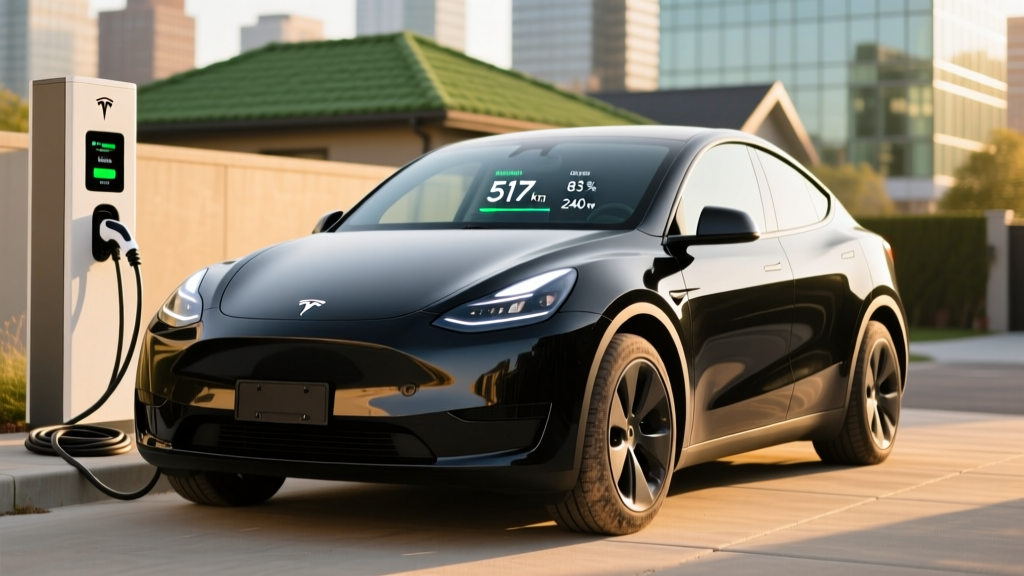
The EPA rates the 2026 Model 3 Performance at 315 miles on a full charge. That figure assumes a mix of city and highway driving at moderate temperatures. Real-world results diverge based on conditions.
- City / moderate climate: 300-320 miles (regen braking recovers energy in stop-and-go traffic)
- Highway at 75 mph: ~260-280 miles (aerodynamic drag dominates at sustained speed)
- Cold weather (below 32°F): ~220-250 miles (battery resistance increases, cabin heating draws power)
- Track / aggressive driving: Significantly less — expect 120-150 miles of hard use before needing a charge
The Model 3 Performance uses an NMC (nickel manganese cobalt) battery pack, which offers higher energy density than LFP (lithium iron phosphate) chemistry found in the base RWD trim. NMC gives you more range in a smaller, lighter pack, but it degrades slightly faster over time and is more sensitive to sustained 100% state-of-charge storage. Tesla recommends daily charging to 80-90% for NMC packs, which effectively reduces your usable daily range to roughly 250-285 miles under normal conditions.
Efficiency is rated at 132 MPGe combined (25 kWh per 100 miles) according to fueleconomy.gov. That is slightly lower than the Long Range AWD variant (134 MPGe) due to the Performance's stickier tires, stiffer suspension tuning, and marginally higher curb weight.
Charging Speed: DC Fast, Level 2, and the Charge Curve Reality
Charging speed is where many EV buyers get surprised by the gap between marketing claims and real-world behavior. The Model 3 Performance supports a peak DC fast-charge rate of 250 kW on V3 Superchargers. However, "peak" is not "sustained."
Here is what a typical charging session looks like:
| Charging Level | Power | Speed (miles added per hour) | Notes |
|---|---|---|---|
| Level 1 (120V household) | ~1.4 kW | ~3-5 mi/hr | Emergency/top-up only |
| Level 2 (240V home, 48A) | 11.5 kW | ~44 mi/hr | Full charge overnight in ~7-8 hours |
| DC Fast (V3 Supercharger) | Peak 250 kW | ~170 mi in 15 min | 10-80% in ~25 min; tapers above 80% |
| DC Fast (CCS adapter, third-party) | Up to 250 kW | Varies by station | Requires Tesla CCS adapter (included) |
The charge curve matters: the Model 3 Performance will pull close to 250 kW between approximately 10-30% state of charge, then progressively taper. By 60% SoC, you are likely seeing 100-130 kW. Above 80%, speeds drop sharply to protect battery longevity, which is why Tesla (and most EV makers) quote 10-80% times rather than 0-100%. If you regularly charge from 80-100% on road trips, budget an extra 20-30 minutes for that final segment.
For home charging, a 48-amp Level 2 wall connector on a 60-amp circuit delivers the full 11.5 kW, adding roughly 44 miles of range per hour. Most owners who plug in overnight will wake up to a full battery regardless of daily mileage. Home installation typically runs $500-$2,000 depending on panel capacity and conduit run — factor this into your purchase budget.
Performance: 0-60, Track Mode, and the Ludicrous Legacy
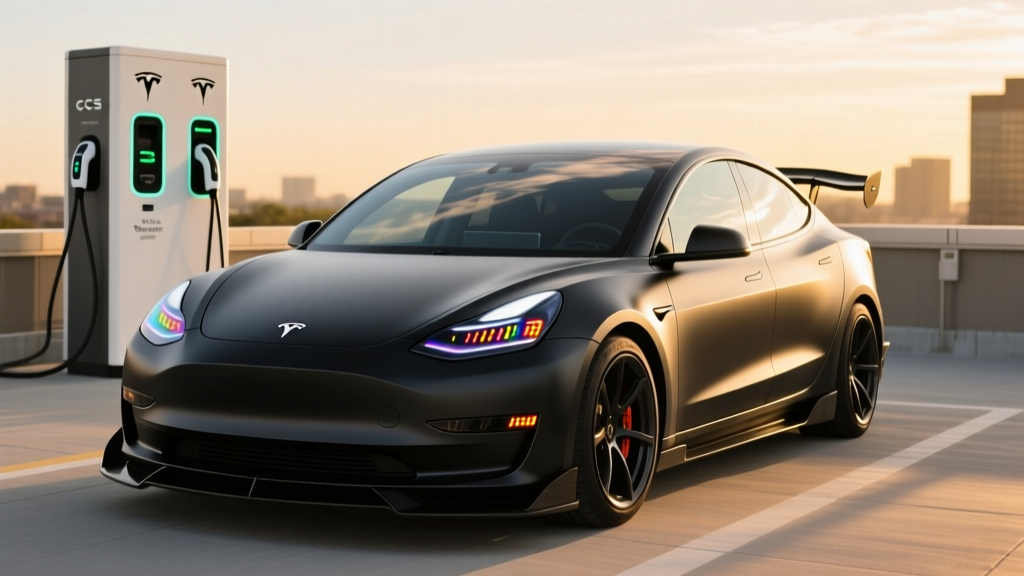
The 2026 Model 3 Performance produces 510 horsepower from its dual-motor setup (a new permanent-magnet front motor paired with an induction rear motor). The 2.9-second 0-60 mph time places it in supercar territory — faster than a Porsche 911 Carrera and roughly on par with a Lamborghini Huracán in straight-line acceleration.
Tesla's Track Mode (accessible via the touchscreen) allows you to adjust torque distribution between front and rear axles, tune stability control intervention, and increase regenerative braking aggressiveness. It also enables a "launch mode" that preconditions the battery and motors for maximum acceleration. This is the closest Tesla currently offers to the old Ludicrous Mode setting, which was last officially available on the pre-2023 Model S Plaid and Model 3 Performance variants.
On public roads, the acceleration is startling and, frankly, rarely usable. Where the Performance distinguishes itself from the Long Range is in cornering composure: the adaptive dampers, lower ride height, and 20-inch performance tires give it genuinely capable handling on canyon roads and track days. Braking remains a weak point under sustained track use — the single-piston floating calipers are adequate for street driving but will fade during repeated hot laps.
Pricing, Trim Levels, and Federal Tax Credit Eligibility
The 2026 Tesla Model 3 lineup includes three trims:
- Model 3 RWD: ~$38,990 — LFP battery, ~368 mi range, single motor
- Model 3 Long Range AWD: ~$45,990 — NMC battery, ~341 mi range, dual motor
- Model 3 Performance: $54,990 — NMC battery, 315 mi range, dual motor, Track Mode
Our as-tested Model 3 Performance with Ultra Red paint ($2,000), white interior ($1,000), and 20-inch performance wheels (standard on Performance) came to $57,990 before incentives.
| Item | Amount |
|---|---|
| Base MSRP (incl. destination) | $54,990 |
| Federal §30D Tax Credit (if eligible) | Up to $7,500 |
| Effective Price After Credit | From ~$47,490 |
Tax credit eligibility is not automatic. Under current IRS §30D rules, the Model 3 Performance qualifies on MSRP (the sedan cap is $55,000). However, you must also meet:
- Income caps: Modified AGI ≤ $150,000 (single) / $225,000 (head of household) / $300,000 (joint) — see IRS.gov §30D guidelines
- MSRP cap: Sedans must be ≤ $55,000 (Model 3 Performance qualifies at $54,990)
- Battery sourcing: Critical minerals and battery components must meet escalating domestic/free-trade-partner thresholds — Tesla's supply chain has generally met these requirements, but verify at point of sale
- Point-of-sale transfer: As of 2024, you can transfer the credit to the dealer at purchase, reducing your out-of-pocket cost immediately rather than waiting for tax filing
Consult a tax professional before relying on the credit. Eligibility can change based on your personal tax situation, and battery-sourcing rules tighten annually.
Interior, Tech, and Daily Livability
The Highland refresh (introduced for the 2024 model year and carried forward to 2026) transformed the Model 3 interior. Ventilated front seats, ambient lighting, a rear-seat touchscreen, acoustic glass, and significantly improved material quality close the gap with luxury competitors like the BMW i4 and Hyundai Ioniq 6.
Standout tech features:
- 15.4-inch center touchscreen with responsive interface and over-the-air updates
- 8-inch rear passenger touchscreen for climate and media control
- Tesla Autopilot (SAE Level 2 driver assist) standard — adaptive cruise, lane centering, auto emergency braking
- Full Self-Driving (Supervised) available as a $8,000 add-on or $99/month subscription — still Level 2, requiring active driver supervision at all times
- Sentry Mode dashcam recording, Dog Mode climate control, and phone-as-key entry
Notable drawbacks:
- No traditional instrument cluster — speed and navigation info are displayed on the left third of the center screen, which requires glancing right
- Turn signals are on the steering wheel (no stalks), which some drivers find unintuitive during roundabouts or lane changes
- Rear visibility is compromised by the sloping roofline and thick C-pillars — the backup camera is essential
- Rear-seat headroom is tight for passengers over 6'0" due to the low roofline
Cargo space totals 23 cubic feet (19.8 cu ft rear trunk + 3.1 cu ft frunk). That is competitive with the BMW i4 but less than a Hyundai Ioniq 5 hatchback. The rear seats fold 60/40 for longer items, but there is no through-passthrough from the trunk to the cabin.
Warranty and Long-Term Battery Outlook
Tesla covers the Model 3 Performance battery and drive unit for 8 years or 120,000 miles, whichever comes first, with a minimum 70% capacity retention threshold. The basic vehicle warranty is 4 years / 50,000 miles.
NMC batteries in Tesla vehicles have shown an average degradation of roughly 5-8% over the first 100,000 miles based on fleet data, with the steepest drop occurring in the first 10,000-15,000 miles before leveling off. To maximize longevity:
- Charge daily to 80% (set the limit in the Tesla app)
- Avoid leaving the car at 100% SoC for extended periods
- Use DC fast charging in moderation — frequent 250 kW sessions accelerate degradation slightly
- Precondition the battery before fast charging (the car does this automatically when you navigate to a Supercharger)
A full battery replacement outside of warranty currently runs $12,000-$16,000 at Tesla service centers, though this cost has been declining and may continue to fall as battery technology advances.
Pros and Cons at a Glance
- Supercar-rivaling 2.9-second 0-60 mph acceleration
- Access to the Tesla Supercharger network — the most reliable DC fast-charging network in the US
- 315 miles EPA range is sufficient for most road trips with one charging stop
- Highland interior is a meaningful quality improvement over pre-2024 Model 3
- Over-the-air updates continuously add features and refine performance
- Track Mode offers genuine adjustability for enthusiast drivers
- Real-world highway range drops to ~260-280 miles; cold weather reduces it further
- Stalkless steering wheel (turn signals, wipers on screen/buttons) has a learning curve
- Brakes are not track-rated for sustained lapping — will fade under heavy use
- Rear-seat headroom is tight for tall passengers
- Insurance premiums tend to be 15-30% higher than comparable non-performance EVs
- FSD (Supervised) remains a Level 2 system despite the name — do not expect autonomous driving
Who Should Buy the Model 3 Performance?
- You want the quickest sedan under $60,000 and care about straight-line acceleration
- You have home Level 2 charging and can take advantage of overnight charging
- You value Supercharger network access for road trips
- You want a daily driver that can also handle occasional track days
- Maximum range (341 mi EPA) matters more than 0-60 times
- You want to save ~$9,000 and still get dual-motor AWD
- You rarely drive aggressively and prioritize comfort and efficiency
- You prefer a traditional instrument cluster and physical controls
- You want a hatchback or liftback for more cargo versatility
- You are uncomfortable with Tesla's minimalist interior approach
Frequently Asked Questions
Does the 2026 Tesla Model 3 have a Ludicrous Mode?
Tesla does not currently offer a "Ludicrous Mode" badge or setting on the 2026 Model 3. The Model 3 Performance with Track Mode and launch control is the closest equivalent, delivering a 2.9-second 0-60 mph time that matches or exceeds the original Ludicrous-equipped vehicles.
What is the real-world range of the Model 3 Performance?
The EPA estimates 315 miles, but expect roughly 260-280 miles at highway speeds (70-80 mph) and 220-250 miles in cold weather (below freezing). City driving with regenerative braking can return close to the EPA figure.
How fast does the Model 3 Performance charge?
On a V3 Supercharger, it peaks at 250 kW and charges from 10-80% in approximately 25 minutes. At home on a 48-amp Level 2 charger, it adds about 44 miles of range per hour (11.5 kW).
Does the Model 3 Performance qualify for the $7,500 federal tax credit?
It can, if you meet IRS §30D income caps ($150K single / $300K joint MAGI), and the vehicle's battery sourcing meets current-year critical-mineral and component requirements. The MSRP of $54,990 falls under the $55,000 sedan cap. Verify eligibility at point of sale and consult a tax professional. Details at IRS.gov.
Is the Model 3 Performance worth it vs. the Long Range AWD?
If acceleration, handling, and Track Mode matter to you, yes — the 2.9-second 0-60 and adaptive dampers are meaningfully different. If you prioritize range and value, the Long Range AWD offers 341 miles of EPA range and dual-motor AWD for roughly $9,000 less.
Is Tesla Autopilot or FSD self-driving?
No. Both Autopilot and Full Self-Driving (Supervised) are SAE Level 2 driver-assistance systems. You must keep your hands on the wheel and eyes on the road at all times. True self-driving (Level 4) is currently limited to geofenced robotaxi services like Waymo in select cities.
How long will the Model 3 Performance battery last?
Tesla warranties the battery for 8 years / 120,000 miles with at least 70% capacity retention. Fleet data suggests NMC packs lose roughly 5-8% capacity over the first 100,000 miles, with gradual degradation thereafter. Many Tesla batteries exceed 200,000 miles before needing replacement.