If you've been searching for a "Fisker Karma electric" car, you've likely encountered a tangle of conflicting information. The original Fisker Karma, produced from 2011 to 2012, was never a battery-electric vehicle (BEV). It was a plug-in hybrid electric vehicle (PHEV) with a gasoline range extender. The company behind it went bankrupt, the brand was sold, and today the Karma nameplate lives on under entirely different ownership — and still not as a pure EV. This article cuts through the confusion with exact specs, ownership history, and what you should actually consider if you're drawn to the Karma's striking design.
What the Fisker Karma Actually Was (and Wasn't)
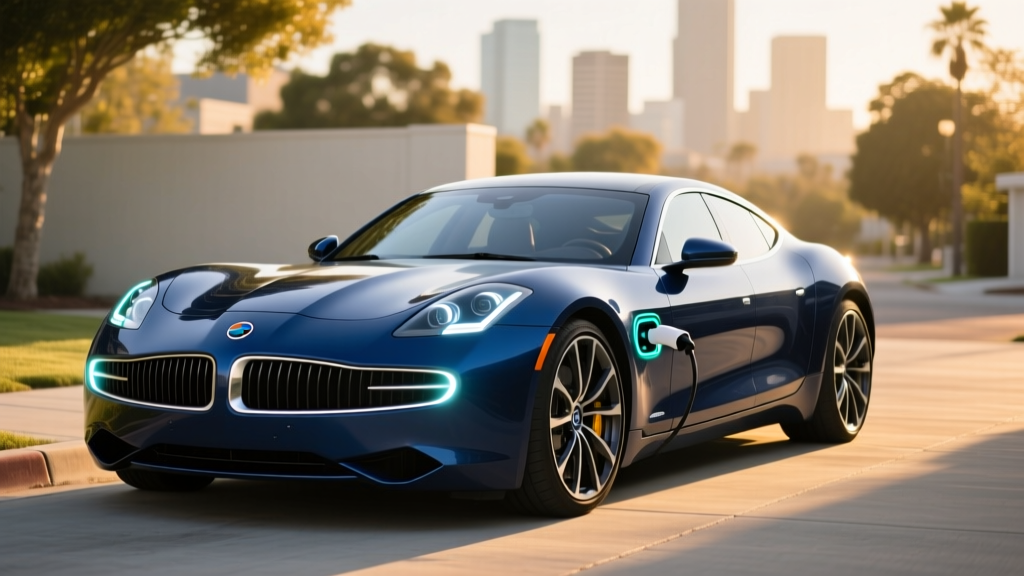
The Fisker Karma debuted in 2011 as a luxury plug-in hybrid sedan designed by Henrik Fisker, the Danish automotive designer behind the BMW Z8 and Aston Martin DB9. It looked like nothing else on the road — a low-slung, four-door coupe with a solar panel roof and corrugated side strakes. But beneath the exotic skin sat a series-hybrid powertrain called Q-Drivetrain: two rear-mounted electric motors producing a combined 403 horsepower and 959 lb-ft of torque, fed by a 20.1 kWh lithium-ion battery pack supplied by A123 Systems. When the battery depleted, a 2.0-liter turbocharged GM Ecotec four-cylinder engine kicked in as a generator to extend range.
This is critical to understand: the Karma was never a "Fisker Karma electric" car in the pure sense. It required gasoline for anything beyond its short electric-only range. Fisker Automotive filed for bankruptcy in November 2013 after A123 Systems (its battery supplier) collapsed, a Hurricane Sandy flood destroyed over 300 Karmas at the Port of Newark, and the company burned through over $1 billion in loans and investment. Only about 2,450 units were ever built.
| Specification | Value |
|---|---|
| Powertrain Type | Series Plug-In Hybrid (PHEV) |
| Electric Motors | Dual rear-mounted (RWD) |
| Combined Output (Electric) | 403 hp / 959 lb-ft torque |
| Gasoline Engine | 2.0L turbo I4 (GM Ecotec) — generator only |
| Battery Capacity | 20.1 kWh (lithium-ion, A123 Systems) |
| EPA Electric-Only Range | 32 miles |
| Total Range (Electric + Gas) | ~230 miles |
| EPA Fuel Economy (Charge-Sustaining) | 20 MPG combined |
| MPGe (Electric Mode) | 54 MPGe combined |
| 0–60 mph | 5.9 seconds (Sport mode) |
| Top Speed | 125 mph |
| DC Fast Charging | Not supported |
| Level 2 Charging | 3.3 kW (~10 mi/hr) |
| Cargo Volume | 6.9 cu ft (trunk) |
| Original MSRP | $96,850–$110,000+ |
Real-World Range: What Owners Actually Experienced
EPA Electric-Only Range: 32 miles
Real-World Electric Range: 22–28 miles in mixed driving; as low as 18 miles in cold weather or at highway speeds above 70 mph. Once the battery depleted, the gasoline generator delivered roughly 20 MPG combined — far below what competing hybrids like the Toyota Prius achieved.
The Karma's 20.1 kWh battery pack yielded an EPA-rated 32 miles of electric-only driving, but real-world results consistently fell short. The car weighed over 5,300 pounds, and that mass punished efficiency. Owners on forums like FiskerFans routinely reported 22–28 miles of usable electric range in moderate temperatures. In cold weather — below 40°F — the range could drop to 18 miles or fewer, as the battery's usable capacity shrank and cabin heating drew additional power.
Once the gasoline generator engaged, the Karma returned roughly 20 MPG combined. That's a figure more typical of a conventional mid-size sedan than a hybrid, and it became a major criticism. For comparison, the contemporaneous Chevrolet Volt delivered 37 MPG in charge-sustaining mode with a far smaller battery and lighter curb weight.
Charging: Slow by Any Standard
The Fisker Karma was never equipped with DC fast-charging capability. It accepted only Level 1 (120V) and Level 2 (240V) AC charging via a J1772 connector. At its maximum Level 2 rate of 3.3 kW, a full charge from empty took roughly 6 hours — adding about 10 miles of electric range per hour of charging.
| Level | Voltage | Max Power (kW) | Charge Time (0–100%) | Rate |
|---|---|---|---|---|
| Level 1 | 120V AC | ~1.4 kW | ~14 hours | ~5 mi/hr |
| Level 2 | 240V AC | 3.3 kW | ~6 hours | ~10 mi/hr |
| DC Fast Charge | — | Not supported | N/A | N/A |
For context, modern BEVs like the Hyundai Ioniq 5 or Tesla Model 3 support DC fast charging at 150–250 kW, adding 150+ miles of range in 15–20 minutes. The Karma's 3.3 kW Level 2 rate was modest even for 2011, and the lack of DC fast charging meant road trips depended entirely on the gasoline generator and its 20 MPG thirst.
What Happened After Bankruptcy: Karma Automotive
After Fisker Automotive's 2013 bankruptcy, the company's assets — including the Karma name, tooling, and the Delaware factory — were auctioned off. Chinese auto parts giant Wanxiang Group purchased the Karma brand and relaunched it as Karma Automotive. In 2017, Karma Automotive introduced the Karma Revero, essentially a refreshed version of the original Karma with updated software, a BMW-sourced 1.5-liter three-cylinder range extender, and a slightly larger 21.4 kWh battery.
The Revero GT, introduced for 2020, bumped the battery to 28 kWh and claimed 61 miles of electric range. Karma Automotive also announced the GSC (Gyesera) and the Kaveya supercar concepts, but production has remained extremely low-volume and bespoke. As of 2026, Karma Automotive operates as a niche luxury manufacturer producing fewer than a few hundred vehicles per year. These are still plug-in hybrids, not pure EVs.
Henrik Fisker, the designer, went on to found Fisker Inc. in 2016, which launched the Fisker Ocean all-electric SUV. That company also filed for bankruptcy in June 2024 after producing fewer than 12,000 vehicles. The Fisker Ocean is now discontinued, and Fisker Inc. has been liquidated. Neither the original Fisker Karma nor the Fisker Ocean is currently in production.
Used Fisker Karma: What Buyers Need to Know in 2026
If you're considering purchasing a used Fisker Karma, understand that you're buying a 13-to-15-year-old, low-volume plug-in hybrid from a defunct manufacturer. Parts availability is extremely limited, and specialized service centers are scarce. A123 Systems, the original battery supplier, went through its own bankruptcy, and replacement battery packs are expensive and difficult to source.
Pros
- Stunning, concept-car-level design that still turns heads
- Solar panel roof provides trickle charging for ancillary systems
- Smooth, torquey electric acceleration in Sport mode
- Low production numbers mean exclusivity
- Depreciated heavily — used examples sell for $25,000–$50,000 depending on condition
Cons
- No DC fast charging; 3.3 kW Level 2 is painfully slow
- Only 22–28 real-world electric miles
- 20 MPG on gasoline defeats the purpose of a hybrid
- Defunct manufacturer — parts and service are major concerns
- Battery degradation on 13+ year-old packs is significant
- Tiny 6.9 cu ft trunk compromised by battery placement
- No federal EV tax credit available for used Karma (exceeds MSRP cap; manufacturer defunct)
Federal Tax Credit and Ownership Costs
The original Fisker Karma does not qualify for the federal used-EV tax credit under IRS §25E. That credit, worth up to $4,000 or 30% of the sale price (whichever is lower), applies only to used EVs and PHEVs with an original MSRP under $25,000. The Karma's original MSRP of $96,850+ far exceeds this cap. Additionally, the manufacturer must still be in business and the vehicle must meet battery component and critical mineral sourcing requirements — neither of which applies here.
For new-car buyers, the IRS §30D clean vehicle credit of up to $7,500 is irrelevant since the Karma is no longer produced. If you're evaluating current PHEVs that do qualify, consult the IRS §30D guidelines for income caps ($150,000 single / $300,000 joint), MSRP limits ($55,000 sedans / $80,000 SUVs and trucks), and battery-sourcing requirements.
Insurance for a used Karma is difficult to quote because actuarial data is thin — fewer than 2,500 were built. Expect premiums comparable to other exotic or collector vehicles. Maintenance costs can spike if the A123 battery pack needs replacement (estimates of $8,000–$15,000 when available) or if the GM Ecotec generator requires service.
Better Alternatives to Consider in 2026
If the Karma's appeal is its combination of electric commuting and gasoline range extension, several modern PHEVs deliver dramatically better efficiency, warranty coverage, and dealer support:
- Toyota Prius Prime (2026): 44 miles electric-only, 52 MPG combined on gas, ~$33,000 MSRP, widely available, full Toyota dealer network.
- BMW 330e xDrive (2026): 22 miles electric, 28 MPG combined, luxury sedan positioning, ~$46,000 MSRP.
- Jeep Wrangler 4xe (2026): 22 miles electric, 20 MPG combined, off-road capability, ~$52,000 MSRP.
- Hyundai Tucson PHEV (2026): 33 miles electric, 35 MPG combined, compact SUV practicality, ~$39,000 MSRP.
If you want a pure BEV with striking design, the discontinued Fisker Ocean (used market) or the current Hyundai Ioniq 6 (EPA 361 miles, 800V architecture, 10–80% in ~18 minutes at 350 kW) are far more practical choices with modern charging infrastructure compatibility.
Frequently Asked Questions
Was the Fisker Karma ever a fully electric car?
No. The Fisker Karma was always a series plug-in hybrid (PHEV). It drove on electric power for roughly 22–32 miles, then a gasoline engine activated as a generator to extend range. It was never a battery-electric vehicle (BEV).
Is the Fisker Karma still being made?
No. The original Fisker Karma was produced from 2011 to 2012, with approximately 2,450 units built. The Karma brand was sold to Wanxiang Group and relaunched as Karma Automotive, which produces the low-volume Revero GT (also a PHEV, not a BEV). Henrik Fisker's later company, Fisker Inc. (maker of the Fisker Ocean EV), filed for bankruptcy in June 2024.
What is the real-world electric range of the Fisker Karma?
The EPA rated the Karma at 32 miles of electric-only range. Real-world owners typically report 22–28 miles in moderate conditions, dropping to 18 miles or fewer in cold weather or sustained highway driving. The car's 5,300-pound curb weight significantly impacts efficiency.
Does the Fisker Karma support DC fast charging?
No. The Karma only supports Level 1 (120V, ~1.4 kW) and Level 2 (240V, 3.3 kW) AC charging via a J1772 connector. A full Level 2 charge takes approximately 6 hours. There is no DC fast-charging capability.
Can I get the federal EV tax credit for a used Fisker Karma?
No. The IRS §25E used clean vehicle credit requires an original MSRP under $25,000. The Karma's original MSRP was $96,850+. It does not qualify. See IRS used vehicle credit rules for full eligibility details.
How much does a used Fisker Karma cost in 2026?
Used Fisker Karmas typically sell for $25,000–$50,000 depending on mileage, condition, and battery health. Low-mileage, well-maintained examples command premium prices among collectors. However, parts scarcity and battery replacement costs ($8,000–$15,000) are significant financial risks.
Is the Karma Revero the same car as the Fisker Karma?
The Karma Revero (2017–present) is a heavily revised evolution of the original Karma, built by Karma Automotive (owned by Wanxiang Group). It uses a BMW-sourced 1.5L range extender instead of the GM 2.0L, has a larger battery (up to 28 kWh in the Revero GT), and claims up to 61 miles of electric range. It is still a PHEV, not a BEV, and is produced in very low volumes.
Bottom Line: A Beautiful Artifact, Not a Practical EV
The Fisker Karma remains one of the most visually arresting cars of the 2010s, and its story is a cautionary tale about the perils of rushing unproven technology to market. But if you're searching for a "Fisker Karma electric" vehicle expecting a practical, efficient, modern EV experience, you won't find it here. The Karma delivers just 22–28 real-world electric miles, charges at a glacial 3.3 kW, returns only 20 MPG on gasoline, and comes with the parts-and-service risks of a defunct, low-volume manufacturer.
For collectors and design enthusiasts willing to accept those trade-offs, a used Karma can be a rewarding garage piece. For everyone else seeking an electrified daily driver, modern PHEVs from Toyota, BMW, and Hyundai — or BEVs from Hyundai, Tesla, and others — deliver vastly superior range, charging speed, efficiency, warranty protection, and ownership peace of mind. The Karma's legacy is its design, not its powertrain.