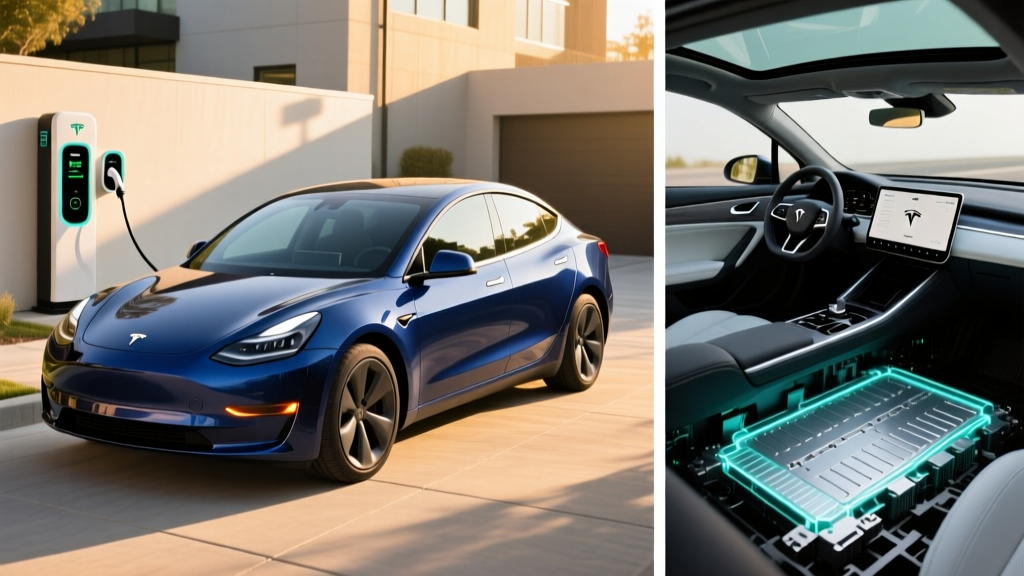
If you have spent more than five minutes in a Tesla, you already know the infotainment screen is the nerve center of the car. Navigation, climate, mirrors, glovebox — everything routes through it. But when the car is parked, that same screen transforms into a surprisingly capable gaming rig. The phrase Tesla games has become a genuine search trend among owners and shoppers alike, and for good reason: Tesla's infotainment system supports a growing library of titles that range from casual time-killers to AAA ports playable with a gamepad. In this review, we look at the 2026 Tesla Model 3 — the current-generation "Highland" refresh — through the lens of its tech and gaming capabilities, while delivering the hard numbers on range, charging, pricing, and ownership that matter just as much as what happens on the screen while you wait at a Supercharger.
2026 Tesla Model 3 Core Specifications
| Spec | Long Range AWD | Performance AWD | Rear-Wheel Drive |
|---|---|---|---|
| EPA Range | 341 mi | 315 mi | 272 mi |
| Battery (usable) | ~75 kWh (NMC) | ~75 kWh (NMC) | ~57.5 kWh (LFP) |
| Drivetrain | Dual-Motor AWD | Dual-Motor AWD | Single-Motor RWD |
| Horsepower | ~346 hp | ~510 hp | ~271 hp |
| 0-60 mph | 4.2 sec | 2.9 sec | 5.8 sec |
| Peak DC Fast Charge | 250 kW | 250 kW | 170 kW |
| 10-80% DC Time | ~25 min | ~25 min | ~30 min |
| Level 2 Home Rate | 11.5 kW (~44 mi/hr) | 11.5 kW (~44 mi/hr) | 11.5 kW (~44 mi/hr) |
| MPGe (combined) | 132 MPGe | 119 MPGe | 142 MPGe |
| Base MSRP | $47,740 | $54,990 | $38,990 |
| Battery Warranty | 8 yr / 120,000 mi | 8 yr / 120,000 mi | 8 yr / 100,000 mi |
Source: EPA fueleconomy.gov, Tesla.com. Prices reflect 2026 model-year MSRPs before destination or incentives.
Real-World Range: What the EPA Sticker Doesn't Tell You
In mixed real-world driving, expect roughly 290-310 miles on a full charge in moderate temperatures at highway speeds of 65-75 mph. In cold weather (below 30°F), range can drop 20-30%, bringing usable range to approximately 240-270 miles. City driving with frequent regenerative braking opportunities returns closer to the EPA sticker, sometimes exceeding it. The RWD model's smaller LFP battery means its 272-mile EPA figure compresses to roughly 230-245 miles on the highway and as low as 190 miles in deep winter.
The Highland Model 3's efficiency is among the best in its class. The RWD variant achieves 142 MPGe combined — roughly 24 kWh per 100 miles — which translates directly to lower charging costs whether you are at home or at a public DC fast charger. The Long Range AWD sits at 132 MPGe combined (about 26 kWh/100 mi), still remarkably efficient for a dual-motor sedan. For context, that efficiency edge means the Model 3 extracts more miles per kWh than the Hyundai Ioniq 6 or the BMW i4, which matters when you are paying $0.35-$0.48 per kWh at public chargers.
Charging Speed: DC Fast, Level 2, and the Supercharger Advantage
| Charging Level | Power / Rate | Miles Added per Hour | Best Use Case |
|---|---|---|---|
| Level 1 (120V household) | ~1.4 kW | ~4-5 mi/hr | Emergency / overnight trickle |
| Level 2 (240V home Wall Connector) | 11.5 kW | ~44 mi/hr | Daily home charging |
| DC Fast (V3 Supercharger) | Up to 250 kW (LR/AWD) Up to 170 kW (RWD) | ~1,000+ mi/hr at peak | Road trips, quick top-ups |
A critical nuance about Tesla's charging: the 250 kW peak on the Long Range and Performance trims is exactly that — a peak. The charge curve tapers significantly above 50-60% state of charge (SoC). You will see 250 kW only when the battery is preconditioned (the car does this automatically when you navigate to a Supercharger) and the SoC is below roughly 30%. By the time you hit 80%, the rate has typically dropped to 40-60 kW. This is why the 10-80% time of approximately 25 minutes is the number that actually matters for road-trip planning, not the headline peak kW figure.
The RWD model's LFP battery charges more slowly — peaking at 170 kW — but LFP chemistry offers a distinct advantage: Tesla recommends you can charge it to 100% daily without the long-term degradation concerns that apply to NMC batteries. That means the RWD's 272 EPA miles are more consistently available to you on a daily basis, whereas Long Range owners are typically advised to set a daily charge limit of 80% (roughly 273 miles of real-world range at that limit).
At home, a Tesla Wall Connector on a 60-amp circuit delivers 11.5 kW (48 amps), replenishing roughly 44 miles of range per hour. A full charge from 10% to 100% on the Long Range takes about 7-8 hours overnight. Installation costs for a 240V/60A circuit typically run $800-$2,000 depending on your electrical panel's capacity and the distance from panel to charger location — a licensed electrician should evaluate your panel before committing.
Tesla Games and the Infotainment Experience
Here is where the Tesla games angle earns its spotlight. The 2026 Model 3's 15.4-inch center touchscreen runs a custom Linux-based OS that supports a rotating catalog of games playable while the vehicle is parked. The library includes:
- Cyberpunk 2077 — Yes, the full AAA open-world RPG runs on the Model 3 (and Model S/X) via Tesla Arcade, playable with a connected gamepad. It is a genuine showcase of the car's AMD Ryzen-based infotainment chip.
- Stardew Valley — The beloved farming sim is a perfect Supercharger companion for 25-minute sessions.
- Cuphead — The notoriously difficult run-and-gun platformer, fully playable with a controller.
- Beach Buggy Racing 2 — A casual kart racer that supports the car's steering wheel as a controller (parked only).
- Solitaire, Chess, Backgammon, Sudoku — Classic casual titles for quick sessions.
- Teslaverse / Arcade originals — Tesla periodically adds exclusive or themed titles.
A few practical notes from ownership: games are only accessible when the car is in Park — Tesla enforces this hard, and there is no workaround. You will want a Bluetooth gamepad (Xbox or PlayStation controllers pair easily) for anything beyond touch-based casual games. The Highland Model 3's ventilated front seats and improved cabin insulation make gaming sessions during Supercharger stops noticeably more comfortable than in the pre-refresh Model 3. The 17-speaker audio system (9 speakers in the RWD) also elevates the experience, particularly for immersive titles like Cyberpunk 2077.
Beyond gaming, the infotainment system includes Netflix, YouTube, Disney+, Twitch, and a full web browser — all parked-only. The removal of physical turn-signal stalks (replaced by steering-wheel buttons) and the gear selector (now a touchscreen swipe or overhead console) remains the most divisive UX choice in the Highland redesign. Most owners adapt within a week, but it is a genuine friction point for first-time Tesla drivers and passengers.
Pricing, Trims, and Federal Tax Credit Eligibility
| Trim | Base MSRP | Destination | Est. §30D Credit | Effective Price (if eligible) |
|---|---|---|---|---|
| RWD | $38,990 | $1,390 | Up to $7,500* | ~$32,880 |
| Long Range AWD | $47,740 | $1,390 | Up to $7,500* | ~$41,630 |
| Performance AWD | $54,990 | $1,390 | Up to $7,500* | ~$48,880 |
*Federal §30D tax credit eligibility depends on multiple factors. See checklist below. Credit may be applied as a point-of-sale rebate beginning in 2024 per IRS rules. Always verify current-year eligibility at irs.gov and consult a tax professional.
- Buyer income cap: Modified AGI ≤ $150,000 (single) / ≤ $300,000 (joint)
- MSRP cap: Sedans must be ≤ $55,000 — the RWD ($38,990) and Long Range ($47,740) qualify; the Performance ($54,990) qualifies; all trims are under the cap
- Battery sourcing: Critical minerals and battery components must meet phased-in domestic/free-trade-partner sourcing thresholds that tighten annually — Tesla's US-built batteries have generally met these requirements, but verify the specific VIN at the IRS tool
- Point-of-sale transfer: Eligible buyers can transfer the credit to the dealer at purchase, reducing the out-of-pocket price immediately rather than waiting for a tax refund
- Final assembly: Must occur in North America — all US-market Model 3 vehicles are assembled in Fremont, CA
A critical caveat: the battery-sourcing and critical-mineral requirements under the Inflation Reduction Act have tightened each year since 2023. While Tesla's vertically integrated supply chain and domestic battery production have historically positioned the Model 3 favorably, the specific credit amount (full $7,500 vs. partial $3,750) can change based on the latest mineral-sourcing rules. Always check the VIN-specific eligibility tool on fueleconomy.gov before purchasing.
Driver Assistance: Autopilot and FSD Supervised
Tesla's Autopilot (standard) and Full Self-Driving Supervised ($8,000 option or $99/month subscription) are SAE Level 2 driver-assistance systems. The driver must remain fully attentive, keep hands on the steering wheel, and be prepared to take over at any moment. These systems do not make the car self-driving. Only Level 4 robotaxi services like Waymo operate without a human driver in defined geographic areas.
The 2026 Model 3 ships with Tesla's latest vision-only hardware suite (no ultrasonic sensors, no radar — cameras only). Autopilot includes adaptive cruise control, lane centering, and automatic emergency braking. FSD Supervised adds automatic lane changes, navigation-guided on-ramp to off-ramp driving, traffic-light and stop-sign recognition, and enhanced parking features. In practice, FSD Supervised has improved substantially in city-street performance, but it still requires vigilant oversight — particularly in construction zones, unprotected left turns, and inclement weather where camera visibility degrades.
- Drive autonomously without driver supervision
- Reliably handle all construction zones or temporary lane markings
- Perform safely in heavy rain, fog, or snow that obscures cameras
- Replace the driver's legal responsibility for the vehicle
Cargo, Passenger Space, and Daily Practicality
The Model 3 is a compact executive sedan, and its dimensions reflect that positioning:
- Rear cargo (trunk): 23 cu ft (including under-floor storage)
- Frunk (front trunk): 3.1 cu ft — enough for a charging cable bag and a small duffel
- Front legroom: 42.4 inches
- Rear legroom: 35.3 inches — adequate for adults under 6 feet, tight for taller passengers on long trips
- Rear headroom: 37.8 inches — the sloping roofline reduces the feeling of space for rear passengers
Compared to the Model Y (which offers 30 cu ft behind the rear seats and a far more usable rear cabin), the Model 3 is the driver's car in Tesla's lineup — better suited for singles, couples, or small families who prioritize handling and efficiency over cargo volume. The Highland refresh improved rear-seat comfort with a slightly reclined seat angle and added a small rear touchscreen for climate and media controls, which is a genuine upgrade for rear passengers.
Pros, Cons, and Who Should Buy the 2026 Model 3
- Class-leading efficiency (142 MPGe RWD) reduces charging costs
- Access to the Tesla Supercharger network — the most reliable and extensive DC fast-charging network in North America
- Strong infotainment and Tesla games library for parked entertainment
- Excellent real-world DC fast-charging speed (250 kW peak, 25 min 10-80%)
- Over-the-air updates continuously add features and improvements
- Competitive pricing, especially the RWD trim after potential tax credit
- LFP battery on RWD allows daily 100% charging without degradation concern
- No physical turn-signal stalks or gear selector — steep learning curve for some
- Rear seat space is tighter than rivals (BMW i4, Hyundai Ioniq 6)
- No Apple CarPlay or Android Auto — Tesla's native system is the only option
- FSD Supervised remains a Level 2 system despite its name and $8,000 price
- Insurance costs remain above segment average
- Build quality, while improved in the Highland refresh, still shows minor panel-gap variance
- Cargo volume trails the Model Y and crossover competitors significantly
Choose the Model 3 if: You are a tech-forward commuter or couple who values efficiency, charging-network access, and infotainment features (including Tesla games for Supercharger stops). The RWD trim at ~$32,880 after the tax credit is one of the most compelling value propositions in the EV market. The Long Range AWD is ideal for road-trippers who want 300+ real-world miles and dual-motor traction.
Look elsewhere if: You regularly carry rear-seat adults (consider the Model Y or Ioniq 6), you need Apple CarPlay, you want a traditional driving interface with physical controls, or you need a true Level 4 autonomous experience (no consumer vehicle offers this).
Frequently Asked Questions
What is the real-world range of the 2026 Tesla Model 3?
The Long Range AWD is EPA-rated at 341 miles, but expect 290-310 miles in real-world highway driving and 240-270 miles in cold weather. The RWD's 272-mile EPA rating translates to roughly 230-245 miles highway, with its LFP battery offering the advantage of daily 100% charging.
How fast does the Model 3 charge at home and on the road?
At home on a Level 2 Wall Connector (11.5 kW), the Model 3 adds about 44 miles of range per hour. On a V3 Supercharger, the Long Range and Performance trims peak at 250 kW and charge from 10-80% in approximately 25 minutes. The RWD peaks at 170 kW with a 10-80% time of about 30 minutes.
How much does the 2026 Model 3 cost after tax credits?
The RWD starts at $38,990 and could drop to approximately $32,880 if you qualify for the full $7,500 federal §30D credit (subject to income, MSRP, and battery-sourcing requirements). The Long Range AWD starts at $47,740 (~$41,630 after credit). Verify eligibility at irs.gov before purchasing.
Does the Tesla Model 3 qualify for the federal EV tax credit?
All three trims fall under the $55,000 MSRP cap for sedans and are assembled in North America. Eligibility for the full $7,500 depends on the buyer's income (≤$150K single / ≤$300K joint) and the specific VIN's battery-sourcing compliance. Check fueleconomy.gov for VIN-specific details.
Can you play Tesla games while driving?
No. Tesla games are only accessible when the vehicle is in Park. Tesla enforces this restriction at the software level with no workaround. Games are designed for use during charging stops or while parked at home.
Is the Model 3 worth buying vs. the Hyundai Ioniq 6 or BMW i4?
The Model 3 wins on charging-network access (Superchargers), infotainment depth (including the Tesla games library), and efficiency. The Ioniq 6 offers a more traditional interior with physical controls, Apple CarPlay, and competitive range (361 mi EPA). The BMW i4 provides a more premium cabin and conventional driving feel but at a higher price point and with slower DC charging. For most buyers prioritizing total cost of ownership and road-trip convenience, the Model 3 remains the benchmark.
What are the biggest pros and cons of the 2026 Model 3?
Top pros: class-leading efficiency, Supercharger network access, strong infotainment/gaming, competitive pricing after tax credit. Top cons: no physical stalks or CarPlay, tight rear seats, FSD Supervised remains Level 2 despite its cost, and insurance costs are above average.