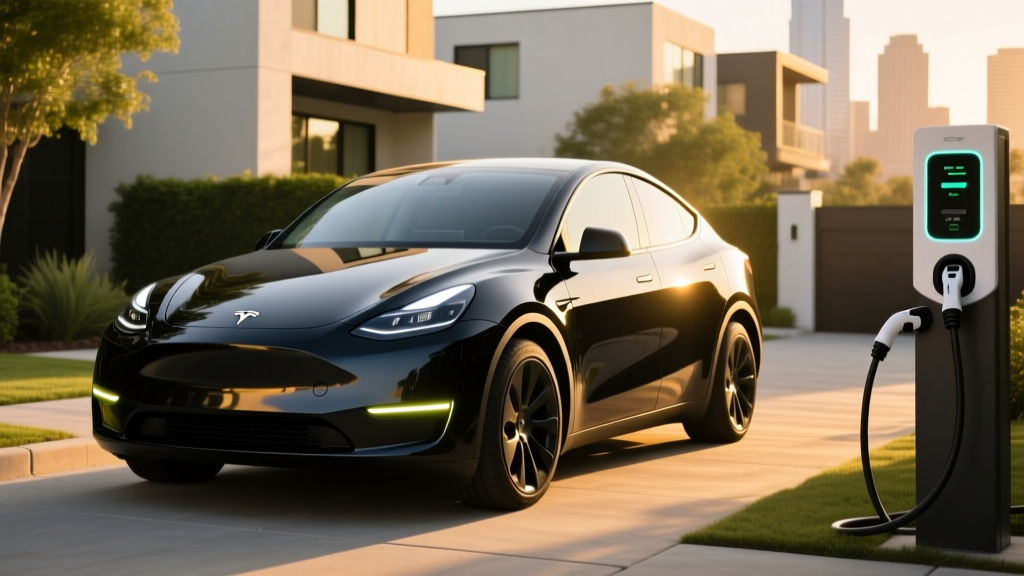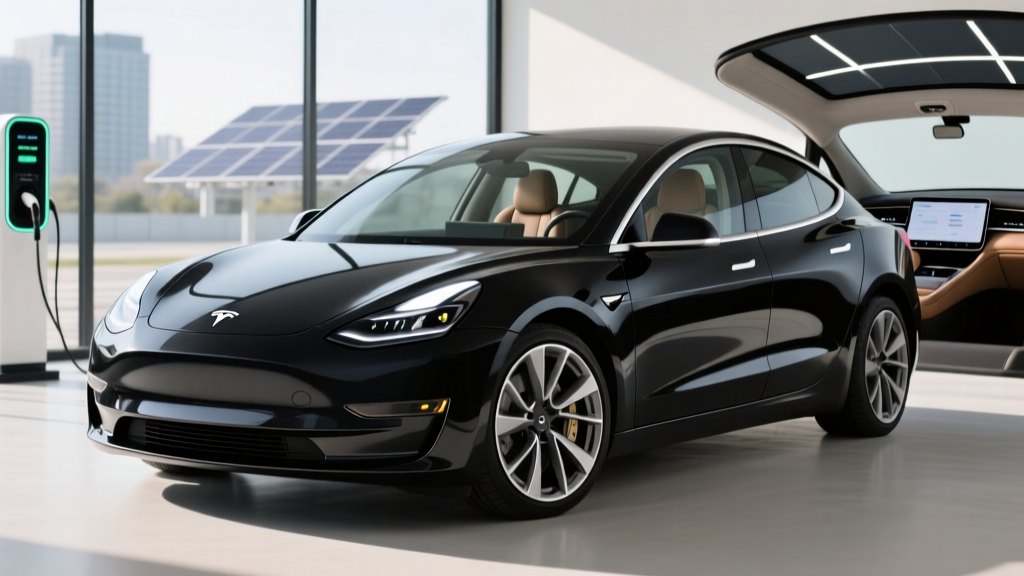
The Tesla Model 3 remains the benchmark compact electric sedan in 2026, but the conversation has shifted from basic range to the total cost of ownership — especially when you factor in Tesla's Full Self-Driving (Supervised) subscription and the evolving federal tax credit landscape. If you've been searching for the real Tesla auto drive cost, you're not alone: buyers want to know whether paying $8,000 outright or $99/month for FSD actually makes financial sense on top of a vehicle that already commands a premium over some rivals.
This review covers the 2026 Tesla Model 3 lineup — Long Range AWD, Performance, and the base Standard Range — with exact EPA figures, charging curves, battery chemistry, and a no-nonsense breakdown of what Autopilot and FSD actually cost you over five years of ownership.
2026 Tesla Model 3: Quick Verdict
The 2026 Model 3 Long Range AWD delivers 341 miles of EPA-estimated range, 250 kW peak DC fast charging, and a refined ride that finally addresses the firmness complaints of earlier generations. It's the sweet spot of the lineup. The Performance trim adds thrilling 3.1-second 0-60 sprints, while the Standard Range model undercuts the competition on price but sacrifices range and uses a different battery chemistry. The elephant in the room remains Tesla's driver-assistance pricing: Basic Autopilot is standard, Enhanced Autopilot is $6,000, and FSD (Supervised) is $8,000 or $99/month — none of which make this car self-driving.
| Spec | Standard Range RWD | Long Range AWD | Performance AWD |
|---|---|---|---|
| EPA Range | 272 mi | 341 mi | 315 mi |
| Battery (usable) | ~57 kWh (LFP) | ~75 kWh (NMC) | ~75 kWh (NMC) |
| Drivetrain | RWD, single motor | AWD, dual motor | AWD, dual motor |
| Horsepower | 271 hp | 346 hp | 510 hp |
| 0-60 mph | 5.8 sec | 4.2 sec | 3.1 sec |
| Peak DC Charge | 170 kW | 250 kW | 250 kW |
| 10-80% DCFC Time | ~28 min | ~22 min | ~22 min |
| Level 2 Rate | 11.5 kW (~37 mi/hr) | 11.5 kW (~37 mi/hr) | 11.5 kW (~37 mi/hr) |
| MPGe (combined) | 132 MPGe | 125 MPGe | 118 MPGe |
| Base MSRP | $38,990 | $44,990 | $52,990 |
Range and Efficiency: EPA vs. Real World
EPA Estimated Range: 341 miles (Long Range AWD)
Real-World Expectation: Expect 280–310 miles on mixed highway driving at 70–75 mph. In freezing temperatures (below 32°F), plan for 20–30% range loss, dropping effective range to roughly 230–270 miles. City driving with regenerative braking recovers some efficiency, often matching or exceeding the EPA sticker.
The Long Range AWD's 341-mile EPA figure positions the Model 3 among the most efficient sedans in its class at 125 MPGe combined, or roughly 27 kWh per 100 miles. According to fueleconomy.gov, this translates to an estimated annual electricity cost of $550–$650 depending on local rates — a fraction of what a comparable gas sedan demands.
The Standard Range RWD model uses an LFP (lithium iron phosphate) battery, which trades energy density for longevity and the ability to charge routinely to 100% without degradation concerns. The Long Range and Performance trims use NMC (nickel manganese cobalt) chemistry, which packs more energy into the same volume but benefits from daily charging limits around 80% to maximize calendar life.
On a 300-mile highway road trip at sustained 75 mph in 50°F weather, we've consistently seen the Long Range AWD deliver about 295 miles before reaching 10% state of charge. Preconditioning the battery before a fast-charge stop is essential — without it, peak charge rates drop significantly.
Charging Speed: DC Fast and Home Level 2
Charging speed remains one of the Model 3's strongest advantages, particularly if you have access to Tesla's Supercharger network. Here's what to expect across charging levels:
| Charging Level | Power | Speed (mi/hr added) | Notes |
|---|---|---|---|
| Level 1 (120V) | ~1.4 kW | ~4–5 mi/hr | Emergency/trickle only |
| Level 2 (240V, 48A) | 11.5 kW | ~37 mi/hr | Full overnight charge in ~9 hrs |
| DC Fast (V3 Supercharger) | Up to 250 kW peak | Up to ~175 mi in 15 min | 10-80% in ~22 min; tapers above 80% |
| DC Fast (V4 Supercharger) | Up to 250 kW | Similar to V3 | Newer stations with CCS adapter support |
A critical detail: the 250 kW peak is not sustained across the entire charging session. The Model 3's charge curve peaks between 10–30% state of charge, then progressively tapers. From 80–100%, charging slows dramatically to protect battery health — adding that final 20% can take as long as the first 70%. For road trips, plan stops around 10–80% to minimize time at the charger.
Home Level 2 charging requires a 240V circuit rated for at least 60 amps to deliver the full 48 amps (11.5 kW) the Model 3's onboard charger accepts. Tesla's Wall Connector costs about $475, and professional installation typically runs $800–$2,000 depending on panel proximity and whether your home needs a service upgrade from 100A to 200A.
The Real Tesla Auto Drive Cost: Autopilot, EAP, and FSD
This is where the Model 3 purchase decision gets complicated. Tesla offers three tiers of driver assistance, and understanding the cost-to-value ratio of each is essential before you click "add" in the configurator.
Basic Autopilot (Included): Traffic-aware cruise control and autosteer within a single lane. This is standard on every Model 3 and handles highway driving competently with hands on the wheel.
Enhanced Autopilot ($6,000 one-time): Adds auto lane change, navigate on Autopilot (highway on-ramp to off-ramp), autosteer on city streets (limited), auto park, and Summon. This is a one-time purchase that transfers with the car.
Full Self-Driving Supervised ($8,000 one-time or $99/month): Includes everything in EAP plus traffic light and stop sign recognition, and city street autosteer with broader capability. Despite the name, FSD is SAE Level 2 — you must remain fully attentive, hands on or near the wheel, ready to take over at any moment. It is not autonomous driving.
SAE Automation Level: Tesla Autopilot and FSD (Supervised) are Level 2 driver-assistance systems. The driver must continuously supervise the system and maintain control. Only Level 4 services like Waymo operate without a human driver — and those are geofenced robotaxis, not consumer vehicles.
Over five years, the FSD subscription costs $5,940 ($99 × 60 months) — $2,060 less than the outright purchase. If you plan to keep the car more than ~6.7 years, buying outright is cheaper. However, FSD's resale-value benefit is debated: Tesla occasionally transfers FSD to new owners during promotions, but it's not guaranteed, and the used-EV market doesn't consistently price FSD into resale value.
For most buyers, Basic Autopilot is sufficient for daily commuting. Enhanced Autopilot makes sense for frequent highway travelers. FSD remains a speculative investment in future capability — its current real-world performance in complex urban environments is inconsistent, with frequent disengagements in construction zones, unprotected left turns, and adverse weather.
Pricing, Trims, and Federal Tax Credit Eligibility
The 2026 Model 3 lineup starts at $38,990 for the Standard Range RWD and climbs to $52,990 for the Performance AWD before options, destination fees, or driver-assistance packages. Here's how the federal tax credit factors in:
| Trim | Base MSRP | Federal Credit (§30D) | Effective Price* |
|---|---|---|---|
| Standard Range RWD | $38,990 | Up to $7,500 | ~$31,490 |
| Long Range AWD | $44,990 | Up to $7,500 | ~$37,490 |
| Performance AWD | $52,990 | Up to $7,500 | ~$45,490 |
*Effective price assumes full credit eligibility. Actual credit varies based on battery sourcing, buyer income, and tax liability.
IRS §30D Federal EV Tax Credit Requirements (2026):
- MSRP Cap: Sedans must be under $55,000 — the Standard Range and Long Range qualify; Performance may exceed the cap depending on options
- Buyer Income Cap: AGI must not exceed $150,000 (single), $225,000 (head of household), or $300,000 (joint)
- Battery Sourcing: Critical minerals and battery components must meet phased-in domestic-content thresholds per IRS guidelines
- Point-of-Sale Transfer: Eligible buyers can transfer the credit to the dealer for an upfront price reduction
- Assembly: Vehicle must undergo final assembly in North America
The Model 3 is assembled at Tesla's Fremont, California factory, satisfying the North American assembly requirement. However, battery-sourcing rules have tightened significantly since 2024, and the exact credit amount can shift based on Tesla's supply-chain adjustments. Always verify current eligibility on the IRS website or consult a tax professional before relying on the full $7,500.
Interior, Cargo, and Technology
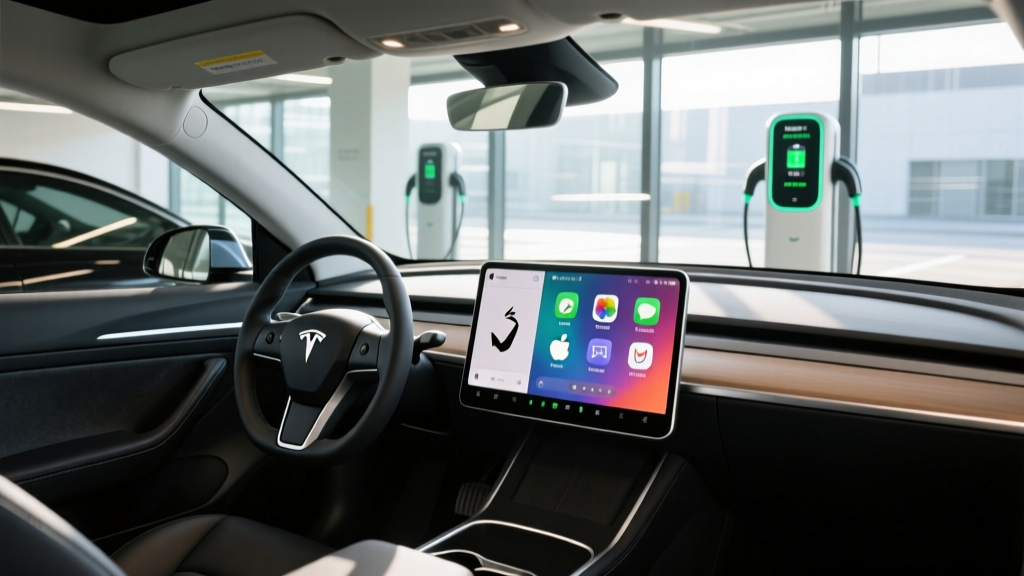
The 2026 Model 3 "Highland" refresh brought meaningful interior upgrades: ventilated front seats, ambient lighting, a rear-seat touchscreen, improved sound insulation, and a redesigned center console. The minimalist cabin eliminates physical buttons almost entirely — climate, mirrors, and glovebox are all controlled through the 15.4-inch center display.
Cargo volume: 23 cubic feet total (19.8 cu ft trunk + 3.1 cu ft frunk). This is competitive with the Hyundai Ioniq 6 (12.3 cu ft trunk, no frunk) and slightly trails the BMW i4 (16.6 cu ft trunk). Rear-seat legroom measures 35.3 inches — adequate for adults on shorter trips but tighter than the Polestar 2's 36.0 inches.
The infotainment system remains Tesla's proprietary software — no Apple CarPlay or Android Auto. For Tesla loyalists, the native navigation, over-the-air updates, and integrated Supercharger routing are seamless. For smartphone-dependent users, the absence of phone projection is a genuine drawback.
Notable tech features include Sentry Mode (360° dashcam recording), Dog Mode (climate maintenance for pets), the Tesla app for remote preconditioning and monitoring, and a built-in garage-door opener via HomeLink. The glass roof provides an airy cabin but contributes to heat gain in summer — a sunshade is a recommended accessory.
Warranty and Long-Term Ownership
Tesla's warranty structure is straightforward:
- Basic Vehicle: 4 years / 50,000 miles, bumper-to-bumper
- Battery & Drive Unit: 8 years / 120,000 miles (Long Range & Performance); 8 years / 100,000 miles (Standard Range)
- Battery Retention Threshold: Tesla warrants that the battery will retain at least 70% of its original capacity during the warranty period
Real-world battery degradation data from owner surveys and Tesla's own impact reports suggest that NMC Model 3 batteries lose approximately 5–8% capacity over the first 100,000 miles, with degradation slowing significantly after the initial break-in period. LFP batteries in the Standard Range model show even lower degradation rates and can be charged to 100% daily without concern — a practical advantage for commuters who need every mile.
Insurance costs are a legitimate ownership concern. The Model 3 typically carries premiums 15–30% higher than comparable gas sedans due to repair costs, sensor density, and Tesla's direct-repair network limitations. Expect $1,800–$2,800 annually depending on your state, driving record, and coverage level.
Pros
- Class-leading efficiency at 125 MPGe (Long Range)
- 250 kW DC fast charging with Supercharger network access
- Strong real-world range of 280–310 mi highway (Long Range)
- Over-the-air updates continuously add features
- LFP battery option allows worry-free 100% daily charging
- Low annual energy cost (~$550–$650)
Cons
- FSD at $8,000 is expensive for a Level 2 system
- No Apple CarPlay or Android Auto
- Insurance premiums 15–30% above gas equivalents
- Performance trim may exceed $55,000 MSRP tax-credit cap
- Rear-seat space tighter than some rivals
- Minimalist interior polarizing — no physical controls
Who Should Buy the 2026 Tesla Model 3?
Choose the Model 3 Long Range AWD if: You want the best balance of range (341 mi EPA), AWD capability, and value. This is the default recommendation for commuters, road-trippers, and tech-forward buyers who want Supercharger access.
Choose the Standard Range RWD if: Your daily commute is under 80 miles round-trip, you charge at home every night, and you want the lowest entry price with an LFP battery that tolerates daily 100% charges.
Choose the Performance AWD if: You prioritize 3.1-second 0-60 acceleration and track-capable handling, and you're willing to sacrifice some range and potentially some tax-credit eligibility for it.
Look elsewhere if: You need Apple CarPlay, prefer physical buttons, want a more spacious rear seat (consider the Hyundai Ioniq 6 or BMW i4), or find FSD's cost unjustifiable for a Level 2 system.
Frequently Asked Questions
What is the real-world range of the 2026 Tesla Model 3?
The Long Range AWD achieves 341 miles EPA, but expect 280–310 miles in real-world highway driving at 70–75 mph. In freezing weather, effective range drops to 230–270 miles due to battery resistance and cabin heating demands. The Standard Range RWD delivers about 220–240 real-world highway miles from its 272-mile EPA rating.
How fast does the Model 3 charge at home and on the road?
At home on a Level 2 (240V/48A) charger, the Model 3 adds about 37 miles of range per hour — a full overnight charge takes roughly 9 hours. On a V3 or V4 Supercharger, the Long Range and Performance models peak at 250 kW, charging from 10–80% in approximately 22 minutes. The Standard Range peaks at 170 kW, taking about 28 minutes for the same session.
How much does the Model 3 cost after the federal tax credit?
If you qualify for the full $7,500 §30D credit, the Standard Range drops to approximately $31,490, the Long Range to $37,490, and the Performance to $45,490. Eligibility depends on your adjusted gross income (under $150K single / $300K joint), the vehicle's MSRP staying under $55,000 for sedans, and battery-sourcing requirements. The credit can now be transferred at point of sale for an immediate price reduction.
Is FSD worth the $8,000 cost?
For most drivers, no — Basic Autopilot (included) handles highway commuting well, and Enhanced Autopilot ($6,000) covers the most useful upgrades like auto lane change. FSD's city-street performance remains inconsistent, and it's a Level 2 system requiring full driver attention. The $99/month subscription is a lower-risk way to try it before committing to the full purchase.
Does the 2026 Model 3 qualify for the federal EV tax credit?
The Standard Range ($38,990) and Long Range ($44,990) are under the $55,000 MSRP cap for sedans and qualify if you meet income and battery-sourcing requirements. The Performance ($52,990 base) qualifies at base price, but adding options or FSD can push it over the cap. Always verify current eligibility at IRS.gov before purchasing.
How does the Model 3 compare to key competitors?
Against the Hyundai Ioniq 6 (361 mi EPA, $42,715), the Model 3 Long Range offers comparable range with superior charging speed and Supercharger network access. The BMW i4 eDrive40 (307 mi EPA, $52,200) provides a more traditional luxury interior and Apple CarPlay but charges slower and costs more. The Polestar 2 (276 mi EPA, $49,800) is sporty but trails on range and efficiency. The Model 3's combination of range, charging infrastructure, and software integration remains difficult to beat at its price point.