The 2026 Tesla Model Y at a Glance
The Tesla Model Y remains America's best-selling electric vehicle entering 2026, now in its second year of the 'Juniper' refresh that brought a quieter cabin, updated suspension tuning, a rear touchscreen, and a full-width light bar. For buyers researching the Model Y as a daily driver and family hauler, the conversation inevitably turns to the total cost of ownership — and that means confronting the reality of auto insurance for Tesla vehicles, which tends to run 20-40% higher than comparable non-electric crossovers. This review breaks down the 2026 Model Y's range, charging, pricing, and ownership economics so you can budget accurately before signing.
| Attribute | Long Range AWD | Performance |
|---|---|---|
| EPA Range | 320 miles | 293 miles |
| Battery (usable) | ~75 kWh, NMC | ~75 kWh, NMC |
| Drivetrain | Dual-motor AWD | Dual-motor AWD |
| Horsepower | 384 hp | 510 hp |
| 0-60 mph | 4.8 sec | 3.5 sec |
| Peak DC Charge | 250 kW | 250 kW |
| 10-80% DC Time | ~25 min | ~25 min |
| Level 2 Rate | 11.5 kW (~44 mi/hr) | 11.5 kW (~44 mi/hr) |
| MPGe (combined) | 111 MPGe | 103 MPGe |
| Efficiency | 30 kWh/100 mi | 33 kWh/100 mi |
| Cargo (rear seats up) | 30.2 cu ft | 30.2 cu ft |
| Cargo (rear folded) | 72.1 cu ft | 72.1 cu ft |
| Base MSRP | $44,990 | $51,490 |
| Federal Tax Credit | Up to $7,500 | Up to $7,500 |
| Battery Warranty | 8 yr / 120,000 mi | 8 yr / 120,000 mi |
Real-World Range and Efficiency
Real-World Expectation: ~265-285 miles on a 75-mph highway loop; ~220-240 miles in sub-30°F winter driving with cabin heat. City/regenerative driving can approach or slightly exceed the EPA figure.
Tesla's efficiency engineering is genuinely class-leading. At 30 kWh per 100 miles on the combined cycle, the Model Y Long Range extracts more miles per kilowatt-hour than the Hyundai Ioniq 5, Ford Mustang Mach-E, and VW ID.4. That efficiency pays dividends on road trips, where fewer kWh burned per mile translates directly into shorter Supercharger stops.
Per fueleconomy.gov, the Long Range AWD achieves 111 MPGe combined (118 city / 104 highway). The Performance trim drops to 103 MPGe due to stickier tires and more aggressive powertrain mapping. Owners who drive predominantly in stop-and-go traffic with frequent regen opportunities will see results near or above the EPA sticker; steady 75-80 mph highway cruising and cold weather are where the gap between sticker and reality widens.
Charging Speed: Home, Public, and the Supercharger Advantage
The 2026 Model Y retains Tesla's proven 250 kW peak DC fast-charging capability on V3 and V4 Superchargers. The charging curve is well-managed: the pack pulls close to peak rate from roughly 10-40% state of charge, then tapers progressively. Expect a 10-80% session in approximately 25 minutes at a V3/V4 stall, adding roughly 175-185 miles of range.
| Charging Level | Power | Miles Added per Hour | Typical Use Case |
|---|---|---|---|
| Level 1 (120V) | ~1.4 kW | ~3-4 mi/hr | Emergency top-off only |
| Level 2 (240V / 48A) | 11.5 kW | ~44 mi/hr | Home overnight, full charge in ~7 hr |
| DC Fast (Supercharger V3) | Up to 250 kW | ~1,000 mi/hr peak | Road trips, 10-80% in ~25 min |
| DC Fast (NACS third-party) | Up to 350 kW (vehicle limited) | ~1,000 mi/hr peak | Electrify America, EVgo NACS stalls |
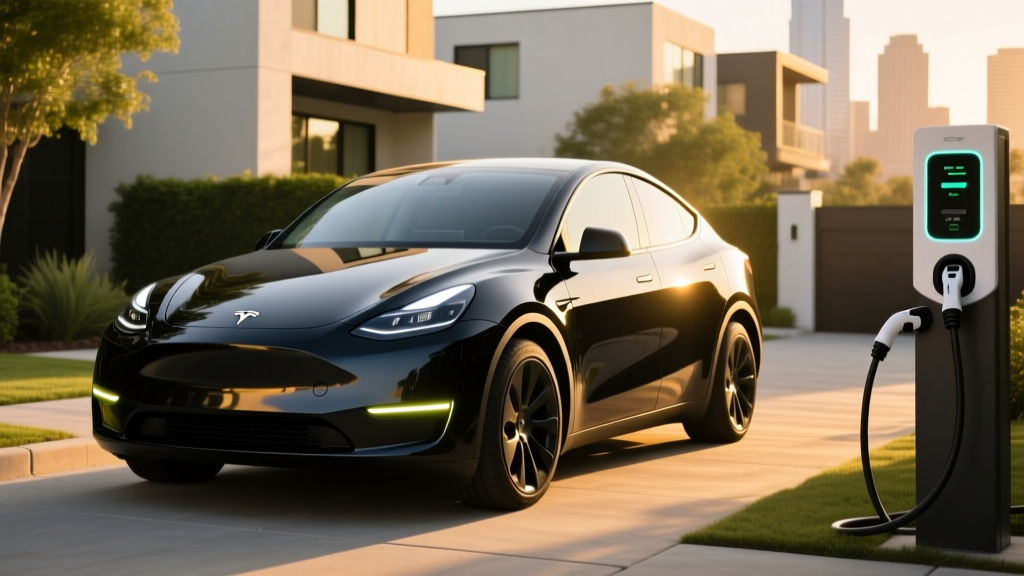
A critical ownership note: the Model Y uses the NACS (North American Charging Standard) connector natively, giving it seamless access to 25,000+ Tesla Superchargers and a rapidly expanding network of NACS-equipped third-party stations. This connector advantage is a real differentiator over CCS-equipped rivals that still require adapters for Supercharger access.
For home charging, a 48-amp Level 2 wall connector on a 60-amp circuit delivers the full 11.5 kW, recovering a day's worth of commuting (40-50 miles) in about an hour. Budget $800-$2,000 for professional installation depending on panel proximity and local permitting.
Performance, Ride, and Daily Drivability
The Juniper-refreshed Model Y rides on a reworked suspension with frequency-selective damping that meaningfully improves ride comfort over the pre-2025 model. Road noise is noticeably reduced thanks to acoustic glass and additional insulation. The Long Range AWD's 4.8-second 0-60 time is brisk for a family crossover; the Performance trim's 3.5-second sprint is genuinely sports-car territory.
Standard features include Tesla's Basic Autopilot (a SAE Level 2 driver-assist system — not self-driving), adaptive cruise control, lane centering, and automatic emergency braking. Full Self-Driving (Supervised) remains a $8,000 option or $99/month subscription and is still classified as Level 2: the driver must remain attentive with hands on or near the wheel at all times.
Cargo space is generous: 30.2 cubic feet behind the second row and 72.1 cubic feet with the 60/40 split folded. The front trunk (frunk) adds roughly 4.1 cubic feet for charging cables or a small bag. Rear legroom is adequate at 38.0 inches, though taller passengers may find the sloping roofline limits headroom compared to boxier rivals like the Ioniq 5.
Pricing, Trims, and Federal Tax Credit Eligibility
| Trim | Base MSRP | Destination | Est. §30D Credit | Effective Price |
|---|---|---|---|---|
| Long Range AWD | $44,990 | $1,390 | Up to $7,500 | ~$38,880 |
| Performance | $51,490 | $1,390 | Up to $7,500 | ~$45,380 |
The 2026 Model Y qualifies for the full IRS §30D federal tax credit of up to $7,500, subject to the following requirements:
- MSRP cap: The vehicle must have an MSRP at or below $80,000 for SUVs (both trims qualify).
- Buyer income cap: Modified AGI must not exceed $150,000 (single), $225,000 (head of household), or $300,000 (joint).
- Battery sourcing: Critical minerals and battery components must meet escalating domestic-content thresholds. Tesla's US-assembled packs with North American-sourced minerals have consistently met these requirements, but always verify at the point of sale.
- Point-of-sale transfer: The credit can be applied at purchase to reduce the upfront price, rather than waiting for a tax refund.
Consult a tax professional to confirm eligibility — rules can shift, and state-level incentives (California's CVRP, Colorado's state credit, etc.) stack on top of the federal credit in some jurisdictions.
Auto Insurance for Tesla: What Model Y Buyers Should Budget
This is where the total-cost-of-ownership math gets real. Auto insurance for Tesla vehicles — including the Model Y — typically costs between $2,400 and $3,800 per year for a clean-record driver, depending on state, age, coverage level, and annual mileage. That is meaningfully above the ~$1,600-$2,200 average for comparable gas-powered compact SUVs.
Why the premium? Three factors drive Tesla insurance costs:
- Repair cost severity: Tesla's aluminum-intensive unibody, integrated casting components, and sensor-laden bumpers make even minor collisions expensive to repair. Insurers price for worst-case claim severity.
- Parts availability and labor: Tesla controls its parts supply chain tightly, and body shops must be Tesla-certified, limiting competition on repair pricing.
- Vehicle performance: The instant torque and rapid acceleration of dual-motor Teslas correlate with higher claim frequency in some actuarial models.
Tesla Insurance, available in most states, uses real-time driving data from the vehicle (the Safety Score) to offer usage-based premiums that can undercut traditional carriers by 15-30% for careful drivers. If your Safety Score consistently exceeds 90, Tesla Insurance may be the most competitive option. Always compare quotes from Geico, Progressive, State Farm, and Tesla Insurance before committing.
For a 35-year-old driver with good credit and a clean record in a suburban zip code, expect approximately:
- Tesla Insurance (Safety Score >90): ~$1,900-$2,300/year
- Traditional carrier (full coverage): ~$2,600-$3,500/year
Warranty, Reliability, and Long-Term Ownership
Tesla covers the Model Y with a 4-year/50,000-mile basic warranty and an 8-year/120,000-mile battery and drive unit warranty (whichever comes first). The battery warranty guarantees the pack will retain at least 70% of its original capacity during the coverage period. Based on fleet data from Tesla's Impact Reports and third-party analyses, Model Y packs using NMC chemistry typically show 5-8% degradation over the first 100,000 miles, well within the warranty threshold.
Build quality has improved markedly since the Fremont factory's early production years, with the Austin-built Juniper models showing tighter panel gaps and fewer interior rattles. Service remains a pain point in some metro areas where Tesla Service Center capacity has not kept pace with the fleet's growth — mobile service handles many software and minor hardware issues, but body repair can involve multi-week wait times.
Pros
- Best-in-class efficiency (30 kWh/100 mi)
- Native NACS access to Supercharger network
- Spacious cargo area (72 cu ft max)
- Over-the-air updates add features post-purchase
- Strong resale value relative to non-Tesla EVs
- Juniper refresh meaningfully improves ride and noise
Cons
- Insurance costs 20-40% above gas crossover average
- Touchscreen-only controls frustrate some drivers
- No Apple CarPlay or Android Auto
- Service center wait times in some markets
- Performance trim ride can be firm on rough roads
- Rear visibility limited by sloping hatch design
Who Should Buy the 2026 Tesla Model Y?
Choose the Model Y Long Range AWD if: You want the most efficient electric family crossover with the best public charging access, you commute 30-60 miles daily with home charging, and you prioritize low running costs over traditional luxury-brand cachet. The ~$38,880 effective price after the federal credit makes it one of the best values in the segment.
Choose the Model Y Performance if: You want sports-car acceleration in a practical package, you're willing to sacrifice ~27 miles of range and accept a firmer ride, and you value the upgraded brakes, wheels, and lowered suspension.
Look elsewhere if: You want Apple CarPlay, physical buttons for climate and volume, a ride tuned for comfort over sportiness, or lower insurance premiums. The Hyundai Ioniq 5, Kia EV6, and Ford Mustang Mach-E are compelling alternatives with lower average insurance costs (roughly $1,800-$2,500/year) and competitive — though slightly less efficient — powertrains.
Frequently Asked Questions
What is the real-world range of the 2026 Tesla Model Y?
The EPA rates the Long Range AWD at 320 miles. In real-world highway driving at 75 mph, expect roughly 265-285 miles. In cold weather (below 30°F), plan for 220-240 miles due to cabin heating demand and reduced battery efficiency.
How fast does the Model Y charge at home and on the road?
On a 250 kW Supercharger, the Model Y charges from 10-80% in approximately 25 minutes. At home on a 48-amp Level 2 charger (11.5 kW), it adds roughly 44 miles per hour, fully replenishing the battery in about 7 hours.
How much does the 2026 Model Y cost after the federal tax credit?
The Long Range AWD starts at $44,990 plus $1,390 destination. With the full $7,500 §30D credit applied at point of sale, the effective price drops to approximately $38,880 before state incentives or dealer fees.
Does the 2026 Model Y qualify for the $7,500 federal EV tax credit?
Yes, both trims currently qualify, provided the buyer's income is within IRS limits ($150K single / $300K joint) and the vehicle's battery meets critical-mineral and component sourcing thresholds. Verify eligibility at purchase, as rules are subject to legislative change.
Why is auto insurance for Tesla more expensive?
Higher repair costs from aluminum body panels, Tesla-certified-only body shops, expensive integrated sensor arrays, and the vehicle's high performance all contribute to elevated premiums. Tesla Insurance with a high Safety Score can reduce costs by 15-30%.
Is the Model Y worth buying over the Hyundai Ioniq 5 or Ford Mach-E?
The Model Y wins on efficiency, Supercharger network access, cargo space, and resale value. The Ioniq 5 offers 800V ultra-fast charging (10-80% in ~18 min on a 350 kW charger) and a more comfortable ride. The Mach-E offers a more traditional interior layout. All three are strong choices — your priority (charging network, ride comfort, or interior ergonomics) should drive the decision.