Tesla Model 3 Charging Times: The Quick Answer
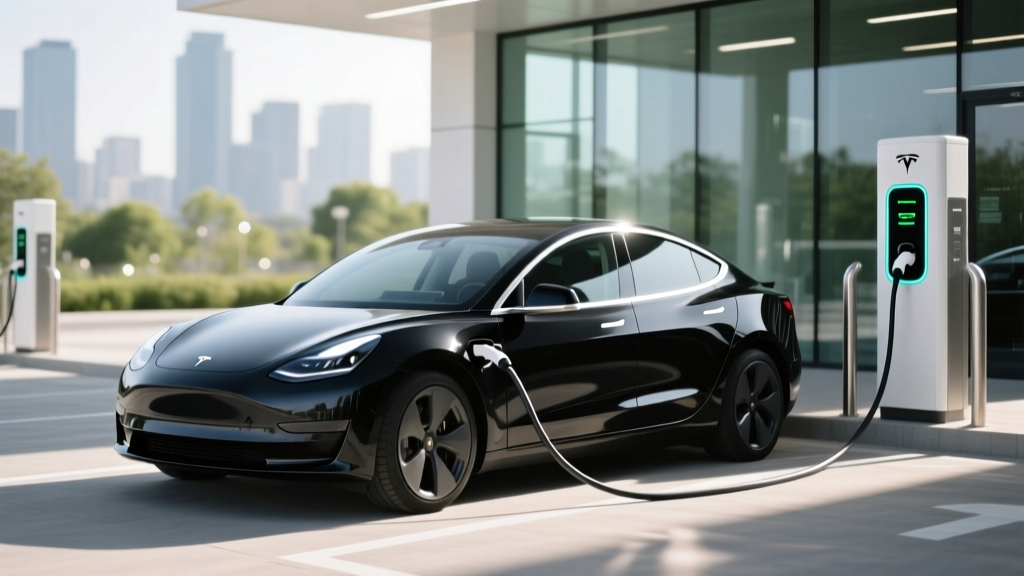
If you're researching the Tesla Model 3, one question rises above the rest: how long does it actually take to charge? The answer depends heavily on where and how you plug in. The 2026 Tesla Model 3 supports DC fast charging at up to 170 kW on the Standard Range RWD and 250 kW on Long Range and Performance trims — meaning a 10-80% session at a Supercharger takes roughly 25-30 minutes depending on battery preconditioning and ambient temperature. At home on a Level 2 wall connector, you'll add about 30-44 miles of range per hour, enough to fully replenish overnight.
But charging speed is only one piece of the ownership puzzle. Below, we cover real-world range, battery chemistry trade-offs, efficiency, pricing after federal tax credits, and whether the refreshed Model 3 still earns its benchmark status against rivals like the Hyundai Ioniq 6 and BMW i4.
| Spec | Standard Range RWD | Long Range AWD | Performance AWD |
|---|---|---|---|
| EPA Range | 272 mi | 363 mi | 315 mi |
| Battery (usable) | ~57.5 kWh (LFP) | ~79 kWh (NMC) | ~79 kWh (NMC) |
| Max DC Fast Charge | 170 kW | 250 kW | 250 kW |
| 10-80% DC Time | ~28 min | ~25 min | ~25 min |
| Level 2 Home Rate | 7.6 kW (~30 mi/hr) | 11.5 kW (~44 mi/hr) | 11.5 kW (~44 mi/hr) |
| 0-60 mph | 5.8 sec | 4.2 sec | 2.9 sec |
| Horsepower | 271 hp | 384 hp | 510 hp |
| Drivetrain | RWD | Dual-Motor AWD | Dual-Motor AWD |
| MPGe (combined) | 132 MPGe | 130 MPGe | 118 MPGe |
| Efficiency | 25 kWh/100mi | 26 kWh/100mi | 28 kWh/100mi |
| Base MSRP | $38,990 | $45,990 | $52,990 |
Real-World Range vs. EPA Estimates
EPA Sticker: 272 mi (RWD) / 363 mi (Long Range) / 315 mi (Performance)
Real-World Expectation: On highway road trips at 70-75 mph in moderate temperatures, expect roughly 240-255 miles from the RWD and 310-330 miles from the Long Range. In cold weather (below 35°F), range drops 20-30% due to cabin heating and battery chemistry — bringing the Long Range down to approximately 250-275 miles of usable distance.
The Model 3's efficiency is among the best in its class. The RWD trim's 25 kWh/100mi figure means it uses less electricity per mile than nearly every competing sedan. This efficiency advantage compounds over time: according to fueleconomy.gov, a Model 3 Long Range owner driving 15,000 miles per year spends roughly $550-$700 on electricity (at the national average of $0.16/kWh), compared to $2,000+ for a similarly sized gas sedan.
One nuance buyers should understand: the RWD model uses an LFP (lithium iron phosphate) battery, while the Long Range and Performance use NMC (nickel manganese cobalt). LFP batteries are heavier and slightly less energy-dense, which explains the RWD's lower range despite similar exterior dimensions. However, LFP chemistry offers a significant longevity advantage — Tesla recommends charging LFP packs to 100% regularly, whereas NMC packs last longer when daily charging is limited to 80-90%. For daily commuters who can charge at home every night, LFP is arguably the better long-term choice.
How Long Does a Tesla Model 3 Take to Charge at Every Level?
The keyword question deserves a thorough answer. Charging time isn't a single number — it's a spectrum from trickle-charging at a standard outlet to blasting electrons at a Supercharger. Here's what to expect at each level:
| Charge Level | Power (kW) | Rate (mi/hr added) | 0-100% Time (Long Range) | Best For |
|---|---|---|---|---|
| Level 1 (120V outlet) | ~1.2 kW | ~4-5 mi/hr | ~65+ hours | Emergency/trickle only |
| Level 2 (240V, Wall Connector) | 7.6-11.5 kW | 30-44 mi/hr | ~8-10 hours | Daily home charging |
| DC Fast (Supercharger V2) | 150 kW | ~170 mi in 15 min | 10-80% in ~30 min | Road trips (older stations) |
| DC Fast (Supercharger V3/V4) | 250 kW (LR/Perf) | ~200 mi in 15 min | 10-80% in ~25 min | Road trips (optimal) |
Critical context on DC fast charging: The advertised 250 kW peak rate is exactly that — a peak, sustained for only a portion of the session. The charging curve tapers significantly above 50% state of charge (SoC), and even more aggressively above 80%. This is why Tesla and most EV manufacturers quote 10-80% times rather than 0-100%. Charging from 80% to 100% on a DC fast charger can take as long as the 10-80% session. For battery longevity and time efficiency, plan road-trip stops around the 10-80% window.
For home Level 2 charging, the Tesla Wall Connector delivers up to 11.5 kW on a 48-amp circuit (requiring a 60-amp breaker). The RWD trim's onboard charger maxes at 7.6 kW (32 amps), so even on a Wall Connector it charges slightly slower. Most owners installing a Level 2 home charger should budget $500-$1,500 for the equipment plus $800-$2,000 for professional electrical installation, depending on whether a panel upgrade is needed. Always consult a licensed electrician for final specifications.
Performance, Interior, and Technology
The 2026 Model 3 "Highland" refresh brought meaningful improvements to ride quality, cabin noise, and interior materials compared to the pre-2024 generation. The dual-motor Long Range delivers 384 hp and a 4.2-second 0-60 mph time — quick enough to feel effortless on highway merges without the neck-snapping aggression of the Performance trim's 2.9-second sprint.
Interior space is adequate for four adults, though the sloping roofline cuts into rear headroom for taller passengers:
- Front legroom: 42.7 inches
- Rear legroom: 35.2 inches
- Cargo volume (rear trunk): 23 cu ft
- Frunk (front trunk): 3.1 cu ft
- Total cargo: ~26 cu ft (seats up)
The infotainment system runs on a 15.4-inch central touchscreen with no physical buttons — climate controls, mirror adjustments, and glovebox release all live in the display. This minimalist approach draws polarized reactions. On the plus side, Tesla's software receives frequent over-the-air updates, and the navigation system integrates Supercharger routing with automatic battery preconditioning, which warms the pack before you arrive for faster charging.
On the driver-assistance front, the Model 3 comes standard with Tesla Autopilot, a Level 2 SAE system providing lane centering and adaptive cruise control. The optional Full Self-Driving (Supervised) package ($8,000) adds automated lane changes, traffic-light recognition, and city-street navigation. However, FSD remains a Level 2 system — the driver must remain fully engaged, hands on the wheel, eyes on the road. It is not autonomous driving. Only Level 4 services like Waymo operate without a driver in the loop.
Driver-Assist Limitation: Tesla Autopilot and FSD (Supervised) are SAE Level 2 systems. They do NOT make the vehicle self-driving. The driver is legally and operationally responsible for all vehicle control at all times. Performance degrades in heavy rain, construction zones, and poorly marked roads.
Pricing, Tax Credits, and Total Cost
| Trim | Base MSRP | Federal §30D Credit | Effective Price |
|---|---|---|---|
| Standard Range RWD | $38,990 | Up to $7,500* | ~$31,490* |
| Long Range AWD | $45,990 | Up to $7,500* | ~$38,490* |
| Performance AWD | $52,990 | Up to $7,500* | ~$45,490* |
*Credit eligibility depends on buyer income, battery sourcing, and MSRP caps. See details below.
The federal EV tax credit under IRS §30D offers up to $7,500, but eligibility is not automatic. Key requirements for 2026 include:
- MSRP cap: Sedans must be priced at or below $55,000. This means the Performance trim at $52,990 qualifies, but adding expensive options could push it over.
- Buyer income cap: Modified adjusted gross income (MAGI) must not exceed $150,000 (single), $225,000 (head of household), or $300,000 (joint).
- Battery sourcing: The credit splits into two halves — $3,750 for meeting critical-minerals requirements and $3,750 for battery-component sourcing. These thresholds tighten annually. Tesla's US-built batteries have historically met component requirements, but critical-mineral compliance varies by model year and supply chain.
- Point-of-sale transfer: As of 2024, buyers can transfer the credit to the dealer at purchase, reducing the upfront price rather than waiting for a tax refund.
Always verify current eligibility on the IRS website or with a tax professional before purchase — rules change and supply-chain sourcing can shift mid-year.
Pros, Cons, and Who Should Buy
Pros
- Class-leading efficiency (25-28 kWh/100mi)
- Access to Tesla Supercharger network — the most reliable DC fast-charging network in the US
- LFP battery on RWD allows daily 100% charging without degradation concern
- Excellent over-the-air update cadence and software integration
- Strong resale value relative to EV competitors
- Qualifying trims eligible for full $7,500 federal credit
Cons
- Rear-seat headroom tight for passengers over 6 feet
- No physical buttons — all controls via touchscreen
- FSD package ($8,000) remains Level 2 despite the name
- Repair costs and insurance premiums tend to run higher than average
- Non-Tesla NACS adapters needed for some third-party chargers (though most networks now support NACS natively as of 2025-2026)
Best for: Daily commuters with home charging access who prioritize efficiency, software polish, and Supercharger reliability. The RWD trim at ~$31,500 after tax credit is one of the most affordable premium EVs available. The Long Range suits frequent road-trippers who need 300+ miles of real-world range and dual-motor traction in rain or snow.
Look elsewhere if: You regularly carry tall rear-seat passengers, prefer physical controls, or need more than 26 cu ft of cargo space (consider the Model Y crossover). If you drive fewer than 30 miles daily and lack home charging, a plug-in hybrid may better serve your needs without range- or charger-access concerns.
How the Model 3 Stacks Up Against Competitors
The refreshed Model 3 faces legitimate competition for the first time in years. The Hyundai Ioniq 6 offers comparable efficiency (132 MPGe combined on the SE Long Range) and a 360-mile EPA rating, with faster 10-80% charging at 350 kW-capable chargers (~18 minutes). However, Ioniq 6 owners rely on third-party charging networks, which remain less reliable than Superchargers in many regions.
The BMW i4 eDrive40 starts around $57,000 (above the tax-credit MSRP cap for sedans) but delivers a more traditional luxury interior with physical controls and superior rear-seat comfort. For buyers who value driving dynamics and build quality over maximum range-per-dollar, the i4 is compelling.
The Model 3's strongest moat remains the Supercharger network. While Tesla opened the network to non-Tesla EVs via NACS adapters and built-in connectors starting in 2024, Tesla owners still benefit from seamless plug-and-charge integration, automatic battery preconditioning during navigation, and generally higher station uptime.
Frequently Asked Questions
What is the real-world range of the Tesla Model 3?
In mixed driving at moderate temperatures, expect 245-260 miles from the RWD and 320-340 miles from the Long Range — roughly 90-95% of EPA ratings. Sustained highway driving at 75+ mph and cold weather (below 35°F) reduce range by 15-30% depending on conditions. Preconditioning the battery while plugged in mitigates some cold-weather loss.
How fast does the Model 3 charge on a road trip?
At a V3 Supercharger (250 kW), the Long Range and Performance trims charge from 10-80% in approximately 25 minutes. The RWD trim peaks at 170 kW, taking about 28 minutes for the same session. Plan stops around the 10-80% window — charging slows dramatically above 80%.
How long does home charging take?
On a Level 2 Tesla Wall Connector (48 amps / 11.5 kW), the Long Range adds roughly 44 miles of range per hour, reaching a full charge from near-empty in 8-10 hours. The RWD adds about 30 miles per hour at its 7.6 kW onboard charger limit. Most owners wake up to a full battery every morning.
Does the Tesla Model 3 qualify for the $7,500 federal tax credit?
All three trims fall under the $55,000 sedan MSRP cap and are assembled in the US, making them potentially eligible. However, the full $7,500 depends on battery critical-mineral and component sourcing requirements (which tighten annually), as well as buyer income limits ($150K single / $300K joint MAGI). Verify current eligibility at irs.gov before purchasing.
Is the Model 3 worth buying over the Ioniq 6 or BMW i4?
Choose the Model 3 if Supercharger access, software integration, and efficiency-per-dollar are your priorities. Choose the Ioniq 6 if you want faster peak charging (350 kW) and don't mind third-party networks. Choose the BMW i4 if interior quality and physical controls matter more than tax-credit eligibility or maximum range.
How long will the Model 3 battery last?
Tesla warranties the battery for 8 years / 100,000 miles (RWD) or 8 years / 120,000 miles (Long Range/Performance), guaranteeing at least 70% capacity retention. Real-world data from high-mileage Tesla owners suggests NMC packs retain 85-90% capacity at 100,000 miles when regularly charged to 80%. LFP packs (RWD) show similar or slightly better longevity, with the added benefit of tolerating regular 100% charges.
Final Verdict: Choose the Model 3 If…
- You have (or can install) home Level 2 charging and want the simplest daily ownership experience
- Road-trip charging reliability matters — Superchargers remain the gold standard
- You want a sub-$32,000 effective price (RWD after credit) with 250+ real-world miles
- Software-first design appeals to you more than physical knobs and buttons
Skip it if you need serious rear-seat headroom, want a traditional luxury interior, or can't charge at home and live in an area with sparse public charging infrastructure.