If you are shopping for a Tesla and typing "how much does a Tesla cost to charge" into your search bar, you are asking the right question. The sticker price only tells half the story. The real ownership equation hinges on electricity rates, charging habits, and which Tesla model you choose. For this deep-dive, we are using the 2026 Tesla Model 3 Long Range AWD as our baseline — the volume seller and the most common entry point into Tesla ownership — while referencing the broader Tesla lineup where costs diverge.
Below you will find exact charging costs per mile across home Level 2, public DC fast charging, and the Tesla Supercharger network, alongside the full spec profile you need to evaluate the Model 3 as a purchase: EPA range, battery chemistry, charge speeds, performance, pricing after federal tax credits, and real-world ownership trade-offs.
2026 Tesla Model 3 Long Range: Core Specs at a Glance
| Spec | Value |
|---|---|
| EPA Estimated Range | 341 miles |
| Battery Capacity (usable) | ~79 kWh (NMC chemistry) |
| Drivetrain | Dual-Motor AWD |
| Horsepower | ~346 hp (combined) |
| 0–60 mph | 4.2 seconds |
| Max DC Fast-Charge Rate | 250 kW (peak) |
| 10–80% DC Fast Charge | ~27 minutes |
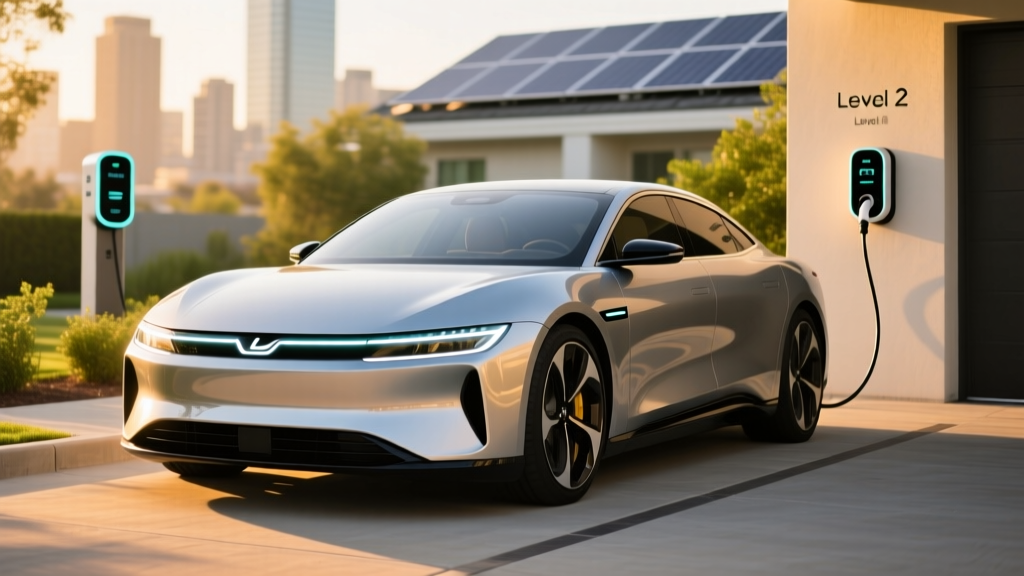
| Level 2 Home Charge Rate | 11.5 kW (~44 mi/hr) |
| Efficiency (EPA) | 132 MPGe combined / 25 kWh/100 mi |
| Cargo Volume | 23 cu ft (rear trunk + frunk) |
| Rear Legroom | 35.3 inches |
| Battery & Drive Unit Warranty | 8 years / 120,000 miles |
| Base MSRP | $47,740 (before destination) |
The Long Range AWD uses NMC (nickel manganese cobalt) battery chemistry, which prioritizes energy density over the LFP (lithium iron phosphate) cells found in the base Rear-Wheel-Drive Model 3. That trade-off matters: NMC gives you 341 miles of range in a lighter package, while the LFP variant (RWD, ~272 miles EPA) is heavier per kWh but tolerates daily 100% charging without long-term degradation concerns. If you plan to charge to 100% every night, the RWD/LFP model is the more battery-friendly choice. If you want maximum range and can charge to 80% daily, Long Range NMC is the better fit.
How Much Does a Tesla Cost to Charge? The Real Numbers
This is the core question, and the answer depends entirely on where you charge. We calculated costs using the Model 3 Long Range's 79 kWh usable battery and 25 kWh/100 mi real-world efficiency (EPA rates it at 25 kWh/100 mi combined). Your local electricity rate will shift these numbers, so we provide the formula alongside our baselines.
Home Level 2 Charging (Cheapest Option)
Home charging is where most Tesla owners do 80–90% of their charging. Using the US residential average of $0.165 per kWh (EIA, early 2026 data):
- Full 0–100% charge cost: 79 kWh × $0.165 = $13.04
- Cost per mile: $13.04 ÷ 341 miles = $0.038/mile
- Cost per 100 miles: ~$3.83
- Monthly cost (1,000 mi/mo): ~$38.25
Compare that to a 30 MPG gas car at $3.40/gallon: $11.33 per 100 miles. Home-charged Model 3 ownership costs roughly one-third what a comparable gas sedan costs in fuel.
Important caveat: If you live in California, Hawaii, or the Northeast, your rate may be $0.25–$0.35/kWh, pushing home charging to $0.058–$0.082/mile. Still cheaper than gas, but the gap narrows. Check your utility's EV-specific time-of-use (TOU) rate — many utilities offer $0.08–$0.10/kWh for overnight charging, which drops your cost to under $0.025/mile.
Tesla Supercharger Network (Road Trips)
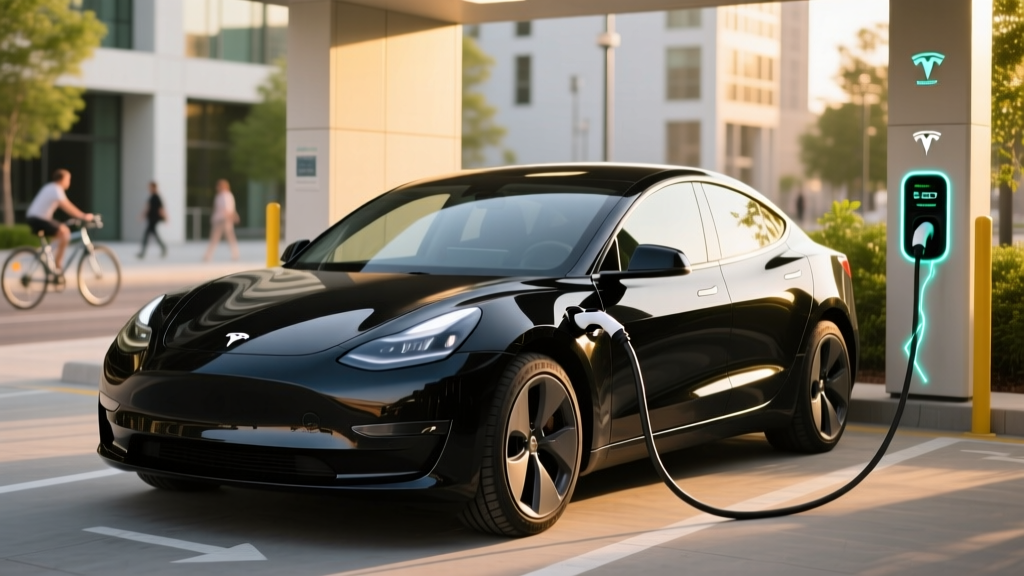
Supercharger pricing varies by station, time of day, and region. As of early 2026, the US average is approximately $0.35/kWh, with peak urban stations reaching $0.48/kWh and off-peak rural stations as low as $0.26/kWh.
- Full charge at $0.35/kWh: 79 kWh × $0.35 = $27.65
- Cost per mile (Supercharger): ~$0.081/mile
- Typical road-trip top-up (10–80%, ~55 kWh): ~$19.25
For a 600-mile road trip requiring two Supercharger stops, expect roughly $40–$55 in charging costs — compared to $65–$80 in gasoline for a 30 MPG sedan.
Third-Party DC Fast Chargers (Electrify America, EVgo, ChargePoint)
The 2026 Model 3 Long Range ships with the NACS (North American Charging Standard) connector natively. Tesla opened its Supercharger network to non-Tesla EVs, but as a Tesla owner you have native access. If you use third-party networks (which increasingly support NACS), expect rates of $0.38–$0.55/kWh, making them comparable to or slightly more expensive than Superchargers.
| Charging Method | Avg $/kWh | Full Charge Cost | Cost/Mile | Monthly (1,000 mi) |
|---|---|---|---|---|
| Home Level 2 (US avg) | $0.165 | $13.04 | $0.038 | $38 |
| Home TOU (overnight) | $0.09 | $7.11 | $0.021 | $21 |
| Tesla Supercharger | $0.35 | $27.65 | $0.081 | $81* |
| Third-Party DCFC | $0.45 | $35.55 | $0.104 | $104* |
*Assumes 100% reliance on this method — most owners mix home and public charging.
Real-World Range vs. EPA: What to Actually Expect
EPA Sticker: 341 miles
Real-World Highway (70–80 mph, 70°F): ~280–300 miles
Real-World City/Suburban (mixed, 70°F): ~310–330 miles
Cold Weather Highway (30°F, heater on): ~230–260 miles
Cold Weather City (30°F, heat pump active): ~260–290 miles
The EPA test cycle includes generous city driving with regenerative braking recovery, which inflates the sticker number relative to sustained highway travel. At 75 mph on a flat interstate in mild weather, expect roughly 15–18% less range than the 341-mile EPA figure — putting you at 280–290 miles of usable distance before you hit 10% State of Charge (SoC) and need to stop.
The Model 3 Long Range uses a heat pump (standard since the 2022 refresh), which significantly reduces cold-weather cabin-heating energy draw compared to resistive heaters. Even so, battery chemistry itself loses efficiency below 40°F. Expect 20–30% range reduction in sustained freezing temperatures, particularly on highway trips where regenerative braking is minimal. The heat pump recovers some of this, but physics is physics — cold lithium-ion cells have higher internal resistance.
For daily commuting under 60 miles round-trip, range is a non-issue regardless of weather. For road trips, plan stops around the 250-mile mark in summer and 200-mile mark in winter to maintain a comfortable buffer.
Charging Speed: DC Fast, Level 2, and Level 1 Breakdown
The Model 3 Long Range peaks at 250 kW on a V3 (or V4) Tesla Supercharger, but like all EVs, it does not sustain peak rate for the entire session. Here is what the charge curve actually looks like:
| Level | Power | Miles Added/Hour | Session Time | Notes |
|---|---|---|---|---|
| Level 1 (120V outlet) | ~1.4 kW | ~4 mi/hr | ~55 hrs (0–100%) | Emergency/top-up only |
| Level 2 (240V, 48A Wall Connector) | 11.5 kW | ~44 mi/hr | ~7 hrs (0–100%) | Standard home overnight charge |
| DC Fast (250 kW peak) | 250 kW → taper | ~170 mi in 15 min | ~27 min (10–80%) | Peak holds to ~50% SoC, then tapers |
Charge curve reality: The 250 kW peak holds roughly from 10% to 45–50% SoC. From 50–80%, the rate tapers to 100–120 kW. Above 80%, it drops further to protect battery health — which is why Tesla (and every EV maker) quotes 10–80% times rather than 0–100%. If you arrive at a Supercharger at 10% SoC, you will add roughly 170 miles in 15 minutes, but the last 20% takes nearly as long as the first 70%. Plan accordingly: on road trips, charge to 80% and move on rather than waiting for 100%.
For home charging, the Tesla Wall Connector at 48 amps delivers 11.5 kW — enough to fully replenish the 79 kWh battery overnight in about 7 hours. If your home electrical panel supports only a 30-amp circuit (24A continuous), you will get ~5.8 kW and ~22 mi/hr, requiring roughly 13 hours for a full charge. A licensed electrician can confirm your panel's capacity before installation.
Pricing, Trims, and Federal Tax Credit Eligibility
The 2026 Tesla Model 3 lineup includes three trims. Pricing below includes the $1,390 destination fee:
| Trim | MSRP (incl. dest.) | Battery | Range (EPA) | §30D Credit Eligible? |
|---|---|---|---|---|
| Rear-Wheel Drive | $40,380 | ~60 kWh (LFP) | 272 mi | Yes — up to $7,500 (see rules below) |
| Long Range AWD | $49,130 | ~79 kWh (NMC) | 341 mi | Yes — up to $7,500 (see rules below) |
| Performance AWD | $55,130 | ~79 kWh (NMC) | 315 mi | Yes — up to $7,500 (see rules below) |
The IRS §30D clean vehicle credit offers up to $7,500 for qualifying new EVs, available as a point-of-sale transfer (instant rebate at delivery) since 2024. However, eligibility depends on three hurdles:
- MSRP cap: Sedans must be under $55,000. All Model 3 trims qualify.
- Buyer income cap: Modified AGI must not exceed $150,000 (single), $225,000 (head of household), or $300,000 (joint).
- Battery sourcing: Critical minerals and battery components must meet phased percentage thresholds from US or FTA-partner countries. Tesla has progressively shifted supply chains to comply, but exact eligibility can change by production batch. Always verify the specific VIN on fueleconomy.gov before purchasing.
If eligible, the Long Range AWD drops from $49,130 to an effective $41,630 — a significant value proposition.
Performance, Tech, and Interior: What You Get for the Money
The Long Range AWD's dual-motor setup delivers 346 hp and a 4.2-second 0–60 mph time — quick enough to merge confidently onto any freeway and pass without drama. The RWD model (267 hp, 5.8 sec 0–60) is adequate for commuting but noticeably less urgent. The Performance trim (3.1 sec 0–60, track-tuned suspension) is a thrill but sacrifices 26 miles of range and $6,000 in price.
Infotainment: The 15.4-inch center touchscreen handles everything — navigation, media, climate, vehicle settings — with no physical buttons aside from steering-wheel controls and window switches. The interface is fast and intuitive, but the all-touch approach draws valid criticism: adjusting mirrors, opening the glovebox, and changing wiper settings all require screen taps. The 2024 "Highland" refresh improved this with ventilated front seats, ambient lighting, a rear passenger screen, and significantly better cabin insulation.
Driver Assistance: Basic Autopilot (adaptive cruise + lane centering) is standard. Full Self-Driving (Supervised) is a $8,000 add-on (or $99/month subscription) that adds automated lane changes, traffic-light recognition, and city-street navigation. Crucially, FSD is SAE Level 2 — you must keep your hands on the wheel and eyes on the road at all times. It is not autonomous driving. Tesla's naming is aspirational; the system requires active supervision.
Cargo & Space: The Model 3 offers 23 cu ft of combined trunk and frunk space — competitive with compact sedans but less than the Model Y's 76 cu ft hatch. Rear legroom at 35.3 inches is adequate for adults on shorter trips but tight for tall passengers on long hauls. If rear-seat space is a priority, the Model Y or a competitor like the Hyundai Ioniq 6 (which offers similar range and more rear room) deserves a look.
Who Should Buy the Model 3 — And Who Should Look Elsewhere
- Best-in-class Supercharger network access
- Industry-leading efficiency (25 kWh/100 mi)
- Lowest cost-per-mile when home charging
- Strong resale value and brand recognition
- Over-the-air updates continuously add features
- Excellent safety ratings (IIHS Top Safety Pick+)
- All-touch interface frustrates some drivers
- Rear seat tighter than Model Y or Ioniq 6
- FSD ($8,000) remains Level 2, not autonomous
- Non-Tesla DCFC adapters needed for CCS stations (included with vehicle)
- Insurance premiums run 15–25% higher than gas equivalents
- Cargo space limited vs. crossover alternatives
Best for: Solo commuters, couples without children, tech-forward buyers who want the lowest per-mile operating cost and access to the most reliable fast-charging network. If 80%+ of your charging will happen at home, the Model 3 Long Range delivers the best economics in its class.
Look elsewhere if: You regularly carry rear-seat passengers (Model Y), you need over 350 miles of range without stopping (Lucid Air), or you prefer physical buttons and a traditional instrument cluster (Hyundai Ioniq 6, BMW i4).
Frequently Asked Questions
What is the real-world range of the 2026 Tesla Model 3 Long Range?
The EPA rates it at 341 miles. In real-world highway driving at 70–80 mph in mild weather, expect 280–300 miles. In freezing temperatures, plan for 230–260 miles on the highway. City driving with regenerative braking gets closer to the EPA number.
How fast does the Model 3 charge at home and on the road?
At home on a Level 2 Tesla Wall Connector (11.5 kW), it adds ~44 miles per hour — a full charge takes about 7 hours. On a 250 kW Supercharger, 10–80% takes approximately 27 minutes, with the fastest charging occurring between 10–50% SoC.
How much does a Tesla cost to charge per month?
If you drive 1,000 miles per month and charge primarily at home at the US average electricity rate ($0.165/kWh), expect roughly $38/month. Exclusive Supercharger use pushes that to about $81/month. Most owners fall somewhere in between.
Does the Model 3 qualify for the $7,500 federal tax credit?
All three Model 3 trims fall under the $55,000 MSRP cap for sedans. Eligibility depends on your income (under $150K single / $300K joint), and the vehicle's battery sourcing compliance. Verify your specific VIN on fueleconomy.gov before purchase, as sourcing rules can shift by production batch.
Is the Model 3 worth buying vs. the Hyundai Ioniq 6 or BMW i4?
The Model 3 wins on charging-network access (Supercharger), efficiency, and software. The Ioniq 6 offers comparable range (361 mi EPA), faster 800V charging architecture (10–80% in ~18 min), and more rear-seat room. The BMW i4 offers a more traditional luxury interior and physical controls but at a higher price and with less range. If Supercharger access matters to you, the Model 3 remains the default choice.
How long will the Model 3 battery last?
Tesla warranties the battery for 8 years or 120,000 miles (whichever comes first), guaranteeing at least 70% capacity retention. Real-world data from high-mileage Teslas suggests NMC batteries retain 85–90% capacity at 100,000 miles when charged primarily to 80%. Replacement cost, if needed out of warranty, ranges from $12,000–$16,000 depending on the pack.