Quick Verdict: The Lucid Air Is Still a Benchmark Sedan — But Corporate Headwinds Matter
If you've been tracking headlines around Lucid Motors layoffs 2026, you're not alone in wondering whether the Lucid Air remains a safe buy. The short answer: the car itself is still the most efficient long-range electric sedan on the market, with class-leading EPA range, blistering DC fast-charge speeds, and a luxury cabin that rivals anything from Germany. The longer answer involves corporate restructuring, shifting production volumes, and what a leaner Lucid means for service, parts availability, and long-term software support.
This review covers the 2026 Lucid Air lineup — Pure, Touring, Grand Touring, and Sapphire — with hard numbers on range, charging, performance, pricing, and federal tax credit eligibility. We'll also address the ownership-risk question directly: what do the 2026 layoffs mean for your warranty, service network, and resale value?
2026 Lucid Air: Full Specification Table
| Spec | Air Pure | Air Touring | Air Grand Touring | Air Sapphire |
|---|---|---|---|---|
| EPA Range | 419 mi | 425 mi | 516 mi | 427 mi |
| Battery (usable) | 88 kWh (NMC) | 112 kWh (NMC) | 112 kWh (NMC) | 118 kWh (NMC) |
| Drivetrain | RWD (single motor) | AWD (dual motor) | AWD (dual motor) | AWD (tri-motor) |
| Horsepower | 430 hp | 620 hp | 819 hp | 1,234 hp |
| 0–60 mph | 5.0 sec | 3.4 sec | 3.0 sec | 1.89 sec |
| Max DC Fast Charge | 220 kW | 300 kW | 300 kW | 300 kW |
| 10–80% DC Time | ~30 min | ~25 min | ~25 min | ~28 min |
| Level 2 Home Charge | 19.2 kW (~75 mi/hr) | 19.2 kW (~75 mi/hr) | 19.2 kW (~75 mi/hr) | 19.2 kW (~75 mi/hr) |
| MPGe (combined) | 146 MPGe | 131 MPGe | 131 MPGe | 110 MPGe |
| Efficiency (kWh/100 mi) | 23 kWh | 26 kWh | 26 kWh | 30 kWh |
| Base MSRP | $69,900 | $77,900 | $109,900 | $249,000 |
| Federal §30D Credit | Not eligible (MSRP cap) | Not eligible (MSRP cap) | Not eligible (MSRP cap) | Not eligible (MSRP cap) |
Source: EPA fueleconomy.gov, Lucid Motors 2026 spec sheets. Prices exclude $1,500 destination fee.
Range & Efficiency: Still the King of Miles per kWh
The Lucid Air Grand Touring's 516-mile EPA range remains the highest of any production electric sedan sold in the U.S. in 2026. But EPA stickers don't tell the whole story, especially for a car often used for long highway stretches.
- Mixed driving (city + suburban): ~480–510 mi — Lucid's regenerative braking and low-speed efficiency shine here
- Sustained highway (70–75 mph, mild weather): ~420–460 mi — aerodynamic drag at speed trims range ~10–18%
- Cold weather (below 32°F, highway): ~340–390 mi — NMC chemistry loses efficiency in cold; expect 20–30% reduction without preconditioning
- Cold weather + highway + HVAC load: ~310–350 mi — worst-case scenario
The Air's heat pump (standard across trims) mitigates cold-weather losses better than resistive heaters, but physics is physics. If you regularly drive 300+ miles in sub-freezing temperatures, plan one charging stop.
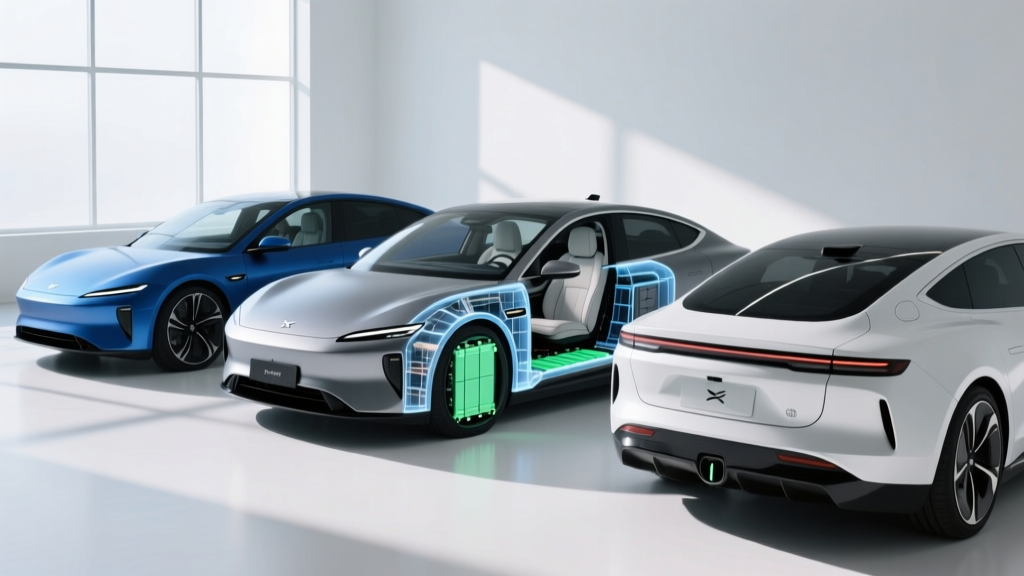
Efficiency is where Lucid's engineering truly stands out. The Air Pure achieves 146 MPGe combined (23 kWh/100 mi), which is extraordinary for a 4,700-lb luxury sedan. For context, the Tesla Model S Long Range achieves 124 MPGe combined, and the BMW i5 eDrive40 lands at 97 MPGe. Lucid's miniaturized drive units and 900V+ electrical architecture reduce energy waste throughout the powertrain.
Charging Speed: 900V Architecture Delivers
Lucid's 900V+ battery architecture (nominally 924V on Touring/Grand Touring/Sapphire) is the key to its charging performance. Higher voltage means lower current for the same power, which reduces heat and sustains peak charge rates longer. Here's the full breakdown:
| Charging Level | Power / Rate | Miles Added per Hour | Notes |
|---|---|---|---|
| Level 1 (120V household) | ~1.4 kW | ~4 mi/hr | Emergency/trickle only; 112 kWh battery takes days |
| Level 2 (240V, 48A circuit) | 11.5 kW | ~45 mi/hr | Typical home charger on 60A breaker |
| Level 2 (240V, 80A circuit) | 19.2 kW | ~75 mi/hr | Full onboard charger capacity; needs 100A breaker |
| DC Fast Charge (peak) | 300 kW (Touring/GT/Sapphire) | ~700+ mi/hr equivalent | Sustains above 250 kW through ~55% SoC |
| DC Fast Charge (Air Pure) | 220 kW peak | ~550 mi/hr equivalent | Lower-voltage architecture; tapers earlier |
Charging curve reality check: The Touring, Grand Touring, and Sapphire hit 300 kW at low state-of-charge on a compatible 350 kW charger (like Electrify America's latest stalls). The curve holds above 250 kW until roughly 55% SoC, then tapers to ~150 kW by 70%, and drops further above 80%. A 10–80% session takes approximately 25 minutes on a 350 kW station. If you arrive at a 150 kW charger, expect 10–80% in roughly 45–50 minutes — still practical, but you're leaving speed on the table.
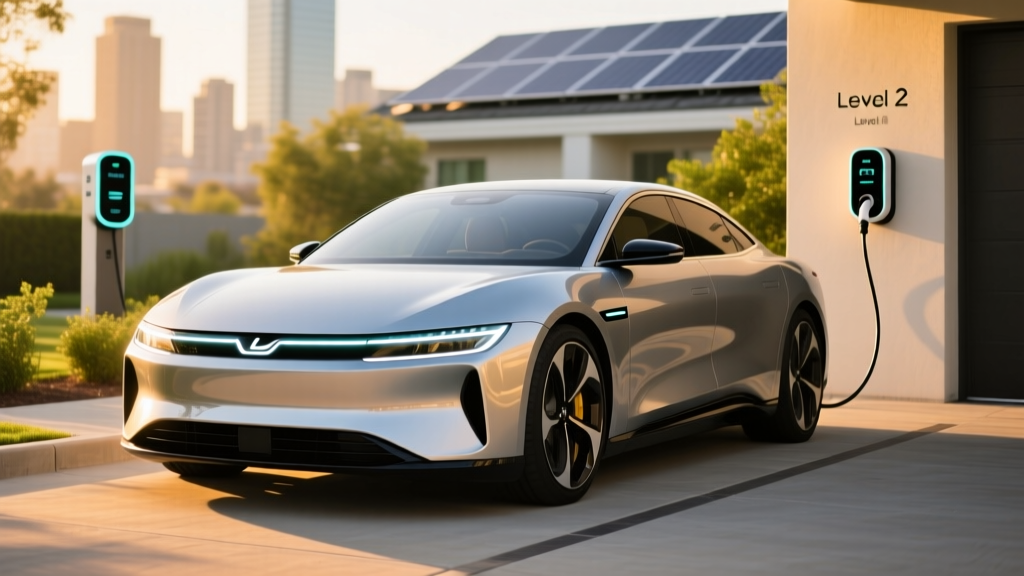
At home, the Air's 19.2 kW onboard charger is among the most powerful in any EV. Most homeowners install a 48A Level 2 unit (11.5 kW), which refills a depleted Grand Touring battery in about 10 hours. If your electrical panel supports a 100A breaker, you can run an 80A charger at the full 19.2 kW and cut that to ~6 hours. Budget $1,200–$3,500 for a professional Level 2 installation depending on panel capacity and run length — confirm specifics with a licensed electrician.
Performance: From Efficient Cruiser to Hypercar Killer
The Air lineup spans a remarkable performance envelope. The Pure's 430 hp rear motor delivers a 5.0-second 0–60 that's quick for daily driving. The Touring's 620 hp dual-motor setup drops that to 3.4 seconds with all-weather AWD traction. The Grand Touring's 819 hp hits 3.0 seconds — supercar territory in a sedan that seats five.
The Sapphire occupies its own universe: 1,234 hp from a tri-motor layout (one front, two rear), 1.89-second 0–60, and a 9:31 Laguna Seca lap time that embarrasses vehicles costing three times as much. It's a low-volume halo, not a rational purchase — but it demonstrates what Lucid's powertrain team can do.
Pricing, Tax Credits & the 2026 Lineup
Lucid simplified its 2026 pricing after the restructuring. Here's where each trim lands:
| Trim | Base MSRP | As-Tested (typical options) | Federal §30D Credit | Effective Price After Credit |
|---|---|---|---|---|
| Air Pure | $69,900 | $72,000–$75,000 | $0 (exceeds $55,000 sedan MSRP cap) | $69,900+ |
| Air Touring | $77,900 | $82,000–$88,000 | $0 (exceeds $55,000 sedan MSRP cap) | $77,900+ |
| Air Grand Touring | $109,900 | $115,000–$125,000 | $0 (exceeds $55,000 sedan MSRP cap) | $109,900+ |
| Air Sapphire | $249,000 | $249,000–$260,000 | $0 (exceeds $55,000 sedan MSRP cap) | $249,000+ |
Tax credit reality: Under current IRS §30D rules, new electric sedans must have an MSRP at or below $55,000 to qualify for the up-to-$7,500 federal tax credit. Every Lucid Air trim exceeds this cap, meaning no trim qualifies for the new-vehicle credit. Buyers with adjusted gross income above $150,000 (single) or $300,000 (joint) would be income-capped regardless. The Air does not currently qualify for any federal purchase incentive.
Used Air buyers: The §25E used clean vehicle credit (up to $4,000 or 30% of sale price, whichever is lower) may apply if you buy a pre-owned Air from a dealer for $25,000 or more, meet income caps ($75,000 single / $150,000 joint), and the vehicle is at least two model years old. Consult a tax professional for eligibility.
What the 2026 Layoffs Mean for Buyers
Lucid's workforce reductions in early-to-mid 2026 followed a pattern familiar to EV startups: production volume below factory capacity, cash burn requiring capital raises, and a strategic pivot toward the upcoming Gravity SUV and future mid-size platform. Here's how the restructuring affects current and prospective Air owners:
Service Network & Parts
Lucid operates a mix of company-owned service centers and mobile service vans. As of mid-2026, the service footprint covers major metro areas (California, New York, Florida, Texas, Arizona) but remains sparse in the Mountain West and rural Midwest. Layoffs have trimmed some regional service staff, though Lucid has stated warranty and service operations remain fully funded. Parts availability for the Air — which shares components across model years 2022–2026 — should remain stable, but turnaround times on body panels and glass may stretch if supplier orders are batched to conserve cash.
Warranty Coverage
Lucid's warranty remains competitive:
- Basic vehicle: 4 years / 50,000 miles
- Battery & drive unit: 8 years / 100,000 miles (covers defects and capacity below 70% of original)
- Roadside assistance: 4 years / 50,000 miles
The 70% capacity retention threshold is industry-standard (Tesla uses the same). NMC chemistry in the Air's battery pack has demonstrated minimal degradation in early-model vehicles — most 2022–2023 Airs show 95%+ state of health at 30,000 miles based on owner-reported data. The 900V architecture's thermal management keeps cells in an optimal temperature window, reducing calendar and cycle degradation.
Software & Feature Development
This is where layoffs hit hardest. Lucid's DreamDrive Pro ADAS suite (adaptive cruise, lane centering, automatic lane change) is a capable SAE Level 2 system, but it has lagged Tesla's Autopilot and GM's Super Cruise in feature breadth. With engineering staff reduced, expect slower OTA update cadence in 2026–2027. Lucid has confirmed that safety-critical updates will continue, but ambitious features like a hands-free highway pilot remain on an extended timeline.
Interior, Cargo & Daily Livability
The Air's cabin is a study in minimalist luxury. The glass canopy roof floods the interior with light, and the 34-inch curved glass cockpit display replaces traditional gauges. Materials quality is high — Nappa leather, alcantara headliner, real wood and aluminum trim — though some owners report the Lucid UX infotainment system feels a generation behind Tesla, Rivian, and even legacy OEMs in responsiveness and app ecosystem.
Space is generous:
- Front legroom: 45.3 inches
- Rear legroom: 38.2 inches (usable for adults on long trips)
- Trunk (rear): 32.0 cu ft (deeper than Model S's 28 cu ft)
- Frunk: 7.1 cu ft (fits a carry-on or charging cables)
- Total cargo: 39.1 cu ft — impressive for a sedan, but a fraction of an SUV's volume
The Air is a five-seater, though the rear middle position is best for children. Child seat LATCH anchors are present on both outboard rear positions. No third row — that's the Gravity's role.
Pros, Cons & the Competition
Pros
- Class-leading 516-mile EPA range (Grand Touring)
- Best-in-class efficiency: 146 MPGe (Pure), 23 kWh/100 mi
- 300 kW DC fast charging on Touring/GT/Sapphire
- 19.2 kW Level 2 onboard charger — fastest in any EV sedan
- Expansive interior with 39.1 cu ft total cargo
- Sapphire trim: 1,234 hp, sub-2-sec 0–60 hypercar performance
- 900V architecture future-proofs for next-gen charging stations
- 8-yr/100,000-mi battery warranty with 70% retention guarantee
Cons
- No federal tax credit eligibility (all trims exceed $55K MSRP cap)
- 2026 layoffs raise service and software-development concerns
- Service center coverage remains limited outside major metros
- DreamDrive Pro ADAS trails Tesla Autopilot and GM Super Cruise
- Infotainment UX not as polished or app-rich as competitors
- Low production volumes may affect long-term parts availability
- Resale value uncertain given brand's financial volatility
- No NACS port from factory — requires adapter for Tesla Superchargers
Key Competitors at a Glance
| Metric | Lucid Air GT | Tesla Model S LR | BMW i5 eDrive40 | Mercedes EQS 450+ |
|---|---|---|---|---|
| EPA Range | 516 mi | 402 mi | 295 mi | 390 mi |
| Max DC Charge | 300 kW | 250 kW | 205 kW | 200 kW |
| 0–60 mph | 3.0 sec | 3.1 sec | 5.7 sec | 5.9 sec |
| Base MSRP | $109,900 | $79,990 | $67,875 | $105,550 |
| Federal Credit | None | None | None | None |
The Air Grand Touring wins on range and charging speed by a wide margin. The Model S undercuts it by $30,000 and offers a more mature service/Supercharger network. The i5 is the value pick for buyers who don't need 500+ miles. The EQS competes on luxury prestige but trails on every efficiency metric.
Who Should Buy the Lucid Air in 2026?
- You need maximum electric range for 300+ mile highway commutes or road trips without charging stops
- You value efficiency and want the lowest kWh/100 mi in the luxury sedan segment
- You can charge at home with a Level 2 unit and don't rely exclusively on public charging
- You live near a Lucid service center (check coverage at lucidmotors.com/service)
- You're comfortable with a smaller OEM's long-term trajectory in exchange for best-in-class specs today
- You want the strongest resale value and service network — Tesla Model S or BMW i5
- You need hands-free highway driving now — GM Super Cruise or Tesla Autopilot/FSD Supervised
- You want federal tax credit eligibility — look at sedans under $55,000 MSRP (currently none from luxury brands; consider a used EV or PHEV)
- You can't tolerate potential service delays or slower OTA development pace
Frequently Asked Questions
What is the real-world range of the Lucid Air?
The Air Grand Touring's 516-mile EPA rating translates to roughly 420–460 miles on sustained highway driving in mild weather, and 340–390 miles in freezing conditions. The Air Pure's 419-mile EPA figure yields about 360–400 miles highway. City and suburban driving stays close to EPA numbers thanks to strong regenerative braking.
How fast does the Lucid Air charge at home and on the road?
On a 350 kW DC fast charger, the Touring/Grand Touring/Sapphire peak at 300 kW and hit 10–80% in approximately 25 minutes. At home on a 240V/48A Level 2 charger, expect ~45 miles of range per hour (11.5 kW). With an 80A home circuit, the Air's 19.2 kW onboard charger delivers ~75 miles per hour — the fastest Level 2 acceptance rate of any EV sedan.
Does the Lucid Air qualify for the federal EV tax credit?
No. Under current IRS §30D rules, new sedans must have an MSRP of $55,000 or less to qualify. The cheapest Air Pure starts at $69,900, so no trim qualifies for the up-to-$7,500 new-vehicle credit. Additionally, buyer income caps ($150K single / $300K joint) and battery critical-mineral sourcing requirements apply to credit eligibility in general. Always verify current-year rules with a tax professional.
Is the Lucid Air worth buying given the 2026 layoffs?
The car itself is outstanding — best-in-class range, efficiency, and charging. The risk is corporate: a smaller Lucid means fewer service centers, potentially slower software development, and uncertain long-term resale value. If you live near a service center, can self-insure against depreciation risk, and prioritize the Air's unmatched specs, it remains a compelling buy. If corporate stability is paramount, Tesla, BMW, and Mercedes offer safer ownership experiences.
What are the biggest pros and cons of the 2026 Lucid Air?
Pros: 516-mile range, 300 kW DC charging, 146 MPGe efficiency, 19.2 kW home charging, spacious sedan interior, Sapphire hypercar performance. Cons: No federal tax credit, limited service network, DreamDrive ADAS trails competitors, infotainment UX needs polish, brand financial uncertainty post-layoffs, NACS adapter required for Tesla Superchargers.
Does the Lucid Air have a NACS charging port?
The 2026 Lucid Air ships with a CCS1 port. Lucid offers a NACS adapter for Tesla Supercharger access, and future model years may transition to a native NACS port. The 900V architecture is compatible with both CCS and NACS connectors — the adapter handles the physical and protocol translation.
How does the Lucid Air's battery hold up over time?
Lucid uses NMC (nickel manganese cobalt) chemistry with a sophisticated thermal management system operating at 900V. Early 2022–2023 Airs have shown minimal degradation, with most owners reporting 95%+ state of health at 30,000 miles. The battery warranty guarantees 70% capacity retention for 8 years or 100,000 miles. Full battery replacement cost, if needed out of warranty, is estimated at $18,000–$25,000 based on current NMC pack pricing — though this figure should decrease as battery costs continue to fall.