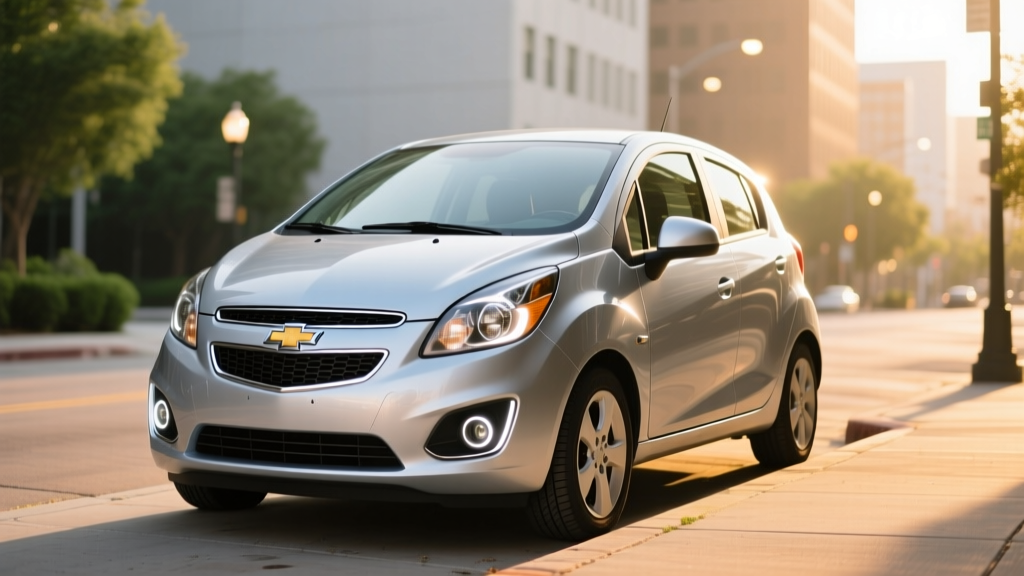
Quick Answer: Who Should Consider a Used 2014 Spark EV?
The 2014 Chevrolet Spark EV is a viable ultra-budget commuter EV for single drivers with reliable home Level 2 charging and a sub-40-mile daily round trip. Its 82-mile EPA range (expect 55–70 miles real-world in cold or highway driving) and 21.3 kWh battery limit it firmly to city and suburban use. Used examples typically sell for $5,500–$9,000 in 2026, making it one of the cheapest ways into electric driving — but only if your driving pattern fits its tight envelope. It is not a sole household vehicle for most buyers.
The Spark EV was Chevrolet's first serious battery-electric compliance car, sold only in California, Oregon, and Maryland. It was discontinued after the 2016 model year, which means every example on the used market is now at least a decade old. That age brings real battery degradation concerns, limited DC fast-charging capability, and no federal tax credit eligibility on purchase (the IRS §30D credit applies only to new vehicles). However, its low purchase price, peppy 143-hp motor, and dirt-cheap running costs keep it relevant for the right buyer.
Specs That Matter: Range, Battery, and Charging
| Specification | 2014 Spark EV |
|---|---|
| EPA Range | 82 miles |
| Real-World Range (mild weather, mixed driving) | 65–75 miles |
| Real-World Range (cold weather / highway) | 50–65 miles |
| Battery Capacity (total / usable) | 21.3 kWh / ~19 kWh |
| Battery Chemistry | Lithium Iron Phosphate (LFP) |
| DC Fast Charge (SAE Combo / CCS) | Up to 50 kW (optional on 2014) |
| 10–80% DC Fast Charge Time | ~20 minutes (when equipped with DCFC) |
| Level 2 Charge Rate | 3.3 kW (onboard charger) |
| Level 2 Time (0–100%) | ~6–7 hours |
| Level 1 (120V) Charge Time | ~17–20 hours |
| EPA Efficiency | 119 MPGe combined (28 kWh/100 mi) |
| Motor Output | 143 hp / 400 lb-ft torque |
| 0–60 mph | 7.6 seconds |
| Battery Warranty (original) | 8 years / 100,000 miles |
Real-World Range Reality: The EPA's 82-mile figure was measured under ideal conditions. In our analysis of owner reports and fueleconomy.gov data, expect 65–75 miles in 60–80°F mixed driving. At sustained highway speeds (70+ mph), range drops to roughly 55–65 miles. In freezing temperatures (below 32°F), the Spark EV has no battery heat pump or active thermal management — expect 50–60 miles, sometimes less if you're running the cabin heater hard. This is a car that demands you know your daily mileage before you buy.
One critical note on DC fast charging: the 2014 model year offered SAE Combo (CCS) DC fast charging only as a $750 dealer-installed option. Not all 2014 Spark EVs have it. If DC fast charging matters to you — and it should, even as a backup — verify the presence of the CCS port below the standard J1772 inlet before purchasing. Without DCFC, you're limited to 3.3 kW Level 2, which means a full charge takes nearly 7 hours.
The 3.3 kW onboard charger is another bottleneck. Even if you install a 48-amp (11.5 kW) Level 2 home charger, the Spark EV will only accept 3.3 kW. There's no benefit to overspending on a high-amperage EVSE for this car — a basic 16-amp (3.8 kW capable) Level 2 unit at roughly $300–$500 is the practical ceiling.
Used Purchase Price and Ownership Cost Breakdown
The Spark EV's biggest selling point in 2026 is its rock-bottom entry price. Here's what the financial picture actually looks like for a used buyer.
| Cost Category | 2014 Spark EV (Used) | Comparable Used Gas Car (2014 Chevy Spark Gas) |
|---|---|---|
| Purchase Price (2026 market) | $5,500–$9,000 | $5,000–$8,000 |
| Federal Tax Credit (§30D) | $0 (used EV credit was $4,000 max, expired/restricted — check IRS used-EV credit rules) | $0 |
| Annual Fuel/Energy (12,000 mi/yr) | ~$420 (at $0.13/kWh, 28 kWh/100mi) | ~$1,350 (at $3.50/gal, 30 MPG combined) |
| Annual Maintenance | ~$200–$350 (no oil, minimal brakes) | ~$600–$900 (oil, filters, brakes, belts) |
| Insurance (avg annual) | ~$900–$1,200 | ~$900–$1,200 |
| Battery Replacement Risk | $5,000–$8,000 if needed (out of warranty) | N/A |
| Estimated 5-Year Total Cost (purchase + energy + maintenance) | ~$10,500–$14,500 | ~$13,000–$17,500 |
The energy savings are substantial: roughly $900 per year less than the gas Spark at typical mileage. Over five years, that's $4,500 in fuel savings alone, plus another $1,500–$2,500 in reduced maintenance. The Spark EV's lower operating costs usually offset its slightly higher purchase price within 2–3 years of ownership.
However, the elephant in the room is battery replacement risk. The original 8-year/100,000-mile battery warranty has expired on all 2014 models. If the battery degrades below usable capacity or fails, replacement costs $5,000–$8,000 from aftermarket or salvage sources — potentially more than the car's value. This is the single biggest financial risk of buying any 10+ year-old EV.
Battery Degradation: What to Check Before You Buy
The Spark EV's LFP (lithium iron phosphate) chemistry is actually one of its hidden advantages. LFP cells typically degrade more slowly and tolerate frequent 100% charging better than the NMC (nickel manganese cobalt) chemistry found in most modern long-range EVs. That said, a decade-old battery is a decade-old battery.
Based on owner-reported data from Spark EV forums and EV degradation trackers, 2014 models with 60,000–100,000 miles typically show 15–25% capacity loss. That means an original 82-mile range might realistically be 62–70 miles at 100% State of Charge (SoC) in mild weather. Some high-mileage examples have lost 30% or more.
Before buying, demand a battery health check:
- Ask the seller or a Chevy dealer to pull the battery's State of Health (SoH) percentage via the onboard diagnostics. The Spark EV's "battery capacity" indicator in the driver information center gives a rough estimate.
- Check the car's full-charge range estimate on the dash. If it reads below 60 miles at 100% SoC in moderate temperatures, the battery has degraded significantly.
- Look for uneven cell voltage readings if a technician can access them — large voltage deltas between cells signal pack imbalance and accelerated degradation.
- Verify whether the car was primarily DC fast-charged or Level 2 charged. Frequent DCFC use on early LFP packs without active cooling can accelerate wear.
EV vs. Gas: The Spark EV Compared to Its Gasoline Sibling
| Metric | 2014 Spark EV | 2014 Spark (Gas, Automatic) |
|---|---|---|
| EPA Range / Tank Range | 82 miles | ~320 miles (9-gal tank, 31/39 MPG city/hwy) |
| Energy Cost Per Mile | ~$0.035 | ~$0.113 |
| 0–60 mph | 7.6 seconds | ~11.5 seconds |
| Horsepower | 143 hp | 98 hp |
| Cargo Space | 9.6 cu ft (battery eats under-floor storage) | 11.4 cu ft |
| Refuel/Recharge Time | 6–7 hrs (Level 2) / 20 min (DCFC to 80%) | 3 minutes |
| Annual "Fuel" Cost (12k mi) | ~$420 | ~$1,350 |
| 10-Year Maintenance Burden | Low (no oil, fewer brake replacements) | Higher (oil changes, transmission fluid, exhaust) |
The Spark EV is dramatically quicker than its gas counterpart — 400 lb-ft of instant electric torque makes it genuinely fun in stop-and-go traffic. The trade-offs are range (a quarter of the gas car's), cargo space (the battery pack reduces rear storage), and recharge time. For a second car or a solo commuter who charges at home overnight, these trade-offs are manageable. For a primary vehicle, they're not.
Common Misconceptions About the 2014 Spark EV
| Myth | Fact |
|---|---|
| "It qualifies for the $7,500 federal tax credit." | No. The §30D new clean vehicle credit applies only to new purchases. The used-EV credit (up to $4,000) has strict income, price, and dealer-registration requirements — verify current eligibility on IRS.gov. |
| "The battery will need replacing immediately." | Not necessarily. LFP chemistry degrades gracefully. Many 2014 Spark EVs still have 75–85% battery health. Get an SoH reading before buying — don't assume the worst. |
| "It can DC fast charge at any station." | Only if the optional CCS port was installed. Many 2014 examples lack DCFC entirely. Check for the CCS port physically on the car. |
| "82 miles is enough for anyone's commute." | It depends heavily on climate, terrain, and driving style. A 40-mile each-way highway commute in winter will drain this battery with margin to spare. Know your actual daily miles. |
| "Any home outlet will charge it overnight." | Level 1 (120V) charging takes 17–20 hours for a full charge. You need a 240V Level 2 circuit for practical overnight charging. Budget $500–$2,000 for a Level 2 installation depending on your electrical panel. |
Real-World Ownership: What Daily Life Actually Looks Like
Living with a 2014 Spark EV in 2026 means accepting a disciplined driving routine. Here's what ownership realistically entails:
Home charging is nearly mandatory. Public charging infrastructure has expanded enormously since 2014, but relying on it for a car with an 82-mile range and a 3.3 kW AC charger is impractical. You need a dedicated 240V Level 2 circuit at home. A basic 16-amp EVSE ($300–$400 for the unit) on a 20-amp circuit will fully recharge the Spark EV overnight in about 6–7 hours. Installation costs vary widely: $500–$800 if your panel is close to the garage and has capacity; $1,500–$2,500 if you need a panel upgrade or a long conduit run. Get a quote from a licensed electrician before committing to the car.
Cold weather is the Spark EV's kryptonite. The battery has no active thermal management (no liquid cooling or heating). Below freezing, expect 20–35% range loss due to increased internal battery resistance and cabin heater draw. If you live in Minnesota, Buffalo, or anywhere with sustained sub-20°F winters, this car's effective range may drop below 50 miles — making it a tough sell even for short commutes.
Apartment dwellers face a hard problem. If you can't install a Level 2 charger at home, the Spark EV's slow 3.3 kW charging and limited range make public-charging-only ownership frustrating. Some owners manage with workplace charging, but you're dependent on availability.
Towing is a non-starter. The Spark EV is not rated for towing. Its gross vehicle weight is already high for its size due to the battery pack. This is strictly a passenger-and-groceries car.
Decision Framework: Should You Buy One?
Buy the 2014 Spark EV if:
- Your daily round-trip commute is under 40 miles (leaving 25–40 miles of buffer)
- You have (or can install) a 240V Level 2 charger at home
- This will be a second vehicle in a multi-car household
- You live in a mild climate (rarely below 30°F)
- You want the absolute cheapest entry point into EV ownership
- You value quick acceleration and low running costs over range and cargo space
- You can verify battery SoH above 75% before purchase
Look elsewhere if:
- Your daily driving exceeds 50 miles round-trip
- This would be your only car
- You lack access to home or workplace Level 2 charging
- You live in a region with harsh winters (sustained sub-freezing temps)
- You need cargo space for more than a few grocery bags
- The idea of a potential $5,000+ battery replacement on a $7,000 car makes you uncomfortable
- You regularly drive on highways at 70+ mph (range evaporates fast)
If the Spark EV doesn't fit your needs, consider stepping up to a used 2017+ Chevrolet Bolt EV (238-mile EPA range, 60 kW DCFC, typically $10,000–$14,000 in 2026) or a used Nissan Leaf (check for the 30 kWh or 40 kWh variants for better range). Both offer dramatically more flexibility while still being budget-friendly.
Frequently Asked Questions
Does the 2014 Chevrolet Spark EV qualify for any federal tax credit?
The new-vehicle §30D credit ($7,500) does not apply to used purchases. The IRS previously offered a used clean vehicle credit of up to $4,000 under §25E, but eligibility depends on your income, the sale price (must be under $25,000), dealer registration requirements, and whether the credit program still has funding. Always verify current rules directly on IRS.gov and consult a tax professional before relying on any credit.
How much does it cost to charge the Spark EV at home?
A full charge from empty to 100% uses roughly 21 kWh. At the US average residential electricity rate of ~$0.16/kWh (as of early 2026), that's about $3.36 for a full charge, or roughly $0.04 per mile driven. Compare that to the gas Spark at ~$0.11 per mile. Over 12,000 miles per year, you'd spend roughly $480 on electricity vs. $1,350 on gasoline — a savings of nearly $900 annually.
What happens if the battery fails out of warranty?
Out-of-warranty battery replacement for the Spark EV typically costs $5,000–$8,000 including labor, depending on whether you source a new, refurbished, or salvage pack. Given that the car itself may be worth $6,000–$9,000, a battery failure can be a total-loss scenario. This is why a pre-purchase battery health check is essential.
Can I use a Tesla Supercharger with the 2014 Spark EV?
No. The Spark EV uses the J1772 connector for Level 2 charging and optionally the CCS1 connector for DC fast charging. Tesla Superchargers use the NACS connector. While Tesla has opened some Supercharger stations to non-Tesla EVs via a built-in CCS adapter at the stall, the Spark EV's 50 kW max DC charge rate and aging battery make it a poor fit for the Supercharger network regardless. Stick to Electrify America, EVgo, or ChargePoint DCFC stations if your car is equipped with the CCS port.
Is the 2014 Spark EV safe?
The Spark EV earned a 4-star overall rating from NHTSA (out of 5 stars). It includes standard stability control, antilock brakes, and 10 airbags. However, it lacks modern ADAS features like automatic emergency braking, lane-keeping assist, or adaptive cruise control — those simply weren't available on subcompact cars in 2014. It's a safe car by 2014 standards but would not meet 2026 IIHS Top Safety Pick criteria.
What's the difference between the 2014 and 2015 Spark EV?
The 2015 model year received a slightly revised battery pack (19 kWh usable vs. ~19 kWh usable in 2014, with minor chemistry tweaks) and standard DC fast charging (it was optional on the 2014). The 2015 also added OnStar 4G LTE. If DCFC is important to you and you're choosing between the two, the 2015 is the safer bet — but both share the same fundamental range and performance limitations.